



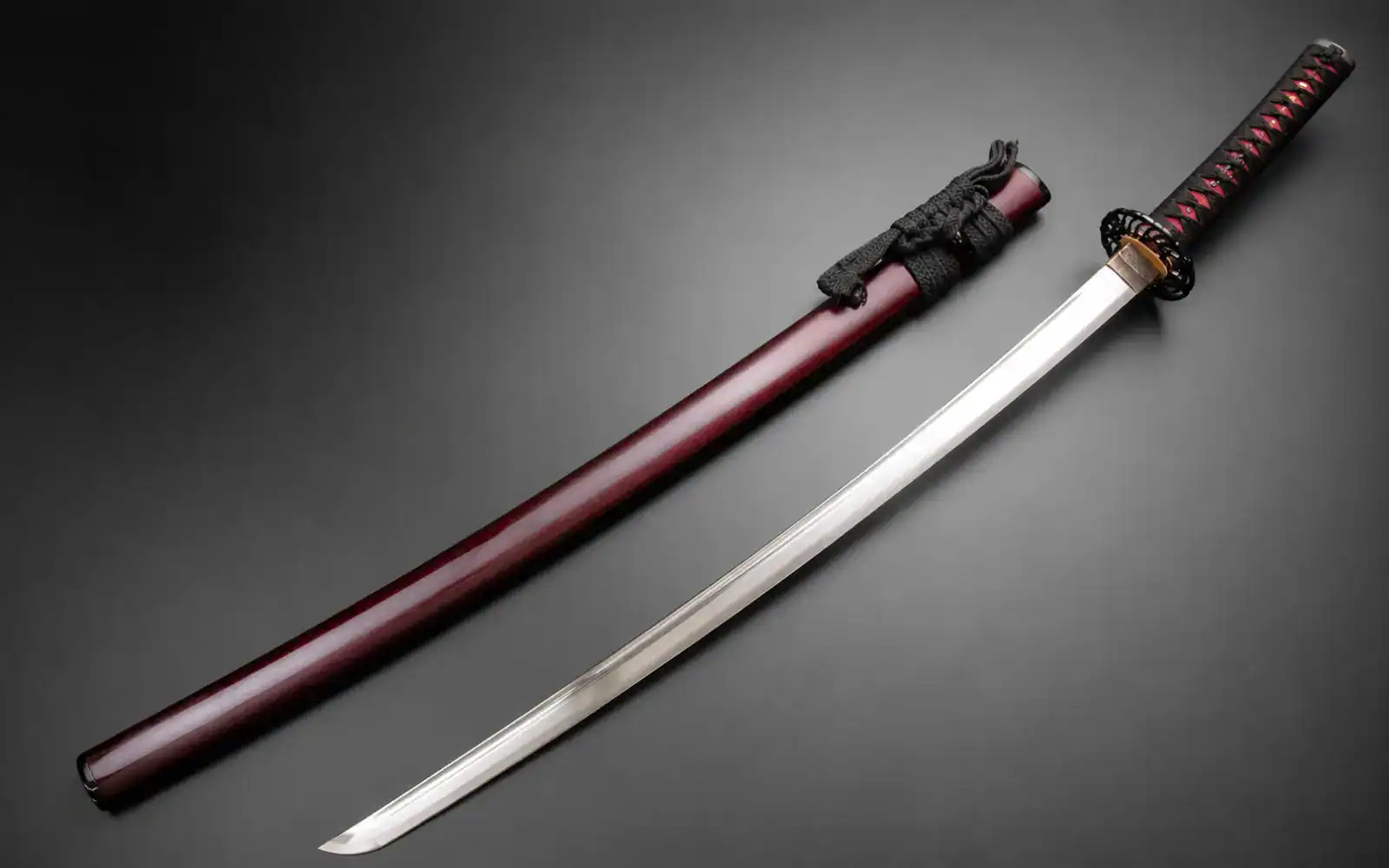
How to Buy Your First Katana Without Getting Burned

Before You Buy
- Choose the use before the look: display, forms practice, supervised cutting, gift, or collecting. Steel, sharpness, size, and budget come after that.
- A functional first katana should show full tang construction, named carbon or spring steel, clear measurements, and photos of the blade, tsuka, fittings, and saya.
- Skip listings that hide the steel, tang, intended use, return policy, or shipping limits, especially when they lean on vague “battle ready” copy.
Learning how to buy a katana usually starts with the look. A black saya, a flame pattern, a favorite anime style, or a clean hamon can pull you in fast. The problem is that none of those details tell you whether the sword belongs on a wall, in a dojo bag, or near a cutting stand.
First, Decide What the Katana Is For
The first buying decision is not steel. It is whether the katana will sit on a wall, go to a dojo, be used for supervised cutting, or arrive as a gift. A sword that is fine for one path can be a bad choice for another.
| Buyer type | Better first choice | Avoid |
| Display | Choose the look, mount, finish, and safe storage. | Swinging a decorative sword because it says “real.” |
| Anime or movie style | Pick the style after confirming display or functional use. | Treating character accuracy as construction proof. |
| Forms beginner | Ask the instructor first. Many beginners need an iaito or bokken. | Buying a sharp shinken before dojo approval. |
| First cutting buyer | Require full tang, named steel, heat treatment notes, intended-use notes, and training. | Cutting without legal space, safe targets, and supervision. |
| Gift | Prioritize clear specs, safe packaging, legal eligibility, and exchange terms. | Surprising someone with a sharp live blade. |
Display buyers can still care about color, fittings, hamon style, and character-inspired designs. A decorative sword is fine for display when nobody treats it like training gear. Character-inspired anime-inspired katanas should still be checked by use, not only by how closely they match the reference.
Early collectors should judge condition photos, polish, fittings, provenance, and seller history before trusting folded steel, tamahagane, or “rare” copy.

Training buyers should slow down. An iaito is an unsharpened practice sword, while a shinken is a sharpened live blade. Many martial arts students should start with a bokken, blunt trainer, or dojo-approved iaito before buying anything sharp. The practice or display decision is the first filter.
Most first buyers should skip antique nihonto and highly customized builds unless they already know the length, steel, fittings, condition, and use they want. Those can be rewarding later. They are expensive ways to learn basic preferences.
What “Battle Ready” Actually Means
“Battle ready” is not a spec. A functional katana should show full tang construction, named steel, suitable heat treatment, stable fittings, and a stated intended use. Without those details, the phrase is just sales copy.
Full tang means the blade steel, or nakago, continues into the handle under the tsuka. That structure helps the blade and handle work together under force. Rat-tail or welded tangs belong in the display lane because they can fail when swung.
Full tang is only the start. The tsuka should be secure, the mekugi should be properly fitted, the tsuba should not rattle, and the saya should fit cleanly. Visible pegs and tight wrap are good clues, but they do not replace clear specs and seller transparency.
A listing that makes the tang hard to understand is already asking for too much trust. KatoKatana’s full tang katana guide shows what that claim should mean.
Which Steel Fits a First Katana?
Named carbon or spring steel gives you a real spec to check. It does not prove the sword is well made, but it is better than copy that stops at “premium steel” or “hand forged.”
- 1060 carbon steel can be a practical first functional choice when the listing also states full tang construction, heat treatment, intended use, and return terms.
- 9260 spring steel can suit supervised cutting practice when the rest of the build checks out and the buyer has safe targets, space, and guidance.
- 1095 and T10 make more sense for buyers who understand maintenance, hardness, and edge-retention tradeoffs.

Folded steel, Damascus-style patterns, and visible hamon can be attractive, but they should not outrank heat treatment, blade geometry, and construction. Folded steel is not automatically stronger. A hamon is not proof of function by itself.
The useful steel question is “what can I judge and maintain?” not “what sounds most advanced?” KatoKatana’s best steel for a katana guide goes deeper, while documented high carbon steel katana listings are a cleaner place to start than vague upgrades.
Choose a Katana You Can Actually Control
A first katana should feel controllable before it feels impressive. A blade that is too long, too heavy, or too forward-balanced can make even a well-built sword awkward in beginner hands.
Check blade length, handle length, overall weight, and point of balance when the listing provides it. Sori, the blade’s curve, and kissaki shape matter more to advanced preference than to most first purchases. Beginners should care first about control, safe storage, and the intended use.
When a beginner is between sizes, the slightly shorter option is usually easier to manage. Confirm blade length, handle length, total weight, and return terms before buying. KatoKatana’s guide to choose the right katana length can help narrow the range.
Fit is not only about height charts. A sword that looks right on paper can still feel wrong if the handle is too long for your grip, the balance pulls forward, or the seller gives no return window.
How to Spot a Weak Katana Listing
A strong katana listing should answer five questions without making you guess: what is it for, what steel is it, how is it built, how large is it, and what happens if it arrives wrong?
| Listing clue | Risk | Check before buying |
| “High quality steel” | No actual steel grade | Named steel, not only a quality claim |
| “Battle ready” | No construction proof | Full tang, intended use, assembly, and heat treatment |
| “Folded” or “Damascus” | Visual pattern sold as performance | Core steel, heat treatment, and intended use |
| Stock photos only | Unknown fit and finish | Close-ups of blade, tsuka, tsuba, mekugi, and saya |
| No return policy | No inspection safety net | Return window, defect policy, and support contact |
Hamon pattern, ito color, saya finish, tsuba design, and blade polish are part of the pleasure of owning a katana. They just should not outrank construction and use. If the listing does not answer the five basic questions, move on.
Words like “unbreakable,” “master smith forged,” “ninja steel,” and “premium battle ready” should make you ask for proof, not reach for checkout. KatoKatana’s guide to mistakes to avoid when buying a katana is useful here.
Check the Seller Before You Pay
A specialist seller should be able to answer basic questions about steel, heat treatment, tang construction, intended use, shipping limits, returns, and inspection windows. A seller that cannot answer construction questions may not understand the sword well enough to stand behind it.
Buying a katana online can be reasonable when the listing gives steel, tang, size, intended use, photos, return terms, and shipping limits. Listings that rely on buzzwords instead of specs are not worth treating as functional-sword proof.
- Gift buyers should check exchange terms because the recipient may need a different size, weight, sharpness level, or style.
- After delivery, inspect the sword promptly for transit damage, loose fittings, incorrect specs, or obvious defects.
- Before ordering, check ownership rules, shipping eligibility, import duties, customs paperwork, and transport restrictions where you live.
Sword laws, age rules, import rules, carrier limits, public carry rules, and customs requirements vary by country, state, and local area. This article is not legal advice. A trustworthy seller should not encourage you to ignore those limits. Read where to buy a functional katana and are katanas legal before ordering across borders.
What a First Katana Should Cost
In the U.S. online market, many entry-level functional-style katanas are listed around $150 to $400 before taxes, shipping, or import costs. Price alone does not prove full tang construction, heat treatment, or cutting suitability.
| Price range | How to read it |
| Under $100 | Treat as display-only unless the seller gives unusually clear functional proof. |
| $150 to $400 | A common first functional-style range when specs, fit, and seller policy are clear. |
| $400 to $600 | May make sense for better fittings, finish, heat treatment, or training needs. |
Outside the U.S., import duties, carrier restrictions, local dealer availability, VAT, GST, and customs handling can shift the real cost. Carbon steel also needs basic care: wiping, light oiling, dry storage, and a safe place away from children, guests, and pets.
A better first buy is rarely the cheapest sword or the flashiest sword. Compare how much a real katana costs with how to care for a katana before treating the listed price as the whole cost.

Shop by Use Before You Shop by Style
Once the use is clear, compare listings by steel, length, fittings, and style. Buyers who have settled on a functional first sword can start with documented high carbon steel katana listings. Supervised cutting buyers who value toughness can compare 9260 spring steel options specifically.


