



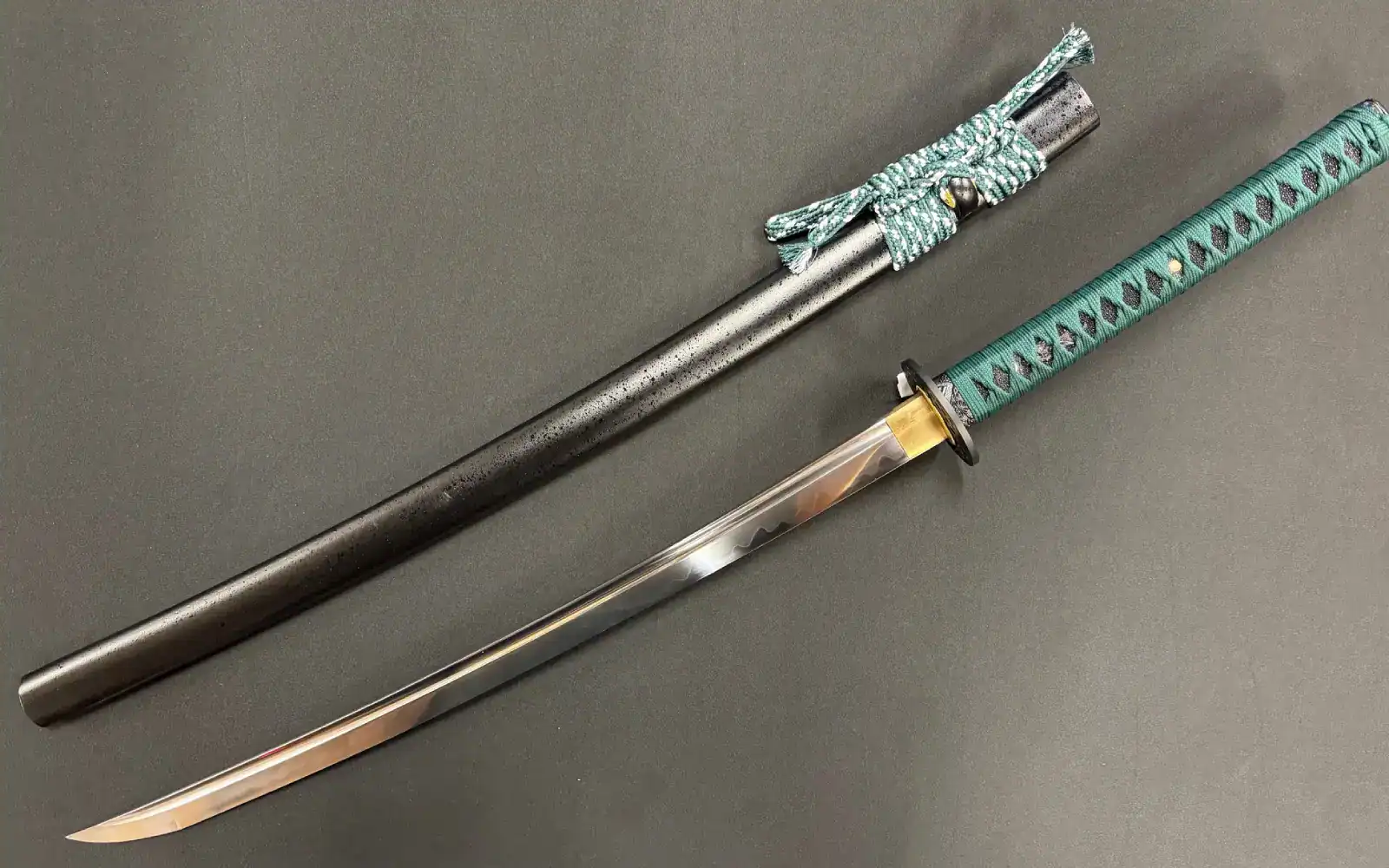
What Is the Best Steel for Katanas?

Every katana listing highlights different steel types: 1060, 1095, T10, 9260, Damascus, Tamahagane. If you are trying to decide the best steel for katana use, the answer depends on what you actually plan to do with the blade.
Cutting practice, display, or learning fundamentals all demand different trade-offs in hardness, toughness, and maintenance. This guide breaks down each option by real-world use and skill level so you can choose with clarity.
Quick Answer: Best Katana Steel by Need
- For Beginners: 1060 carbon steel or 9260 spring steel. Both are tough enough to survive learning mistakes without chipping or breaking.
- For Cutting Practice: 9260 spring steel or T10 tool steel. Built for repeated impact and edge durability during tatami and bamboo sessions.
- For Sharpness & Performance: 1095 high-carbon or T10 tool steel. These deliver razor-sharp edges for experienced cutters who maintain proper technique.
- For Display & Collectors: Damascus (folded) steel or traditional Tamahagane. Chosen for visual beauty, historical significance, and craftsmanship rather than raw function.
Katana Steel Comparison Table
| Steel | Carbon % | Hardness (HRC) | Toughness | Edge Retention | Best For | Skill Level |
| 1060 | 0.60% | 54–57 | Medium | Moderate | Forms, light cutting | Beginner |
| 9260 | ~0.60% carbon + silicon | 54–58 | Very High | Moderate | Heavy cutting, repeated impact | Beginner–Intermediate |
| 1095 | 0.95% | 58–60 | Medium–Low | High | Precision cutting | Advanced |
| T10 | ~1.0% carbon + tungsten alloy | 58–61 | Medium | Very High | Performance cutting | Intermediate+ |
| Damascus (Folded) | Depends on core steel | 56–60 (typical) | Depends on core | Varies | Display / functional art | Collector |
| Tamahagane | Variable (traditional smelting) | 58–62 (edge) / 40–50 (spine) | Medium–High | High | Traditional collection | Collector |
- Hardness (HRC) varies by heat treatment and maker.
- Toughness reflects how well a blade resists chipping or cracking under impact.
- Many 1095/T10/Tamahagane blades use differential hardening: harder edge, softer spine.
Why There’s No Single “Best” Steel for a Katana
Every katana steel sits somewhere on a sliding scale between two competing properties: hardness and toughness. Hardness lets the edge get sharper and stay sharper longer. Toughness lets the blade absorb impact and flex without cracking. No single alloy maxes out both at the same time.
A steel rated at 60 or above on the Rockwell hardness scale (HRC) will slice through targets with minimal effort, but one off-angle cut can chip the edge or crack the blade. A softer steel around HRC 50 forgives sloppy technique, but it dulls faster and needs more frequent sharpening.
Your own skill level matters just as much as the steel itself. A beginner using a high-hardness blade will chip it within weeks because edge alignment takes time to develop. An experienced cutter using a softer blade will outperform that same beginner with a premium steel every time. If you want a deeper look at how different alloys and forging methods affect blade composition, our article on what katanas are made of covers each one in detail.
Best Steel for Beginners
Your first katana needs to survive your mistakes. Beginners tend to hit targets at slight angles, use too much force, or misjudge distance. A blade that chips or cracks under those conditions is expensive to fix and potentially dangerous.
Steels in the medium-carbon and spring steel families handle these situations best because they prioritize toughness over extreme sharpness. If you mostly plan to practice forms and light cutting, 1060 keeps costs low. If you want to start hitting targets early, 9260 gives you more room for error.
1060 Carbon Steel

1060 sits right in the middle of the carbon content range at 0.60%. That gives it enough hardness to hold a working edge through forms and light cutting, while staying soft enough to absorb the shock of an imperfect strike. If you hit a target slightly off-angle, a 1060 blade is more likely to dull than to chip.
Most functional swords in 1060 steel fall in the $100 to $300 range, making it one of the most affordable options for a real blade. It sharpens easily with basic whetstones, responds well to maintenance, and does not require advanced heat treatment knowledge to appreciate. For anyone buying their first functional katana, 1060 is the standard starting point. You can browse our 1060 carbon steel Japanese swords to see what is currently available.
9260 Spring Steel
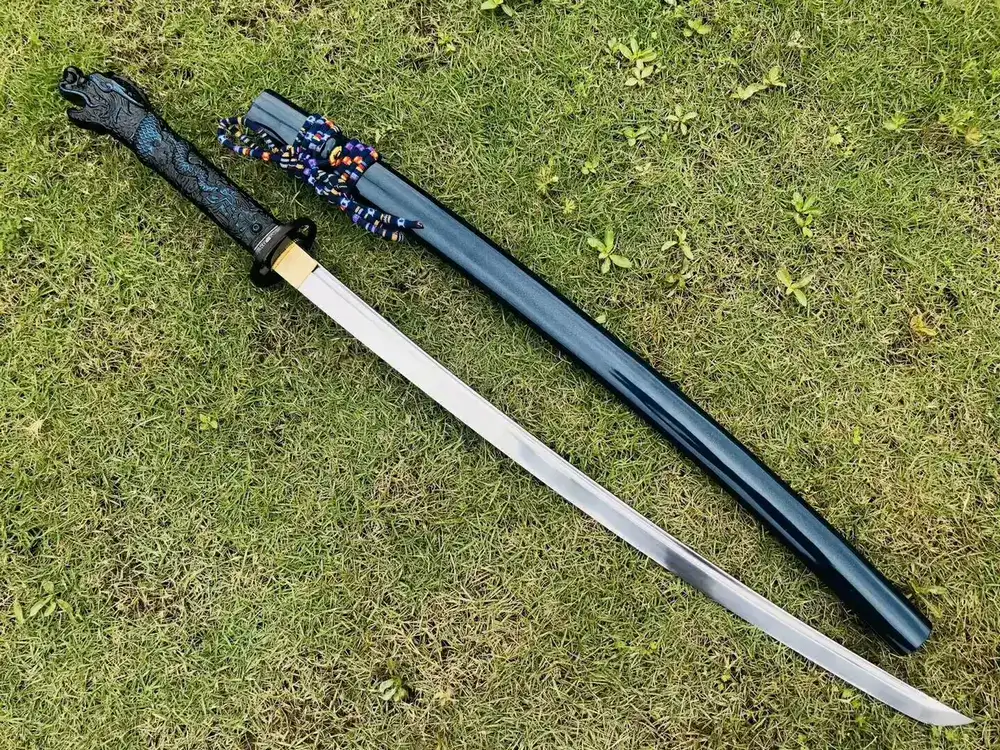
9260 contains about 2% silicon, which changes how the steel behaves under stress. Instead of deforming permanently when bent, a 9260 blade flexes and returns to its original shape. A properly heat-treated 9260 blade can flex significantly under stress and return to true alignment without permanent deformation.
For a student still developing consistent edge alignment, this is the safest choice available. A bad cut that would chip a harder steel simply bounces off a 9260 blade. Dojos that loan swords to students almost always use spring steel for this reason. Most 9260 swords run between $150 and $350, only slightly above 1060 for a significant upgrade in durability. If you want a sword that can take real abuse while you build your fundamentals, our 9260 spring steel Japanese swords are built for exactly that.
Best Steel for Cutting Practice
Tameshigiri puts different demands on a blade than basic forms or display. You are making full-power cuts into rolled tatami mats or bamboo, sometimes dozens in a single session. The blade needs to resist chipping from repeated impacts and maintain edge geometry through sustained use.
9260 Spring Steel
In a cutting context, 9260 performs as a workhorse that keeps going when other steels start to show fatigue. After 50 or 100 cuts on tatami, most steels develop micro-chips along the edge. 9260 resists this because the silicon content makes the steel’s grain structure more elastic, allowing the edge to deform slightly and recover rather than fracture.
Safety is the other reason cutting groups prefer it. When a blade chips during practice, those fragments become projectiles. A steel that flexes instead of fracturing reduces that risk significantly during group sessions.
T10 Tool Steel
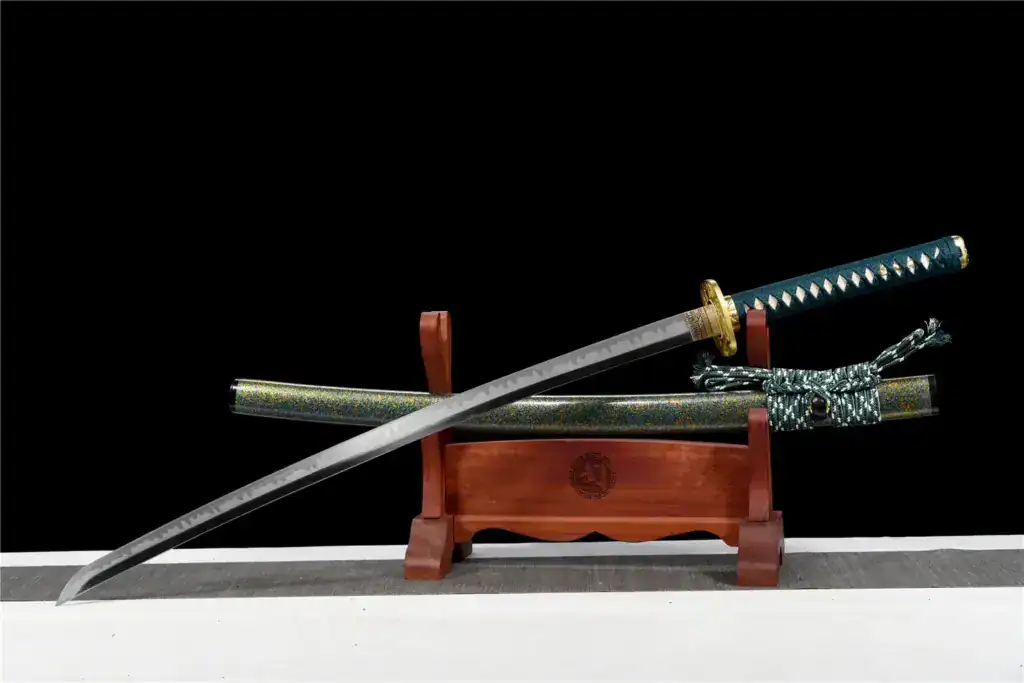
T10 adds tungsten to a high-carbon base, which creates a steel that resists wear far better than plain carbon alloys. Where 9260 excels at absorbing shock, T10 excels at keeping its edge geometry intact through extended cutting sessions. After the same number of cuts, a T10 blade typically needs less touch-up sharpening than a 9260.
Most T10 katanas are clay tempered, which creates a hard edge (HRC 58 to 60) backed by a softer spine (HRC 40 to 45). The hard edge does the cutting while the soft spine absorbs the impact. This combination gives you aggressive cutting ability with meaningful structural safety. Expect to spend $200 to $500 depending on fittings and blade length. If you are serious about regular cutting practice, our T10 tool steel Japanese swords are designed for that level of use.
Best Steel for Sharpness and Performance
This category is for experienced practitioners who have already developed reliable edge alignment and proper cutting mechanics. These steels achieve higher Rockwell hardness ratings, which translates to sharper edges and longer edge retention. The trade-off is that they punish mistakes. A slightly off-angle cut can chip the edge, and repairs on high-hardness steel require skill and patience.
1095 High-Carbon Steel
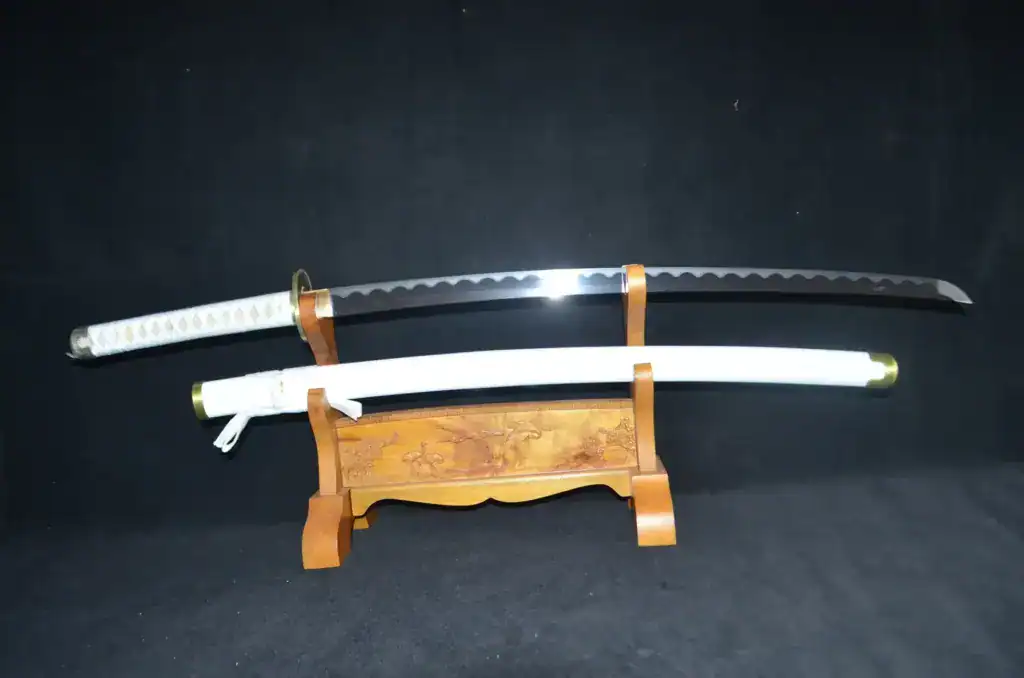
With 0.95% carbon content, 1095 can be heat treated to achieve some of the highest hardness levels in the plain carbon family. The result is an edge that gets razor-sharp and holds that sharpness through precise, well-executed cuts.
1095 also responds well to clay tempering. The differential hardening creates a visible hamon line along the blade, which is both functional and visually striking. Compared to T10, a clay tempered 1095 tends to produce a more vivid and active hamon pattern because its simpler carbon composition reacts more dramatically to the quenching process.
The hard edge near HRC 60 handles precision slicing, while the softer spine provides just enough flex to prevent catastrophic failure. Most 1095 swords fall in the $200 to $500 range, similar to T10 but sometimes slightly lower for simpler fittings. For experienced cutters who want top-tier sharpness from a traditional carbon steel, our 1095 high-carbon Japanese swords offer that level of performance.
T10 Tool Steel
T10 appeared in the cutting section for its durability, but it also competes with 1095 on pure sharpness. It reaches similar sharpness levels as 1095 but edges ahead in one specific area: wear resistance. The tungsten content means the cutting edge holds its geometry slightly longer between sharpening sessions, even under demanding use.
The practical difference shows up over time. If you cut regularly, a 1095 blade might need a touch-up every few sessions, while a T10 holds its edge a session or two longer before showing the same wear. Both steels require the same oiling and storage routine, so the choice comes down to whether that extra edge retention matters enough for your cutting frequency.
Best Steel for Display and Collectors
When a katana is meant primarily for display or collection, the evaluation shifts away from mechanical performance. What matters here is the visual character of the steel, the craftsmanship behind the forging process, and the historical or cultural story the blade represents. Both options below can be functional depending on the specific blade, but their primary value lies in artistry as much as engineering.
Damascus (Folded) Steel
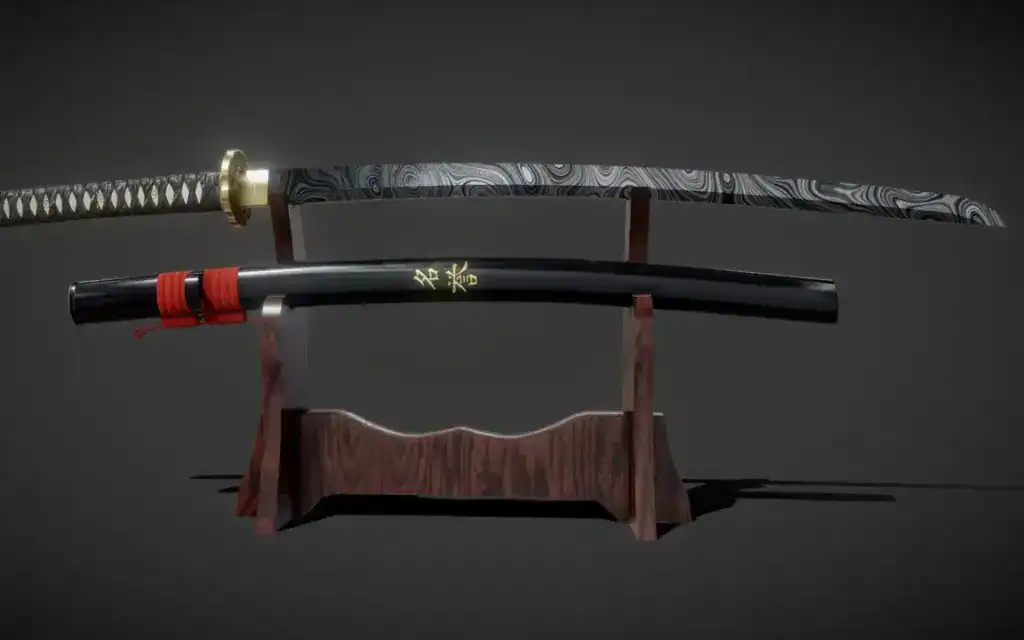
Modern Damascus katanas are made by folding multiple layers of steel together during forging. This process creates the distinctive ripple and wave patterns visible on the blade surface. Each fold doubles the layer count, so a blade folded 13 times contains over 8,000 layers.
The patterns are unique to each individual sword because the folding process is never perfectly identical twice. For collectors, that uniqueness is the point. Damascus swords typically range from $230 to $700 depending on layer count and fittings. Our article on whether Damascus steel is good for katanas breaks down how folding affects the blade beyond appearance. If you are looking for a sword that works as both a functional blade and a visual centerpiece, our Damascus steel katana collection focuses on exactly that balance.
Tamahagane
Tamahagane is the traditional steel used in authentic Japanese Nihonto. It is produced in a tatara furnace by smelting iron sand with charcoal over a multi-day process. The smith then sorts the resulting bloom by carbon content, selecting and combining pieces to create a blade with the right balance of hard and soft steel.
This process is labor-intensive, inconsistent by industrial standards, and produces relatively small quantities of usable material. That rarity is a large part of its value. Owning a Tamahagane blade connects you to centuries of Japanese swordsmithing tradition in a way that modern alloys cannot replicate.
Authentic Tamahagane swords from licensed smiths carry prices well into the thousands. For collectors who appreciate the tradition without the extreme cost, our Tamahagane replica series offers an accessible entry point.
Common Mistakes When Choosing Katana Steel
Assuming harder always means better
Blades hardened above HRC 62 can hold exceptional sharpness, but brittleness increases significantly at that level. One bad cut, one accidental contact with a hard surface, and you are dealing with a chipped or cracked blade. For most users, HRC 56 to 60 offers the best balance of sharpness and safety.
Using a decorative sword for practice
Stainless steel wall-hangers are not heat treated for impact. They are made to look good in a display case. Swinging one at a cutting target can cause the blade to snap at the tang, sending the blade flying. Never use a decorative sword for any kind of functional practice.
Ignoring maintenance requirements
High-carbon and tool steels will rust if left unprotected. After every use, you need to wipe the blade down and apply a thin layer of oil. Skipping this step even once in a humid environment can start corrosion that pits the steel permanently. The best steel in the world is worthless if you are not willing to maintain it.
Overbuying for your skill level
A $500 T10 blade will not make you a better cutter than a $200 1060 blade if your edge alignment is inconsistent. Spending more on steel does not compensate for technique that is still developing, and a premium blade that gets chipped through poor form is an expensive lesson.
Find the Right Katana Steel for Your Needs
The best katana steel is the one that matches where you are right now. If you are just getting started, a forgiving alloy like 1060 or 9260 lets you train without worrying about damaging your blade.
Once your technique is solid, steels like 1095 and T10 reward that consistency with sharper edges and better retention. And if your goal is to build a collection worth displaying, Damascus and Tamahagane carry a visual and historical weight that no modern alloy can match.
Start where you are, and let your steel grow with your skill. You can explore our full katana collection to find the right fit for your goals.


