



How to Care for a Katana: Cleaning, Oiling, and Storage

To care for a katana, you only need three habits: wipe the blade after each use, keep a thin coat of oil on the steel, and never touch it with bare fingers. High-carbon steel can rust faster than many owners expect, so even a display sword needs regular attention. The entire process takes only a few minutes and does not require expensive tools.
Whether you use your sword for tameshigiri (test cutting) or keep it mounted on a wall, the routine is the same at its core. The main difference is how often you do it, how much residue the blade picks up, and how carefully it needs to be stored.
How Often Should You Clean a Katana?
Your cleaning schedule depends on how you use the sword and where you live. Here is a quick reference:
| Scenario | Cleaning Frequency |
| After every cutting or training session | Same day, immediately after use |
| Display sword, normal climate | Every 2–3 months |
| Any sword, humid climate | Monthly or more often |
High-carbon steel is far more reactive than stainless steel. Moisture in the air, fingerprints, and even dust particles trapped in old oil can start corrosion. If you practice cutting with tatami mats, bamboo, or water bottles, plant acids and moisture from those targets will stain the blade within minutes if left unwiped.
Not every sword needs the same level of attention. Here is how katana care frequency breaks down by type:
- Functional high-carbon steel katana: Clean and oil the same day you use it. After cutting wet or fibrous targets, wipe the blade down immediately, even if it looks clean at first glance.
- Display-only carbon steel sword: A display sword can still rust even if it is never swung. Dust, humidity, and fingerprints are enough. Oil and inspect every 2 to 3 months.
- Decorative stainless or alloy sword: Lower maintenance than carbon steel, but still keep it dry and dust-free. Pieces like our anime and movie katanas benefit from a light wipe and dusting every few months.
Our breakdown of what katanas are made of explains why carbon steel is so vulnerable and what that means for your maintenance routine.
What You Need for Katana Care
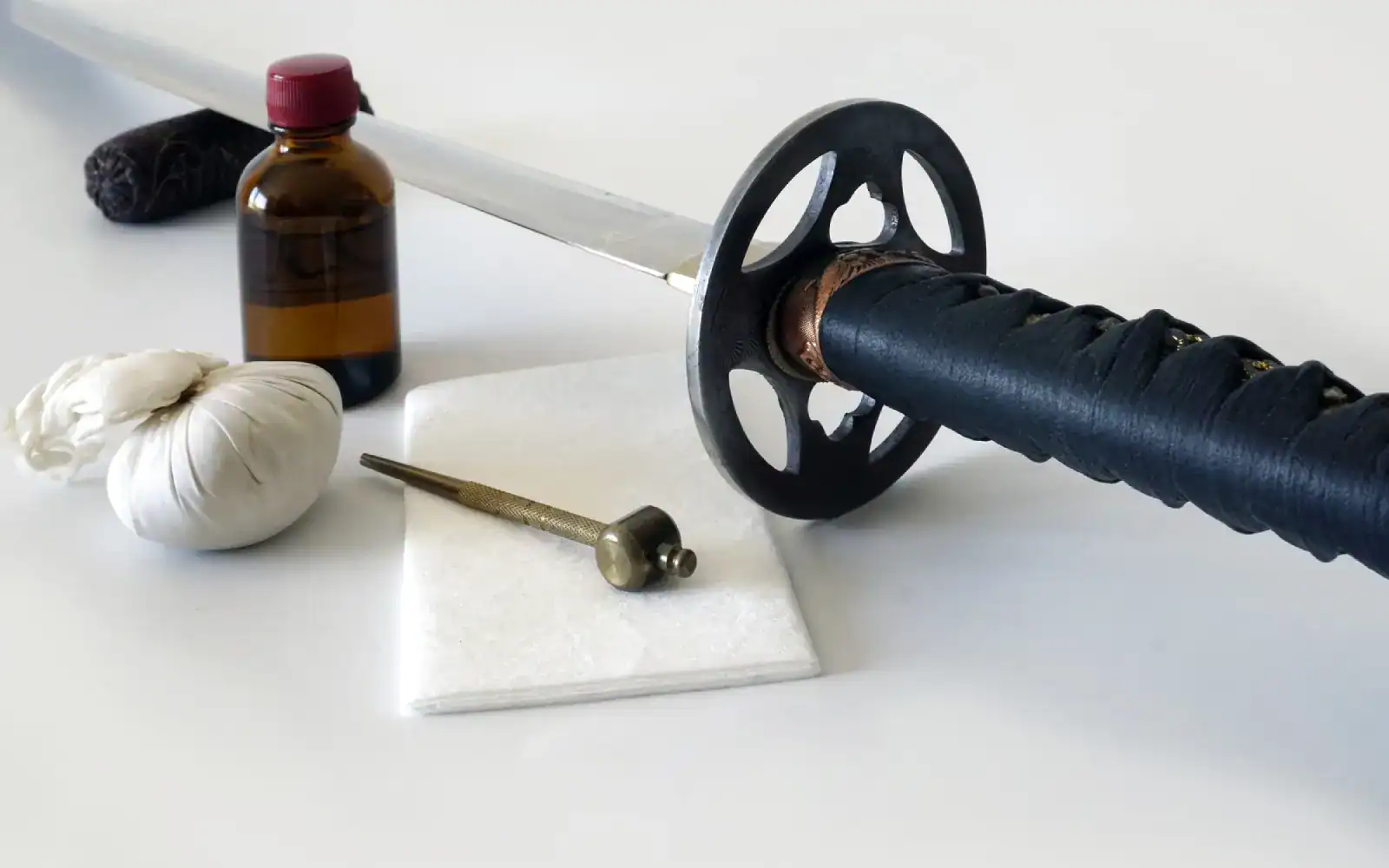
You do not need a traditional Japanese maintenance kit to care for a katana properly. Traditional items like choji oil (clove oil blended with mineral oil) and nuguigami (rice paper) work well, but affordable modern substitutes do the same job.
Here is what covers most cleaning sessions:
- Lint-free microfiber cloth: For wiping old oil and applying fresh oil. A soft cotton flannel cloth also works.
- Light mineral oil (unscented): The most accessible blade protectant. Food-grade mineral oil from a pharmacy costs a few dollars and lasts months.
- Isopropyl alcohol (90% or higher): Strips old, grime-laden oil and dissolves organic residue from cutting targets. Always dry the blade immediately after using it.
- Uchiko powder ball (optional): A silk ball filled with fine stone powder, used to absorb old oil and polish the steel. Useful for deep cleaning once or twice a year, but not required for routine care.
A mekugi-nuki (a small brass hammer for removing handle pins) is included in many kits. You only need it if you are disassembling the sword to clean the tang (nakago), which most owners rarely do. For routine blade care, a cloth, oil, and alcohol cover everything.
An expensive kit is not a prerequisite for quality care. A $5 bottle of mineral oil and a clean cloth protect the steel just as well as a $40 traditional set.
How to Clean and Oil a Katana Step by Step
Set up a clean, flat workspace with good lighting. Keep the edge facing away from you at all times. Have your cloth, oil, and alcohol within reach before you start.
Step 1: Wipe the Blade Clean
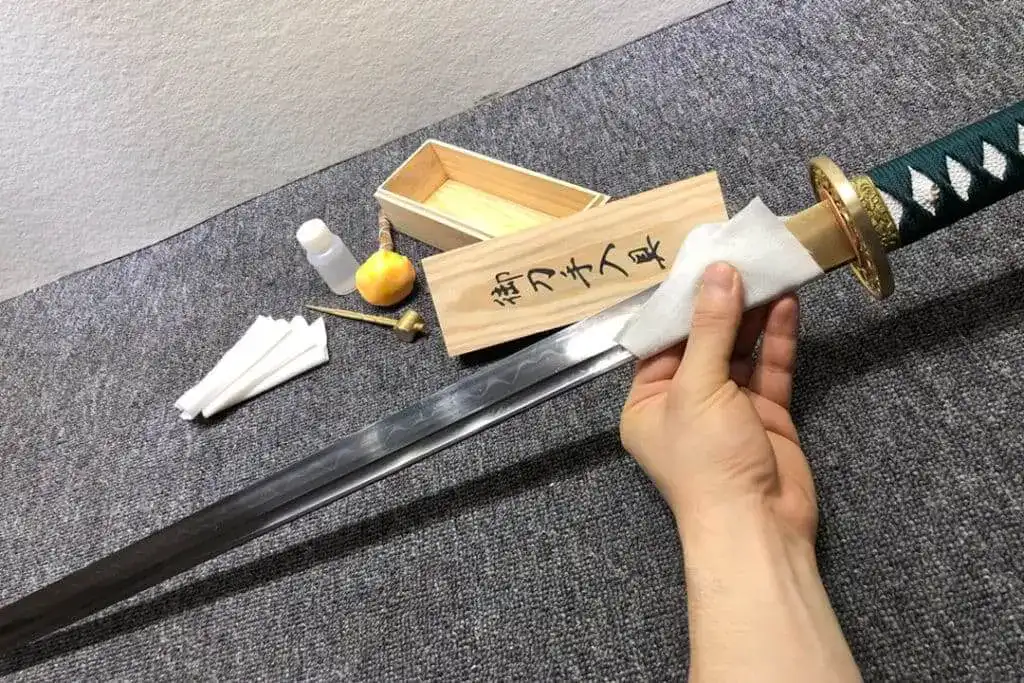
Hold the sword by the handle with one hand. With the other hand, pinch a folded cloth around the spine (back of the blade) and wipe from the base toward the tip in one smooth motion. One direction only. Scrubbing back and forth pushes debris into the surface and creates micro-scratches.
For routine display maintenance, a dry wipe is often enough. After cutting sessions, dampen the cloth with isopropyl alcohol to dissolve plant acids and organic residue, then immediately follow with a dry pass.
Step 2: Apply Uchiko Powder (Optional)
Tap the uchiko ball lightly along the blade every few inches to dust the surface with powder. Wipe the powder away with a clean cloth. This step removes stubborn old oil and brings up a light polish. Once or twice a year is sufficient for most owners.
Step 3: Inspect for Rust or Damage
Look closely for any spots, discoloration, or early rust (small reddish or dark specks). For very light surface oxidation, use a rust eraser gently and test on a small area first. Wipe the residue clean and apply oil to the spot right away.
Avoid abrasive DIY rust removal on valuable or traditionally finished blades. If the rust has spread, deepened, or started flaking, stop and consult a professional. Catching oxidation early is the best way to prevent rust on a katana from becoming permanent.
Step 4: Oil the Katana Blade
Put a few drops of mineral oil or choji oil on a clean cloth. Wipe from base to tip, coating both flats and the spine. The goal is a microscopic film, not a visible layer. If you can see oil droplets sitting on the surface, you have applied too much. Finish with one light pass to remove excess.
This oil barrier is the primary defense against ambient humidity and is especially important for owners of high carbon steel katanas.
Step 5: Re-Sheath and Store the Katana
Never store the blade wet or with excess oil pooling near the habaki (blade collar). Oil buildup at the collar can seep into the scabbard wood and cause problems over time.
For practitioners: during long training sessions, sweat from your hands can reach the blade through gaps in the handle wrap. A quick wipe and light re-oiling mid-session neutralizes the corrosive salts before they etch the steel.
How to Store a Katana Properly
Proper storage is just as important as cleaning when you care for a katana. How you position, protect, and control the environment around the blade determines whether it stays clean between maintenance sessions or develops rust while sitting untouched.
Edge-Up Position on a Katana Stand

Place the sword horizontally on a stand with the edge facing up. Edge-up orientation keeps the cutting edge from pressing against the inside of the scabbard, which preserves both the edge and the scabbard lining.
Your storage setup should match the sword’s intended use, so our guide on how to choose a katana for practice or display can help you decide what works best.
Control Humidity and Avoid Moisture Traps
Aim for a dry, stable indoor environment. Around 40% to 50% relative humidity is a good target for long-term storage. Too much moisture accelerates rust. Too little dries out wooden components and can crack the handle or scabbard. In humid coastal climates, a small dehumidifier or silica gel packets near the storage area make a noticeable difference.
Avoid storing your katana long-term in leather bags, foam-lined cases, or any enclosed container that traps moisture. Leather absorbs humidity from the air and creates a damp microenvironment around the blade. A fabric sword bag with some airflow is a better option for transport.
Long-Term Display Protection
For display-only swords you rarely handle, Renaissance Wax is an alternative to oil. It forms a harder protective barrier that lasts several months without reapplication. You should still inspect the blade a few times per year and reapply when the coating begins to wear thin.
Katana Care Mistakes That Cause Rust
Even owners who care for a katana regularly can damage their blades through a few common errors.

- Using cooking oil instead of mineral oil: Olive oil, coconut oil, and other organic oils break down over time. They turn sticky, attract dust, and create a corrosive layer on the steel. Neutral mineral oil does not degrade.
- Over-oiling the blade: More oil is not better protection. Excess oil seeps into the scabbard wood, swells the wood fibers, and creates a damp interior that accelerates rust from the inside. A thin, even film is all you need.
- Relying on WD-40 for storage: WD-40 is not a long-term blade protectant. It can displace moisture temporarily after a cutting session, but it evaporates too fast to protect steel during storage. Always follow up with proper cleaning and a coat of mineral oil before you store a katana.
The next two mistakes are less obvious but just as damaging over time.
- Touching the blade with bare hands: Fingerprints deposit salts and acids that can etch permanent marks into high-carbon steel within hours. If you accidentally touch the blade, wipe the spot immediately and apply a thin layer of oil.
- DIY sharpening on improper equipment: A katana’s edge geometry and differential heat treatment (the process that creates the hamon temper line) require specific sharpening techniques. Running the blade across a bench grinder or coarse stone will ruin the geometry and potentially crack the hardened edge. Leave sharpening to a professional or use Japanese water stones if you have training.
Katana Care in Five Minutes or Less
The entire routine comes down to three things: inspect the blade regularly, maintain a thin coat of oil, and keep bare skin away from the steel. These steps work whether your katana cost $100 or $1,000. Consistent katana maintenance keeps the blade cleaner, safer to handle, and far less likely to develop permanent rust.
Build the habit of checking your sword at least once a month, even if it sits on display untouched. A quick inspection catches early oxidation before it becomes permanent damage.
Ready to find your next blade? Explore our full katana collection.


