




How to Start a Japanese Sword Collection

Most collections go sideways when the first sword is bought on impulse and the next few are chosen to justify it. Start with one modern Japanese-style piece that fits the room, the use you have in mind, or a theme you want to build around. This guide does not cover antique nihonto collecting.
One sword is enough to get started. Add another only when it brings something new to the display or collection.
Before you buy, work through these questions:
- What kind of collection do you want to build?
- Where will the first sword live, and how much space do you have?
- Which first sword fits that plan?
- What will you learn from living with it?
- Would a second piece add something the first one does not?
- Which category should you browse once you know the answer?
Decide what kind of collection you want
Start with the end picture. Do you want one sword that carries a room, a collection built around a theme, or pieces chosen for a specific intended use? The space you have, what you can spend, and local rules will narrow the choice.
This article is about modern Japanese-style swords. Antique nihonto collecting is a different pursuit, built around provenance, documentation, condition, budget, and specialist guidance. Use nihonto vs. katana for the modern-versus-antique distinction. A label, price, or visual detail is not proof that a sword is an antique.
Start with display
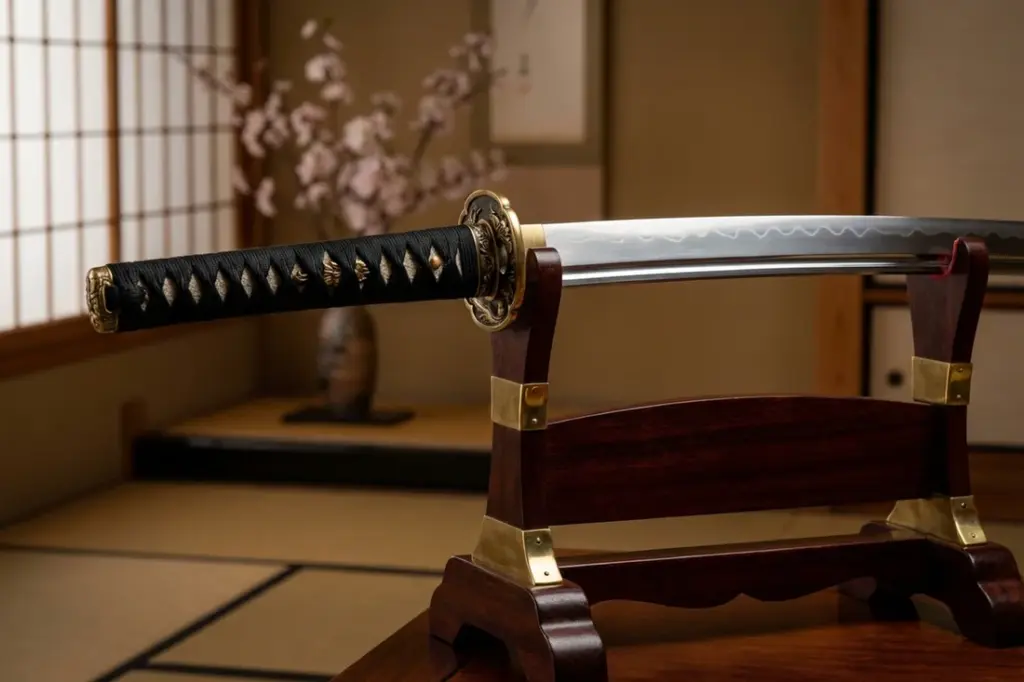
If you are buying for display, start with the room rather than the product grid. Look at the wall, cabinet, stand, or storage spot the sword must fit. Scale, mounting style, and how two swords look together matter more than collecting every sword type.
Picture how the first piece will sit in the room. It might be the one sword you want people to notice first, the shorter companion to a later katana, or the small counterpoint in a larger arrangement. Color and finish can help, but neither is a collection plan.
Plan around intended use
Keep display pieces, practice tools, and sharp functional swords as separate purchases. If you are shopping for dojo practice, ask your instructor which sword type the school requires before you look at listings. The answer depends on the school and activity.
Visual appeal does not establish a practice match. Once you know the intended use, read how to choose a katana for practice or display.
Build around a theme
A historical-form theme can compare shapes and proportions without becoming an antique collection. A visual or pop-culture theme may follow a series, character, color palette, or display mood. Appearance says something about the display theme, not whether a sword suits a functional use.
Anime-inspired and traditional-style swords can share a home, but make the choice on purpose. Give each one its own shelf or wall area. Pair them only when the contrast is part of the display, rather than an accidental mix.
Set limits before you choose your first sword
Set the boundaries before you open product grids. Write down the room you have, the intended use, a maximum spend per piece, an annual budget, and how often you expect to buy. Include where each sword will be displayed or stored. Do not raise the limit because one listing catches your eye.
Before purchasing any Japanese-style sword, check the ownership, age, transport, carrier, customs, and import rules that apply to the item where you live. Rules can differ by location and shipment, so confirm the current requirements rather than relying on a general online answer.
Give yourself time with the first piece. You will learn whether the spending limit and buying pace still feel sensible once the sword takes up space and needs care.
Let your first sword set the direction
Your first sword gives you a reference point for the next one. It shows how much visual weight suits the room and whether display or intended use should lead the collection. It does not need to be the most expensive sword. If you already own one, display it where you plan to keep it before deciding you need a replacement.
Compare later purchases beside that first piece. They should support its scale, display plan, or intended use. Pass on a listing that belongs to a different collection.
Decide which sword type should act as the anchor, then use how to buy your first katana for detailed purchase criteria. Check the stated intended use against that role. Do not treat a display-oriented listing as practice or functional-use equipment because of photos or finish alone.
Choose the first sword by its place in the collection
Have room for a full-length display and no firm theme yet? Start with one katana. Choose a wakizashi first when the room is tighter or you already know you want a pair.
A tanto makes sense when the display needs a smaller element. It is optional, and its scale can make a crowded arrangement easier to handle.
A wakizashi can still be the right first choice in limited space. Read wakizashi vs. katana for a detailed comparison. If you already own one sword, name what is missing before you open another category: more scale, a companion relationship, display contrast, or a separate theme.
Decide what the next sword adds
Once the first piece is in place, leave it alone for a while before you shop again. Ask: “What new job does this sword do that my current collection does not?” A second or third piece remains optional. Do not complete a sequence only because it looks unfinished on a product grid.
Skip random bundles, uncertain restoration projects, and listings that lean on dramatic finishes or vague labels. Before you buy a bundle, write down where each sword will go and why it belongs in the collection.
When a companion or smaller piece helps
Add a wakizashi after a katana when you want the two pieces to read as a pair. Add a tanto when the display needs a smaller visual scale. You do not need to start with a daisho set.
Choose a pair when paired presentation is already the display goal, then read the daisho sword set guide before making that your next step. Buy both at once only when you want the pair to define the display.

Add contrast only when it belongs in the theme
A later piece can widen the look of a collection. Add one because it gives you a silhouette, mounting style, or mood that the first sword cannot. Keep historical-form pieces and anime or pop-culture pieces in separate display ideas because they answer different visual questions.
Before you buy, say what will change in the display. If all you can name is a new color or finish, leave it for now.
Keep practice and display needs separate
One sword does not need to do everything. A practice tool, a display piece, and a sharp functional sword may be separate purchases. Decide the use before you browse and follow instructor guidance for training. A good-looking display sword is not automatically training equipment.
Make room before the collection grows
Once you have narrowed the next piece, look at the room again. A centerpiece needs a different setting than a matched pair, and several swords need enough room for their details to remain visible. Decide which arrangement you are building before you add a companion.
Get a tape measure out. Check the viewing distance, mounting space, storage space, and room needed to move each piece safely. Do not estimate from product photos. Set up secure storage before you bring a sword into the room.
Secure all swords and keep them away from children and guests. Before expanding, check long-term care needs and local ownership rules. More pieces require more storage and care.
Browse only after you have a plan
Now you can browse without starting the decision over. Use the type and display plan you have chosen to narrow the category. Consider material, color, and price after you have narrowed the type. For a classic centerpiece, start with katana for sale and shortlist pieces that fit your space and intended use.
Choose wakizashi or tanto when a compact or paired display needs one of those forms. Choose anime and movie katana for an anime display theme, while keeping display intent separate from functional-use decisions. Compare only pieces that fit the collection you are building.
Stop when the collection feels complete. Before you add another piece, check the display and storage space, then confirm that it changes the collection in a way you can name. Leave it off the list if it does not.


