




How to Choose the Right Katana Length for Your Height?

Most height-to-blade-length charts give you a starting point. But a chart can’t tell you how a katana actually feels in your hands. That’s why you need one quick body check to confirm the fit before you buy.
This guide helps you pick the right blade length based on your height, how you plan to use it, and what feels comfortable when you hold it. Control matters more than looks.
How Long Should a Katana Be for Your Body?
Getting the right blade length comes down to two steps. First, use your height to find a recommended range. Then, run a quick body test to see if that length actually works for you.
Use Your Height as a Starting Point
Your height gives you a baseline. Taller people generally need longer blades for proper reach and balance. Shorter people often find smaller blades easier to control.
The chart below matches common height ranges to blade lengths. Find your height, note the suggested blade length, and treat that as your starting point.
Double-Check With a Simple Body Test
A chart gets you close, but your arms and torso matter too. Two people at the same height can have different arm lengths. That changes how a katana feels during a draw or swing.
The standard way to check fit is the floor clearance test:
- Stand up straight with your arm relaxed at your side
- Hold the katana (or a stick cut to size) with the blade pointing down along your leg
- The tip should clear the ground by 1 to 2 inches
If you don’t have a sword to test, measure from your wrist to the floor while standing. That distance is a close match to your ideal blade length.
If the Results Don’t Match
Sometimes the chart says one thing and your body test says another. When that happens, lean toward the body test result.
A blade that clears the floor properly will feel more natural during draws and movement. If you’re stuck between two sizes, go with the shorter option. It’s easier to control a slightly shorter blade than to manage one that drags or feels awkward.
Katana Size Chart: Katana Length by Height
Before using the chart, it helps to understand what the numbers actually measure.
Blade Length (Nagasa) vs Full Sword Length
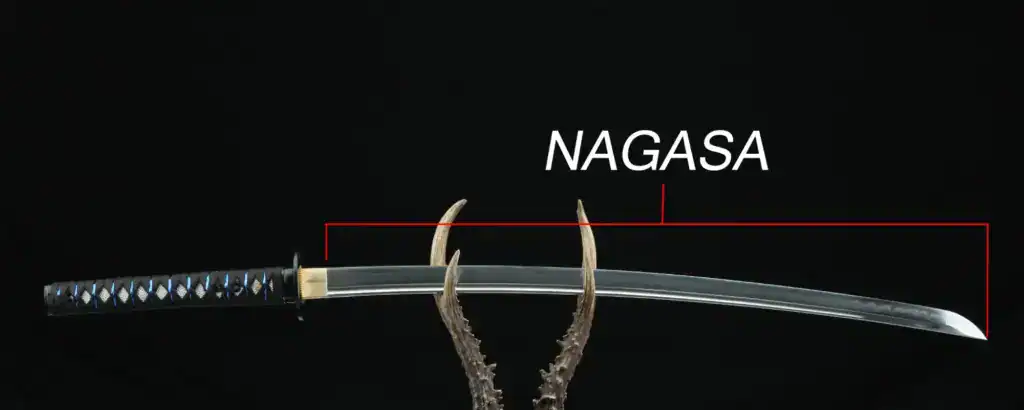
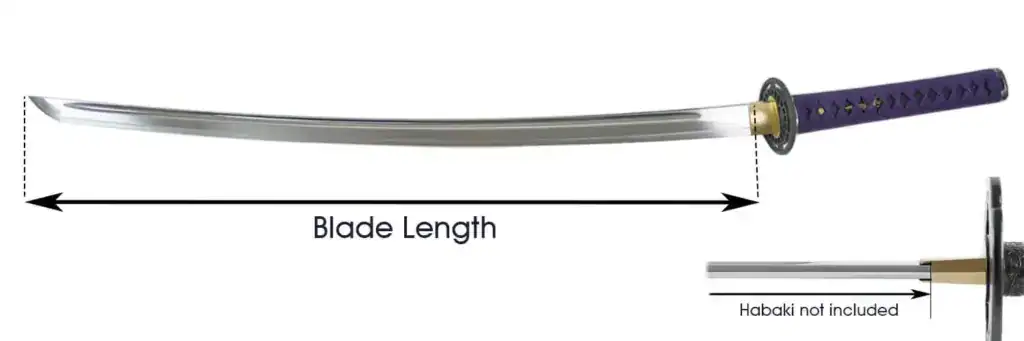
When sellers list katana length, they usually mean the blade length, called nagasa. This measures from the base of the blade to the tip. It does not include the handle.
The full sword length adds the handle, which is typically 10 to 12 inches. So a katana with a 27-inch blade will have an overall length around 37 to 39 inches.
What “Shaku” Means in Katana Sizing
Traditional katana sizing uses a Japanese unit called shaku. One shaku equals about 11.93 inches. Most standard katanas fall between 2.2 and 2.4 shaku.
You’ll see both inches and shaku listed online. Knowing the conversion helps you compare options from different sellers.
Height-to-Blade Length Table
| Height | Blade (in) | Shaku | Handling Feel |
| <5’2″ | 25–26 | 2.10–2.18 | Very easy control |
| 5’2″–5’5″ | 26–27 | 2.18–2.26 | Light, balanced |
| 5’6″–5’9″ | 27–28 | 2.26–2.35 | Standard, ideal for most |
| 5’10″–6’0″ | 28–29 | 2.35–2.43 | Balanced reach |
| 6’1″–6’3″ | 29 | 2.43 | Longer reach |
| >6’3″ | 29–30 | 2.43–2.51 | Advanced handling |
Use this table as a guide, then confirm with the floor clearance test.
Two Fast Body Tests to Confirm the Chart
A height chart gives you a starting range. But your arm length and torso can shift the ideal fit by an inch or two. These two tests help you confirm the right blade length before you buy.
The Ankle Clearance Test
This test works best if you have a katana or a straight stick cut to size.
- Stand up straight with your arm relaxed at your side
- Hold the katana vertically with your arm fully relaxed at your side, the tip pointing straight down
- Check how far the tip sits above the floor
The blade tip should clear the ground by 1 to 2 inches. This gap keeps the sword from dragging when you walk or draw. If the tip touches the floor, the blade is too long. If it hangs more than 3 inches off the ground, the blade may be too short for smooth draws.
The Wrist-to-Floor Method
No sword to test with? Use a tape measure instead.
- Stand naturally with your arm hanging straight down
- Measure from the crease of your wrist to the floor
- This distance usually matches your ideal blade length closely
Most people find this number falls within an inch or two of the chart recommendation. If your wrist-to-floor measurement is noticeably different from the chart, trust your body measurement.
Katana Weight vs Blade Length: Why Longer Feels Harder to Control
A longer blade doesn’t just weigh more. It also changes how the sword moves and stops.
Swing Weight and Balance Point
Two katanas can weigh the same but feel very different. The reason is balance point, which is where the weight sits along the blade.
A longer blade pushes the balance point further from your hands. This makes the sword feel heavier during swings, even if the actual weight is similar. It also takes more effort to stop or redirect a cut.
Why Length Changes Handling Feel
Every extra inch of blade adds leverage against your grip. During a swing, that leverage multiplies. A 29-inch blade requires more wrist and forearm strength than a 27-inch blade, even with the same steel and fittings.
For display or light practice, this difference might not matter. But for cutting drills or extended use, a blade that’s too long leads to fatigue faster. Your cuts lose precision when your arms get tired.

What Is the Average and Standard Katana Length?
Most katanas you’ll find online fall within a narrow range. Understanding why helps you decide if you need something different.
Why Most Katanas Are Between 27 and 29 Inches
This range fits the largest number of people. Someone between 5’6″ and 6’0″ will find a 27 to 28 inch blade comfortable for most uses. Sellers stock this range because it covers the majority of buyers.
A blade in this range also balances reach and control well. It’s long enough for effective cuts but short enough to handle without extra strength training.
When and Why Exceptions Exist
Shorter blades, around 24 to 26 inches, work better for smaller users or indoor practice where space is limited. They also suit quick-draw styles where speed matters more than reach.
Longer blades, 29 inches and up, appeal to taller users or those who want extra reach for outdoor cutting. But longer blades demand more control and tire you out faster.
What Happens If the Katana Is Too Long for You?
A blade that’s too long creates problems you’ll notice the first time you pick it up. These issues get worse with use.
Fatigue During Practice
Every extra inch adds leverage working against your grip. Your forearms and wrists have to work harder to control the swing and stop the cut. After 10 or 15 minutes of practice, your arms start to burn.
Fatigue leads to sloppy technique. When your muscles tire, your cuts drift off target. You end up reinforcing bad habits instead of building clean form.
Edge Alignment Problems
A proper cut requires the blade edge to travel straight through the target. When a katana is too long for your body, maintaining that alignment gets harder.
Your wrists start compensating for the extra length. The edge angle shifts slightly during the cut, which leads to ragged cuts or the blade catching partway through.
Safety Risks for Beginners
Longer blades are harder to control during draws and transitions. If you’re still learning, an oversized katana increases the chance of bumping walls, hitting objects, or losing grip during a swing.
This matters even more with a sharp blade. A katana you can’t fully control is a katana that can hurt you or damage your space.
What Happens If the Katana Is Too Short?
A blade that’s too short causes different problems. You’ll feel these most during cuts and formal stances.
Unnatural Posture
Many cutting techniques assume the blade reaches a certain distance from your body. When the blade is too short, you have to lean forward or extend your arms further to complete the motion.
This throws off your center of balance. Your stance feels forced instead of stable. Over time, this unnatural posture can strain your shoulders and lower back.
Reduced Cutting Leverage
A shorter blade has a shorter cutting path through the target. You get less natural follow-through, so you end up using more arm effort to complete the cut.
That said, a slightly short blade is easier to adapt to than a blade that’s too long. If you’re between sizes, going shorter is usually the safer choice for control and comfort.
Which Katana Length Is Best for Practice, Display, or Cutting?
Your intended use shapes which blade length makes sense. A katana meant for wall display has different requirements than one you plan to swing every week.
For Beginners
If you’re new to handling katanas, start with a blade on the shorter end of your recommended range. A 26 or 27 inch blade gives you room to learn without fighting the weight.
Shorter blades forgive small mistakes in form. You can focus on building proper technique before moving to a longer, more demanding sword.
For Tameshigiri Practice
Cutting practice requires a blade long enough to generate momentum but short enough to control through the target. Most practitioners find 27 to 28 inches works well for regular tatami mat cutting.
If you plan to cut thicker targets or bundled mats, you may want the upper end of your range. The extra reach can help with follow-through, but clean cuts depend more on control and edge alignment than blade length alone.
For Display Purposes
Display katanas don’t need to match your body as precisely. You can choose based on how the sword looks in your space. Longer blades around 28 to 30 inches often look more striking on a stand or wall mount.
Still, if you ever plan to handle the katana, even occasionally, sizing it to your body makes sense. For a deeper look at choosing between functional and display swords, see our guide on how to choose a katana for practice or display.
Handle Length Matters Too: How to Choose Tsuka Length
Blade length gets most of the attention, but handle length affects how the katana feels in your grip. A handle that’s too short cramps your hands. One that’s too long creates wasted space and changes how the sword balances in your hands.
How Your Hands Should Sit on the Handle
A proper two-handed grip leaves about one fist width between your hands. Your lead hand sits just below the guard. Your rear hand rests near the end of the handle with a small gap before the pommel.
Most katana handles run 10 to 11 inches. This fits the majority of hand sizes comfortably. If you have larger hands, look for handles closer to 11 or 12 inches.
Why Overly Long Handles Cause Problems
A handle that’s too long for your grip pushes your rear hand past its natural position. This forces your wrists into awkward angles during cuts and transitions.
Extra handle length shifts how the sword balances in your hands, often making the blade feel more tip-heavy and harder to control. Match your handle to your hand size, not to the blade length alone.
Does Katana Length Change Which Steel You Should Choose?
Blade length doesn’t directly decide the steel you need, but longer blades used for cutting place more demand on the steel during impacts. The steel you choose should match both your intended use and your blade length.
Short Blades and Beginner-Friendly Steels
Shorter blades under 27 inches are easier on entry-level steels. 1045 carbon steel and 1060 carbon steel handle light practice and occasional cutting without issues at these lengths.
These steels are more forgiving if your technique is still developing. They’re also easier to maintain and less likely to chip from minor mistakes.
Longer Blades and Tougher Steels
Once you move past 28 inches, the blade experiences more force during swings and impacts. Higher-carbon steels like 1095 carbon steel and T10 carbon steel offer better edge retention for regular cutting.
For heavy use or outdoor practice, spring steels like 5160 spring steel and 9260 spring steel add flexibility that resists breakage. If you want visual appeal along with performance, Damascus steel combines layered patterns with solid durability.
Katana Measurements: How to Measure Blade Length Correctly
Getting accurate measurements prevents buying mistakes. Before you order, make sure you understand what numbers you’re looking at and how they were taken.
Measuring Blade Only vs Full Sword
Blade length, or nagasa, measures from the notch at the base of the cutting edge to the tip of the blade. This does not include the tang hidden inside the handle.
Full sword length includes the blade plus the entire handle. A katana with a 27-inch blade and an 11-inch handle has a full length around 38 inches. Know which measurement you need before comparing options.
Common Measuring Mistakes Online
Some buyers measure from the very end of the handle to the tip and assume that’s the blade length. This adds 10 to 12 extra inches and throws off the entire sizing process.
Others forget to account for the curvature. Blade length follows the curve from base to tip, not a straight line. Measuring straight across gives you a longer, inaccurate number.
Blade Length vs Overall Length: A Common Source of Confusion
Product pages don’t always make it clear which measurement they’re showing. This causes confusion when comparing katanas from different sellers.
Why Many People Measure Incorrectly
Most people grab a tape measure and run it along the visible sword. But sellers measure in different ways. Some list blade length. Others list overall length. A few list both without labeling which is which.
If you assume a 38-inch listing means blade length, you’ll end up with a sword far too long for your body. Always check what the number actually refers to.
What Sellers Usually List as “Length”
Most katana sellers list blade length as the primary measurement. But some list overall length in the main specs and bury blade length in the details.
Before you buy, look for terms like nagasa, blade length, or cutting edge length. If the listing only says “length” without clarification, check the product description or contact the seller to confirm.
Final Checklist Before You Buy
Use this quick checklist to make sure you’ve covered the key decisions. Going through each step takes a few minutes but saves you from ordering the wrong sword.
Confirm Your Height Range
Check the height-to-blade chart and note your recommended range. This gives you a starting point for filtering options.
Confirm With One Body Test
Use the floor clearance test or the wrist-to-floor measurement to verify the chart recommendation fits your body. If the numbers don’t match, trust your body measurement.
Confirm Intended Use
Decide whether you’re buying for practice, cutting, or display. Your intended use affects both blade length and steel choice. Beginners and light practice favor shorter blades. Cutting practice often works best in the 27 to 28 inch range.
Confirm Steel Type
Match your steel to your blade length and use. Shorter blades and light use pair well with 1045 or 1060 steel. Longer blades and regular cutting benefit from 1095, T10, or spring steels like 5160 and 9260.
Now that you know your ideal blade length and steel type, you can go straight to katanas that match your setup in our katana collection.


