



How to Wear a Katana?

If you are trying to figure out how to wear a katana, you are likely looking at a sword and wondering exactly where it sits on your body. The standard answer is left side, edge facing up, tucked through an obi or belt with the handle angled slightly forward. Most carry situations follow that baseline.
Some readers searching how to “hold” a katana on the waist mean carry position, not grip or draw. This guide covers carry only: where the sheathed sword sits, how to support it, and what to fix when it shifts. Back carry, belt setups, jeans, and two-sword carry are all covered — whether you have a real sword, a display piece, or a cosplay prop.
| Your Setup | Best Carry Method | Main Consideration |
| Functional katana | Obi or sturdy leather belt, left side, edge up | Saya fit and weight distribution matter most |
| Cosplay prop or costume sword | Belt, jeans, or back rig depending on costume | Secure it before moving, stability over looks |
| Display or wall piece | Obi or belt for short-term photo wear | Usually lighter, but saya fit still varies |
Where Should a Katana Sit?
Before getting into the specific setups, it helps to know the parts in play. The saya is the scabbard the blade slides into. The sageo is the cord attached to the saya, often used to help tie or anchor the sword to an obi. The tsuba is the hand guard that sits between blade and handle. If you want a full breakdown, the parts of a katana guide covers each component in detail.
For most carry situations — whether you call it a katana or a samurai sword — the standard reference point is the waist. Everything else builds from there.
How to Position a Katana: Left Side, Edge Up, Slightly Forward
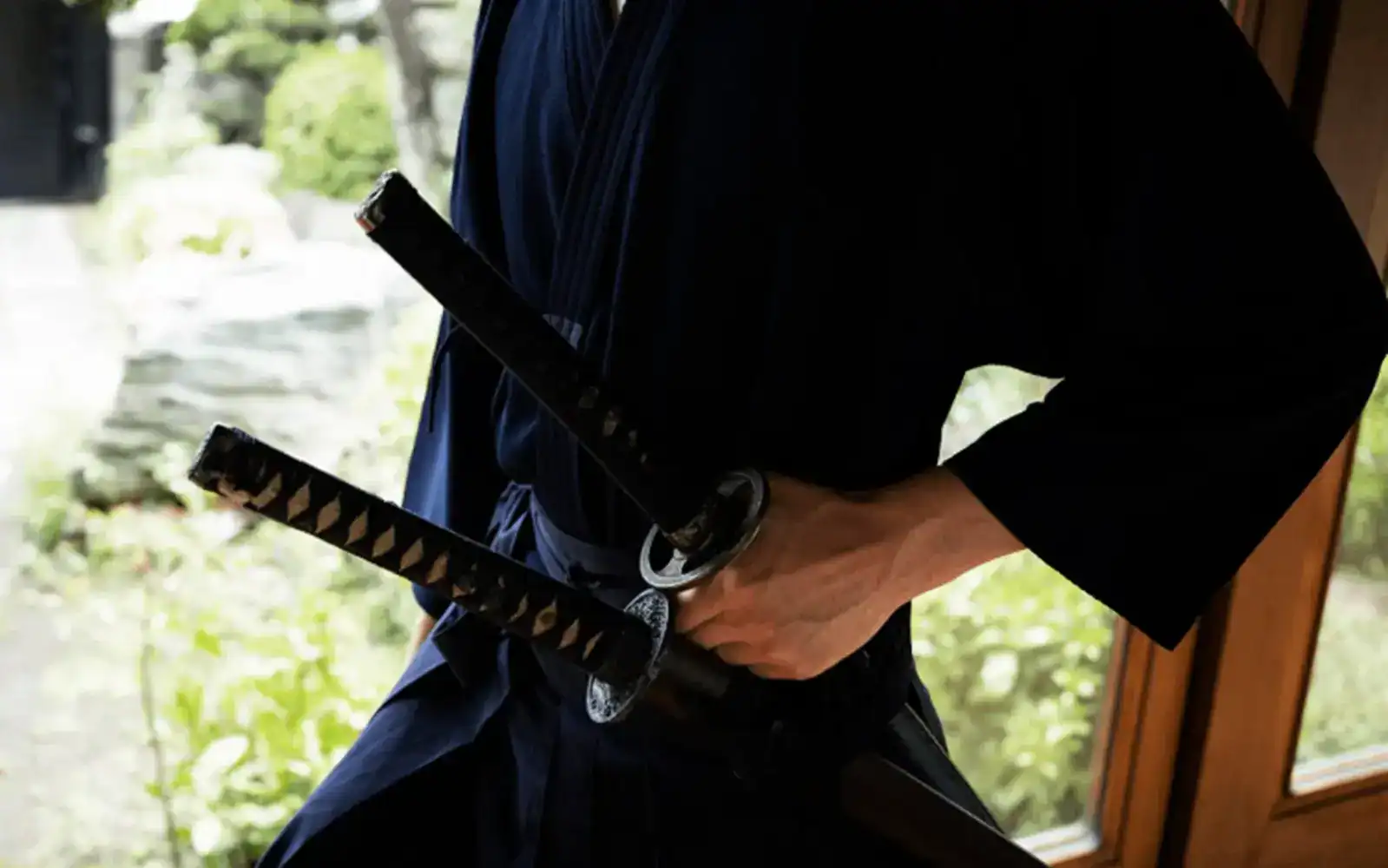
Left-side, edge-up carry is traditionally the go-to katana position, and the one most people are actually searching for. The saya sits against the left hip, the cutting edge faces upward, and the handle angles slightly forward so the grip stays accessible without awkward reaching.
When the sword is positioned correctly, it moves with the body rather than bumping and shifting against it. Even when people search for back carry, shoulder rigs, or other setups, left-side waist carry remains the baseline that most other methods are measured against. If you are new to wearing a katana, this is where to start.
Why a Katana Is Worn Differently from a Tachi
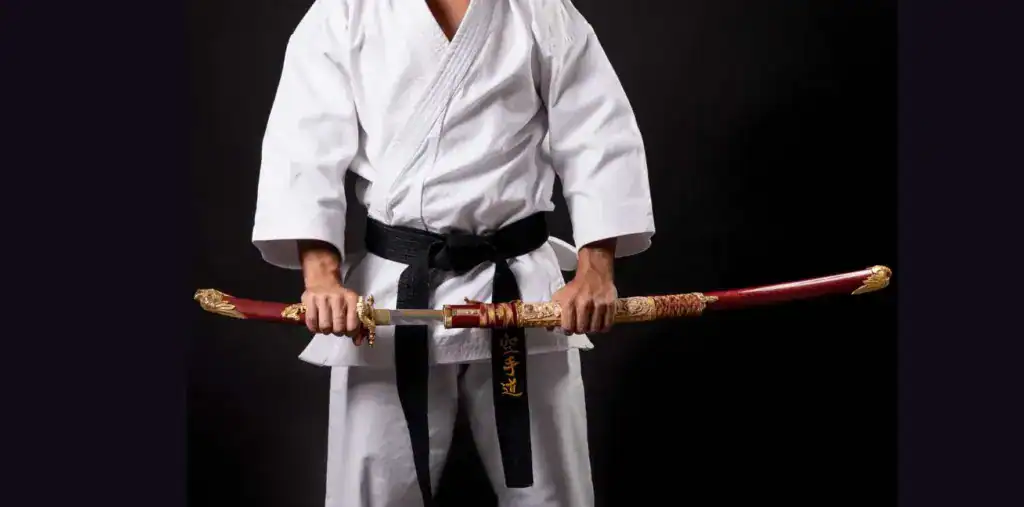
A tachi is an older style of Japanese sword that was suspended from a belt with the edge facing down. A katana is tucked through a belt or obi with the edge facing up. These two methods are traditionally worn differently and should not be treated as the same carry style — mixing them up is one of the more common mistakes for people new to Japanese sword carry.
The difference comes down to draw mechanics and how the blade is supported against the body. If you are curious about how these swords differ beyond carry style, the tachi vs katana breakdown explains the structural differences clearly.
How to Wear a Katana with an Obi
An obi gives the saya more surface contact than a narrow modern belt. That extra contact means the saya stays put more reliably and moves less while walking or standing. For anyone looking for the most stable traditional setup, an obi is the right starting point. A sword worn in a proper obi will typically stay in place without constant repositioning, even during normal movement.
How to Tuck a Katana into an Obi
- Slide the saya between the folds of the obi, or tuck it firmly under the top layer.
- Position the saya at the left hip with the edge facing upward.
- Angle the handle slightly toward the front of the body.
- Check that the sword feels settled and stable, not loose or pivoting.
The goal is a secure, stable fit. The sword should not sag toward the ground, rotate so the edge points sideways, or slide forward when you take a step. If any of those happen, the obi wrap is either too loose or the saya is not inserted deeply enough. Small adjustments to depth and angle usually fix it without needing to re-wrap the whole obi.
How to Wear a Katana with a Belt or Jeans
Modern belts and jeans can both work for carrying a katana, but they typically provide less support than a real obi. The saya has less surface area to grip against, and the sword’s weight is harder to distribute evenly across a narrow waistband. That does not make them unusable, just less forgiving when it comes to keeping the sword in a consistent position.
How to Wear a Katana on Your Belt
A sturdy leather or reinforced belt can support a sheathed katana when the sword is positioned carefully and checked for movement before wearing. The saya can be tucked under the belt or run through a dedicated belt ring or loop designed for the purpose. After you position the sword, walk a few steps and check: the sword should stay flat against the hip and not rotate or slide forward.
Narrower belts need closer attention because the saya has less surface contact and is more likely to shift when the belt is not pulled tight enough. This matters especially with functional katanas that carry real blade weight, since a heavier sword amplifies any instability in the setup.
Can You Wear a Katana with Jeans?
Jeans can work for casual styling or light-wear situations, and plenty of people use them for events, photos, or costume setups. They are less ideal for consistent stability because the waistband is softer than leather and provides less support across the saya. Expect the sword to shift more often, and consider using the sageo cord to help anchor the position if the sword keeps drifting.
Jeans carry is best understood as a modern adaptation rather than the standard method. Walking a convention floor or posing for photos, jeans can hold a prop katana well enough for a few hours. For longer wear or a real sword, expect to make more adjustments than you would with an obi.
How to Wear a Katana Without a Belt
Some setups skip the belt entirely in favor of a harness, a costume rig, or a clip system designed for display or transport styling. These can work well in specific contexts such as photoshoots, conventions, or cosplay where a traditional belt is not part of the costume or where hands-free carry is the priority.
The trade-off is control. A belt or obi holds the saya close to the body and distributes the sword’s weight along the waist. Harness and rig setups vary widely in quality, and many consumer-grade versions shift more than expected when the wearer bends, turns, or sits. If you go beltless, the most important requirement is that the sword is still secured, not simply hanging from a clip with no lateral support.
Can You Wear a Katana on Your Back?
Back carry is one of the most searched questions when people start figuring out how to carry a katana. Films, games, and anime regularly show samurai swords worn across the back, so many people assume that is the normal method. The practical reality is different enough that it is worth addressing directly before you invest in a back rig.
Why Katana Back Carry Looks Cool but Works Poorly
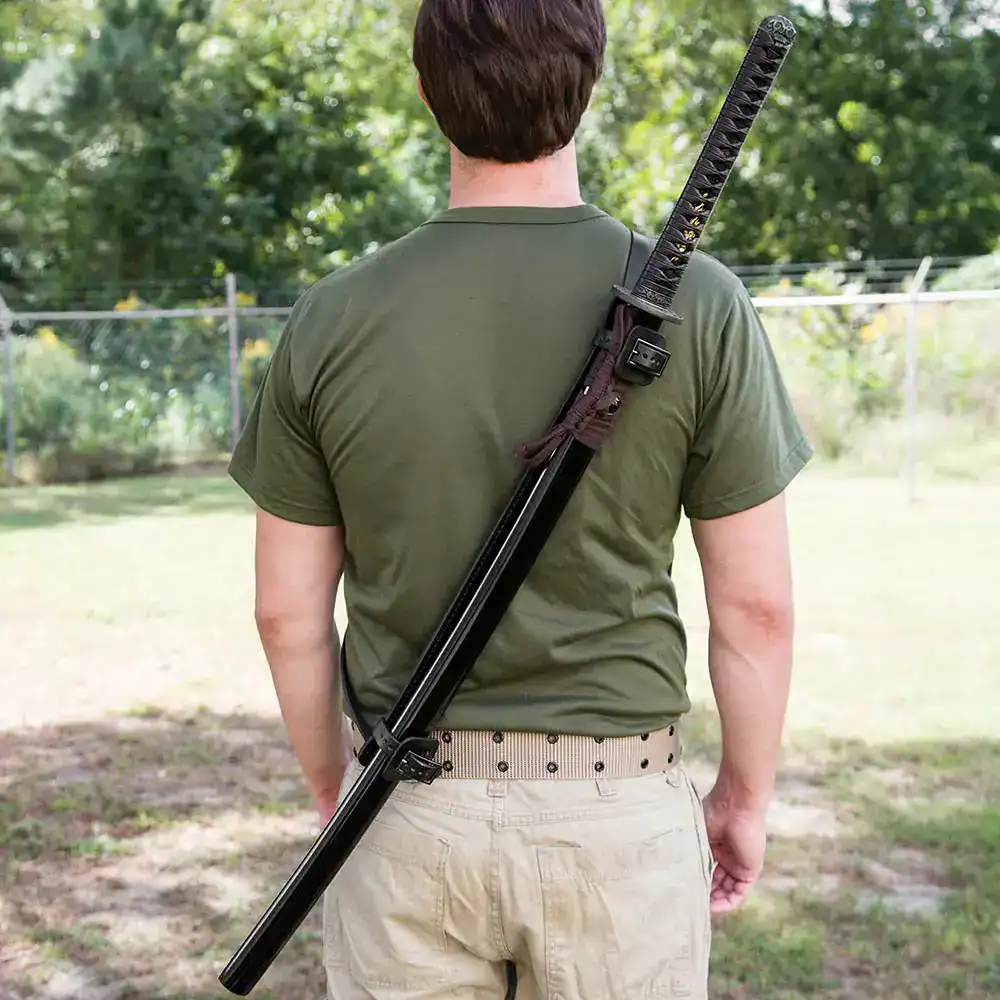
A full-size katana is awkward to draw from behind the shoulder. The angle of the blade combined with the reach required makes a clean draw difficult for most people, and re-sheathing without being able to see the saya opening is genuinely hard to do safely.
Back carry also makes it harder to track where the blade is. The scabbard extends behind the body where you cannot see it, making it easy to catch on doorframes, bump into people, or lose track of where the tip is pointing.
This is not a dramatic caution, just the practical outcome of carrying a sword in a position that was not designed for active use. Many wearers find back rigs uncomfortable after extended wear, especially when moving through crowded spaces like a convention hall or event venue.
When a Katana Back Rig Makes Sense for Cosplay or Transport
Back rigs make reasonable sense for costume wear, convention carry, or transport where draw mechanics are irrelevant and the sword will stay sheathed the entire time. In those situations, getting the sword off the hip and out of the way is a reasonable priority, and a back mount handles that job well enough.
If you choose a back rig, retention still matters. A sword that shifts, swings freely, or can slide out of the mount under normal movement is a problem regardless of context. The rig should hold the sword firmly even when sitting, bending, or turning, not just when standing still for a photo.
A quick reference for when katana back carry makes sense and when it does not:
- Works for: cosplay and convention wear, photos, transport where the sword stays sheathed the whole time
- Avoid when: you need to draw or re-sheath cleanly, you are moving through crowds or tight spaces, or you plan to wear the sword for more than a short period
How to Wear a Katana and Wakizashi Together
The katana and wakizashi worn together at the waist are called a daisho. Historically associated with samurai, the two swords are worn with specific spacing and positioning so they stay stable and do not interfere with each other while walking or moving.

How the Katana and Wakizashi Sit at the Waist
Both swords sit on the left side, tucked through the obi at slightly different depths and angles to keep them from clashing against each other. The katana takes the primary carry position, and the wakizashi is typically positioned slightly forward or angled differently to maintain clearance between the two scabbards while walking.
The practical focus when carrying both is spacing and comfort. If the two saya sit too close together, they knock against each other and shift the carry position for both swords. For more on how these two swords compare as individual pieces, the wakizashi vs katana guide covers the key differences.
When a Wakizashi Is Easier to Wear Than a Full Katana
A shorter sword is simply easier to wear, easier to manage while moving, and easier to fit into tighter costume or practice setups. For anyone who finds a full-length katana awkward at the waist, a wakizashi offers a similar but easier-to-manage carry experience with less total length to work with. It is a practical choice worth considering if the carry comfort of a full katana has been a consistent issue.
Common Mistakes When Wearing a Katana
Poor carry setup creates both comfort problems and real safety problems, especially with a live blade. Most issues come down to three things:
- Wearing the sword too low, too loose, or edge-down
- Mixing up carry position with grip or draw technique
- Skipping local carry rules and basic blade care
Each of these is easy to correct once you know what to look for.
Wearing a Katana Too Low, Too Loose, or Edge-Down
A sword worn too low on the hip sags and pulls awkwardly against the body. One worn too loosely in the obi or belt will rotate and change position with every movement, which is both uncomfortable and unpredictable. A simple self-check: if the sword sags, twists, or bumps against your leg with every step, the setup needs adjustment before you continue wearing it.
Edge-down carry is the wrong reference for a standard katana. That position belongs to the tachi carry style and does not apply to katana wear. If you find yourself carrying edge-down, you are working from a different sword tradition’s logic.
Mixing Up Katana Carry, Grip, and Draw Technique
Wearing a sheathed katana at the waist and knowing how to handle it once drawn are two different skills. This guide covers only carry: how the sword sits on the body and how to keep it stable. If you need instruction on hand placement or drawing cleanly from the scabbard, how to hold a katana covers that side of things separately.
Ignoring Katana Carry Rules and Basic Maintenance
Public carry rules for bladed weapons vary significantly by state, city, event type, and venue policy. Rather than summarize rules that depend entirely on where you are, start with the are katanas legal guide for a general overview, and always confirm local rules before wearing a katana anywhere outside private property.
After wearing a katana, wipe down the blade and inspect the saya for wear. Sweat, humidity, and friction all affect the blade finish and the inside of the scabbard over time. The basics of ongoing maintenance are covered in how to care for a katana, and a few minutes of attention after each wear makes a real difference in how the sword holds up.
FAQ About Wearing a Katana
Do You Wear a Katana Edge Up or Edge Down?
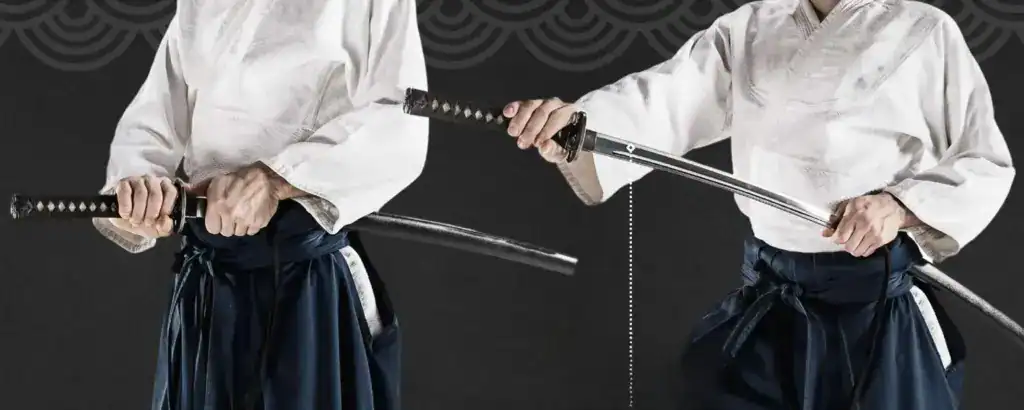
A standard katana is worn edge up. The cutting edge faces upward and the handle is accessible from the left side. Edge-down carry is associated with the tachi style and represents a different tradition entirely. If you are wearing a katana, edge up is the correct reference.
Can You Wear a Katana on Your Back?
Back carry works for cosplay, costume styling, and transport situations where the sword will stay sheathed and draw mechanics do not matter. It is not the practical carry method for a functional full-size katana. Drawing cleanly from behind the shoulder is difficult, and re-sheathing safely is harder still. The back-carry section above covers the specific limitations in more detail.
How Do You Wear a Katana with a Belt or Jeans?
A sturdy belt can support a katana when the sword is positioned carefully and checked for movement before wearing. Jeans work in some cases but are less stable than an obi or leather belt. Both options benefit from extra attention to how the saya sits, since it has less support surface than a traditional obi wrap.
Can You Wear a Katana Without an Obi?
Yes, alternative setups exist. Belts, harnesses, and costume rigs can all hold a sword in position. They trade away some of the stability and body contact that a traditional obi provides, so expect more adjustment and less consistent retention. For extended wear or real-weight swords, an obi is still the more reliable option.
Can You Wear a Katana in Public?
Katana carry laws vary widely by state, city, and venue. Check local rules and any venue policies directly before wearing a sword anywhere outside your own property. See where katanas are legal for a broader overview by location.
Can Any Katana Be Worn Comfortably?
Not every sword is equally comfortable to wear, even with a solid obi or belt setup. A few variables determine how a specific katana will feel once it is on your hip.
- Overall length: A full-size katana typically measures 39 to 42 inches overall. Longer swords need more clearance and can catch when turning in tight spaces. Shorter swords are generally easier to manage at the waist.
- Weight: Most functional katanas weigh roughly 2 to 3 lbs. That does not sound like much, but a heavier sword amplifies any instability in the belt or obi setup and becomes noticeable after extended wear.
- Saya fit: If the blade shifts or rattles inside the scabbard, the sword will be uncomfortable to carry and can damage both the blade and the lacquer over time. A properly fitted saya should hold the blade firmly without being forced.
- Tsuka length: A longer handle creates more leverage, which can cause the sword to pivot outward if the obi or belt is not tight enough. Getting a tsuka length that matches your build makes a real difference in how stable the sword feels while moving.
Display swords and cosplay props vary more in these areas than functional katanas do, since they are not built to the same tolerances. If a sword shifts, sags, or feels unbalanced within a few minutes, the issue is usually saya fit or weight distribution rather than the carry method itself.
How to Choose a Katana That Feels Comfortable to Wear
Comfort while carrying a katana depends on more than just the blade. How well the saya fits the blade, the overall weight and balance of the sword, and the handle length all affect how the sword feels after an extended period of wear. A poor saya fit means the blade shifts inside the scabbard. A sword that is heavier than expected for your build strains the carry setup faster.
Think about what the sword is actually for before buying. Display pieces do not need to pass the movement test that a practice or carry sword does. Cosplay swords prioritize appearance over retention. A sword intended for serious wear or regular use needs to be built accordingly, with a properly fitted saya and the weight distribution to match.
For a deeper look at what to weigh before buying, how to choose a katana for practice or display covers the full decision. If you are ready to browse options directly, browse katana for sale to find a starting point.


