



How to Hold a Katana?

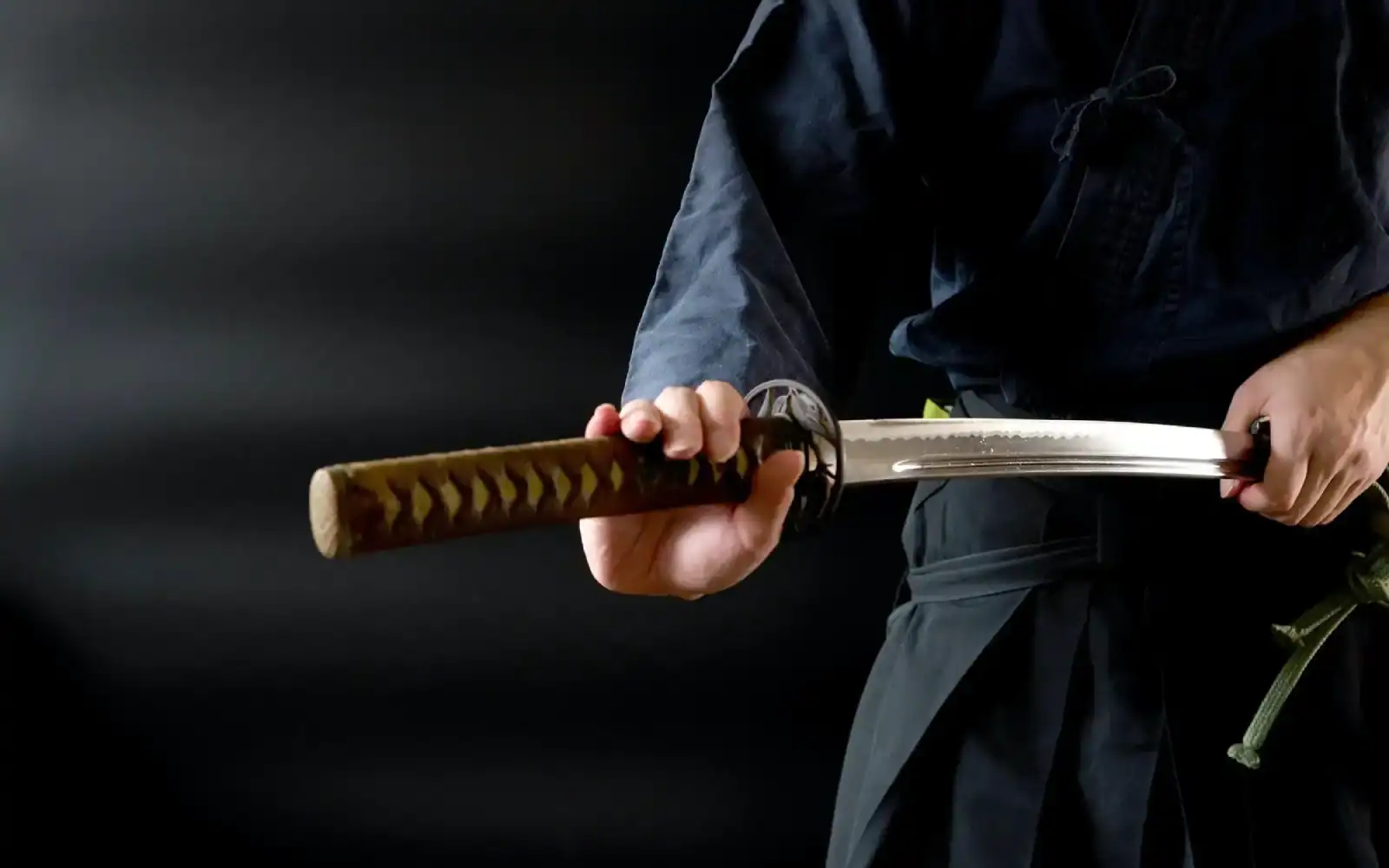
How to hold a katana comes down to two hands, specific finger pressure, and straight wrists. Place your dominant hand one inch below the tsuba (guard), your lower hand near the kashira (pommel), and let the pinky and ring fingers do most of the gripping while keeping your wrists aligned with the forearms.
If you just picked up your first katana and the handle feels awkward no matter how you position your hands, the spacing and pressure adjustments here will fix that. Whether you are starting a bokken (wooden training sword) class in iaido (sword drawing), handling a live blade at home, or just want your grip to look less like something out of an anime fight scene, the same mechanics apply.
Before You Hold a Katana: How to Draw It Safely
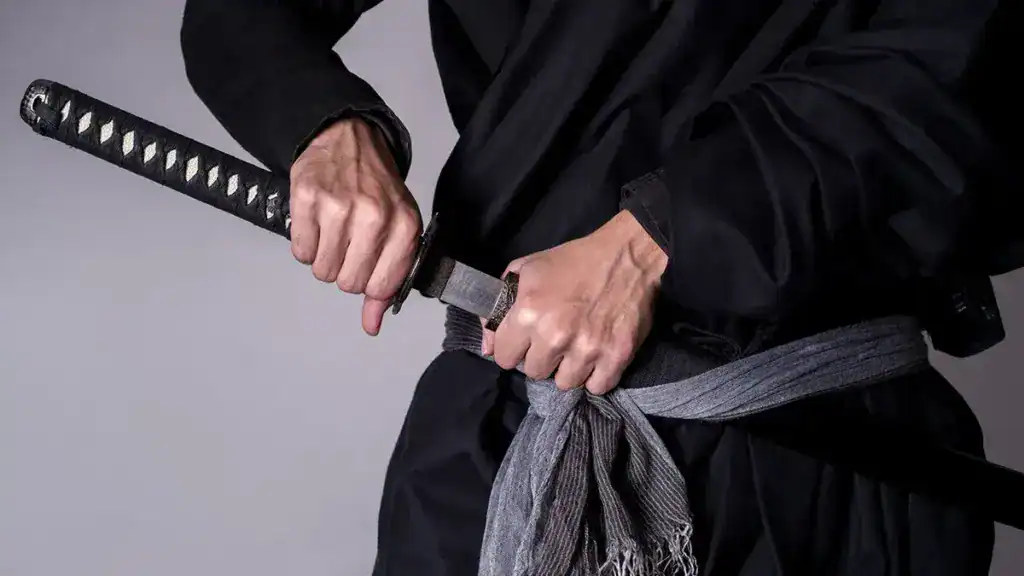
The saya (scabbard) is worn edge-up through the obi (belt). To draw, push your left thumb against the tsuba to break the initial friction, then pull the blade outward in a smooth arc with the right hand while the left hand draws the saya back. Yanking the handle without releasing friction first risks catching the edge against the scabbard mouth.
If terms like tsuka (handle) are unfamiliar, a full breakdown of parts of a katana covers every component of the sword. The drawing technique itself (nukitsuke) has enough depth for its own guide; what matters here is getting the blade out safely so you can focus on grip.
How to Hold a Katana with Two Hands
The correct two-handed katana grip builds on a concept called chakin-shibori (wringing a wet cloth). Your hands apply rotational pressure inward without locking the wrists, creating a firm hold that still allows fluid movement.
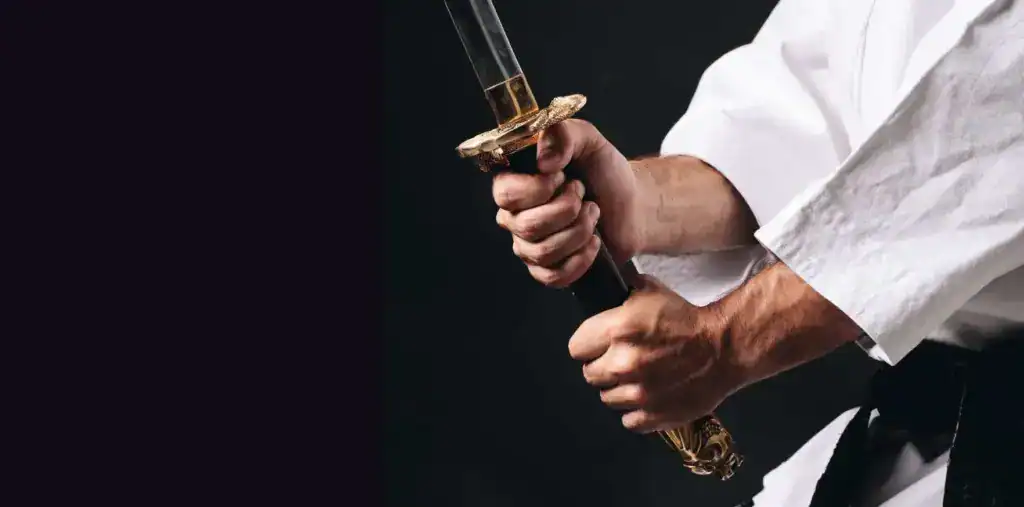
A key detail in how to hold a katana correctly: the tsuka rests diagonally across both palms rather than flat across the fingers. This diagonal contact aligns your bone structure (wrist, forearm, elbow) with the cutting edge, so force transfers efficiently from your body into the blade.
- Top hand: About one inch below the tsuba; dominant hand guides blade angle and direction
- Bottom hand: Near the kashira; non-dominant hand drives power and leverage for all cuts
- Finger pressure: Pinky and ring fingers grip tight; index and thumb stay light
- Wrist angle: Straight with forearm; avoid bending inward or downward
- Edge orientation: The cutting edge faces away from you in a standard forward grip; the curve of the blade arcs toward the target
Where Does Your Top Hand Go on a Katana?
A common starting guideline is placing your dominant hand about one inch (2.5 cm) below the tsuba. This gap helps reduce contact pressure near the guard and gives your wrist room to move freely when the blade makes contact with a target.
Knuckles face outward on the side of the handle, with the thumb resting lightly along the opposite side. Wrapping the thumb forcefully over the top of the handle is a common error that locks wrist rotation.
This hand steers the blade. It controls angle and trajectory during swings but does not drive the cutting force. Thinking of it as a rudder rather than an engine helps keep the grip light where it needs to be.
Where Does Your Bottom Hand Go on the Handle?
Your foundation hand grips the lowest section of the tsuka, with the kashira resting in the fleshy part of your palm near the base of the thumb.
In most two-handed cutting styles, this lower hand provides much of the leverage and acceleration. In a downward strike, the bottom hand pulls while the top hand pushes, creating a scissor-like motion that drives the blade through the target.
Leaving unused handle length below your bottom palm (sometimes called “dead wood”) shortens your effective lever arm. The kashira should sit flush against the edge of your palm, not sticking out past it, so you use the full handle length for maximum reach and force.
Katana Grip Spacing: How Far Apart Should Your Hands Be?
A gap of roughly three to four inches (7.6 to 10.2 cm) between your hands prevents the restricted, hacking motion that comes from gripping the handle like a baseball bat. This is a general guideline; exact spacing varies with handle length and hand size.
This spacing creates a stable lever system. The top hand pivots while the bottom hand drives, and the gap between them allows the push-pull mechanic that produces clean, controlled cuts rather than brute-force swings.
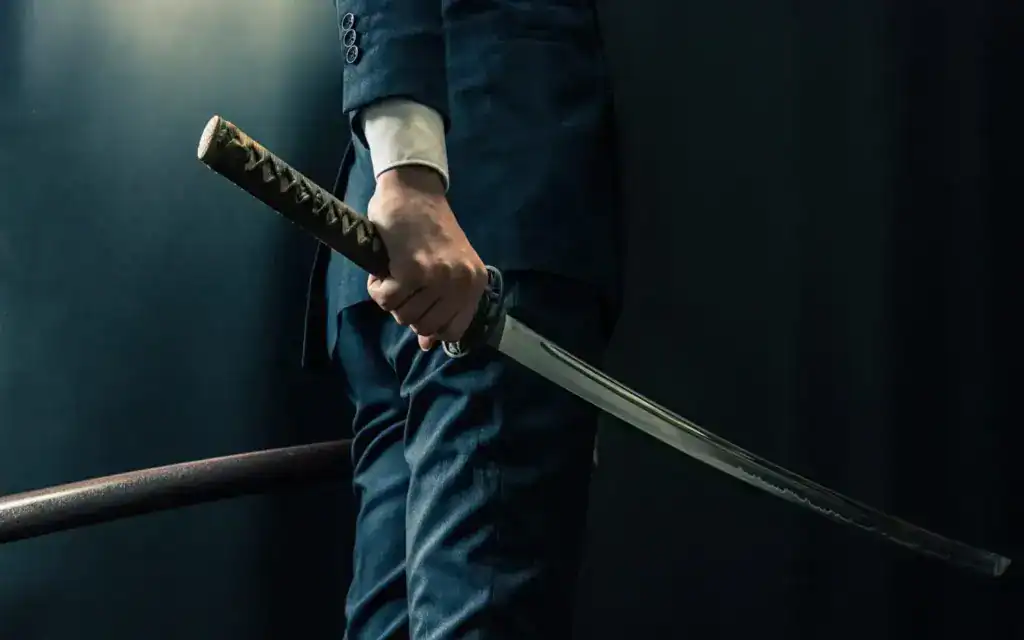
Handle length dictates natural hand spacing. A tsuka that is too short forces the hands together and restricts leverage. One that is too long leaves excess material below the bottom hand, creating dead wood. Choosing the right katana length for your height prevents both problems before they start.
If your hands are on the smaller side and the standard spacing feels like a stretch, closing the gap by half an inch is a reasonable adjustment. The priority is maintaining a comfortable lever action rather than hitting an exact measurement.
Katana Grip Pressure: Which Fingers Do the Work?
How tightly you grip a katana matters less than which fingers apply the pressure. The pinky and ring fingers of both hands do most of the work, anchoring the sword to your body and keeping the handle stable during swings and direction changes.
Index fingers and thumbs stay light, almost floating on the handle. Their role is spatial awareness: sensing blade angle and alignment rather than adding grip strength.
Squeezing with all five fingers simultaneously (the “death grip”) locks the wrists and tenses the shoulders. The result is slower blade movement and faster fatigue. In a typical training session of 200 suburi (repetitive cuts), a practitioner who over-grips will feel shoulder tension well before the halfway mark compared to someone using correct finger distribution.
Katana Technique: How Stance Affects Your Grip Control
Grip does not work in isolation. Your stance determines how stable the grip stays during movement. Misaligned footing shifts your center of gravity, which forces your hands to compensate and creates wrist tension that a correct grip alone cannot fix.
Feet shoulder-width apart with knees slightly bent gives you a low, balanced base. This position keeps your weight centered so your hands can focus on steering and pressure rather than compensating for balance.
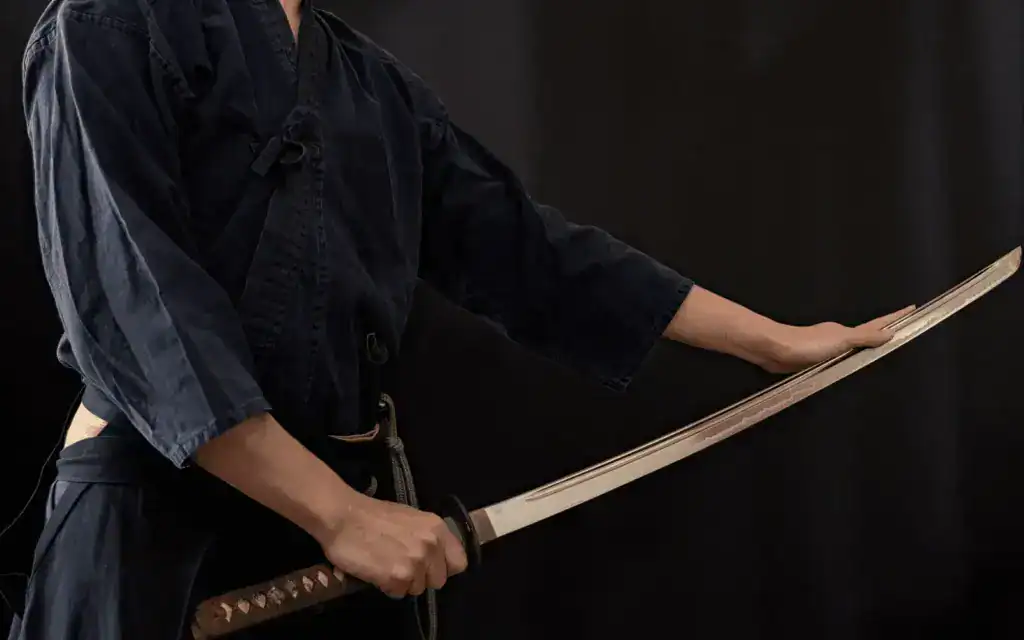
Two guard positions that affect how you hold a katana in practice:
- Chudan (middle guard): Blade pointed forward at throat height. Wrist pressure is evenly distributed between both hands. Most beginners train primarily in chudan because it covers more situations with fewer openings.
- Jodan (high guard): Blade raised overhead. The top hand bears more of the blade’s weight, so grip fatigue shows up faster in this position. Used when you want maximum power on a single downward cut.
If you are practicing at home, choose a room with at least two arm lengths of clearance in every direction. Overhead swings in jodan require ceiling height above your full reach. A mirror on one wall helps you check wrist alignment without a training partner.
Skin oils and moisture transfer to high-carbon steel during practice and can cause rust if left unaddressed. Wiping the blade with a soft cloth after each session prevents surface damage. For a full maintenance routine, how to care for a katana covers cleaning, oiling, and long-term storage.
Katana Grip Mistakes Beginners Make and How to Fix Them
The most common mistake when learning how to hold a katana is the baseball bat grip, where both hands sit directly next to each other with no spacing. This locks the wrists into a fixed axis, limits mobility, and forces the wielder to hack rather than slice.
A related problem is the hammer grip: squeezing all fingers equally, like gripping a hammer. The fix is shifting pressure toward the pinky and ring fingers while keeping full palm contact with the ito (the textured diamond wrapping on the handle). The ito provides friction designed for this distributed grip.
Practicing correct grip on a decorative display sword introduces a separate problem. Display pieces are built for appearance, and their balance points typically sit in the wrong place for proper technique. Serious practice is generally easier on a purpose-built training or functional sword than on a display-first piece.
For a blade with the weight distribution and edge geometry needed to build real muscle memory, a high carbon steel katana is a common practice-grade starting point. Entry-level functional models are often priced in the low-to-mid hundreds, depending on steel type, fittings, and seller.
Can You Hold a Katana One-Handed — or Left-Handed?
The standard way to hold a katana uses two hands. Single-hand use is rare and limited to specific scenarios. Left-handed practitioners can adapt the correct katana grip without losing effectiveness, though the approach depends on whether you train in a group or solo.
When Would You Actually Hold a Katana with One Hand?
One-handed grips appear in advanced nukitsuke (quick-draw) strikes and certain theatrical demonstrations. Outside these specific contexts, single-hand use is uncommon in standard training.
Using one hand increases wrist strain and reduces both stability and power compared to the two-handed hold. Many functional katanas weigh roughly 900 to 1,300 grams (2 to 2.9 lbs), with exact weight varying by blade length and fittings. Controlling that weight through a full cutting arc with one hand demands significant forearm strength.
Training with a lighter bokken builds one-handed muscle memory without the risk of dropping a live blade. Progressing from a lightweight model to heavier training tools over several weeks develops the wrist stability that one-handed katana grip technique requires.
How Do Left-Handed People Hold a Katana?
Most traditional dojo environments standardize a right-hand-dominant grip for all students. The reason is practical: uniform draw direction prevents collisions and accidental contact when multiple people train side by side in close quarters.
Left-handed practitioners who follow the standard right-dominant setup often find an unexpected advantage. Their stronger left hand sits in the foundation (bottom) position, which is where the driving force for cuts originates. Once wrist flexibility develops, this setup can produce noticeably strong cutting force.
Solo practitioners who want a fully mirrored grip (left hand on top, right on bottom) need a handle wrapped in the opposite direction for comfortable contact. A custom katana build can accommodate reversed wrapping and a left-side draw, though this setup is not compatible with most group training environments.
Frequently Asked Questions About Holding a Katana
How tight should my grip be on a katana?
Firm enough that the sword will not slip, but loose enough that your wrists can pivot freely. A common comparison is holding a small bird: secure without crushing.
In practice, the pinky and ring fingers maintain constant pressure. The remaining fingers stay relaxed until the moment of impact, when the entire hand tightens briefly to stabilize the blade.
Can you hold a katana with one hand?
One-handed holding is possible but limited to specific techniques like quick-draw strikes or demonstrations. It provides less stability and control than the standard two-handed position. For regular training, two hands give better leverage, power, and blade alignment.
Does your katana grip change when cutting?
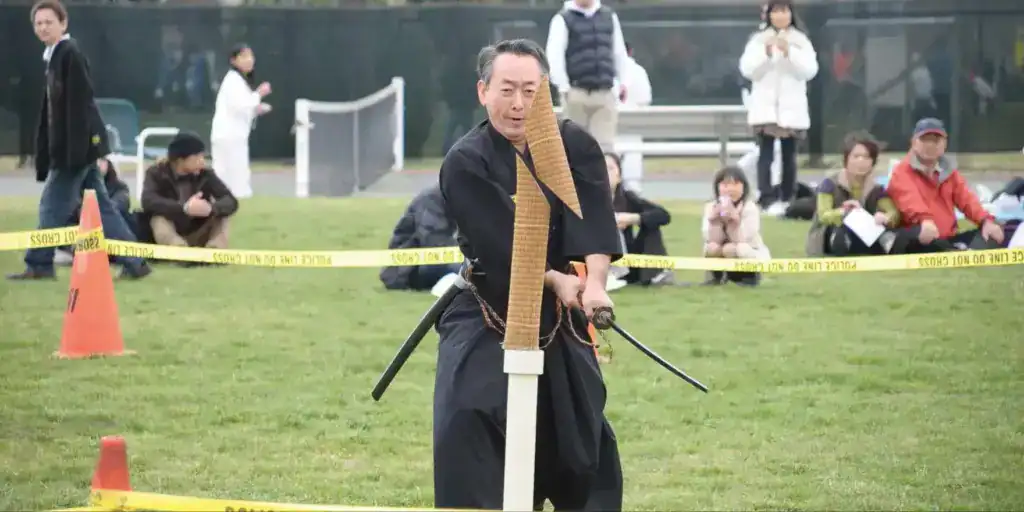
Hand placement stays the same. What changes is grip pressure: both hands tighten at the moment of impact to prevent the blade from rotating or bouncing off the target. This momentary squeeze stabilizes the edge through contact, then releases as you recover for the next movement.
For tameshigiri (test cutting on rolled tatami mats), the grip tightens slightly earlier in the swing because the target provides more resistance than open-air practice. A practitioner cutting a single rolled mat for the first time will typically over-grip the entire swing; the goal is tightening only in the final quarter of the arc.
Does grip technique change between a bokken, iaito, and a live blade?
The core hand placement and finger pressure stay the same across all three. What changes is weight and feedback. A bokken is lighter and has no edge, so it is forgiving of loose grip and lets you focus on building muscle memory for hand position.
An iaito (unsharpened metal practice sword) adds realistic weight without cutting risk, making it the standard tool for learning how to hold a katana in formal training. A live blade (shinken) demands the same grip with more attention to edge awareness, since the cutting edge is functional. Start with a bokken, move to an iaito once hand placement feels consistent, and handle a shinken only when your instructor confirms you are ready.
Ready to Practice Your Katana Grip?
You now have the fundamentals of how to hold a katana: hand placement, finger pressure, wrist alignment, and how stance supports it all. The piece still missing is a blade that responds to those inputs correctly. Serious grip practice generally works better on a purpose-built sword than on a display piece, because the balance point and handle weight need to match what your hands are learning to control.
When choosing a practice sword, check three things: a handle length that allows your natural hand spacing, a blade weight that lets you complete a full training session without early fatigue, and a steel grade that holds up to repeated use. Functional katanas in 1065 or 1095 carbon steel are a common starting point that covers all three.


