


Should You Pay More for a Folded Steel Katana?

Quick Answer
- Folded steel is worth paying more for when the visible hada and hand-forged look matter to you, not when you expect the blade to cut better just because it is folded.
- Quality modern blade steel is generally much cleaner and more uniform than historical bloom steel, so heat treatment, geometry, and assembly matter more than layer count.
- Choose folded steel only when the seller shows the grain clearly, names the base steel, explains heat treatment, and gives enough close-up photos to verify the upgrade.
A folded steel katana can look like the obvious upgrade when a product page shows rippled hada, hand-forging language, and a higher price. The catch is simple: a good-looking grain does not tell you how the blade was heat-treated, fitted, or assembled.
Modern production katanas need a different buying filter than antique nihonto. Do not ask whether folding sounds traditional. Ask whether the listing gives enough proof before you pay more for it.
What “Folded 1,000 Times” Really Means
A katana with about 1,000 layers is usually around 10 folds, not 1,000 separate folds. Each fold doubles the layer count, so the number grows fast without proving the smithing, heat treatment, or polish is better.
| Folds | Approximate layers |
| 1 fold | 2 layers |
| 5 folds | 32 layers |
| 10 folds | 1,024 layers |
| 13 folds | 8,192 layers |
| 20 folds | 1,048,576+ layers; not a quality signal |
“Folded 1,000 times katana” and “1,000-layer katana” are not the same claim. A listing that shouts layer count but hides the base steel, heat treatment, blade geometry, and support policy is using a number to dodge the real questions.
What Folded Steel Means on a Modern Katana
Folded steel on a modern katana means the blade was folded to create layered grain. Historical swordsmiths folded tamahagane because the raw steel could have uneven carbon and impurities; modern production blades use folding mainly for grain and craft.
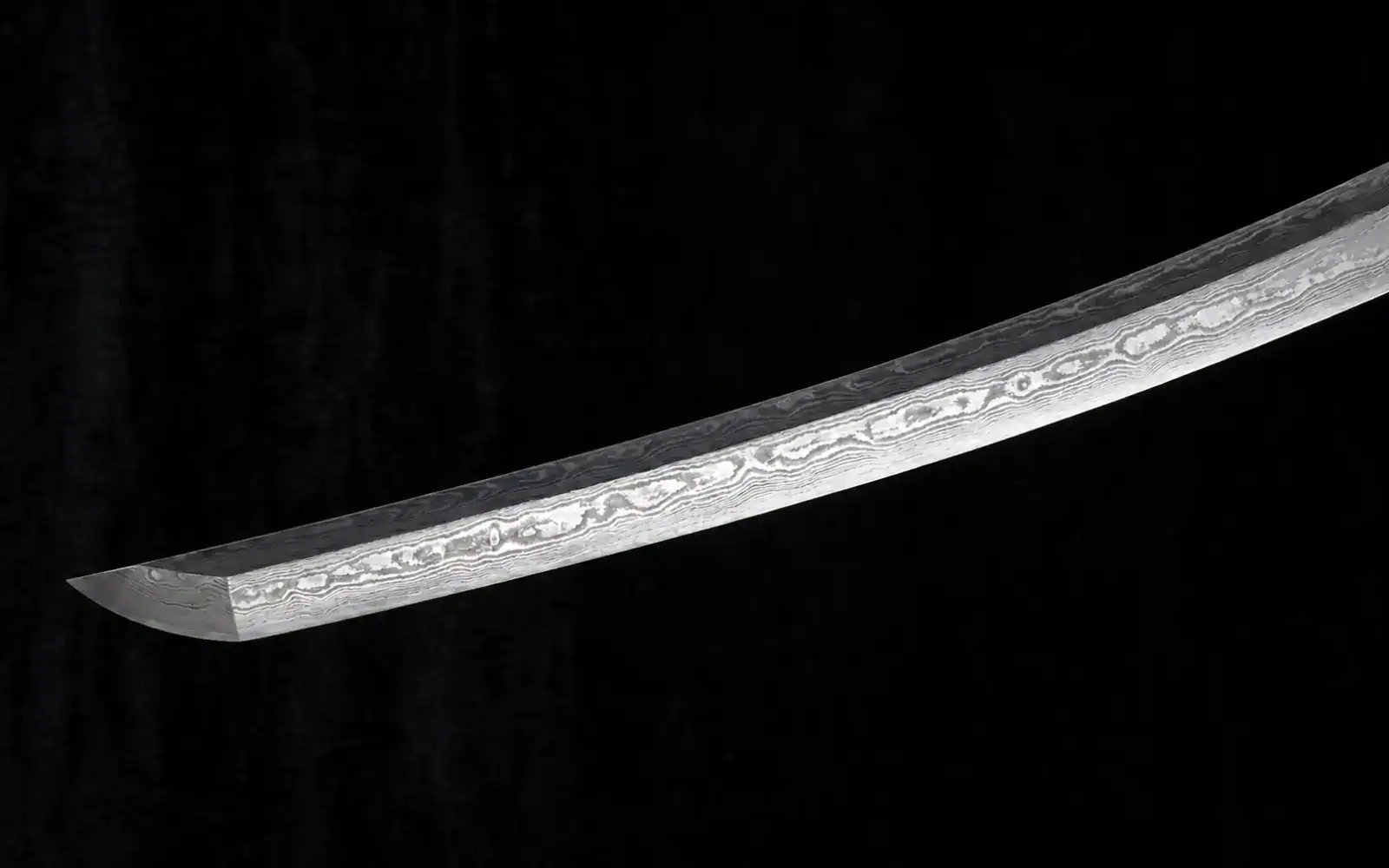
Hada is the visible grain or “skin” on the blade surface. Itame looks wood-grain-like, masame has straighter lines, mokume has a burl-like swirl, and ayasugi has a wave-like pattern. A broader construction background is covered in our guide to what katanas are made of.
Folding can make a modern blade more interesting to look at, but it should not replace the checks that matter in hand: construction, polish, fit, edge geometry, and documentation. A folded blade with loose fittings is still a bad buy.

Folded Steel vs. Other Katana Blade Types
Folded steel is not automatically better than monosteel, Damascus, or San Mai. Choose based on what you actually want: subtle grain, predictable cutting performance, bold patterning, or laminated construction.
- Folded steel: good for subtle hada and collector appeal, weak as a stand-alone performance claim.
- Monosteel: often the cleaner first buy when the steel, heat treatment, and geometry are stated plainly.
- Modern Damascus or pattern-welded steel: better for a bold layered look than for maximum cutting value per dollar.
- San Mai or laminated construction: worth considering only when the maker explains the steels, lamination, and heat treatment.
Monosteel is not the lesser choice by default. On many modern production katanas, a clear-spec monosteel blade is the more practical buy because there are fewer forge-weld variables to worry about. A separate Damascus steel katana guide covers the bolder pattern-welded side.
The guide to which katana steel to choose goes deeper on material terms that show up in product listings.
What Are the Risks of Cheap Folded Steel?
The main risk of cheap folded steel is not the idea of folding itself, but poor forge welding, unclear steel specs, and weak seller documentation. Bad layer bonding, air pockets, inclusions, or delamination can become stress points under use.
At entry-level prices, folded steel can be hard to verify, so the upgrade may mostly buy the claim. As prices rise, the listing should show close-up grain photos, named steel, heat-treatment details, and a clear support path if the blade arrives with visible defects.
The safer move is not to avoid every folded steel katana. Avoid listings that use folding as a substitute for blade specifications. The extra money should buy proof you can inspect, not just a larger layer number.
What You Should Get for the Extra Money
A folded steel premium should buy proof, not romance. Look for honest steel naming, heat treatment described separately from folding, close-ups of the ji and hamon area, and clear support if the sword arrives with visible flaws or loose fittings.
Where Folded Steel Actually Pays Off
Display buyers can justify the folded-steel premium more easily than cutting-focused beginners. A sword meant for a stand, wall mount, or gift box is judged differently from one meant for supervised cutting practice.
Mostly for Display or a Gift?
Folded steel makes the most sense when the blade will be displayed, collected, or given as a visually memorable gift. A gift buyer may value the grain because it gives the blade something to notice right away.
A sharpened folded steel katana is not automatically the better gift. For a household with children, pets, guests, or no training plan, an unsharpened display piece can be the more responsible choice.
Folded steel and pattern-welded options can feel more distinctive than plain monosteel when the photos and specs are clear. Buyers who want a bolder layered-steel look for display or collection can compare Damascus steel Japanese swords.

If You Plan to Cut With It
Laws vary by country, state, and region, so check local restrictions before purchasing a functional blade. A well-made folded steel blade may be suitable for controlled cutting on approved soft targets, but folding is not the reason it is safe to use.
Named steel, a properly fitted nakago or full-length tang, heat treatment, edge geometry, fit, assembly, seller transparency, and user reviews matter more. Cutting practice should stay controlled and guided by qualified instruction on approved soft or inert targets, never hard or improvised targets.
A well-made high carbon steel katana is usually a more practical starting point when cutting value matters more than visible grain.
If This Is Your First Katana
Most beginners do not need folded steel as their first upgrade unless the sword is mainly for display, collecting, or gifting. First-time buyers should care more about safe construction, seller trust, and maintenance expectations.
- First katana for display: folded steel can be worth it when the hada is visible and the specs are clear.
- First katana for cutting practice: skip the folded-steel premium at first and prioritize steel and heat treatment.
- Unsure about use case: start with a clear-spec high-carbon steel katana.
Already Set on Folded Steel?
Folded steel is a good buy when you already know the grain is part of the appeal. Verify the steel, heat treatment, close-up hada photos, seller reviews, and support policy before treating the upgrade as real value.
A custom katana may let you request specific specs when the builder confirms the blade construction or finish you want. Confirm the construction options first instead of assuming every custom path includes folded steel.
How to Read a Folded Steel Katana Product Listing
A folded steel listing is only useful if it proves what the blade is made from, how it was treated, and whether the pattern is real. Good listings answer those questions before asking you to care about layer count.
Green flags include named base steel, separate heat-treatment details, close-up hada photos, natural-looking grain, seller reputation, and clear support policies. Red flags include layer-count hype, no base steel, vague “real samurai sword” language, suspicious pricing, or a bold etched-looking pattern with no process notes or multi-angle blade photos.

Photos should show the grain close enough to inspect, not just a full-blade glamour shot. Be cautious when every line looks unusually dark, even, and high-contrast but the listing never explains the steel or folding process.
Hada is the grain created by folded steel. Hamon is the visible temper line associated with differential hardening. A blade can have hada without a dramatic hamon, and a blade can have a hamon without being folded steel. Our guide to common katana buying mistakes covers more listing traps.
FAQ
Is folded steel worth the extra money?
Folded steel is worth the extra money when the listing proves the hada, steel, and craftsmanship behind the premium. It is not worth paying more for layer-count language alone.
Does folding steel make a katana stronger?
Folding steel does not make a modern katana stronger, because modern production steel is already uniform. Historical folding helped refine tamahagane, while modern folding mainly creates visible grain and craft appeal.
Is folded steel good for cutting practice?
A properly made folded steel katana may be suitable for controlled cutting practice under proper instruction, but reliability comes from steel grade, heat treatment, blade geometry, and safe assembly.
Should I buy folded steel for my first katana?
Most beginners should not treat folded steel as the first upgrade unless the katana is mainly for display, collecting, or gifting. Construction, seller trust, and intended use should come first.
Is folded steel the same as Damascus steel?
Folded steel and modern Damascus steel are related by layering, but product listings do not always use the terms the same way. Folded steel usually creates subtler hada, while Damascus or pattern-welded steel usually looks bolder.
Pay for Proof, Not Layer Count
The layer count is often the least useful number on a folded steel katana listing. Pay more only when the seller gives clear evidence of the steel, heat treatment, construction, and finish behind the blade.
The next move should match the sword’s job. Compare folded or Damascus-style options for display with close-up photos first. For a practical first cutter, start with clearly specified high-carbon steel katanas before browsing the full Japanese sword collection.


