




How Much Does a Katana Weigh?

Most production katanas commonly fall around 2.1 to 2.75 lbs (0.95 to 1.25 kg), but that number alone does not tell the full story. Product listings measure weight differently, blade builds vary, and whether the scabbard is included changes the figure you see.
What makes this more interesting is that two katanas with nearly the same listed weight can feel noticeably different in hand, because balance point shapes how heavy or quick a sword actually feels when you use it.
Average Katana Weight in Lbs and Kg
Many production battle-ready katanas commonly fall around 2.1 to 2.75 lbs (0.95 to 1.25 kg) without the scabbard. Blade length, geometry, and fittings all affect the final figure. The broader market — covering lighter display builds, training swords, and heavier cutters — runs from roughly 2.0 to 3.1 lbs (0.9 to 1.4 kg).
The saya, or scabbard, typically adds roughly 0.45 to 0.7 lbs (200 to 320 grams), though plainer wooden saya can run lighter. Always check whether the listed weight includes the saya. Some product listings quote the bare sword weight, while others include the saya in the total, and that difference alone explains why two otherwise similar swords can look meaningfully different when you compare specs side by side.
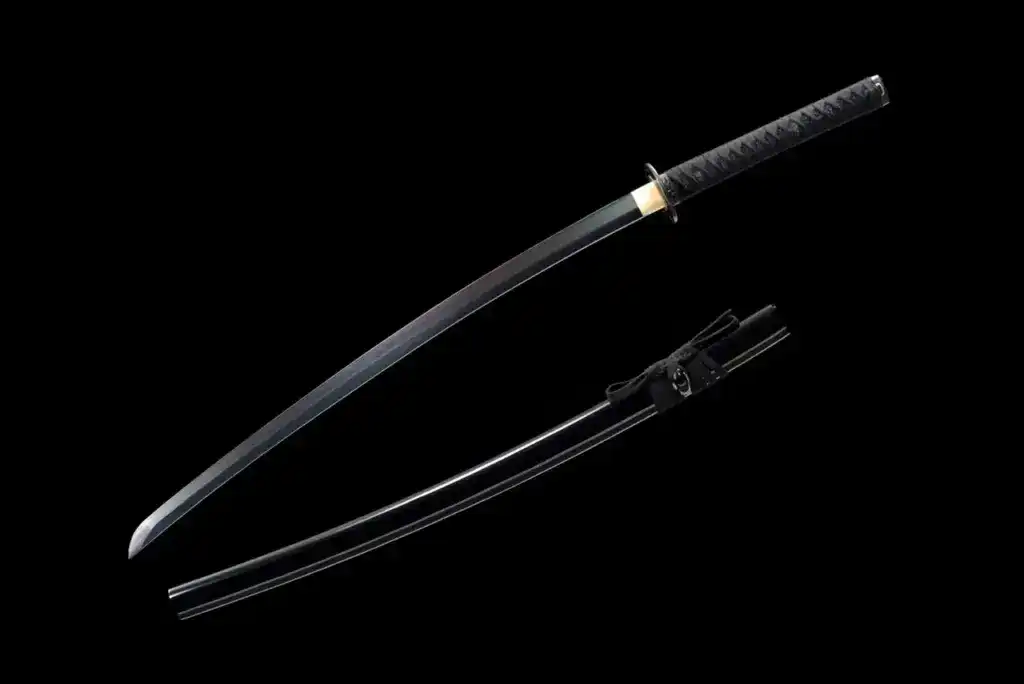
What Is a Normal Katana Weight?
Most people searching this question want to know the weight of a real, usable sword rather than a decorative piece sold for display. The answer depends on what kind of katana you are comparing.
| Type | Typical Weight Range | Intended Use | Feel in Hand |
| Decorative / wall hanger | 1.0 to 2.0 lbs (0.45 to 0.9 kg) | Display only | Light, often unbalanced |
| Training-focused blade (incl. iaito) | 1.8 to 2.4 lbs (0.82 to 1.09 kg) | Form practice, light use | Light to moderate |
| Functional cutting katana | 2.1 to 2.75 lbs (0.95 to 1.25 kg) | Cutting, practice, collection | Balanced and purposeful |
| Heavier production swords | 2.5 to 3.1 lbs (1.13 to 1.4 kg) | Heavy use, some collectors | Substantial, slower feel |
Ranges vary by maker, blade length, and whether the saya weight is included in the listing.
A real sword built for actual use is very different from a decorative piece. Understanding what separates a usable sword from a display piece starts with how they are constructed.
A full tang katana has the blade steel running the entire length of the handle, which affects both structural integrity and how weight distributes through the grip. Many decorative swords use partial or weaker tang construction, which is why they can feel hollow or unbalanced even when the listed weight looks similar.
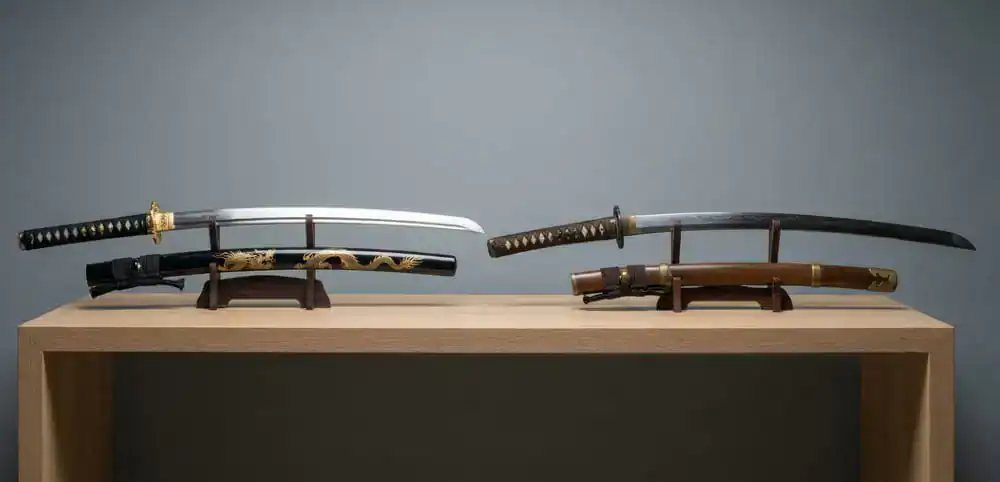
Why Katana Weight Numbers Vary So Much
Readers often find different weight figures across product listings for swords that look similar in size and style. This happens for a few consistent reasons, and knowing them helps you make sense of what you are actually comparing.
How Blade Length and Build Affect Katana Weight
Longer blades tend to weigh more, but that relationship is not perfectly linear. The blade’s thickness, width, and taper all affect total mass. A wider base, fuller grind, or thicker spine pushes weight up, while a slimmer profile or lighter fitting set brings it down. A bo-hi, which is a groove running along the blade, removes material and shifts the balance point slightly closer to the hand.
Handle build and fittings also contribute to the final number in ways that are separate from blade geometry. Heavier iron fittings or a longer handle adds mass differently than extra blade tip weight does. For a deeper look at how blade length connects to handling and weight, the guide to how long a katana is covers the full picture.
Steel type matters more for performance and construction intent than for predicting final weight, but if you want to understand those choices, best steel for katana explains why material selection drives build quality.
Does the Scabbard Count Toward Katana Weight?
Some product pages quote the bare sword weight. Others include the saya in the listed total. The saya commonly adds around 0.45 to 0.7 lbs (200 to 320 grams), which is enough to make two otherwise similar swords look noticeably different when you compare listings. If a product page does not specify, it is worth checking before drawing any conclusions.
Why Two Katanas With Similar Weight Can Feel Different
Total mass is only part of what determines how a sword handles. A katana balanced near the guard feels quick and easy to redirect, while one with more weight toward the tip feels slower and more demanding, even when both show the same number on a scale. Buyers who judge a sword purely by the listed weight often end up surprised by how it actually moves.
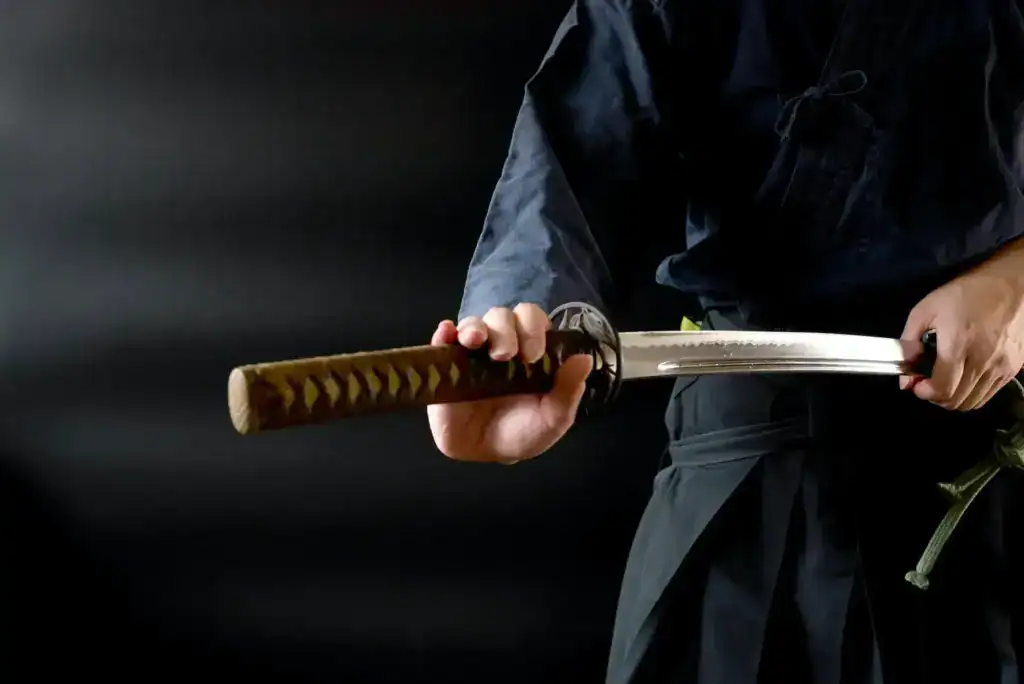
How Balance, Bo-Hi, and Fittings Change How a Katana Feels
Balance point is the main reason two swords of identical listed weight can feel completely different. A sword balanced close to the guard tends to feel agile and responsive. One balanced further down the blade takes more effort to drive through cuts and control during direction changes.
A bo-hi moves a small amount of material but shifts where the remaining weight sits along the blade, which changes the felt weight more than the scale weight suggests. Heavier fittings on the handle side bring balance back toward the hand.
Heavier tips or thicker blade geometry push it the other way. The parts of a katana guide explains these components and how they function together as a system, which is useful context when comparing specs across different builds.
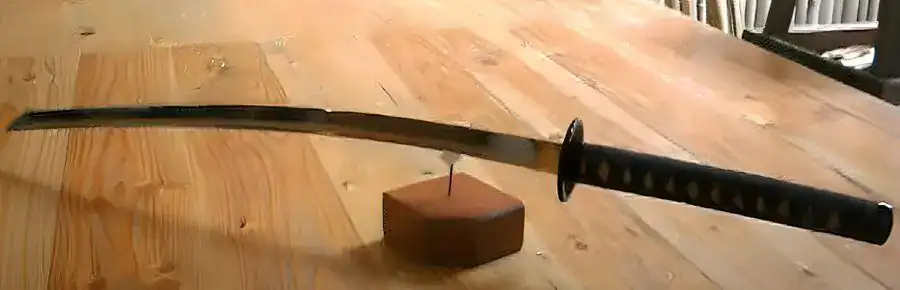
Is a Heavier Katana Better?
No. A heavier katana is not automatically better. The right weight depends on who is using it and for what purpose.
| Build Feel | Typical Weight | Best Suited For |
| Lighter-feeling | 2.0 to 2.3 lbs (0.9 to 1.04 kg) | Beginners, form practice, quick handling |
| Mid-range | 2.3 to 2.6 lbs (1.04 to 1.18 kg) | General practice, cutting, most buyers |
| Heavier-feeling | 2.6 to 3.1 lbs (1.18 to 1.4 kg) | Experienced cutters, some collectors |
Best Katana Weight for Beginners and Home Practice
Beginners typically do better with a sword that feels controllable and allows consistent practice over a full session. Extra mass can make form work harder to sustain and slow the feedback loop between movement and correction. A sword in the 2.0 to 2.4 lb range gives most beginners enough to work with without creating unnecessary fatigue before technique is established.
Best Katana Weight for Cutting Practice
Some cutters prefer a bit more mass because momentum helps drive through target material. That preference is real, but it is often overstated. For most practice cutting and tameshigiri sessions, edge alignment and build quality make a bigger difference to cutting performance than raw weight. A well-built sword in the 2.3 to 2.6 lb range will outperform a poorly balanced heavier sword on most cuts.
When you are narrowing down a cutter, the guide on how to choose a katana for practice or display helps match the sword to the actual use. For functional cutting work specifically, high carbon steel katanas offer the edge retention that cutting practice demands over repeated sessions.
What Katana Weight Means for Collectors and Display Buyers
Collectors tend to care about authentic proportions and how the sword feels as an object, not just how much it weighs. A sword that feels substantial and well-made is different from one that is simply heavy. Excessive weight in a display piece usually signals construction choices that prioritize bulk over quality, and experienced collectors recognize that difference quickly.
What Katana Weight Feels Right for You?
The weight that works best is the one that matches your intended use and feels controllable when you handle the sword. If you are buying a katana as a gift and are not sure about the recipient’s experience level, mid-range builds around 2.3 to 2.6 lbs are usually the safest call because they suit the widest range of users without being too demanding or too light. Here is a practical breakdown by use case.
Lighter Katana Builds: Who They Work Best For
If your priority is easier handling, more repetitions without fatigue, or a less demanding starting point, a sword in the 2.0 to 2.3 lb range usually works well. These builds tend to feel quick and responsive, which suits form-focused practice and anyone who wants a katana they can use comfortably for longer sessions without it becoming a workout on its own.
Heavier Katana Builds: Who They Work Best For
If you want more cutting momentum or prefer a more authoritative in-hand feel, builds in the 2.5 to 3.1 lb range are worth considering. These swords feel more substantial but require more control, especially during extended use. Experienced practitioners often find them rewarding. Beginners frequently find them tiring before the session ends.
When a Custom Katana Build Makes More Sense
Some buyers are not looking for an average-weight sword. They want a sword tuned to a specific length, fitting set, and handling profile that reflects how they actually move. Off-the-shelf averages are not always the right answer.
Common triggers for going custom include a height that puts you outside standard blade length brackets, a strong preference for a specific tsuka length, or a handling profile that stock builds simply do not match.
Choosing the right blade length for your body is covered in how to choose katana length for your height. If your needs go further than stock options allow, a custom katana lets you define the build from the start rather than compromising on specs.
How to Compare Katana Weight on Product Listings
Weight is one data point, not a quality score. When you are comparing swords across listings, that number only makes sense alongside other specification details.
When comparing katana weights, check these together:
- Whether the listed weight includes the saya
- Blade length
- Bo-hi or no-bo-hi build
- Intended use (display, training, or cutting)
- Likely balance point and feel
Do not use weight as a shortcut for quality or authenticity. A heavy sword is not a better sword. A light sword is not a cheaper or weaker one. These assumptions trip up many first-time buyers. Knowing what to watch for matters more than finding the right weight number, and the guide to mistakes to avoid when buying a katana covers the most common ones in full.
When you are ready to browse, the full range of functional katanas includes spec details alongside each listing so you can compare builds on your own terms.
So, How Much Does a Katana Weigh for Most Buyers?
Most production battle-ready katanas commonly land around 2.1 to 2.75 lbs (0.95 to 1.25 kg). Some builds fall outside that range depending on blade length, construction, and intended use, but that window covers the majority of what most buyers will encounter and seriously consider.
The best katana weight is not a universal number. It is the one that matches how you plan to use the sword and feels controllable in your hands. If you know your use case, the weight question largely answers itself. Browse the full katana collection to find builds across that range, or reach out to discuss a custom option if your requirements are specific.
FAQ
Is 3 lbs heavy for a katana?
Three pounds is on the heavier side of the normal functional range but is not necessarily excessive. Swords built for heavier cutting work or with denser fittings can reach that mark. Whether it feels too heavy depends on your experience level and what you plan to use the sword for.
Why can two katanas with the same listed weight feel different?
Balance point is usually the main reason. A sword balanced closer to the guard feels lighter and quicker than one balanced further down the blade, even when both weigh exactly the same on a scale. Bo-hi, fittings, and blade geometry all shift where that balance sits.
Do product listings include the saya?
Some do and some do not, which is why it matters to check how the seller is measuring. The saya commonly adds around 0.45 to 0.7 lbs (200 to 320 grams), so an included saya can make a sword look noticeably heavier than a competing listing for a similar bare sword.
What is a good katana weight for beginners?
Most beginners are better served by a sword that feels controllable and allows for consistent practice rather than one that is unusually heavy. A sword in the 2.0 to 2.4 lb range is usually a solid starting point. Manageable handling and repeatability matter more than extra mass when technique is still developing.
Are heavier katanas better for cutting?
Some experienced cutters prefer more mass because momentum helps drive through thicker materials. But cutting performance still depends mostly on edge alignment, blade geometry, and overall build quality. A well-balanced mid-weight sword typically outperforms a heavy but poorly balanced one on most cuts.
How much does a katana weigh with the scabbard?
With the saya included, most katanas end up somewhere in the 2.5 to 3.5 lb range, depending on the base sword weight and how the scabbard is built. Plain wooden saya add less; lacquered or hardware-fitted saya add more. If a listing does not say, it is worth asking the seller before comparing weights across different product pages.
What is the average weight of a battle-ready katana?
Most production battle-ready katanas commonly fall between 2.1 and 2.75 lbs (0.95 to 1.25 kg) without the saya. Lighter builds around 2 lbs exist for training-focused use, while heavier cutters can reach 2.8 to 3.1 lbs. The term “battle-ready” is used loosely in the market, so weight should be evaluated alongside construction details like full tang and steel type.


