



What Is Iaido? Training, Swords, and Who It’s For

Quick Answer
- Iaido is a Japanese sword art centered on drawing, cutting, and resheathing from a sheathed starting position.
- Most iaido training is solo kata, not sparring, so it fits people who want quiet technical practice more than contact competition.
- Beginners usually start with a bokken or blunt iaito instead of a live blade, and many schools can lend equipment at first.
Most people find iaido while looking for something else: a martial art to join, a sword to buy, or an explanation for something they saw in a film or anime. The art is not always easy to place at first glance, and the questions that follow tend to be practical ones.
This guide explains what practice looks like, what swords beginners use, how iaido differs from kendo, and what to ask before you start. By the end, you should know whether iaido is the kind of sword practice you were actually looking for.
What Is Iaido and How Does It Work?
The one-cut scenes in anime and period films get the broad idea right: one draw, one response, finished. What they skip is how much control the art demands between those moments. The technique does not start when the sword clears the scabbard. It starts the instant the hand moves toward the hilt.
Every form has a defined beginning, a defined action, and a defined end, and the technique is not complete until the blade is back under control. That structure is not ceremony for ceremony’s sake. It is how the art keeps the practitioner responsible for the full situation, not just the cut.
What does “iaido” mean in simple terms?
In simple terms, iaido is a way of training awareness, timing, and control through sword practice. People often explain the name through ideas like presence, readiness, and meeting a moment correctly, but the practical meaning matters more than a perfect translation.
For a beginner, the useful takeaway is this: iaido is not just about drawing fast. It is about drawing at the right time, moving with balance, cutting with intent, and finishing without losing composure.
Why does the sword start sheathed?
The sword starts sheathed because iaido trains response from a resting position rather than from an already active fight stance. That changes the whole problem the art is solving, because the first movement must create space, draw the blade cleanly, and bring the body into line at the same time.
This also explains why the art feels so controlled. The practitioner has to manage readiness, direction, and awareness before the sword is even fully out, which gives the opening draw far more weight than it has in arts that begin with weapons already raised.
What Does Iaido Practice Actually Look Like?
Iaido training is usually quiet, repetitive, and solo-form based rather than sparring-based. Students practice together in a dojo, but most of the work is individual, corrected by an instructor, and repeated until posture, timing, and handling stay clean.
That can look simple from the outside. It looks much less like a movie duel and much more like careful repetition under correction.

Why solo kata matter in iaido
Solo kata matter because they give iaido its training structure. Each form presents a set scenario against an imagined opponent, which lets the student work on timing, balance, posture, angle, and intent without the chaos of live sparring.
Kata is what gives the repetition tactical meaning. Each form is a set scenario against an imagined opponent, and the repetition is demanding because control has to survive fatigue, small corrections, and constant attention to detail.
How One Iaido Technique Unfolds
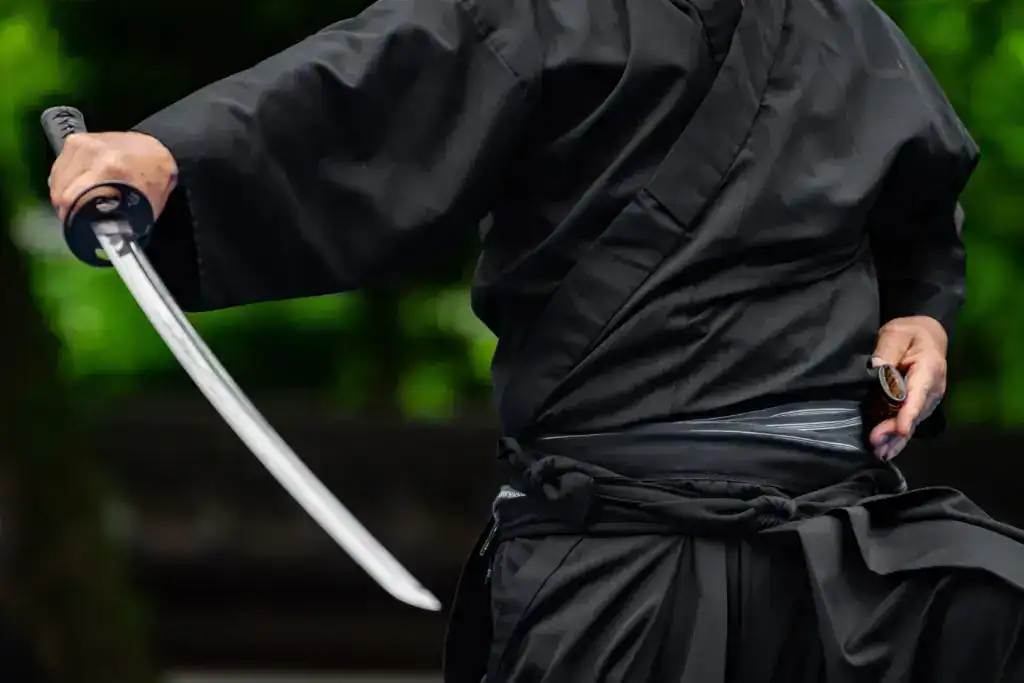
Many beginner explanations describe iaido through a basic flow: draw, cut, chiburi, and resheathing. In plain English, that means clearing the sword, delivering the main action, performing a symbolic blade-clearing motion, and then returning the blade to the scabbard with calm control.
The draw and cut feel dynamic, but noto, the return to the scabbard, is where many beginners realize how exact the art really is. Students new to sword terms often stumble on saya, tsuka, and tsuba before the movement makes sense, so a quick look at the parts of a katana helps.
What a First Class Looks Like
Your first iaido class usually focuses on etiquette, posture, safe handling, and very simple movements rather than dramatic technique. Many schools begin with basic standing or kneeling position, how to hold the sword, how to move without wobbling, and how to listen to correction.
Many beginners start with loaner gear, a wooden sword, or another safer training tool. Grip and edge alignment usually matter more than speed in iaido training for beginners, so a short look at how to hold a katana can make early corrections easier to understand.
- No sharp blade.
- No martial arts background.
- No full-speed performance.
Does Iaido Use Real Swords?
Sometimes, but beginners usually start with wooden or blunt practice swords rather than a live blade. The exact progression depends on dojo rules, instructor judgment, and how safely a student can handle the basics.
That distinction helps buyers avoid the wrong purchase too early. Iaido training swords, display swords, and collectible katana are different purchases, and beginners should not treat them as the same item.
Bokken, iaito, and shinken
When people ask what kind of iaido sword is used in class, the answer usually starts with three categories: a bokken is a wooden training sword, an iaito is a blunt metal practice sword, and a shinken is a live blade. Those three tools are not interchangeable, because each one teaches a different level of handling, feedback, and risk.
Many students spend their early training with a bokken or iaito so they can learn grip, draw path, distance, and resheathing without the consequences of a sharpened edge. The goal is not to rush toward a shinken. Collectors may care more about blade style and fittings, but iaido students should follow dojo requirements first.
Why not buy a sharp katana first?
Beginners usually should not buy a sharp katana first because the dangerous part of iaido is not only cutting. Resheathing, edge awareness, hand position, and calm mechanics are all easy to get wrong early on, and the consequences are much less forgiving with a live blade.
A beginner is usually safer following the dojo’s equipment rules instead of arriving with a sharp sword too soon. For most beginners, the real question is not which sharp katana to buy, but what kind of sword is actually used for training.
A practice sword and a display piece do not solve the same problem. A side-by-side look at how to choose a katana for practice or display helps separate those uses before you buy anything.
- Training with a dojo usually starts with the tool the instructor approves, often a bokken or iaito.
- Display or gift buying usually points toward a blunt display sword rather than a sharp katana.
- Cutting practice should wait until you have instruction, space, and a setup meant for live blades.
Why Do People Practice Iaido?
Most people practice iaido for discipline, awareness, body control, and the chance to study a traditional sword art seriously. Beyond the question of what kind of sword to use, the bigger question is why people keep returning to such a quiet, repetitive practice.
The answer is usually practical rather than romantic. Iaido gives people a structured way to refine movement, attention, and composure while staying connected to a historical martial tradition.
Discipline, awareness, and body control
Repetition in iaido builds posture, coordination, balance, and careful mechanical control. Because the sword demands exact handling, small flaws in stance, grip, or breathing become obvious, and that steady correction is part of the appeal.
Iaido can be approachable for many adults because it emphasizes control over impact, though each person still needs to follow their body and dojo guidance. People who want technical discipline often find it more approachable than a contact-driven sport.
Why Iaido Feels Meditative
Iaido is often called moving meditation because the practice is quiet, repetitive, and built around controlled attention. Breathing, posture, timing, and finishing each motion cleanly create a rhythm that can feel mentally clarifying.
That does not make iaido less martial. The calm feeling comes from how much attention the sword demands, not from pretending the art is only symbolic or detached from technique.
What’s the Difference Between Iaido and Kendo?
Unlike kendo, iaido does not center on partner sparring or protective armor, and most practice stays away from live contact even when formal grading and competitions do exist. The easiest beginner distinction is simple: iaido usually starts from a sheathed sword and solo forms, while kendo centers on partner exchanges with armor and shinai.
That means the beginner experience feels different right away. One art teaches measured sword handling through forms. The other teaches timing, distance, and pressure through live interaction.
- Iaido: solo forms built around drawing from the sheath.
- Kendo: armored sparring with shinai and live partner exchanges.
- Kenjutsu: a broader label for older sword-fighting traditions and paired methods.
Which one fits a beginner better?
Iaido fits beginners better when they want individual practice, precise sword-handling discipline, and a quieter training environment. Kendo fits better when they want partner work, energetic exchanges, and a sport structure with clear competitive elements.
Some people practice both because the arts develop different parts of sword training. Iaido focuses on drawing from the sheath; kendo focuses on armored sparring; kenjutsu is a broader label for older sword-fighting traditions. Battojutsu is another related term often used for sword-drawing methods, though naming and emphasis vary by school.
Is Iaido Effective?
Iaido is effective for sword handling, focus, posture, and technical control, but it is not a modern self-defense system or sparring art. Whether it feels effective depends on the goal you bring to it.
A beginner gets better guidance by knowing exactly what iaido trains and what it does not train.
What Iaido Is Effective For
Iaido is effective when the goal is cleaner movement, better awareness, careful handling, and long-term technical refinement. It also preserves a traditional method of sword practice in a format that can be repeated, corrected, and taught safely over time.
For many practitioners, that combination is enough. They are not looking for modern combat drills. They are looking for an exacting discipline that rewards patience and attention.
When Iaido Is the Wrong Fit
Iaido is not the right expectation when someone wants modern self-defense training or the pressure of an actively resisting opponent. Without live sparring at the center, it does not produce the same stress, adaptation, or contact experience as combat sports or self-defense systems.
That limit matters because people looking for sparring or self-defense may be happier in a different martial art. People who want quiet repetition, careful sword handling, and long-term technical refinement are usually closer to the right fit.
How Do You Start Iaido?
The best way to start iaido is to find instruction before choosing equipment. Beginners progress faster by learning safe habits from a dojo than by trying to assemble the perfect setup alone.
Patience matters here because iaido is built on repetition, not gear collecting. A teacher can save you from buying the wrong sword, the wrong length, or the wrong expectations.

Find instruction before buying gear
Dojos often have their own expectations for sword type, length, beginner equipment, and when a student is ready to move from one training tool to another. That makes instruction the easiest filter before any purchase.
Many schools can lend a bokken or point you toward a basic iaito when the time is right. Starting with the dojo’s recommendation is simpler than guessing from online listings and hoping the choice matches training use.
What to ask before your first class
Ask about class schedule, clothing, loaner equipment, and what a beginner is expected to bring. It also helps to ask how the school introduces grip, carrying position, and basic handling so the first class feels familiar instead of intimidating.
This matters more after you understand dojo expectations, not before buying gear. A short look at how to wear a katana can make instructor corrections easier to follow when carrying position comes up.
When no dojo is nearby, ask regional kendo or iaido groups about recognized clubs, seminars, or beginner pathways before buying equipment on your own. It is also reasonable to ask about monthly cost and starter gear before committing.
Common Iaido Questions From Beginners
These are the beginner questions that usually come right after the basic definition. The short answers below keep the scope practical.
What is the purpose of iaido?
Iaido trains awareness, movement, and discipline through structured sword practice. In modern settings, people usually study it to build control, composure, and technical skill while preserving a traditional art.
How long does it take to learn iaido?
Some beginners may feel more comfortable with basic handling after steady practice, but the pace depends heavily on the dojo, teacher, and student. Real fluency takes years, and advanced blade use follows dojo rules, not one universal timeline.
Does iaido use real swords?
Sometimes, but beginners usually start with a bokken or blunt iaito. Live blades are usually introduced only after more experience and only under the rules of the student’s dojo.
Can beginners start iaido without owning a sword?
Yes. Many schools let beginners borrow equipment or start with simple training tools. Good instruction matters more on day one than owning a sword, and gifts are usually safer when they are blunt display pieces or dojo-approved practice tools.
Is iaido a martial art?
Yes. Iaido is a Japanese martial art focused on drawing, cutting, and resheathing through solo forms rather than sparring.
What is the difference between iaido and kendo?
Iaido trains solo forms from a sheathed sword, while kendo trains armored sparring with shinai. One centers on controlled forms, and the other centers on partner exchange.
So, Is Iaido for You?
Iaido is a disciplined way to study sword movement, awareness, and control, and it helps people separate practice tools from live blades. Once you understand the training side, Japanese swords start to make more sense as tools with different roles, not just dramatic objects.
A gift buyer may care more about safe display, while a future student should care more about dojo-approved practice gear. After learning how iaido separates practice, display, and collecting, you can browse Japanese swords with clearer expectations.


