



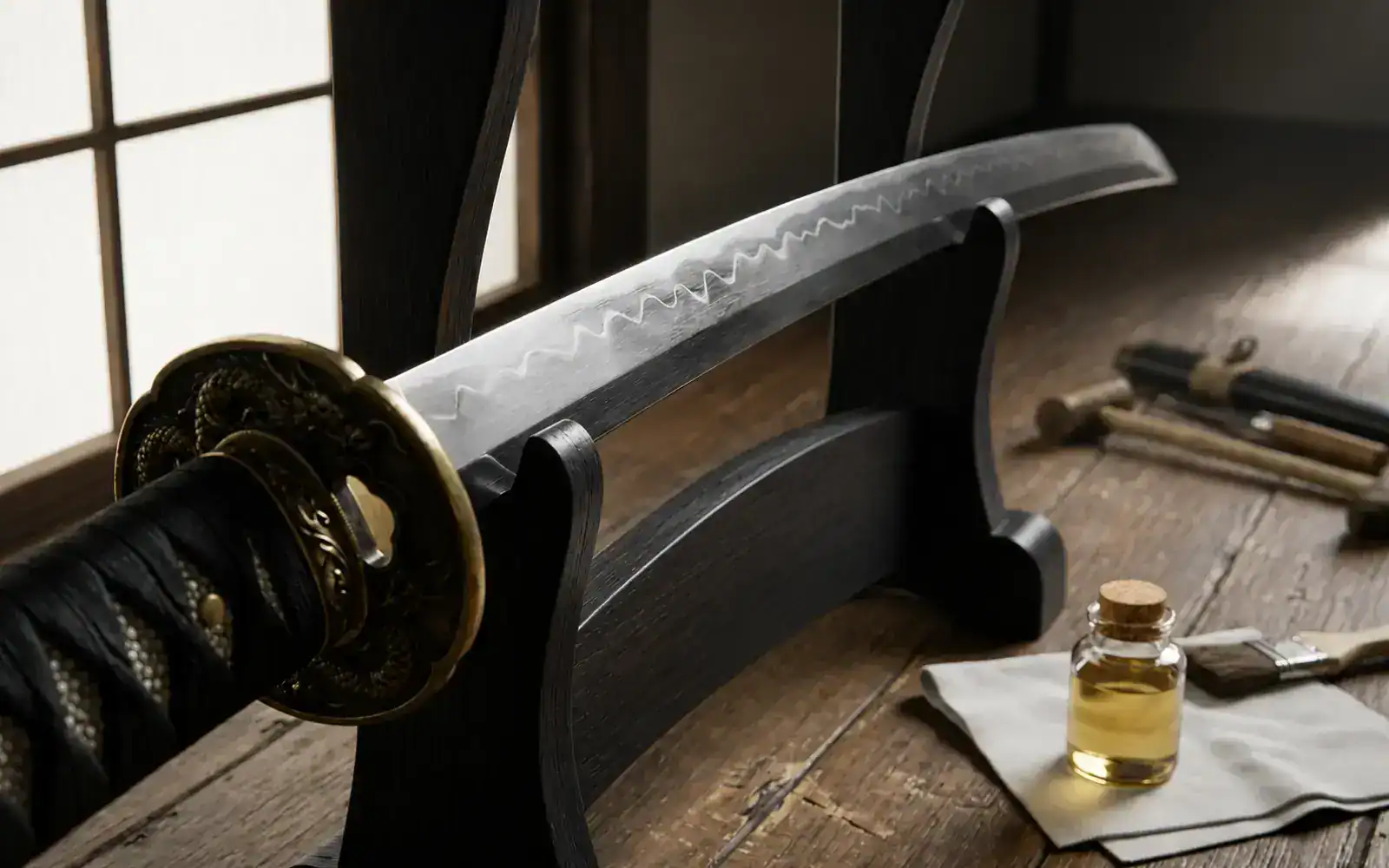
How to Prevent Your Katana from Rusting

Preventing your katana from rusting comes down to one missed thing: moisture left on polished steel. After handling or cutting, wipe the blade, dry it fully, and add a thin coat of mineral oil or choji oil. Display blades can often be checked every few weeks; fingerprints, rain, sticky targets, and humid rooms need same-day care.
The habit works for display, gifts, cosplay, practice, or cutting. Sharpening, polishing, antique restoration, and heavy rust removal need a different guide or a specialist.
Start with what happened
Your first move depends on what the blade has been through, not how dramatic the sword looks.
- New sword or unknown care: wipe off residue, inspect both sides, then leave a barely visible oil film.
- Fingerprints: clean the touched area the same day, dry it, and refresh the oil lightly.
- Cutting practice: clean before storage, especially after wet, sticky, or acidic targets.
- Humid room or long display period: inspect more often, even if nobody touched the sword.
- Possible antique, signed blade, papered sword, or nihonto: photograph first and ask a specialist.
Wipe, dry, then oil the blade
The steps are simple, but timing matters. Fingerprints, cutting residue, rain, and humid storage should not wait.
After touching the blade
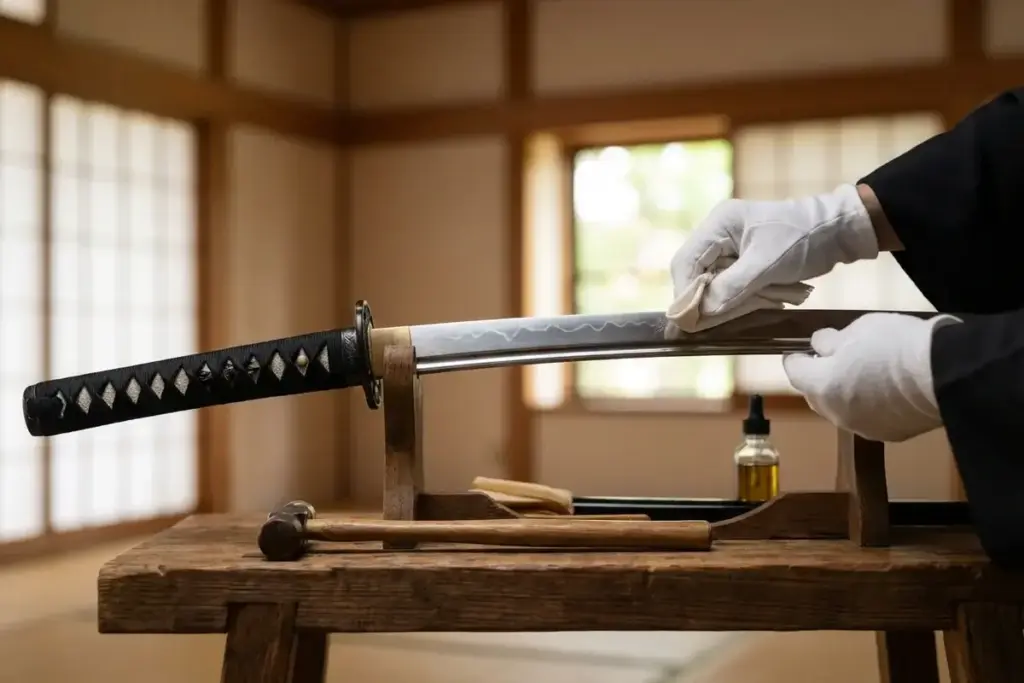
Bare fingers can leave salts, moisture, and skin oil on polished steel. Wipe the touched area with a clean microfiber, cotton, or lint-free cloth, then refresh the oil film lightly.
When the blade is out, use the tsuka, the handle. When the sword is sheathed, carry it by the saya instead of touching the blade.
After cutting practice
Cutting practice raises rust risk because water bottles, soaked tatami, bamboo, fruit, and plant targets can leave moisture or acidic residue. Wipe residue right away, then clean again before storage.
Do not return a wet blade to the saya. After a messy cutting session, follow KatoKatana’s how to care for a katana guide.
Before putting it away
The oil film should be barely visible. A wet-looking blade has too much oil, while dry-looking steel needs a light refresh.
Isopropyl alcohol can remove old oil or residue, but use it only on the blade surface. Keep it away from the tsuka, saya interior, lacquer, leather, samegawa, and fittings.
Your use changes the rust risk
A wall display does not age the same way as a practice blade.
Display katanas
Display buyers should ask whether a sharp carbon steel blade is necessary at all. An unsharpened decorative katana is usually easier to place, safer around guests, and less stressful to maintain.
Gift and cosplay blades
With gifts and cosplay, color, fittings, visual accuracy, and safe handling usually matter more than cutting performance. Confirm sharpness, mounting location, and access before the gift arrives.
Training and cutting swords
Training is different: separate iaito and shinken early. An iaito is usually a blunt practice sword used in iaido. A shinken is a live blade and belongs only where instruction, space, targets, and local rules support it.
Before buying a sharp sword for practice, check dojo requirements, local laws, and import or transport rules. No online listing makes a sword training-safe everywhere.
Collectors and old blades
Collector value changes the care rule. A possible antique, signed blade, inherited sword, papered sword, or nihonto should be treated as a preservation piece first.
Do not clean the nakago, the tang inside the handle, on a possible nihonto. Patina and markings can matter. Photograph the blade, fittings, kissaki, hamon, and papers, then ask a specialist.
Steel terms that affect rust
Seller terms can tell you how much care the blade will need, but they do not replace the basic routine.
High carbon steel
High carbon steel is common in functional modern katanas, and it is one reason rust prevention matters. 1045, 1060, 1095, T10, 5160, and 9260 steels need a dry room, clean handling, and a light oil film.
A high carbon steel katana makes sense when you want clear specs and will maintain the blade. The routine is not hard, but it is not optional.
Stainless display blades
Stainless display swords can be lower-maintenance, but they are usually bought for looks rather than cutting practice. Treat stainless claims as a display cue, not proof that the sword is safe for training or impact use.
Folded steel and Damascus
Folded steel and Damascus-style patterns are visual and construction claims, not rust-proofing. Do not pay extra for folded steel because you think it avoids maintenance. It still needs the same wipe, dry, oil, and inspection habit.
Be wary of vague marketing. Look for clear steel type, heat treatment, blade photos, and return policy details. Patterned steel with vague specs is not automatically a better sword.
Hamon and clay-tempered blades
A hamon is the visible temper line associated with differential hardening on many clay-tempered blades. It does not protect the blade from rust, and it should not be treated with abrasives at home.
Rust near the hamon, kissaki, edge, or deep polish is a reason to slow down. A scratch through the finish may be worse than the tiny spot you were trying to remove.
Tamahagane and nihonto
Tamahagane and nihonto are not casual marketing words. A true nihonto is a Japanese-made sword with cultural and legal context. Tamahagane refers to traditional Japanese sword steel. Verify either claim before paying more.
A care article cannot tell you whether a blade is legal where you live. Check import rules, local blade-length and carry laws, and your shipping carrier’s weapon policy before ordering. Some US states restrict blade length, concealed carry, or public carry.
Where to store or display a katana
A katana on display needs maintenance. Dust, old oil, guest handling, direct sun, exterior walls, and humidity can all cause slow problems.
In normal indoor conditions, checking every few weeks is reasonable for display swords. Humid rooms, coastal climates, and seasonal swings call for more frequent inspection.
Keep the display away from windows, vents, garages, basements, damp closets, and rooms with wide temperature swings. Silica gel can help in a cabinet, but it does not replace inspection. KatoKatana’s how to display a katana guide covers wall and stand placement.
Which oil should you use?
For most modern katana owners, light mineral oil or choji oil is enough. You want a thin barrier between steel and moisture, not a glossy coating.
Use neutral gun oil only when it has no colored, scented, abrasive, or unknown additives. WD-40 is for emergency moisture displacement, not storage. Wipe it off, dry the blade, then re-oil. Pure clove oil is not choji oil.
| Oil or Product | Best Use | Watch Out For |
| Light mineral oil | Default modern-blade care | Use a small amount. |
| Choji oil | Traditional routine care | Usually mineral oil with a little clove scent. |
| Neutral gun oil | Modern blades only | Keep it off fittings and saya. |
| WD-40 | Emergency moisture displacement | Wipe off, then re-oil. |
| Cooking oils | Avoid | Can turn sticky or rancid. |
Early rust warning signs
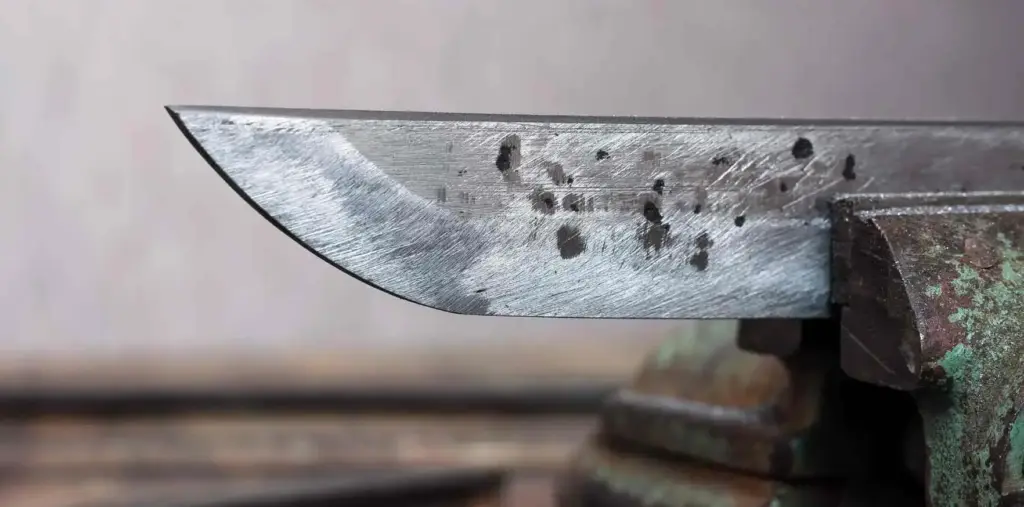
Early rust is easier to handle when you can tell a smudge from a warning sign. Check the blade under good light before using any cleaner, and stop if the surface feels rough instead of smooth.
| What You See | Risk Level | Next Step |
| Fingerprint, haze, or dull oil film | Low | Wipe clean, dry fully, and apply a thin oil film. |
| Tiny orange specks on smooth steel | Medium | Stop using the sword, wipe and oil lightly, then inspect again. |
| Rough, dark, spreading, or pitted rust | High | Stop DIY cleaning and ask a qualified specialist. |
| Rust near the edge, kissaki, or hamon | High | Avoid abrasives and get advice before polishing. |
Rust fixes that can backfire
Many owner-caused problems start with treating a small spot too aggressively. Avoid sandpaper, grinders, acids, metal polish, harsh abrasives, and power tools unless a qualified specialist has approved them for that blade.
Do not disassemble a sword unless you know what you are doing. Loose fittings, cracked tsuka, chips, bends, and edge damage are not rust-prevention jobs. They are stop signs.
Light marks that do not wipe away deserve patience, not force. Before doing more, read KatoKatana’s katana polishing guide.
When to stop cleaning
Stop cleaning when the blade may be antique, signed, inherited, papered, valuable, or historically important. Stop when rust feels rough, reaches the kissaki or edge, sits near hamon detail, or appears with cracks, bends, chips, or loose fittings.
If the sword may have collector or historical value, photograph it before doing more. Include the blade, fittings, visible markings, papers, and nakago if safely visible. Ask a qualified specialist before using abrasives or chemicals.
FAQ
How often should I oil my katana?
Oil your katana after handling, after cutting, and whenever inspection shows dry-looking steel. Display swords in normal indoor rooms can often be checked every few weeks. Humid or coastal rooms need more frequent inspection.
Can I touch a katana blade?
Avoid touching the blade with bare fingers. Fingerprints can leave moisture, salts, and oils on polished steel. Wipe the area promptly, dry it fully, and refresh the protective oil film when contact happens.
Does folded steel rust less?
No. Folded steel and Damascus-style patterns still need rust prevention. Treat them like other carbon steel blades unless the seller gives a clearly different material specification.
Do I need a traditional cleaning kit?
No. A traditional kit may include an uchiko powder ball, cleaning papers, and oil. Those tools can matter for some polished nihonto, but most modern production katanas only need a clean lint-free cloth and light mineral oil or choji oil.
Can I use baby oil or cooking oil?
Plain unscented baby oil may work temporarily if it is truly mineral oil. Check the ingredients first. Avoid cooking oils such as olive oil, vegetable oil, or coconut oil because they can turn sticky or rancid.
Buy a katana you can maintain
The right katana is one you understand before it arrives. Know the steel, sharpness, intended use, safety needs, and care routine before the sword is on your wall or in your hands.
For display or gifting, an unsharpened piece may be easier to live with. For cutting, plan around instruction, local rules, safe targets, and same-day cleaning. For collecting, protect evidence and value before chasing shine.
No listing should ask you to guess the maintenance burden. Once you know what care level you can keep up with, compare katana options by steel type, sharpness, intended use, photos, and care requirements before choosing.


