



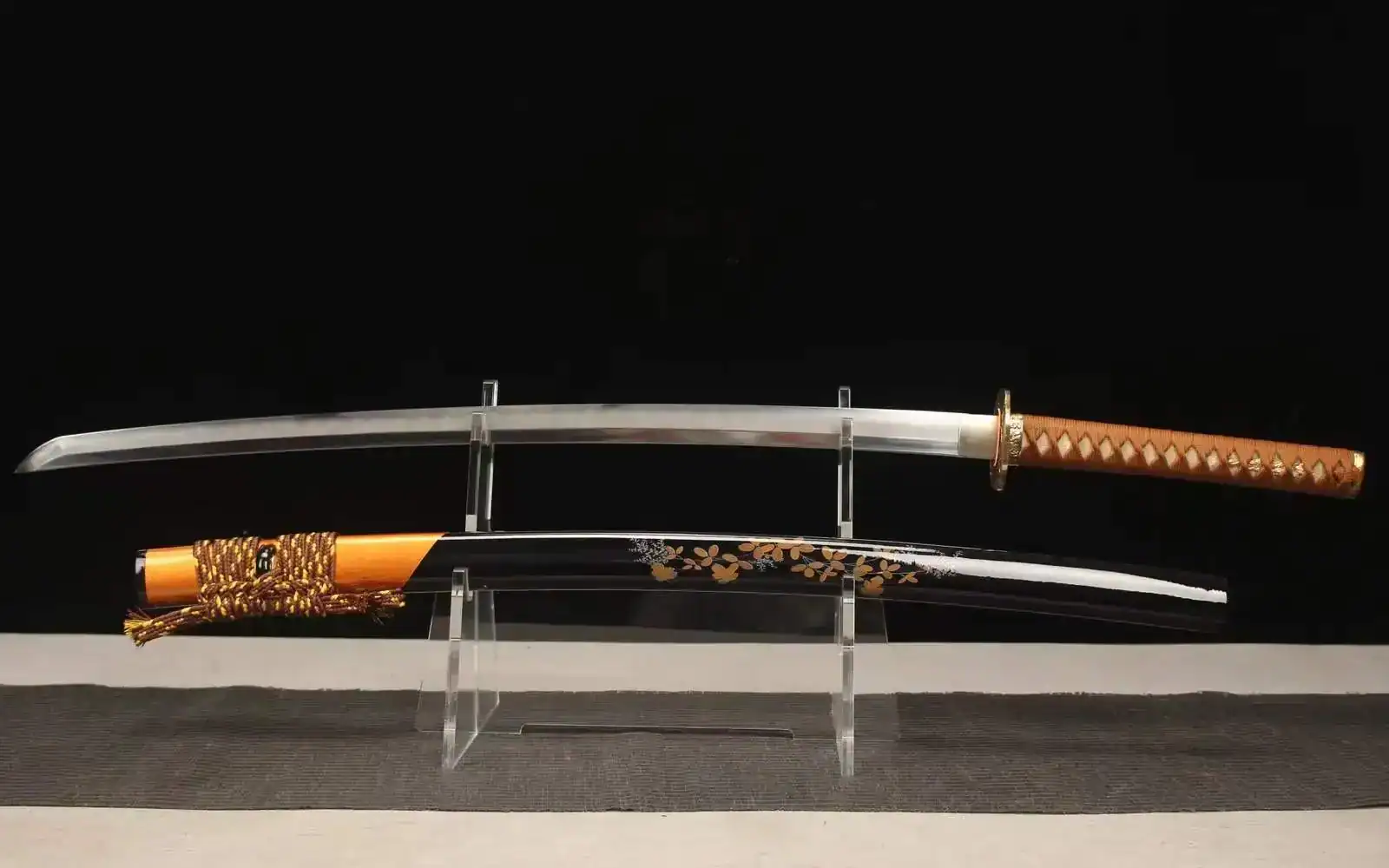
What Are Katanas Made Of?

A katana is made of steel. But it is not a simple bar of metal. Traditional smiths used tamahagane, a type of smelted steel. Modern makers use high-carbon steels suited for different purposes.
The blade must stay sharp enough to cut, yet flexible enough not to break on impact. This article explains how the materials work, not which one to buy.
Core Steel of the Katana Blade
The cutting-edge handles the toughest job. It meets the target first, absorbs the shock, and grinds through material with every strike. For this to work, the edge needs to be harder than whatever it cuts. That hardness comes from one key ingredient in the steel.
The Role of Carbon
Carbon is what separates soft iron from hard steel. By adding more carbon, smiths can push the blade toward greater hardness.
Katana sword edges usually fall between 0.5% and 1.0% carbon. This range allows the steel to take a fine edge and keep it sharp over time.
Traditional Core Material
Japanese smiths created their own steel called tamahagane. They smelted iron sand in clay furnaces over several days. The finished product varied in carbon content. Smiths picked through the pieces and chose high-carbon sections called hagane for the cutting edge.

Modern Core Materials
Industrial steel changed things. Modern alloys offer consistent carbon levels, so makers no longer need complex lamination to get reliable results. Today, most katanas use mono-steel construction, known as maru. The entire blade comes from a single steel type.
These steels differ in balance, not quality:
- 1045 carbon steel: An entry point. It takes an edge but needs more frequent sharpening.
- 1060 carbon steel: A reliable middle ground. It offers solid toughness without sacrificing too much hardness.
- 1095 carbon steel: Very hard with excellent edge retention. Requires skilled heat treatment to avoid brittleness.
- T10 tool steel: Contains tungsten for added scratch and abrasion resistance.
Different uses call for different trade-offs between hardness and durability.
But hardness alone creates a problem. A blade made entirely of hard-edge steel would stay sharp, yet it would be far more likely to crack on impact.
Supporting Structural Steel for Toughness
Hard steel keeps an edge sharp, but it comes with a trade-off. By itself, hard steel acts like glass. Strike a solid target, and the blade risks cracking or shattering completely. Smiths addressed this by adding a flexible backbone to the sword. This inner layer absorbs impact energy so the cutting edge stays intact.
The Solution: Lamination
Traditional construction combines steel with different strengths. Lower-carbon steel goes into the spine because it bends rather than breaks.
Several methods achieve this balance:
- Kobuse: A soft steel core wrapped in a hard steel outer layer.
- Sanmai: A hard cutting edge sandwiched between softer steel sides.
- Shihozume: A hard core surrounded by soft steel on all sides.
In each case, hard steel sits where the blade cuts, and soft steel sits where shock travels through.
Modern Alternatives: Spring Steel
Modern alloys can do both jobs in a single material. These steels flex under stress without needing laminated construction.
- 5160 spring steel: Chromium content adds durability. It handles repeated heavy strikes well, earning a reputation as a reliable “beater” steel.
- 9260 spring steel: Silicon allows dramatic flex—up to 90 degrees—before snapping back true.

Surface Treatments and Decorative Elements
Chemistry alone does not define how steel performs. The way a smith heats, cools, and finishes the metal changes its characteristics just as much. Many visual features on katanas began as functional techniques. The patterns collectors admire are actually byproducts of engineering choices.
Clay Tempering: The Hamon
Smiths apply clay to the blade before the final heat treatment. Thick clay goes on the spine; thin clay covers the edge. The edge cools rapidly during quenching and hardens for cutting. The spine cools slowly and remains tough for absorbing shock. The hamon, that distinctive wavy line, marks the boundary where these two zones meet.
Folding the Steel: The Hada
Folding originally served a practical purpose. It pushed out impurities and distributed carbon more evenly through steel. The process leaves behind a wood-grain texture called hada.
Modern “Damascus” blades use folding for visual effect rather than refinement. Different steels are layered to create contrast. Done poorly, this can introduce weak points between layers.
Polishing and Coatings
Traditional polishing moves through progressively finer stones. Each stage brings out more of the grain and temper line, revealing the blade’s structure on its surface.
Some modern swords feature titanium or gold plating for colored finishes like red, blue, or black. These coatings serve a decorative purpose and typically appear on display pieces rather than functional blades.
Traditional vs. Modern Katana Materials
Ancient smiths made blades from what their environment provided. Modern smiths select materials based on how the sword will perform.
Knowing the reasoning behind these choices makes it easier to find the right blade for your purpose—whether that means historical appreciation or hands-on practice.
Why Did Ancient Japan Use Tamahagane Steel?
Japan lacked deposits of high-quality iron ore. Smiths turned to iron sand, called satetsu, which demanded extra processing to become usable.
They refined this material in a tatara furnace, a clay smelting vessel. Iron sand and charcoal are combined over several days to produce raw steel.
The steel bloom that emerged contained impurities throughout. Folding was not an artistic choice; it was the only practical method to clean the metal enough for a reliable weapon.
Why Can Modern Katana Blades Succeed Without Tamahagane?
Steel mills today produce materials with precise chemistry and very few impurities. The labor-intensive folding process is no longer necessary just to make clean steel.
Modern metallurgy also opens the door to purpose-built alloys. Formulas like L6 bainite or spring steels can outperform traditional materials in straightforward durability tests.
These developments bring down both cost and complexity. A high-performance blade no longer requires years of training or an exceptional budget to obtain.
Differences in Intended Purpose
Your intended use should guide your material choice.
- For collectors: Traditional tamahagane or carefully folded steel provides a historical connection and visual character. The hamon and hada patterns reflect centuries of craft tradition.
- For practitioners: Modern alloys like 1060 or spring steel stand up to repeated cutting sessions. They also sting less financially if a blade gets scratched during regular use.
- For props and costumes: Stainless steel suits, wall display, or cosplay well. It resists tarnish without upkeep. However, stainlesssteel becomes brittle under force and should never see any kind of contact.
Each material serves a different goal. Matching the steel to your actual needs keeps both expectations and results in line.
Conclusion
There is no single “best” steel. A wall display and a cutting sword call for entirely different materials.
Quality comes from how the steel, heat treatment, and blade geometry work together, not just a name on a label. A well-crafted 1060 blade can easily outperform a poorly made tamahagane sword. Choose based on what matters to you: historical connection or everyday durability.
For a deeper look at how materials influence cost, see How Much Does a Real Katana Cost?


