


Can You Buy a Katana in Japan and Bring It to the US?

Yes, you can buy a katana in Japan and bring or ship it to the US in many cases. The answer changes once you know what kind of sword you are buying. A modern replica is mostly a packing, airline, and customs issue. A registered nihonto can become an export-paperwork issue before it ever gets near an airport or carrier.
That difference matters when you are standing in a Tokyo shop with a sword in your hands. The blade may look right. The price may be fair. None of that tells you whether this exact piece can leave Japan, ride in checked baggage or a carrier shipment, clear US customs, and be legal to own at home.
Make those calls while you are still in the shop. At the airport, your choices are already much worse.
Start with the sword in your hand
Ask the seller to put the sword type in writing, preferably on the receipt or a separate shop note. “Japanese sword” is too vague for an airline, carrier, or customs broker. You want a plain description: registered nihonto, iaito or practice sword, or modern replica. A good shop should not need to guess.
| Sword type | Travel problem | Ask for this first |
| Registered nihonto | Japan export inspection may apply | Dealer explanation of certificate and timeline |
| Iaito / practice sword | Usually fewer export issues, but still looks like a sword in baggage | Written shop description and airline approval |
| Modern replica | Less Japan export work, but still no carry-on | Checked-bag plan or domestic purchase option |
Also ask whether the blade is sharp or blunt, decorative or functional, steel or alloy. A blunt iaito can still look like a live blade on a baggage scanner, and a decorative blade can still make a check-in agent stop and call a supervisor. For the full nihonto-versus-modern breakdown, see nihonto vs katana.
Flying home with a katana
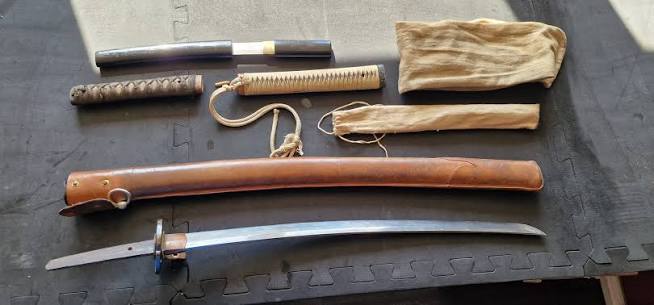
Do not put a sword in carry-on luggage. TSA allows swords only in checked bags and says sharp objects should be sheathed or securely wrapped. That rule is useful on the US side, but your Japan-departure flight still depends on the airline and local airport staff accepting the checked item.
The more valuable the sword is, the less you want to improvise at check-in. If an airline refuses a cheap decorative piece, the loss is annoying. If it refuses a papered nihonto, you may be stuck with a sword you cannot casually mail, carry around, or abandon. Email the airline about blades on your exact route before you buy, and keep the answer.
Flying with a sword makes the most sense for modern replicas and practice swords after the seller has identified the item and the airline has confirmed the baggage policy. For a registered nihonto, do not plan on the airport route unless the dealer and airline have both confirmed the details. Export timing, airline refusal, and rough handling are all real problems.
CBP clearance only answers the import question. It does not give you a carry permit, and it does not override state or city rules after you leave the airport. The separate question is are katanas legal where the sword will be stored, transported, or displayed.
If the sword is a registered nihonto
With a registered nihonto, the papers are easy to misunderstand. A registered sword is not automatically a National Treasure or Important Cultural Property. It is still a regulated Japanese art sword, and export inspection may apply. Japan’s Agency for Cultural Affairs handles export inspection certificates for antique art objects when they are not protected items. National Treasures and Important Cultural Properties cannot be exported.
The timing alone can ruin a casual travel plan. The agency says processing generally takes 10 open-agency days after complete documents arrive, and delays are possible when applications increase or paperwork is incomplete. A two-week trip is not a good window for carrying a registered nihonto home yourself. Ask the dealer whether they can finish the certificate and ship the sword after approval.
Do not let the paperwork names blur together. A torokusho is a Japanese domestic registration certificate; it proves lawful ownership inside Japan. NBTHK or dealer appraisal papers speak to attribution and quality. A purchase invoice proves what you paid. None of those automatically proves the sword can leave Japan. If a seller waves one paper at you and says it is enough, slow down and ask what it is for.
Shipping a katana from Japan
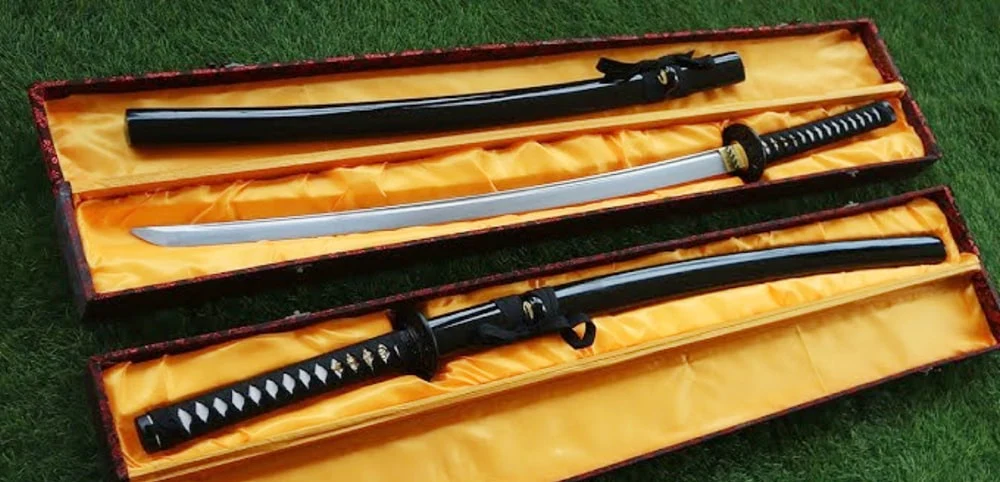
For a registered nihonto, dealer-managed shipping is usually safer than trying to carry the sword through the airport yourself. The dealer can line up the export certificate, packaging, carrier, invoice, and insurance in the right order. It will cost more and take longer, but it gives you a documented path instead of a check-in gamble.
Do not accept “we can ship it” as a complete answer. FedEx Japan lists weapons and swords among prohibited items. Other carriers may accept swords only under certain contracts, routes, descriptions, or packaging rules. Ask the dealer which carrier will actually carry this exact sword, what the invoice description will say, and whether the shipment is insured for the declared value.
Be careful with old duty advice. CBP suspended duty-free de minimis treatment for low-value shipments from all countries effective August 29, 2025. Older guides may still say packages under $800 enter duty-free. That rule no longer works the same way for shipped goods.
A sword in your luggage and a sword shipped from Japan follow different customs paths. Ask for the HTS code the broker will use, often 9307 for non-antique swords or 9706 for qualifying antiques, and confirm the current rate before shipment. Antiques over 100 years old may enter duty-free under HTS code 9706 with the right documentation. Also check fittings: elephant ivory, tortoiseshell, coral, and some other materials can create CITES problems. The invoice, declared value, and customs entry should match.
Do you actually need to buy it in Japan?
Buy in Japan when Japanese provenance is the point. A papered, attributed nihonto is a collector’s purchase, and the paperwork is part of what you are paying for. The slower export path makes sense there.
Buy online when the sword is meant for display, cosplay, a gift, or first-time functional ownership. In those cases, Japanese export paperwork rarely adds value for the buyer. A seller that ships from within the US, or clearly handles import paperwork before delivery, keeps the Japan export and airline problems on the seller side. You still need to check state and local law, but you are not trying to solve export paperwork in the middle of a trip.
For those buyers, clear specs and predictable delivery matter more than Japanese provenance. You can focus on steel, tang construction, sharpness, and intended use instead of turning the purchase into an export project.
Martial arts buyers should ask their instructor first. Some schools want a bokken, iaito, or unsharpened trainer before a sharp shinken is appropriate. If you buy a modern functional katana, choose a seller who states the steel, tang construction, sharpness, and intended use. Gift buyers should make the same check before choosing a blade by looks alone. See decorative vs functional katana before you spend.
Before you pay, watch for three red flags
A reputable seller should be able to explain the path home clearly. Pause the purchase if any of these show up, especially on a registered blade.
- The export timeline is hand-waved. For a registered sword, the dealer should explain who files the certificate and when the sword can ship.
- The carrier or airline is unnamed. “We can ship it” or “it should be fine as baggage” is not a plan.
- The paperwork does not line up. The invoice, declared value, export certificate if required, and customs entry should all describe the same transaction.
Buying a documented nihonto? Let a reputable dealer manage export and shipping from start to finish. Buying a replica or practice sword? Confirm the airline will take it, pack it in a hard case, declare it honestly, and check your local laws before you fly. For a functional, display, gift, or custom katana without Japan-side export paperwork, start with a custom katana.


