



How to Read a Katana Product Page Before Buying

A katana listing can look convincing without proving that it describes the exact sword in your cart. Start by checking whether the page identifies your selected option and whether its other claims fit what that option is said to be for.
Read from stated use to selected variant, construction details, images, and terms. The order matters: a strong photo or broad label should not decide the purchase on its own. By the end, you should know whether to buy, ask one or two specific questions, or leave the listing.
Start with the stated use
Before comparing price or appearance, find what the listing says the sword is for, its selected edge condition, and any limits it names. Use those details as the reference point for the rest of the page. A missing point can justify a question. Claims that do not fit together should stop the purchase until the seller can explain them.
Do not infer a use statement from the title, a familiar product name, or a photo. The page needs to say what it is presenting and where its limits are. Use how to choose a katana for practice or display to settle that category question before comparing an individual listing.
Check the selected variant before sales copy
A specification helps only when it belongs to the option you selected. Check that the listed dimensions, material, edge state, included items, and fulfillment status apply to that variant. A page can describe a family of options while leaving it unclear which details belong to the sword in your cart.
Write down the values shown for your option before broader sales copy starts to shape the decision. Material names and measurements can inform a use decision, but they are not automatic quality scores. They matter only when the listing attaches them to your variant.

Connect each construction claim
Once you know which option you are reading, the construction copy has to hold up. Treat each performance label as a claim and compare it with the stated use, selected specifications, construction description, and limits. If one answerable detail is missing while the rest fits, ask. If several claims have no support, pass.
Steel and heat-treatment details
First check that the material and heat-treatment language belongs to your selected option. A material name does not explain the full construction, and heat-treatment wording does not predict how an individual sword will perform. A battle ready katana label deserves model-specific support elsewhere on the page, not an assumption.
Tang, edge, and use-limit details
Read tang or assembly information alongside the edge condition and stated limits. A full tang katana claim still needs model-specific documentation. The phrase alone is not a safety guarantee or permission to use the sword beyond what the listing states.
Use images to test the description

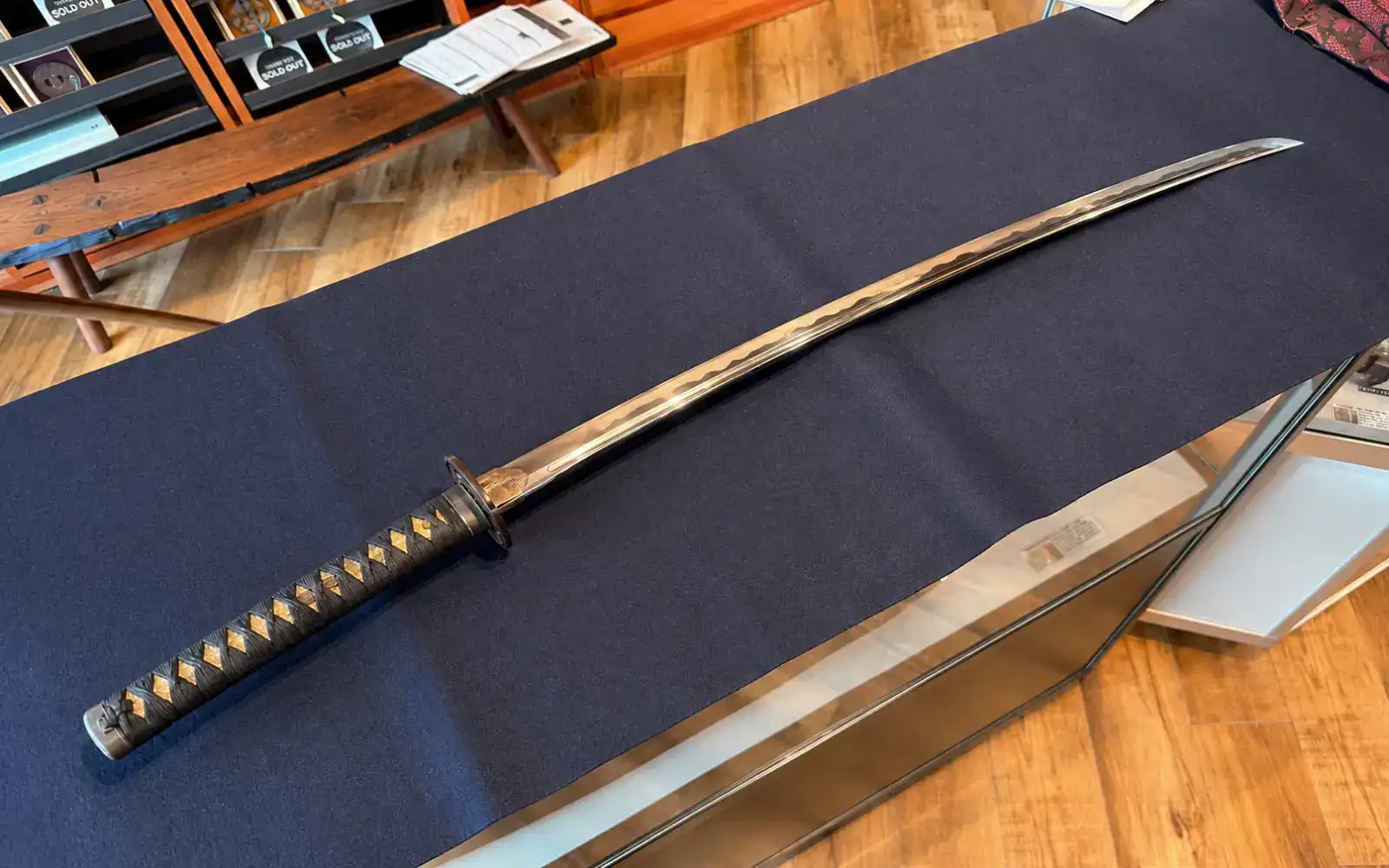
Images can support the description, but only for what they actually show. They cannot establish hidden construction or heat treatment. First identify whether the gallery represents the exact item, a production design, a representative sample, or nothing stated. Then compare the visible finish, fittings, wrap, saya, accessories, and selected options with the written listing.
Set the listing aside when the title, specifications, gallery, and production-status language conflict. A photo that differs from the selected option may have an explanation, but you need it before buying.
Keep one note before you contact the seller: the listing title and URL, the selected option, the relevant screenshot, and the exact sentence that conflicts. It lets you point to the discrepancy instead of trying to summarize what felt wrong.
Treat delivery and returns as part of the item
Price alone leaves too much unresolved. Read the page or policy for customization, shipping, duties, production time, transit time, return eligibility, and defect reporting. A checkout badge or short summary can still leave a term unanswered.
Ask before purchase when the page does not make a destination, return, or production detail clear. The price does not replace the terms for this exact order.
Choose: buy, ask, or pass
After you have compared the whole page, make one call. Buy when the evidence agrees. Ask when one or two narrow, answerable details are missing. Pass when missing support or a conflict would change the selected option, stated use, or terms you would have to accept.
| Decision | Evidence in the listing | What to do |
| Buy | The selected option, stated use, construction support, images, and terms agree. | Save the listing record, then order only when the terms are acceptable. |
| Ask | One or two narrow details are missing, but the rest of the listing agrees and those details have clear answers. | Ask those questions and keep the response with your order record. |
| Pass | A claim lacks support or conflicts on the selected option, stated use, or terms you must accept. | Leave the listing rather than assume the best-case reading. |
Ask only when the answer could change the decision. The functional katana seller questions guide helps turn a gap into a question the seller can answer.
Three product-page questions worth keeping
Can photos prove a construction claim?
No. Photos can help you compare visible finish, fittings, wrap, saya, accessories, and options with the text. They cannot independently verify hidden construction or heat treatment. For any material claim that matters to your decision, rely on the written listing and a seller response.
What should I do with a full-tang claim?
Look for model-specific supporting detail, then compare it with the stated use, edge condition, and other construction information. If that support is absent, ask the seller rather than treating the phrase as proof of performance or safety.
Is a return-window badge enough?
No. Read the full return policy for the terms that apply. Confirm how return eligibility and defect reporting relate to the exact order before you buy.
Before paying, compare your notes on stated use, selected variant, image status, and terms. A small missing detail earns a question. A conflict involving the selected option, stated use, or terms you must accept earns a pass. Once the record agrees, compare the Katana category.


