



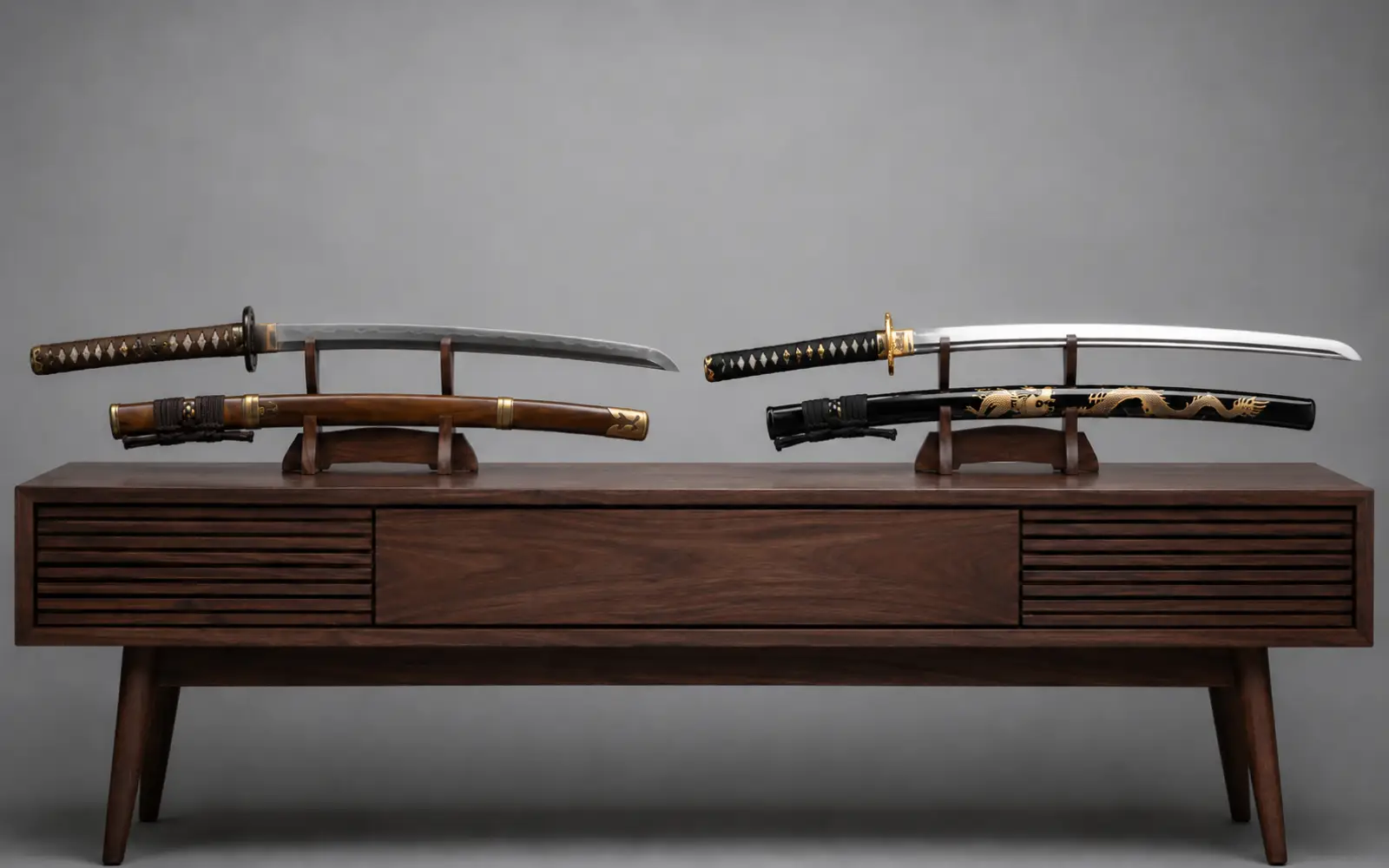
Decorative vs Functional Katana: Don’t Trust Looks Alone

The hard part is not spotting a beautiful katana. It is knowing what that sword is actually built to do. A decorative katana and a functional katana can share the same curve, wrap, tsuba, and polished product photos, but they should not be trusted the same way.
For most buyers, the safest choice starts with how the sword will be owned. A wall display, gift, cosplay prop, iaido tool, and cutting sword all create different risks. If the blade may touch a target, a person, a floor, or a public venue, looks are not enough. You need proof.
First ask if it leaves the stand
A katana that stays on a wall has one job: look right and stay safely stored. Collectors, anime fans, photographers, and gift buyers often care more about the saya, tsuka wrap, tsuba, blade finish, and overall presence than cutting ability.
The moment the sword leaves private display, the question changes. Public photos and cosplay bring venue rules. Training brings instructor rules. Cutting brings target, space, skill, and construction questions. A product page cannot answer all of that unless it clearly states what the sword is meant to do.
Blade laws, import rules, age limits, transport rules, and event policies vary by location. Before buying, carrying, shipping, or public display, check local rules and customs requirements. The are katanas legal guide is the better next step for that part of the decision.
A display katana still has a job
A wallhanger is not a failed functional sword. It is the right category when nobody expects contact use. Paying for unused cutting performance may add care without improving the experience.
The risk is a wallhanger being sold or handled like more than a wallhanger. Long stainless blades, vague steel descriptions, loose handles, fantasy language, or missing use limits are reasons to keep the sword display-only. If a claim sounds slippery, treat it as a warning sign before trusting the listing.
The build matters more than polish
The difference between decorative and functional is not just sharp versus dull. It is whether the seller gives enough construction detail to support the use being claimed. Use the comparison below as a pause before buying the wrong sword, not as a safety certificate.
| Buying question | Decorative katana | Functional katana |
| What should it do? | Display, collecting, gifts, photos, non-contact cosplay | Approved training, handling, or cutting use |
| Can it hit anything? | No. Treat it as display-only. | Only stated targets, with suitable space and instruction. |
| What proof matters? | Edge state, safe storage, mounting, clear display limits | Steel, nakago, heat treatment, fittings, edge state, use limits |
| Who should choose it? | Collectors, fans, gift buyers, display-focused owners | Buyers following seller limits and qualified instruction |
Choose decorative when the sword will live on display, be given to a non-practitioner, or appear in private photos. Choose functional only when the seller states the intended use and you have a legal, supervised, or clearly controlled place for that use.
For display, buy what you will enjoy seeing

For display, focus on the details you will see every day: curve, blade finish, fittings, wrap color, saya finish, and how it sits on a stand or wall mount. Extra cutting capability does nothing for a shelf, office, or gaming room.
Display does not mean careless. Confirm whether the blade is sharpened or unsharpened, where it will be mounted, and who can reach it. Children, pets, guests, and roommates change the decision. Carbon steel display pieces may still need basic care.
Plan the mount before the sword arrives, especially when the blade is sharp, heavy, or displayed in a shared space. A good-looking sword still needs a stable stand, a dry location, and a place where people will not casually grab it.
A gift should not create a safety problem
A katana gift is easy to overbuy. The buyer sees a dramatic sword and assumes sharper means better. The recipient may live with roommates, have no safe display space, train under a school with strict equipment rules, or simply want a good-looking piece for a collection.
When you are unsure, display-first or unsharpened is the safer lane. A dojo student is the exception that proves the rule: they may need a bokken, iaito, shinken, length, weight, or style chosen by the instructor. Guessing can create a more expensive mistake than choosing a lower-risk display sword.
Sharpness should be a conscious gift decision, not a bonus feature. The sharpened or unsharpened katana guide is worth reading before buying for someone else.
Cosplay starts with venue rules
Anime, movie, and fandom buyers often need the right look, not cutting ability. Color, fittings, silhouette, and photo accuracy can matter more than steel type. That is fine for private display or controlled photography, but public events are different.
Many venues restrict metal props, sharp edges, realistic weapons, or unsheathed blades. Check the event policy before purchasing, and contact the organizer when the rule is unclear. An unsharpened sword may still be rejected if the venue does not allow metal props.
Once the venue and edge state are clear, fandom buyers can compare anime-inspired options without pretending the sword needs cutting performance to be worth owning.
Training starts with your school
Beginners often think the first real decision is decorative versus sharp. In a dojo, that may not be the first decision at all. Many schools begin with bokken, iaito, or other non-sharp tools, and some instructors have strong rules about length, weight, curvature, and when live blades are allowed.
Ask your instructor before buying anything sharp for practice. Iaido, kata work, and cutting practice can require different tools, which is why practice swords and cutting swords should not be treated as interchangeable.
Tameshigiri matters for the same reason. Controlled cutting is not casual backyard cutting. It needs suitable targets, space, supervision, and a sword that is sold for that kind of use.
Cutting use starts with proof
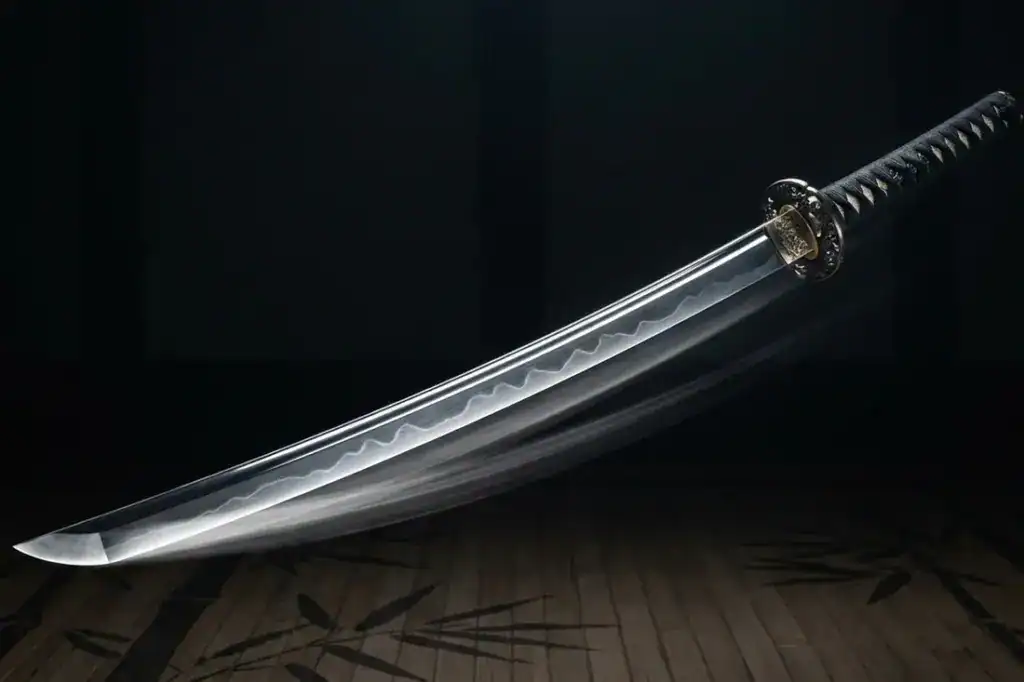
A katana that may hit a target needs a higher standard than “looks solid” or “comes sharp.” Functional should mean the seller states the intended use and backs it with construction details. Without that, the safer assumption is display-only.
Useful proof includes named steel, heat treatment, edge state, allowed targets, prohibited use, and clear seller answers. Ask about the nakago, the blade section inside the handle; the tsuka, or handle; and the mekugi, the retaining pegs. These details show whether the listing supports the use it claims.
Sharp is not proof
Sharpness only describes the edge. It does not prove the blade, handle, fittings, or heat treatment are suited to impact. A properly constructed nakago secured inside the tsuka is important, but it is still one part of the safety picture.
The phrase battle ready katana is also a seller claim, not a certification. Treat it as a prompt to inspect the product page, not as permission to swing the sword at whatever is nearby.
Look beyond the hamon
A visible hamon can be beautiful, but it is not the whole story. Some hamon are cosmetic. Folded steel can be chosen for appearance as much as performance. Tamahagane and nihonto language needs provenance. Do not let good-looking photos or traditional terms replace construction detail.
Buyers comparing live blades should read questions to ask before buying a functional katana. The best question is often not “is it sharp?” but “what exactly is this sword approved to do, and what should it never be used for?”
Once those limits are clear, compare functional katanas by product pages that state steel, construction, edge state, and use limits plainly.
Unknown swords stay on the wall
Already-owned swords create a different kind of problem. You may not have the original listing, seller support, or accurate specs. Maybe it came from a flea market, a gift, an old collection, or a marketplace post that is no longer available.
When steel, heat treatment, tang construction, seller history, or use limits are unclear, keep the sword display-only. Do not test uncertainty by swinging, cutting, or striking targets. A loose tsuka, missing mekugi, vague steel claim, or stainless long blade is enough reason to stop.
Verification starts with boring details: named steel, heat treatment, nakago or tang information, fittings, edge state, and stated use limits. If those details are missing, the sword may still be meaningful as a collectible or display piece. It should not become a practice sword by guesswork.
Price and upkeep can decide
When two choices both look good, care burden often settles the decision. A display-first or unsharpened katana usually creates less handling risk for gifts, decor, cosplay, and unsure buyers. A functional carbon steel sword asks more from the owner: oiling, dry storage, safer handling, and a better plan for where it lives.
Price can help you slow down, but it should not decide safety by itself. Very low prices are a reason to inspect specs more carefully. Higher prices do not prove cutting suitability either. The product page still needs to explain steel, construction, edge state, and use limits.
Care questions matter more once carbon steel and a live edge are involved. Read how to care for a katana before buying a sword that will need regular maintenance.
Customize after you know the use
A custom katana should start with the same practical question as any other sword: what will it actually do? Display customs can lean into color, fittings, saya finish, and character-inspired details. Cutting customs should settle construction, steel, edge state, and use limits before appearance takes over.
The best purchase is not always the sharpest or most expensive katana. It is the one that fits the way it will be owned, stored, displayed, gifted, trained with, or used under clear limits.
Common buyer questions
Can you swing a decorative katana?
No. A decorative wallhanger should not be swung hard, used for cutting, or used for impact. If the seller does not prove functional-use construction and limits, treat the sword as display-only.
Is a sharpened katana always functional?
No. Sharpness only describes the edge. A sharp sword can still have weak construction, poor heat treatment, unsuitable steel, or unclear use limits.
Is full tang always safe for cutting?
No. Full tang or nakago construction is one signal, not a guarantee. Steel, heat treatment, fittings, edge state, target choice, instruction, and seller limits still matter.
Can a decorative katana be made functional?
Usually, no. Sharpening a display sword does not change its steel, heat treatment, tang construction, fittings, or seller use limits. Treat it as display-only unless the maker can prove otherwise.


