



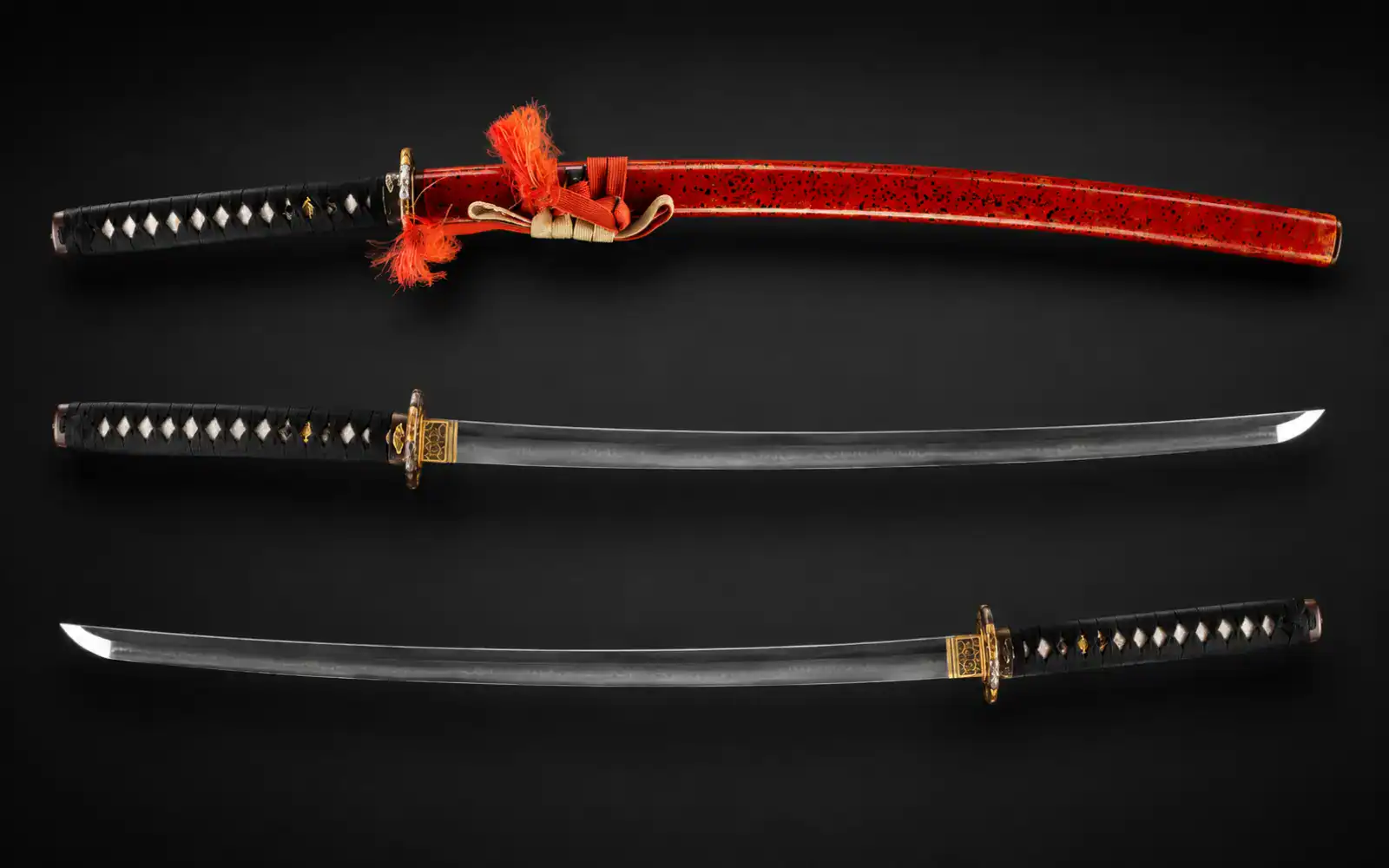
Buying a Functional Katana? Ask the Seller These Questions

Quick Answer
- Before buying a functional katana, ask the seller for written proof of steel, heat treatment, tang construction, sharpness, use limits, photo context, and defect handling.
- A good reply names what the blade can and cannot do instead of leaning on labels like battle ready, hand forged, high carbon steel, or real hamon.
- Use one rule: clear answer means continue, partial answer means ask once, vague answer means caution, and evasive answer means stop.
A functional katana listing can look convincing and still leave the real questions unanswered. Sharp photos, a dramatic hamon, or the phrase battle ready do not prove the sword fits your use.
Use these questions when the listing looks promising but the important details are still missing. They help you avoid buying from photos alone, especially when the sword has to fit a display wall, a storage plan, a training rule, a gift deadline, or a local restriction after delivery.
Ask for Katana Specs, Not Sales Words
Send these questions in one message, then compare the reply against the listing. A seller who knows the product should be able to describe this blade, tsuka, edge, and return policy without repeating the product title back to you.
Use the seller’s own terms back to them. Nakago means tang, tsuka means handle, mekugi are retaining pegs, tsuba is the guard, and saya is the scabbard.
- Ask: What exact steel grade is this blade made from? A useful answer names the steel. “High carbon” or “Damascus” alone is not enough. Clear answer: continue. Missing grade: ask once. Still vague: do not buy.
- Ask: Is it through-hardened, differentially hardened, clay tempered, or unspecified? A useful answer ties heat treatment to function, not just hamon appearance. Hamon-only answer: ask once. Still unclear: pause.
- Ask: Does the nakago or full tang extend securely through the tsuka, and how is it fixed with mekugi or other hardware? Ask whether the tsuba, tsuka, and saya should arrive tight with no rattle. No construction detail: do not buy.
- Ask: Is the blade shipped sharp, semi-sharp, or unsharpened? A useful answer names the edge condition and any handling warning. Match that answer to your local rules, storage plan, and experience.
- Ask: What use is this exact model recommended for, and what should it not be used for? A useful answer names safe and unsafe targets. “Cuts anything” is not a reason to buy.
- Ask: Are the photos exact, recent-batch, representative, or made-to-order samples? Exact or current photos are best. Sample-only photos need one follow-up if fittings, polish, or hamon matter.
- Ask: What happens if the sword arrives loose, damaged, or different from the description? A useful answer gives the reporting window, proof needed, return shipping, and refund or replacement path.
Seller answers about steel and tang are worth checking if the terms are unfamiliar. Start with the best steel for katana guide and the full tang katana guide before accepting vague wording.
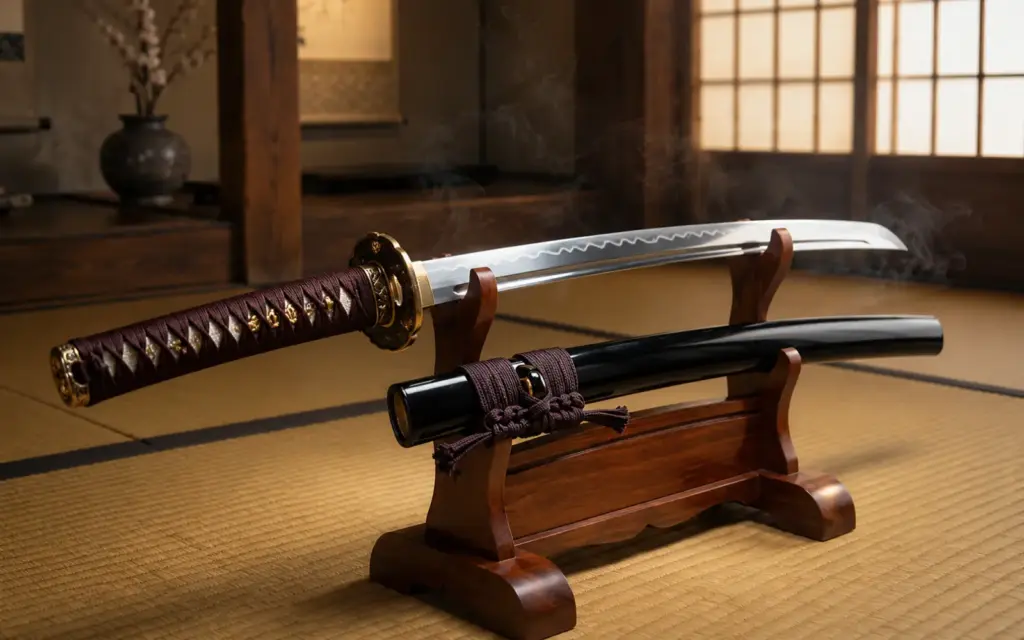
Copy This Message to the Seller
Hi, I am considering this exact katana. Could you confirm the blade steel, heat treatment, tang construction and securing method, shipped sharpness, recommended use, not-recommended uses or targets, whether the photos show this exact sword or a sample, and what happens if it arrives loose, damaged, or different from the description? Thank you.
Good Katana Seller Answers Sound Plain
Strong katana seller answers are usually plain. They name the steel, explain the heat treatment, describe how the tsuka is secured, and say what the blade should not be used for.
- A useful steel answer sounds like: “This model is 1060 carbon steel and through-hardened for durability.” A weak answer says only: “It is high carbon and very strong.”
- A useful construction answer sounds like: “It has a full tang, secured through the tsuka with mekugi, and the fittings should not rattle.” A weak answer says only: “The handle is strong.”
- A useful use-limit answer sounds like: “Use only seller-approved soft targets in a controlled setting, and avoid hard, frozen, metal, bone, tree, or improvised backyard targets.” A weak answer says: “It can cut anything.”
Shortlist product pages that show this level of detail before you contact the seller. The seller conversation should confirm the model, not rescue a listing that hides basic specs.
Katana Seller Red Flags
A weak first reply is not always a scam. Ask one focused follow-up once. If the second reply still avoids steel, tang, use limits, photos, or returns, stop the purchase.
Do not pay a premium for words alone. If the price is built around folded steel, real hamon, tamahagane, handmade work, or a rare finish, ask what proof, photos, or paperwork supports that claim.
| Seller reply | What to do |
| “High carbon steel” with no exact grade | Ask for the exact steel grade. Leave it if they cannot name one. |
| “Battle ready” with no use limits | Ask what targets and uses are not recommended. Leave it if the answer still sounds unlimited. |
| “Hand forged” with no construction details | Ask how the tang is built and secured. |
| “Real hamon” with no heat-treatment explanation | Ask whether it comes from differential hardening or a surface effect. Treat hamon as evidence only when the process is explained. |
| “Can cut anything” | Do not buy based on that claim. Responsible sellers state limits. |
| Pushes off-platform payment | Stay with protected payment methods or leave the deal. |
| Cannot explain defect or return handling | Do not check out until the policy is clear in writing. |
Keep the seller’s reply in the same order thread when possible. If a sword arrives with loose fittings, a different edge condition, or sample-photo differences, the written answer gives you something concrete to reference in a defect claim.
If the sword arrives loose, damaged, or misdescribed, document the issue before trying to tighten, disassemble, sharpen, or alter it. Changes you make after delivery can make a return or defect claim harder.
Some mistakes start before the seller conversation, such as ignoring vague steel, tang, or use claims in the listing. A separate guide covers mistakes to avoid when buying a katana.
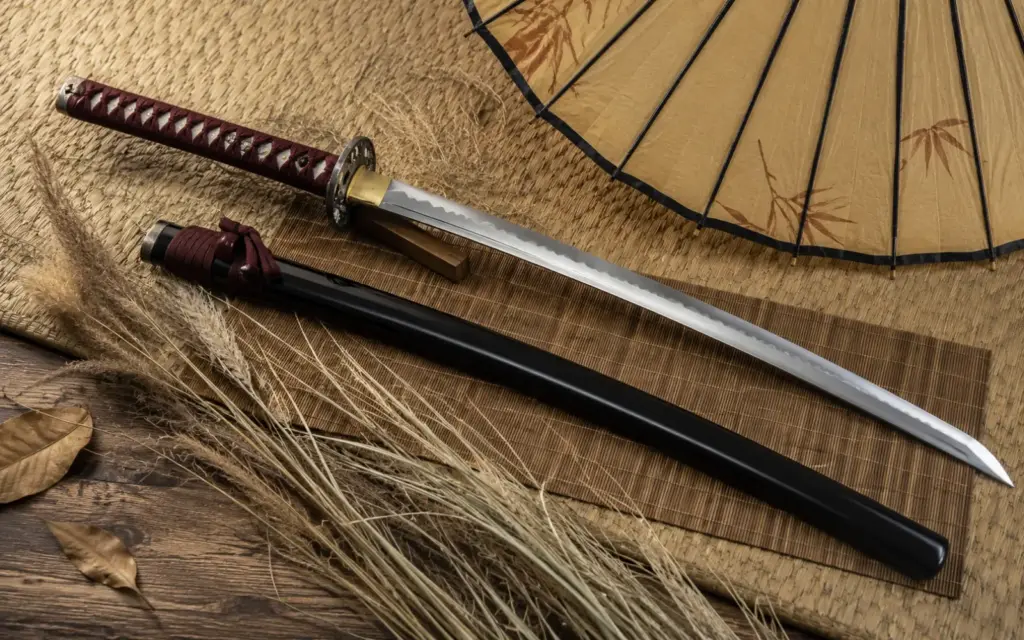
Ask What the Katana Is Made to Do
Ask the seller in the language of your actual use: “I plan to use this for forms, light cutting, tatami, or display. Do you recommend this exact model for that use?” That forces the answer away from the generic word functional.
A useful seller answer separates display, forms, light cutting, and dojo use. A decorative or anime-inspired piece may be fine for display or cosplay presentation, but that does not make it suitable for cutting practice.
- Display or gift: ask whether the blade ships sharp, how close the photos are to the final sword, how the saya should fit, and what storage or mounting caution the seller recommends.
- Light cutting: ask for approved targets, unsafe targets, edge condition, and whether the blade geometry is meant for that kind of use.
- Dojo use: ask only after checking instructor rules, because the right sword depends on the school, rank level, and training method.
Dojo buyers should confirm instructor requirements before ordering. A sword that looks suitable online may still be wrong for a school, rank level, edge policy, or training method. A guide to choosing a katana for practice or display can help you separate those paths first.
Check Shipping, Customs, and Returns
Shipping terms matter because a functional katana may cross borders, arrive with a sharp edge, or need a defect claim after delivery. The seller should explain their own shipping and return process.
Buyers in the US and elsewhere should check local law, age rules, import rules, customs requirements, and rules for carrying or displaying sharp blades before ordering. Use platform-protected payment when buying through a marketplace, and avoid off-platform deals that remove buyer protection.
- Where does it ship from, and what carrier, tracking, and delivery window should you expect?
- Who handles customs, duties, rejected imports, or local restrictions if the shipment has a problem?
- How quickly must damage be reported, and what proof does the seller need?
- Who pays return shipping when the issue is a confirmed defect?
- Does the blade ship oiled or wrapped, and what first cleaning or storage step does the seller recommend after unpacking?
- Are custom orders cancelable or returnable, and when does that policy become final?
Legal rules vary by country, state, and local area. The guide on are katanas legal can help you check the right limits before shipping.
Common Questions Before You Pay
Can I use a functional katana for light cutting?
Only if the seller recommends that exact model for light cutting and names approved soft targets. You still need proper instruction, legal checking, a controlled space, and target-specific safety guidance before using a sharp blade.
Is battle ready enough proof that a katana is functional?
No. Treat battle ready as a marketing label until the seller confirms named steel, heat treatment, secure tang construction, edge condition, use limits, and return handling in writing.
Buy After You Get Clear Answers
Buy only when the seller answers the practical questions in writing. If the reply leaves you guessing about the blade, the use, or the return path, keep looking.
After the answers are clear, compare functional katanas by the use you already confirmed. A blade meant for display, forms, or controlled cutting should be described that way before it reaches your cart.


