



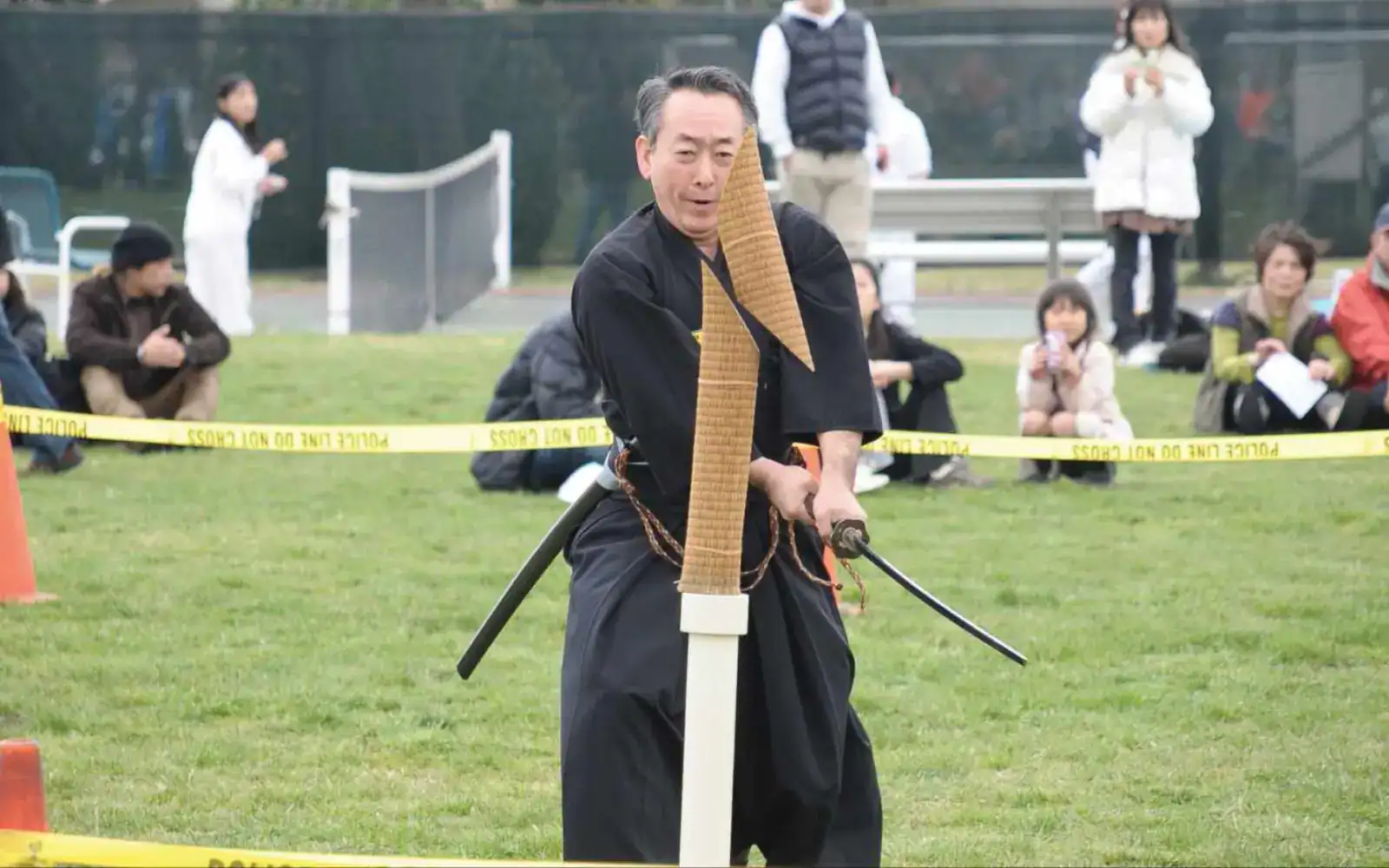
What Is Tameshigiri? A Beginner’s Guide to Test Cutting

QUICK ANSWER
- Tameshigiri literally means test cutting, but modern practice reveals edge alignment and control more than raw sharpness alone.
- Standard targets are usually prepared rolls of tatami omote or goza, with bamboo added when harder resistance is needed.
- Formal tameshigiri needs a functional katana, a stable setup, and supervision, not random backyard cutting.
What is tameshigiri? If you just watched someone slice through a rolled mat cleanly, you are in the right place. In modern use, tameshigiri is controlled sword cutting with a real katana on prepared targets to test edge alignment, technique, and control.
This guide answers three things fast: what the term means today, what people actually cut, and what makes a katana suitable. If you found it through anime or movies, the real version is less cinematic and more interesting.
What Tameshigiri Means Today
Today, the point is controlled feedback, not pure spectacle.
What the word means
Tameshigiri literally means “test cutting.” In modern practice, it usually refers to live-blade cutting that reveals the user’s edge alignment, control, and consistency more than the sword alone.
Online clips often frame it as spectacle. In a serious training context, it is closer to a technique check. The target gives feedback that air practice cannot.

Why modern tameshigiri is not random cutting
Modern tameshigiri is not random cutting because the setup is repeatable. Prepared targets, stable stands, and safety rules give the cut meaning. Without that consistency, you are not learning much beyond whether a blade can hit an object.
That is why martial artists sometimes mention hasuji, which simply means edge alignment. The cut shows whether the edge stayed true through the motion, whether the swing path stayed clean, and whether the follow-through matched the target instead of fighting it.
Why Tameshigiri Started
The history here matters only enough to explain how the meaning shifted.
How historical sword testing worked
Historically, tameshigiri was used to confirm how well a sword cut. Historical descriptions often mention straw-like materials, tatami surface rush, bamboo, and other resistant targets.
Historical records, including some inscriptions on sword tangs, indicate that certain pre-modern tests involved condemned criminals, a practice specific to that era and not part of modern training. In some cases, a result could be recorded on the tang as tameshi-mei.
How it changed in modern training
The meaning shifted with the purpose. Historically, tameshigiri helped evaluate blades. Today, it is mainly used to reveal technique, control, and cutting consistency.
What People Cut in Modern Tameshigiri
Two things drive target selection in serious tameshigiri:
- Standard targets make the cut reflect skill, not random material differences.
- Consistency creates feedback you can compare from one session to the next.
Modern tameshigiri targets are chosen for repeatability first. That is why trained cutting looks different from backyard clips. The goal is to use consistent resistance and learn from the result.
| Target | What It Simulates | What Feedback It Gives | Skill Level |
| Tatami omote / goza (soaked, rolled) | Standard resistance | Alignment, swing path, follow-through | All levels |
| Green bamboo (whole or as core) | Harder resistance | Impact control, structural cutting skill | Intermediate and up |
What tameshigiri mats are
Tameshigiri mats usually mean rolled tatami omote or goza prepared for cutting practice, not ordinary mats used straight from the floor. Tatami omote is the rush surface layer used on traditional tatami. Goza is often used as a looser label for similar rush-mat material.
Preparation matters because the target has to behave consistently. Mats are rolled, soaked, drained, and mounted in a known way so the feedback means something. The point is to remove guesswork.
Why bamboo is sometimes used
Bamboo is sometimes used as a core or as a separate target because it adds harder resistance. That extra resistance exposes control problems faster than tatami alone. It asks more from the cut and the person holding the sword.
Bamboo also fails differently. A cut that looks clean on softer material may bind, twist, or deflect when the target gets denser. So bamboo is usually treated as a harder step, not the default place to begin.

Why backyard targets are different
Bottles and random backyard targets are not the same thing because they do not create reliable comparison. Their density, shape, and mounting vary too much. That makes them poor diagnostic tools even when they look dramatic on camera.
Random targets can also create false confidence. A bottle may cut cleanly while hiding alignment problems that a proper mat would expose right away. So spectacle clips are a poor substitute for real training feedback.
What a Clean Cut Actually Tells You
Two things matter more than most beginners expect:
- A clean cut reflects alignment and control, not just edge sharpness.
- Target feedback is immediate and more honest than air practice.
What a clean cut shows
A clean cut shows that the blade stayed aligned through the motion. The cut line looks smooth because posture, grip, angle, and follow-through worked together instead of fighting each other. This is why advanced practitioners learn so much from one ordinary-looking target.
A swing can feel clean in the air and still fail on contact. The target shows the problem right away.
Why technique matters more than brute force
Technique matters more than brute force because bad structure shows up fast on contact. Tearing, binding, and deflecting usually point to technical problems before blade problems. In many cases, a sword that stalls mid-cut points to off-line contact or swing path issues before edge sharpness, though blade condition can also be a factor.
Tameshigiri often reveals the practitioner more than the sword. Beginners usually benefit more from fixing grip and swing path than from blaming the blade. Grip and swing path fix most beginner stalls.
See how to hold a katana.
Who Tameshigiri Is Actually For
If you are wondering whether tameshigiri is even for you, here is who it fits best and what the next step usually looks like.
For dojo students building cutting skill
Tameshigiri makes the most sense for dojo students who want to test live cutting mechanics under supervision. It fits naturally into Japanese sword arts that care about what the blade does at contact, not just what the form looks like in the air. If that sounds like you, supervised cutting practice is the next step, not a solo backyard setup.
For collectors with a functional blade
Collectors also search this topic because they want to know whether a real sword should be treated as usable or display-only. That only helps when the answer includes construction, safety, and target choice. Many collectors should keep sentimental or display-focused pieces off cutting stands. If that is you, the split between cutting-ready and decorative starts in katana for practice or display.
For beginners still deciding whether to start
Some readers are not ready to buy or cut yet. They are deciding whether this is something to learn formally.
If you are coming from anime, movies, or gift shopping, the same rule still applies: learn first, then buy a real sword only when the user actually plans to train. The next two questions are simple: how to start safely, and what makes a sword actually suitable.

How to Start Tameshigiri Safely
Safe tameshigiri starts with the environment before the sword:
- Tameshigiri is a live-blade activity and should be treated seriously.
- The goal is controlled improvement, not spectacle.
A simple path for beginners
- Learn grip, stance, and dry handling before live cutting
- Start under instruction with prepared targets
- Move to a functional katana only when your basics are consistent
Where people usually learn it
A safer place to learn tameshigiri is through a qualified dojo or instructor in Japanese sword arts such as iaido, battodo, or related lines that include supervised cutting. Local schools and associations are a better starting point than copying a fast clip online.
The first useful correction is usually simple and easy to miss alone. For most beginners, supervised instruction should come first, then a practice sword that matches that training path.
What to check before a live-blade session
Before a live-blade session, check the mekugi, handle tightness, target stand stability, and safe spacing around the cut. A loose handle or unstable stand turns a training problem into a safety problem fast.
Rules on ownership, transport, and practice vary by location and venue, so readers should check local rules before moving a live blade for practice. Before moving a live blade anywhere, check what your state or country allows in katana legality by location.
Three things separate real practice from random backyard cutting:
- Consistent targets create useful feedback
- Stable stands reduce avoidable risk
- Supervision matters more than social media confidence
What to do after cutting wet targets
Wet targets and plant residue can affect high-carbon steel quickly, so cleanup is part of the practice. Wipe the blade down, dry it fully, and oil it before putting it away.
Beginners should not start with unsupervised backyard cutting, because target consistency, stand stability, and live-blade handling all affect both safety and feedback. A short care routine from how to care for a katana helps prevent avoidable rust.
What Makes a Katana Suitable for Tameshigiri
A suitable katana for tameshigiri is built for safe, repeatable live cutting use, not display alone. Once instruction and setup are in place, the next question is what separates a cutting sword from a wall piece.

What makes a katana cutting-ready
Functional construction comes first. A sword that only looks like a katana should never be assumed safe for test cutting unless it is clearly sold for that job.
The basic safety gate is a full tang katana with sound assembly and stable fittings. That does not guarantee good technique, but it is the minimum boundary between a cutting tool and a wall piece.
What to avoid in display-only swords
Display-only swords should never be assumed suitable for tameshigiri. Decorative fittings, poor assembly, and low-trust construction are enough reason to keep them off the stand. This is where many buyers blur categories that should stay separate.
If you are buying for someone who already trains, a full-tang functional sword is the right call, not a decorative piece that only looks the part.
A simple steel and construction filter
Steel labels are only a rough filter because heat treatment and construction matter. A quick beginner filter looks like this:
- 1060 – A common entry-level choice because it handles minor alignment mistakes better than harder steels, though it still requires proper handling.
- 1095 or T10 – Harder-edge options that reward cleaner technique and less sloppy contact.
- 5160 or 9260 – Tougher, more flexible options often compared by buyers who want durability under practice use.
Use that filter to narrow the field before you compare models. After you understand the safety basics, a browse through high carbon steel katana listings is a more relevant way to compare practice-ready options than decorative swords.
Tameshigiri FAQ
These are the questions readers usually ask once the basics are clear. The short answers below are meant to help you decide what matters next.
What are tameshigiri mats made of?
Tameshigiri mats are usually rolled and prepared tatami omote or goza. They are set up for repeatable cutting feedback, not used as ordinary floor mats.
Can any katana be used for tameshigiri?
No. Only functional, properly constructed swords should be used for tameshigiri. Look for secure fittings, proper construction, and a blade clearly sold for live practice.
Can a beginner do tameshigiri at home?
Not recommended. The safe path is supervised instruction first, then prepared targets, a stable setup, and a proper practice sword at a real venue, not backyard cutting.
What is the difference between tameshigiri and battodo?
Tameshigiri is the cutting practice itself. Battodo is a broader sword art built around drawing and cutting. Iaido focuses more on controlled forms and draws, and some schools never use live target cutting at all.
Is tameshigiri testing the sword or the practitioner?
In modern practice, it usually reveals the practitioner’s technique more than the blade alone. The sword matters, but the cut exposes alignment, control, and timing first.
Where to Go Next
Tameshigiri turns a sword from a display object into a diagnostic tool. The cut shows alignment, control, and what still needs work.
Start with instruction first. Once you understand the setup, browse functional katanas built for actual cutting, not wall display.


