


5160 vs 1095 Steel Katana: Don’t Pick by the Number

Quick Answer
- Choose 5160 for first functional katana use, regular practice, and more tolerance for imperfect cuts.
- 1095 is the better choice when edge retention, cutting precision, and a clearer hamon matter more than shock tolerance.
- Heat treatment, blade geometry, and build quality decide the finished sword more than the steel name alone.
If you are comparing 5160 vs 1095 steel katana options, you are probably past wall-hanger browsing and looking at two swords that both sound functional. One product page may talk like toughness is everything. Another may make a harder edge and visible hamon feel like the obvious upgrade.
On a full-length blade, target choice, cutting angle, heat treatment, and edge geometry all start to matter immediately. This guide keeps the steel debate tied to real ownership instead of spec-sheet claims.
5160 vs 1095 Steel Katana
Use this table as the fast filter before reading the details. The goal is not to name one universal winner; it is to match the steel to the way you will use the sword.
| Decision Point | 5160 Spring Steel | 1095 High-Carbon Steel |
| Best default | Tougher, more forgiving | Sharper feel, more visual appeal |
| Cutting tolerance | Better with imperfect cuts | Better with clean technique |
| Edge feel | Good, but not the main draw | Crisper with good treatment |
| Hamon | Faint, subtle, or unreliable | Usually clearer and more traditional-looking |
| Buyer fit | Newer cutters, durability-first buyers | Cleaner cutters, hamon-focused buyers |
| Display or gift fit | Safer if it may be used | Better if hamon matters |
5160 is a chromium-alloy spring steel; 1095 is a simple high-carbon steel with far less alloying. 5160 is commonly specified at roughly 0.56% to 0.64% carbon with chromium and manganese, while 1095 is commonly specified around 0.90% to 1.03% carbon. Composition explains the trend, not the final sword.
Why 5160 Is the More Forgiving Steel
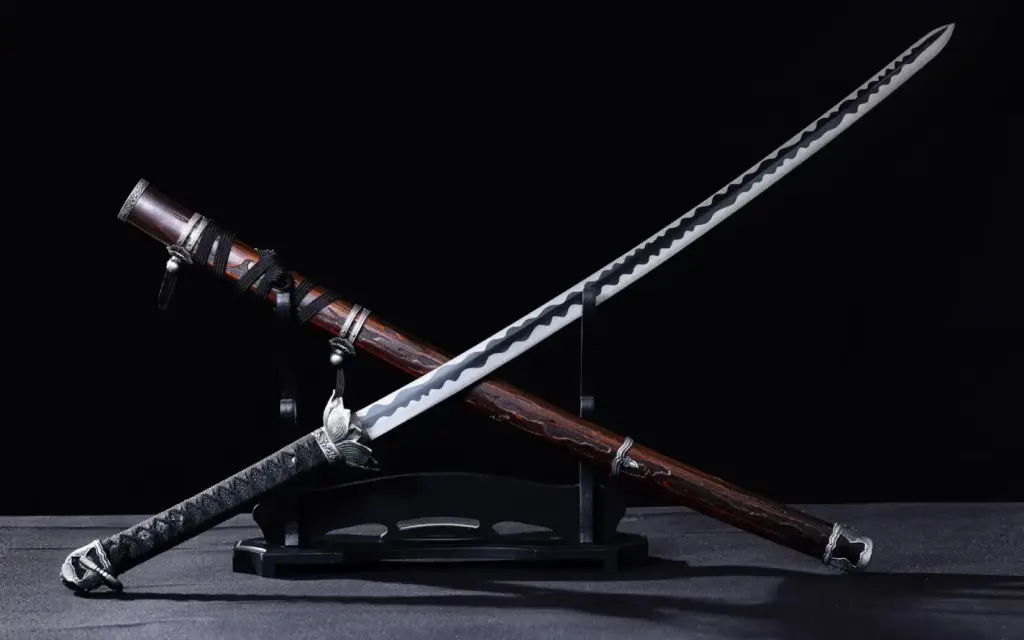
5160 is more forgiving because it is a chromium-alloy spring steel with strong toughness potential when the maker gets the treatment right. In katana terms, that matters most when the blade takes more shock than a light display piece ever would.
A learning cutter may meet the target at a slight angle, send repeated shock through the blade, or deal with target consistency that is not perfect. A well-made 5160 blade gives more margin in those appropriate cutting situations, especially during regular controlled practice.
The tradeoff is visual and edge-focused. 5160 is usually not the best choice for dramatic hamon activity or maximum edge-retention potential. The 5160 spring steel katanas category is the right place to start when practice-friendly durability matters more than polish.
Why 1095 Feels Sharper in the Right Hands
1095 can offer stronger hardness and edge-retention potential when the heat treatment and geometry are right. Its advantage is precision, not abuse tolerance.
With similar blade geometry and good heat treatment, 1095 may keep a crisper edge longer during clean cuts on appropriate targets. That makes it appealing when your cutting setup is controlled and you avoid rough use or improvised targets.
1095 also asks more from the maker and the owner. The 1095 carbon steel katanas category makes sense when cleaner edge feel and visible hamon matter more than maximum mistake tolerance. Pay more for 1095 only when the listing also gives better heat treatment, polish, hamon visibility, or fittings.
Which Steel Gives a Better Hamon?
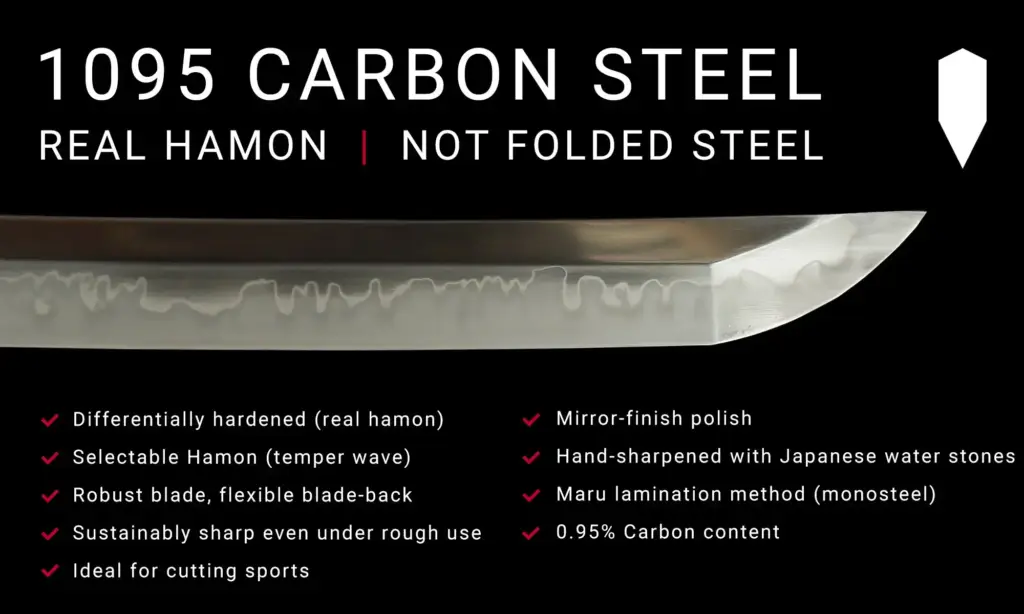
1095 is usually the better choice for a clear, traditional-looking hamon. A hamon is the visible transition line between a hardened edge and softer spine, created through differential hardening. The hamon guide is the better next read if you need to tell real hamon, etched hamon, and polish effects apart.
5160 contains chromium, which helps it achieve more consistent hardness through the blade when heat treated. That chemistry also makes traditional hamon less visible than buyers often expect from a differentially hardened 1095 blade.
Display buyers should be especially careful here. Studio lighting, polish, and contrast enhancement can make hamon look stronger in photos than it does in person. For display-focused collectors, 1095 usually has the stronger visual story, but only when the listing shows real hamon photos and clear heat-treatment notes.
Do 5160 and 1095 Need Different Care?
5160 and 1095 need the same basic carbon-steel care. 5160 contains chromium for alloy performance, but not nearly enough to act like stainless steel. Both steels can rust if they are left with sweat, water, fingerprints, acidic residue, or humid storage.
After handling or cutting, wipe the blade dry, apply a thin coat of oil, and store it away from moisture. This guide to caring for a carbon steel katana covers the full process.
The care difference is really a discipline difference. A 1095 blade with a polished hamon may make neglect more visible, while a 5160 blade can still spot or stain if it is put away damp.
The Steel Name Is Only Part of the Sword
Steel grade sets the potential, but heat treatment, edge geometry, and build quality decide the finished katana. A well-treated 5160 katana can outperform a poorly treated 1095 katana, and the reverse can also be true.
That is why the listing deserves a closer read. Steel name is one signal, not the whole proof. A stronger listing should mention through-hardened or differentially hardened construction, intended targets, and a hardness range when available.
When comparing listings, check:
- stated steel
- stated target use
- heat-treatment description beyond “battle ready”
- through-hardened or differentially hardened construction
- hardness range, if provided
- blade geometry
- full tang or construction details
- real blade photos
- return policy
- seller credibility
Price differences are not always about steel alone. In production katana listings, 1095 may cost more because of polish, hamon work, fittings, or heat treatment rather than the carbon number by itself.
So, Which One Should You Buy?
Choose based on the mistake you most want to avoid. A durability-first buyer should avoid a sword that punishes imperfect technique. A hamon-focused buyer should avoid a sword that cannot deliver the look they actually want.
Gift buyer: choose the safer, easier-to-explain sword. First functional sword: start with 5160. Display-focused collector: compare 1095 hamon photos first.
Anime-inspired first sword buyers can use the same filter: uncertain real use points toward 5160, while display-first appeal points toward 1095, especially when the recipient mainly wants the overall look.
Choose 5160 for a tougher practice katana
- You want more tolerance for imperfect cuts.
- You expect regular controlled practice.
- You care more about durability and impact tolerance than dramatic hamon.
- You want a functional sword with more room for technique development.
- You are buying a gift and are not sure how the sword will be used.
This does not make 5160 a beginner-only steel. It simply means the steel’s best trait lines up with the way many functional katana owners actually practice.
Choose 1095 for edge feel and hamon
- You want stronger edge-retention potential.
- Your cutting technique and target choice are more controlled.
- You care about hamon, display appeal, and traditional high-carbon character.
- You are comfortable avoiding abusive cutting conditions.
- You want a display piece with visible steel character, not just a practice tool.
1095 makes more sense when you are choosing for crisp cutting feel, visible hamon, and careful use.
Still unsure? Start with 5160
Choose 5160 as the lower-risk starting point if you are still unsure. It handles a wider range of practice situations without punishing imperfect technique as harshly, which makes it a better first functional katana for many buyers.
Choose 1095 later, or choose it now, when edge feel and hamon appeal matter more than extra shock tolerance. Price varies by maker, polish, fittings, and heat treatment, so compare the whole sword rather than treating a higher steel number as a higher tier.
Once you know whether toughness, hamon, or cutting feel matters most, browse functional katanas and compare steel type against the full build.
Common Questions About 5160 and 1095 Katana Steel
What is the main difference between 5160 and 1095 katana steel?
5160 is a chromium-alloy spring steel chosen for toughness and mistake tolerance, while 1095 is a simple high-carbon steel chosen for harder edge feel and hamon potential.
Is 5160 good for a katana?
Yes, 5160 is a strong choice for a functional katana when toughness, impact tolerance, and regular controlled practice matter most. It is not the best steel for every buyer, but it is a forgiving default for many first functional swords.
Is 5160 or 1095 better for cutting practice?
5160 is usually better for cutting practice if you are still building clean alignment. 1095 fits careful practice better when your targets, technique, and maker notes support a harder edge.
Is 1095 better than 5160 for cutting?
For most katana buyers, 1095 can be better for clean, controlled cutting because it supports a harder, crisper edge with the right heat treatment process. For rougher practice, 5160 is usually safer.
Can 5160 steel make a real hamon?
5160 can sometimes show a subtle transition line, but it is not the reliable choice for a clear traditional hamon. If hamon is your priority, compare 1095 first.
Should beginners pick a 5160 or 1095 steel katana?
Pick 5160 if you are still learning clean alignment and target control. It gives more margin for imperfect technique, while 1095 is better once your cuts are more controlled.


