



Shirasaya vs. Koshirae: Storage Mount or Finished Sword?

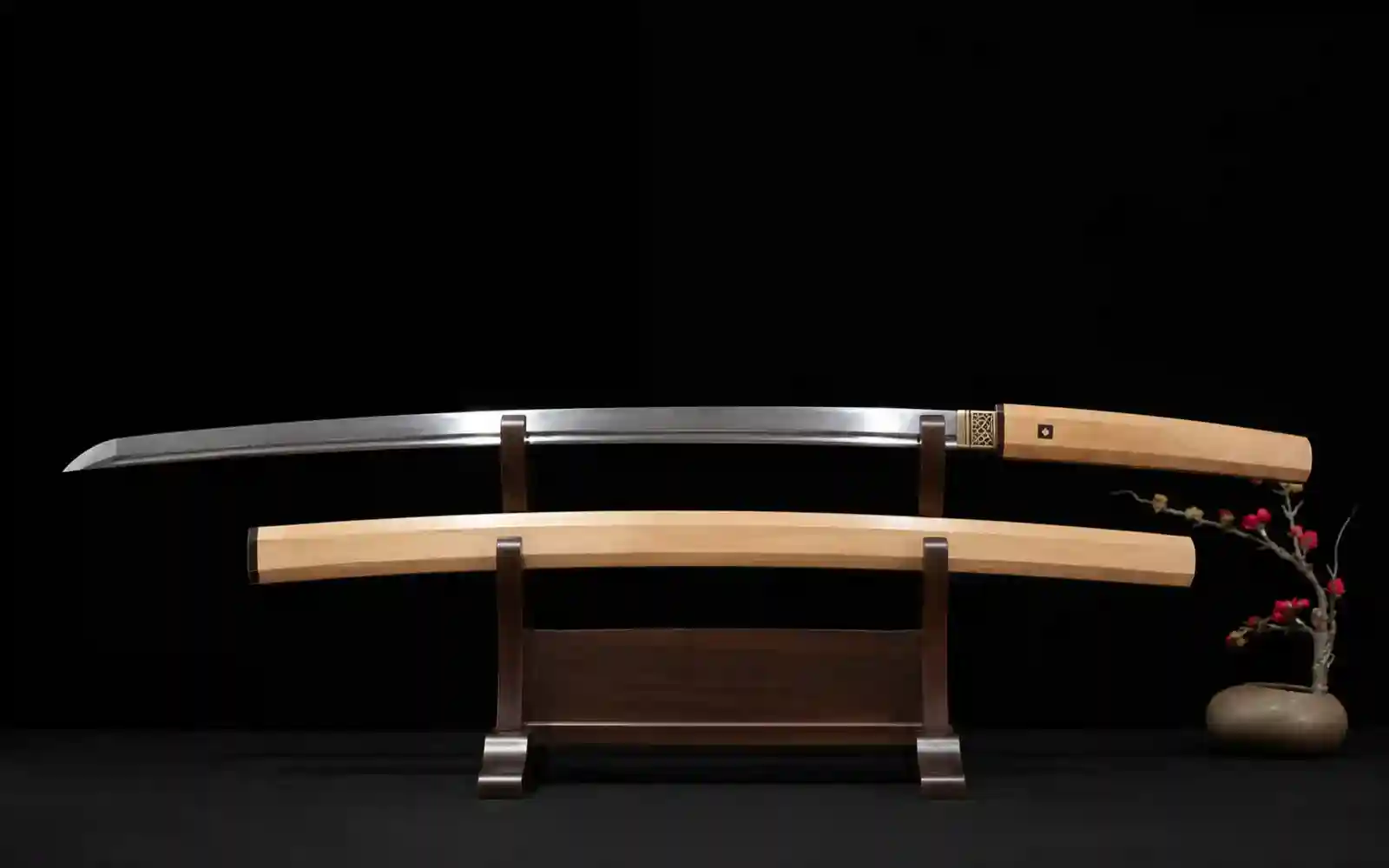
Online listings often use “shirasaya katana” as though it names a kind of blade. It names the mounting around the blade. A shirasaya is a plain wood mount for storage. Koshirae is the finished set of fittings that lets you handle or display the sword.
The distinction affects the purchase. A shirasaya has no guard or wrapped grip. Koshirae gives the sword a guard, a secure handle, and a finished scabbard, although a koshirae-mounted sword still needs the right blade and fit for cutting.
The short answer
Choose shirasaya for a blade that will stay at rest. Choose koshirae for a sword you plan to handle, wear, or display. A traditional shirasaya belongs in storage and is not a cutting mount.
One blade can have either mounting, or both. A craftsperson must fit each mount to that specific blade. A shirasaya made for one katana will not fit another katana with any certainty.
Comparison
| Feature | Shirasaya | Koshirae |
| Primary use | Storing a blade at rest | Handling, display, or practice |
| Grip and guard | Smooth wood, without a guard or grip wrap | Wrapped tsuka and tsuba for handling |
| Cutting | Not a cutting mount | If the blade and mounting suit cutting |
| Storage | Plain wood lets you inspect the blade | A neglected lacquered saya can hold moisture or debris |
Do not choose a shirasaya for its clean silhouette if you plan to practice or cut. The missing guard and grip wrap matter once the sword leaves storage.
Shirasaya: storage and inspection
A shirasaya pairs a wooden scabbard, or saya, with a plain wooden hilt. Traditional examples use honoki, Japanese magnolia, and leave the wood unfinished. You can separate the mount for cleaning, oiling, and checking the blade.
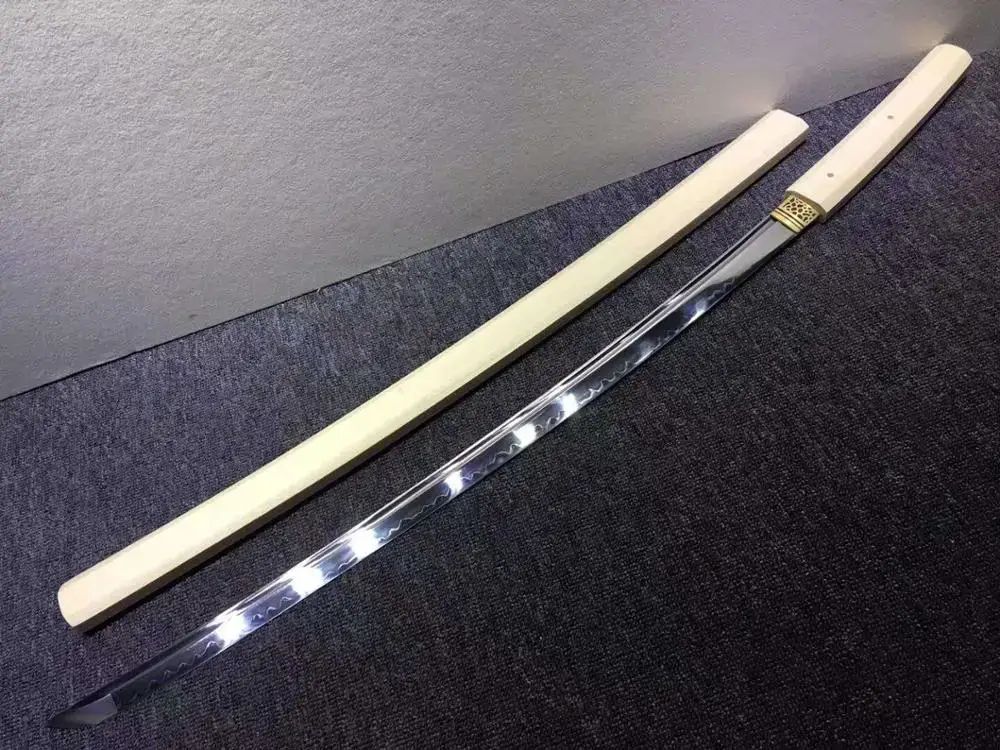
Plain wood does not stop rust on its own. You still need to clean and oil the blade, inspect it, and keep it in suitable conditions. A collector who stores a blade for months may prefer a shirasaya because it is easier to open than a lacquered saya. See our guide to long-term katana storage for the storage routine.
Antique, polished, and inherited blades
Older or polished blades need more care than a standard ecommerce purchase. A custom-fitted shirasaya can protect a blade in storage, but you should ask a qualified professional to assess a valuable blade before changing its mounting.
Some shirasaya carry a sayagaki, an attribution or note written on the wood. It can add useful context, but it does not replace an appraisal, shinsa certification, or authentication.
Koshirae: handling and display
Koshirae is the finished outer mounting of a Japanese sword. A typical katana koshirae has a guard, or tsuba, a wrapped handle, or tsuka, a saya, and the fittings that hold those parts together. The parts affect how the sword sits in your hand and how you carry it.
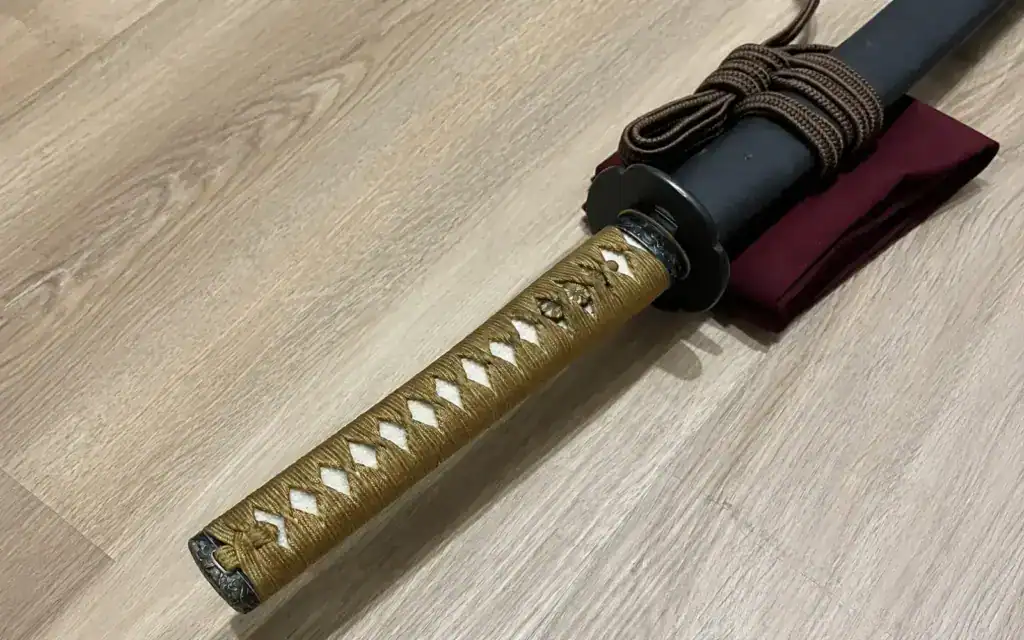
Choose koshirae if you want a complete katana for a stand, regular handling, or suitable practice. The wrapped tsuka gives you a more secure hold, and the tsuba keeps your hand from sliding toward the blade.
Buy for the intended use first. Our guide to choosing a katana for practice or display can help you narrow the options. You can then browse katana for sale with the mounting question settled.
How to read a shirasaya listing
Retailers also use “shirasaya katana” for a visual style. A sword sold under that name may have a tsuba and a wrapped tsuka. In that case, it is a koshirae-mounted sword with a minimalist look, rather than a traditional storage shirasaya.
Read the listing and inspect the photos before you order.
- Match the word “shirasaya” to the mount in the photos. A tsuba and wrapped grip point to koshirae.
- Read the seller’s stated use for the sword: storage, display, practice, or cutting.
- Check that a cutting sword has a fitted tsuba, a secure tsuka, and clear use information from the seller.
- Treat “full tang” as one construction detail. It does not tell you whether the complete mounting can handle cutting.
An aikuchi is a koshirae style without a tsuba, while a shikomizue has a cane-like exterior. Neither term describes a plain wooden storage shirasaya. Blade construction and stated use also separate a decorative katana from a functional katana.
Choose by use
A finished koshirae suits most display buyers because it gives the sword the complete katana form they expect. A shirasaya can look elegant, but it presents the blade at rest.
For practice or cutting, start with the intended use and the quality of the mounting. A cutting-oriented katana needs a sound tsuka fit, a fitted tsuba, and a secure mekugi. The mekugi pin holds the blade in the handle. After you confirm those details, compare high carbon steel katana options that the seller lists for that purpose.
If you prefer plain wood and restrained fittings, a custom katana can give you that look with a guard and wrapped grip.
Can one blade have both mounts?
A collector can keep a shirasaya for storage and a koshirae for display or use. Each mount must fit the same blade. Do not buy a generic mount and expect a proper fit.
Changing mounts can wear the mekugi-ana and affect the habaki fit. Ask a qualified professional to fit or assess the parts if you plan to change the mounting on a valuable blade.
FAQ
Does calling a sword “shirasaya” mean it is fake or unsafe to use?
No. The label alone does not tell you whether the sword is fake or safe. Read the listing, inspect the mounting, and judge the sword by its stated use and construction.
Can a shirasaya katana be used for cutting?
A traditional shirasaya is for storage. It has no guard and no wrapped grip, so it is not suitable for cutting or practice. Judge a modern shirasaya-style sword by its mounting and stated use.
Is shirasaya better than koshirae?
Shirasaya suits blade storage. Koshirae suits handling, display, and practice. Choose the mounting that matches how you will use the sword.


