



What Is a Saya on a Katana?

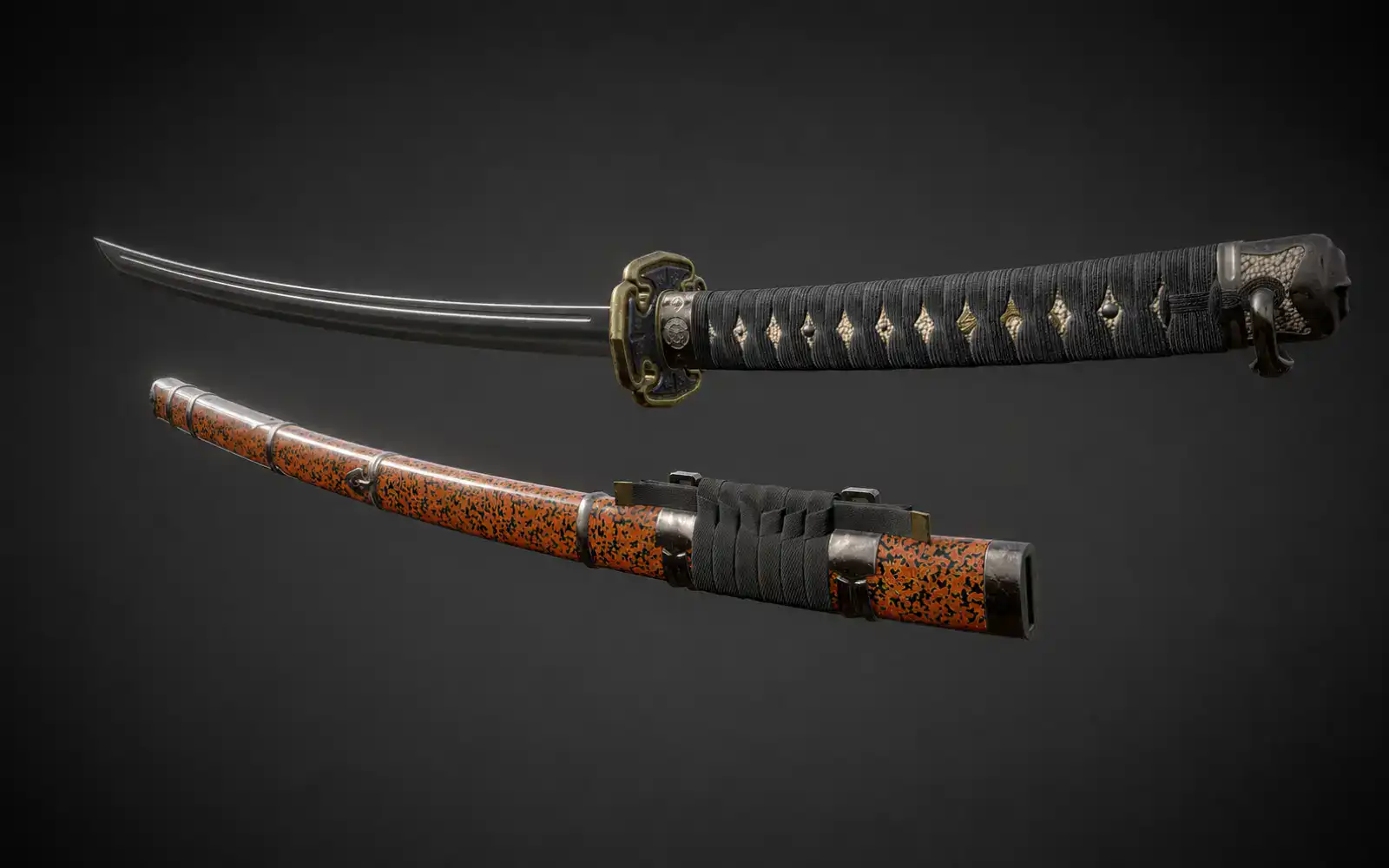
A saya is the fitted wooden scabbard, or sheath, that holds a katana blade when the sword is not in use. That answer is simple. The buying decision is not.
On a product page, the saya is easy to judge by color, lacquer, and the cord around the scabbard. In person, the better question is how it behaves: does the blade stay seated, draw smoothly, and return without scraping? A beautiful saya that rattles, jams, or marks the blade is not a small detail.
A saya is fitted to the blade
The saya covers the edge, keeps casual hands away from the blade, and makes a mounted katana look complete. It is also one of the few parts a first-time buyer can check without taking the sword apart.
It is still a fitted case, not a universal sleeve. The blade’s curve, thickness, kissaki path, and habaki seating all affect how the sword rests inside. Two katana can share a similar advertised length and still need different saya fit.
Traditional high-quality saya are often associated with honoki, a Japanese magnolia wood, but modern production swords vary. Treat “wooden saya” as a material note, not proof of craftsmanship. Finish tells you how the sword will look on a stand. Fit tells you whether the scabbard is doing its job.
A saya also protects the blade best when the blade is clean and dry. Moisture, grit, excess oil, or rough contact inside the scabbard can leave marks or encourage rust over time.
Why the habaki matters
The part doing most of the holding is not hidden deep inside the scabbard. It is the habaki, the metal collar near the guard, seating into the koiguchi, the mouth of the saya.
That contact should feel controlled. The blade should not fall out under careful handling. It also should not need a hard pull. A steady thumb push should start the draw, and the blade should return without grinding, catching, or feeling off-center.
Some swords make a small click when the habaki seats. Nice, but not required. A quiet sword that seats cleanly is a better sign than a loud one that rattles or binds.
Display buyers can accept less wear resistance than practice buyers, but they cannot ignore fit. Repeated draw practice, iaito training, or supervised cutting with a sharp shinken puts more stress on the koiguchi, so reinforcement details and seller support become more important.

Saya fit check: keep, recheck, or stop
| Decision | What it feels like | What to do |
| Keep | Seats securely, releases with controlled thumb pressure, no heavy rattle | Use normal care and monitor the fit over time |
| Recheck | Slight tightness after shipping or climate change, with no cracks or forced draw | Let it acclimate briefly, inspect again, and ask the seller if it does not improve |
| Stop | Falls out, binds hard, scrapes badly, rattles heavily, or shows koiguchi cracks | Stop handling and contact the seller or a qualified craftsperson |
Check the saya before you trust it
Do the first check before the sword goes on a wall, into a gift box, or through repeated draw practice. Shipping movement, humidity changes, and packaging pressure can make a new sword feel different from the listing photos.
- Assume the blade is sharp, even if the listing says otherwise.
- Keep the edge pointed away from people and move slowly.
- Confirm the blade does not slide out under careful handling.
- Start the draw with controlled thumb pressure. Do not pull through a stuck fit.
- Draw only enough to feel whether the release is smooth.
- Return the blade slowly. Stop if it scrapes, catches, or misaligns.
- Look at the koiguchi for chips, cracks, crushed wood, or poor seating.
- Sheathe the blade only when it is clean and dry.
Do not shake, swing, or turn a sharp katana upside down to prove the saya holds. A bad first check is a reason to pause, not a reason to sand, shim, or force the sword into shape. Treat this as a buying and safety guide, not a DIY koiguchi repair tutorial.
After the fit check, sheathing technique is its own skill. Read KatoKatana’s guide to how to sheathe a katana before repeating draw-and-return practice. For longer storage, KatoKatana’s guide on how to store a katana for months covers moisture, oil, dust, and grit.
Five saya parts worth knowing
You do not need a collector’s vocabulary to shop more carefully. These five words are enough to read most product pages and describe a problem without guessing.
- Koiguchi: the mouth of the saya. Chips, cracks, crushed wood, or loose seating here affect how the blade seats.
- Habaki: the blade collar near the guard. It is not part of the saya, but it controls much of the seated feel.
- Kurigata: the side knob that holds the sageo. Some English listings spell it kurikata. Loose attachment matters more on swords meant for wearing or practice.
- Sageo: the cord on the saya. A clean-looking cord does not prove the sword is practice-ready.
- Kojiri: the end of the saya. Damage there can point to rough handling, weak finishing, or a sword that was dropped.
Saya, shirasaya, and koshirae
In most ecommerce listings, saya means the lacquered scabbard on a mounted katana. That is the everyday shopping meaning.
Shirasaya is a different kind of plain wood storage mounting with a scabbard-like housing and handle. It is usually discussed more for preservation than for a sword dressed for display.
Koshirae means the full mounted sword furniture: tsuka, tsuba, saya, and other fittings. Loose use of these terms does not automatically make a sword bad, but it should make you check the photos, intended-use label, and support details more closely.
Judge the saya by the sword’s job
The same saya can be acceptable for a display sword and wrong for a practice sword. Start with how the katana will actually be used, then decide how strict to be.
- Display: finish and color matter, but the blade still needs to sit predictably, and the stand or wall mount needs to be secure.
- Gift or cosplay: read the sharpness label before the theme. A sharp blade should not be handled like a costume prop or casual decor.
- Draw practice: be pickier about the koiguchi, release feel, sageo practicality, and seller support because repeated drawing wears the contact points.
- Cutting practice: treat saya fit as one check beside tang construction, handle security, blade geometry, and use guidance.
Blade marketing can pull attention away from those basics. Folded steel is not automatically stronger. A visible hamon may be decorative or tied to differential hardening. Tamahagane and nihonto are specific cultural and legal categories, not generic upgrade words for every Japanese-style sword sold online.
Gift buyers can compare decorative vs functional katana. Buyers choosing a sword for draw practice or cutting can use KatoKatana’s guide to choose a katana for iaido or cutting practice. Saya fit is a useful build-quality signal, but it cannot prove the whole sword is ready for hard use.
What the seller should make clear
Photos can show lacquer, sageo color, and the general shape of the scabbard. They cannot prove how the habaki seats. A useful product page should tell you what the sword is meant for, how sharp it is, and what support exists if the saya arrives loose, stuck, or cracked.
A vague “comes with scabbard” line is fine for a wall decoration with honest labeling. It is thin information for a sharp or practice-intended katana. Ask whether the saya is fitted to that blade and habaki, and ask how fit problems are handled after delivery.
Be cautious when a listing gives more space to folded steel, hamon, or battle-ready language than it gives to safe handling, intended use, and support.
Be careful with replacement saya
The trap is length. A replacement saya has to fit the blade, not the advertised sword size. Curvature, blade thickness, kissaki shape, habaki size, and seating all affect whether the sword will sit safely.
A generic replacement may be acceptable for some decorative situations, but do not assume it is safe for a sharp or functional katana. A label such as katana or 40-inch sword is not a fit spec.
When saya finish, sageo, fittings, and blade pairing already matter to you, plan those choices before checkout. KatoKatana’s custom katana option is cleaner than trying to force a generic saya onto an existing blade later.
Stop when the draw feels wrong
A katana that will not seat, releases unpredictably, scrapes hard, or needs force to draw is no longer a fit check. It is a handling risk. Put it down and contact the seller or a qualified craftsperson.
Sharp swords belong away from children, guests, and pets. Wall display needs secure mounting. Training and cutting practice should happen only where legal, with proper space, suitable targets, and qualified guidance.
Some countries and regions restrict sale, import, possession, or public carrying of katana-style swords. Confirm local laws, customs rules, age limits, and carrier restrictions before ordering or transporting a sword.
FAQ
What is a katana sheath called?
A katana sheath is called a saya. Scabbard and sheath are normal English words for it, while saya is the Japanese term most sellers, collectors, and practitioners use.
Should a katana be loose in the saya?
No. A katana should not slide out during careful handling. Light movement can happen, but falling out, heavy rattle, cracking, or unsafe binding is a fit problem.
Can a loose or tight saya be fixed?
Sometimes, but new buyers should not sand, shim, or reshape the koiguchi by guesswork. Ask the seller or a qualified craftsperson before using a loose, stuck, or scraping saya.
Can a bad saya damage a katana blade?
Yes. A dirty, cracked, gritty, or badly fitted saya can scrape the blade or trap moisture against it. Stop using the saya if the blade catches, scratches, or feels misaligned.


