



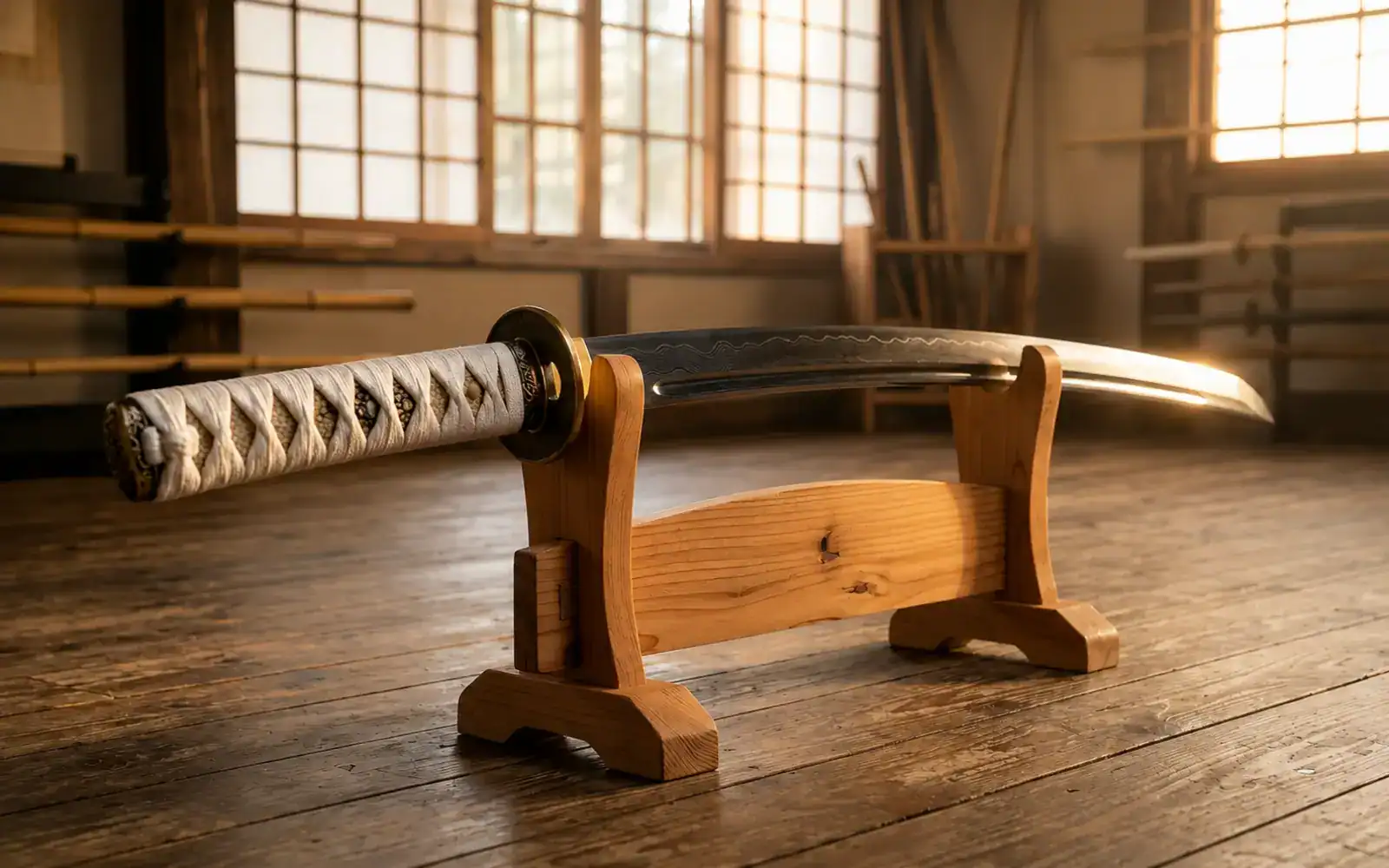
Best Katana for Tameshigiri: Pick by Target, Not Hype

Quick Answer
- For supervised regular rolled-tatami cutting, start with a full-tang, properly heat-treated T10 katana with medium shinogi-zukuri geometry and no bo-hi.
- First-time cutters usually get more room for imperfect edge alignment from 1060 or 9260.
- Bamboo should only be attempted under instructor-approved conditions; compare tougher 5160 or 9260 builds only when your dojo approves that target.
Choosing the best katana for tameshigiri is different from choosing a sword for display. A cutting blade has to match your target, skill level, and maintenance habits, not just show a nice hamon on a product page. That is where many first-time buyers get pulled toward the wrong upgrade.
Decide whether you need a starter cutter, tatami blade, or tougher dojo-approved setup. The wrong choice can damage fittings, bend a blade, or create safety problems. Start with the target, then check the steel.
Safety Note
- Use a live blade only with proper training and a controlled setup.
- Keep people, pets, and obstacles away from the cutting area.
- Use targets approved by your instructor, dojo, or training system.
- Check local laws, shipping rules, age limits, and customs rules before buying or transporting a sharp sword.
Still deciding? Start with what is tameshigiri for targets and practice setup.
Best Default for Most Tatami Cutters
The T10, no-bo-hi pick is for supervised regular rolled-tatami cutting. It is not the right answer for every beginner, bamboo setup, dojo rule, or target you have not cleared with an instructor.
T10 makes sense on rolled tatami because it can hold a keen edge without pushing buyers straight into less forgiving steel. No-bo-hi is the safer starting point for a dedicated cutter because it keeps more blade mass in the blade.
| Cutter Type | Better Setup | Why It Fits |
| Regular tatami cutter | T10, full tang, medium geometry, no-bo-hi | Clean edge feel without jumping to 1095 |
| First live cutter | 1060 or 9260, forgiving build | More room for off-angle cuts |
| Bamboo or denser targets | 5160 or 9260, conservative geometry | Shock tolerance matters more than slicing feel |
| Experienced precision cutter | T10 or 1095, clean geometry | Only after edge alignment is consistent |
| Dojo-specific specs | Instructor-confirmed specs or custom | Fit and dojo rules matter as much as steel |
Once regular rolled-tatami cutting is confirmed, compare T10 carbon steel Japanese sword options by full-tang construction, heat treatment, no-bo-hi design, and support terms.
Choose by Target, Not Steel Prestige
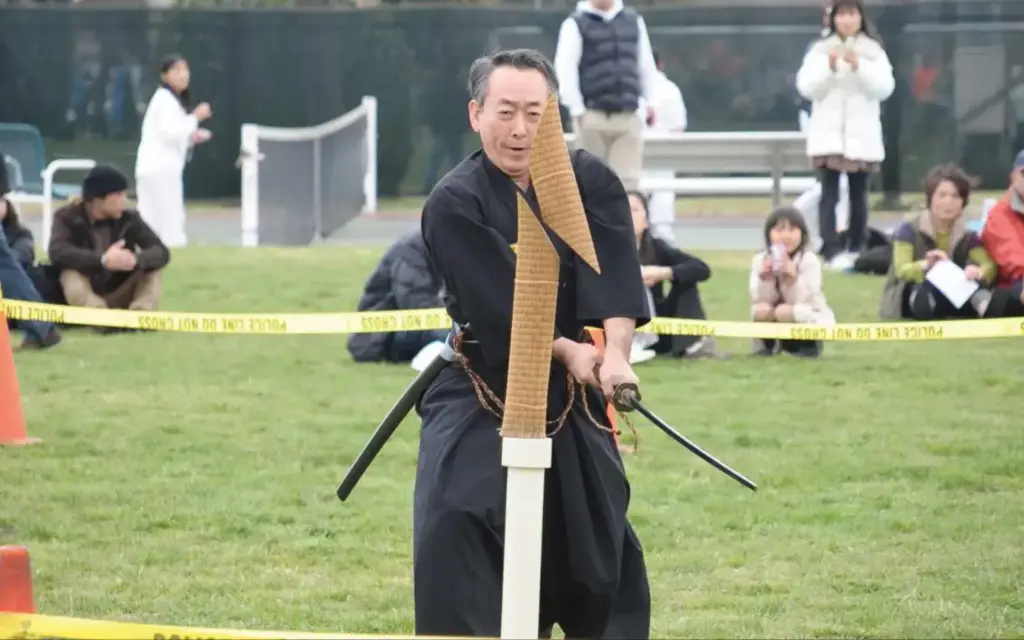
Target type should shape the blade choice before steel reputation or looks. A sword that feels clean on single rolled tatami can be the wrong tool for multiple mats, bamboo, or any hard target that was not approved for your practice.
Single rolled tatami rewards controllable handling and balanced geometry. Frequent tatami practice shifts the choice toward T10 for edge retention or 9260 for forgiveness, while multiple mats ask more from the cutter and the blade.
Bamboo and denser targets raise the risk. Tougher steel helps, but target setup, cutting direction, stand stability, and instruction still matter more than the word “spring” on a listing.
| Target Type | Better Setup | Avoid or Remember |
| Single rolled tatami | T10 or 1060, medium geometry | Avoid overly heavy blades; control matters most |
| Frequent tatami practice | T10 or 9260, no-bo-hi if cutting-focused | Do not let folded steel outrank heat treatment |
| Multiple mats | Wider cutter geometry for experienced users | Avoid thin competition-style blades as a first cutter |
| Instructor-approved bamboo only | 5160 or 9260, conservative geometry | Avoid dry bamboo, backyard wood, and unknown hard targets |
| Unknown hard targets | No katana recommended | Safety and blade damage risk are too high |
Cutters who care most about mistake tolerance should compare 9260 spring steel Japanese sword options before paying more for folded patterns or polish.

Best First Katana for Tameshigiri
A first cutting sword should be forgiving, well-built, and not so expensive that every practice session feels tense. New cutters make alignment mistakes, and a poor cut can bind, twist, chip the edge, bend the sword, or stress the handle.
Many beginners should start below T10 or 1095. A practical starter path is a functional 1060 carbon steel Japanese sword or a 9260 build with clear construction details.
1060 for a Safer First Cutter
1060 is the safer budget path for light supervised tatami practice, especially when forgiveness matters more than edge retention. The tradeoff is simple: you get an easier first cutter, not the longest-holding edge.
That matters early. A beginner needs a blade that teaches clean edge alignment without turning every bad cut into an expensive lesson.
9260 for More Forgiveness
9260 is the better beginner upgrade when imperfect edge alignment and repeated practice matter more than hamon.
9260 is not a shortcut around instruction. Buy it for spring and resilience, not for a traditional hardened-edge look.
Best Katana for Regular Tameshigiri Practice
Upgrade blades make sense once you can cut standard tatami cleanly and consistently. The buying trigger should be clearer cuts, more frequent sessions, target resistance, or a known handling preference.
At that point, steel choice becomes more meaningful because your cuts can reveal edge retention, feedback, and handling. Experienced buyers with confirmed specs can also consider a custom katana for dojo-specific requirements.
T10 for Regular Tatami Cutting
T10 fits regular tatami cutters who want sharper feedback and better edge retention than a basic starter sword. A sound clay-tempered build starts to matter once your cuts are already clean.
The limit is target and skill. T10 is not the answer for a first live blade, bamboo, or unclear hard targets.
1095 Only If Your Cuts Are Consistent
1095 belongs after your edge alignment is reliable. It can give a hard-edge feel, strong edge retention, and attractive hamon, but it is less forgiving when the cut is off.
That makes 1095 more of an experienced-cutter choice than a first tameshigiri sword. Buy it for precision, not for confidence.
5160 or 9260 for Tougher Targets
5160 or 9260 makes more sense when shock tolerance matters more than traditional looks. These spring-steel paths fit denser approved targets, repeated sessions, and imperfect alignment better than less forgiving choices.
Do not read that as permission to cut unknown hard objects. Tougher steel reduces some risk, but it does not make unsafe targets safe.
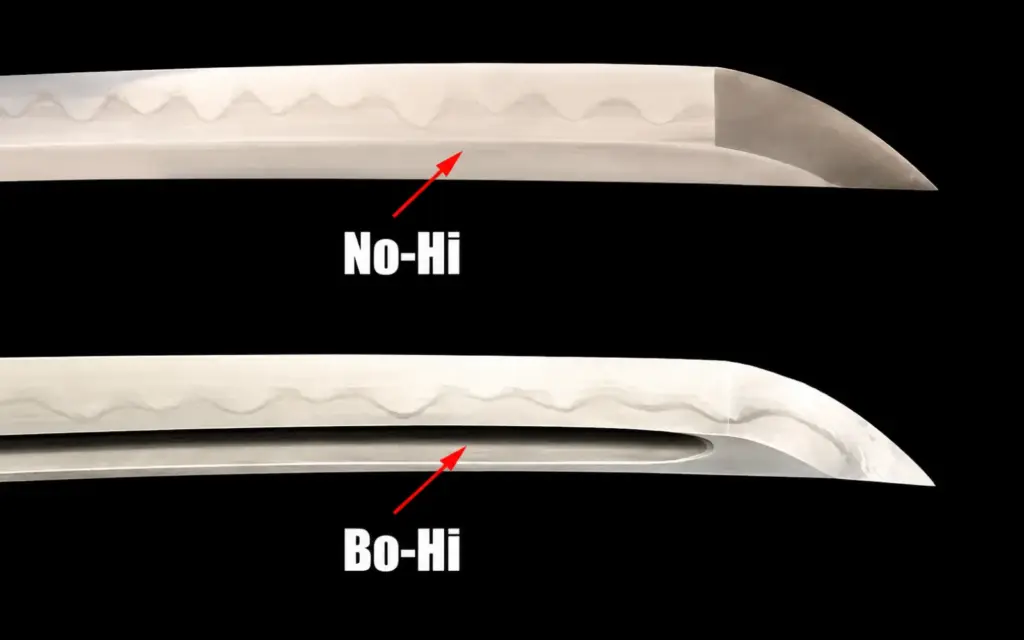
What Bo-Hi and Hamon Actually Change
Bo-hi, clay tempering, folded steel, and hamon can affect weight, feel, looks, or cost. None should outrank target match, full-tang construction, heat treatment, and geometry.
- No-bo-hi is the safer default for dedicated cutting because it keeps more blade mass, though it can feel heavier for forms.
- Bo-hi can help with lighter handling, audible feedback, and light tatami practice, but it is not the first choice for dense targets.
- Clay tempering and real hamon matter only when the heat treatment and assembly are clearly specified.
- Folded steel is mainly a visual upgrade. It adds cost without guaranteeing better cutting value.
A dedicated cutter usually starts with no-bo-hi, then adjusts only when handling needs justify it. The deeper comparison is covered in bo-hi vs no-bo-hi katana.
What a Tameshigiri Katana Costs
Many first functional cutters sit in the low hundreds, regular production cutters often sit in the mid hundreds, and custom or dojo-specific builds can go higher.
Prices change by availability and customization, so treat KatoKatana filter ranges as today’s listing picture, not a permanent rule. Check current pricing, then compare target suitability before price alone.
Below roughly $120, watch for rat-tail tang claims, stainless blades, missing heat-treatment specs, or no return path.
Above the functional range, extra cost often goes toward fittings, polish, geometry, or customization.
Checks Before You Buy a Cutter
A tameshigiri sword should show the hard details before steel debates matter. Steel cannot rescue a vague listing, loose tsuka, unclear tang, or blade geometry that does not match the target.
The first construction term to confirm is full tang katana. For live cutting, unclear tang construction is a stop sign, not a minor missing spec.
Don’t Buy on Buzzwords Alone
Do not buy a cutting sword only because the listing says “battle ready,” “razor sharp,” “handmade,” “real hamon,” or “folded steel.” Those labels matter less than steel, heat treatment, tang construction, geometry, tsuka fit, and target match.
Specs That Need to Be Clear
- Steel and heat treatment are clearly stated.
- Full tang construction is explicitly listed.
- Bo-hi or no-bo-hi is clear.
- Blade length, tsuka length, overall weight, and balance point are listed or available from the seller.
- Geometry gives enough blade mass for the target you actually plan to cut.
- Tsuka, mekugi, habaki, tsuba, and saya fit do not appear vague or loose.
- Shipping, returns, and support terms are clear.
Listings to Skip
Skip vague “battle ready” claims when steel, tang, and heat-treatment details are missing. Be careful with stainless blades marketed for live cutting, fake hamon language, suspiciously low prices, and “competition cutter” claims without target guidance.
A missing return or support path is another warning sign. A live cutting sword should not leave you guessing about construction, target fit, or arrival problems.
One Sword for Kata and Cutting
One sword can sometimes serve kata and tameshigiri, but confirm weight, balance, bo-hi, and length with an instructor before buying. A heavy no-bo-hi cutter can feel strong on tatami and tiring or unsuitable for repeated forms.
When Your Dojo Has Requirements
Dojo buyers should prioritize repeatable specs, student-friendly durability, and instructor-approved targets. A student’s blade and an instructor’s personal cutter may need different priorities.
Confirmed dojo specs are one of the few good reasons to move toward a custom katana early, especially when length, fittings, sori, or handling need to match a training system.
Your Short Buying Path
- First cutting sword: start with 1060 or 9260.
- Regular tatami practice: start with T10.
- Bamboo or denser approved targets: compare 9260 or 5160.
- Dojo-specific specs: confirm requirements, then consider custom katana.
FAQ
Do You Need a Sharp Katana for Tameshigiri?
Yes, live tameshigiri uses a sharp functional blade, but only in a controlled setting. Do not use a sharp katana without instruction, approved targets, and enough clear space for safe cutting.
Should a Beginner Use the Same Katana as an Experienced Cutter?
Usually no. A regular tatami cutter may prioritize edge feel and retention, while a beginner’s first blade should prioritize forgiveness, stable construction, and lower replacement anxiety.
How Much Should a Good Tameshigiri Katana Cost?
Many production tameshigiri katana sit roughly between the low hundreds and mid hundreds, while custom or premium builds cost more. Very cheap blades can be risky if specs and support are unclear.
Should a Tameshigiri Katana Have Bo-Hi?
No-bo-hi is the safer default for a dedicated cutting sword because it keeps more blade mass and conservative strength. Bo-hi can still make sense for lighter tatami practice or audible feedback.
Can One Katana Cut Both Tatami and Bamboo?
Sometimes, but bamboo or denser targets should only be used when approved by an instructor or training system. Do not assume tougher steel makes unknown hard targets safe.
Is a Battle Ready Katana Enough for Tameshigiri?
No. A “battle ready” label is not enough. Check for full-tang construction, high-carbon or spring steel, stated heat treatment, stable fittings, and clear return or support terms.


