



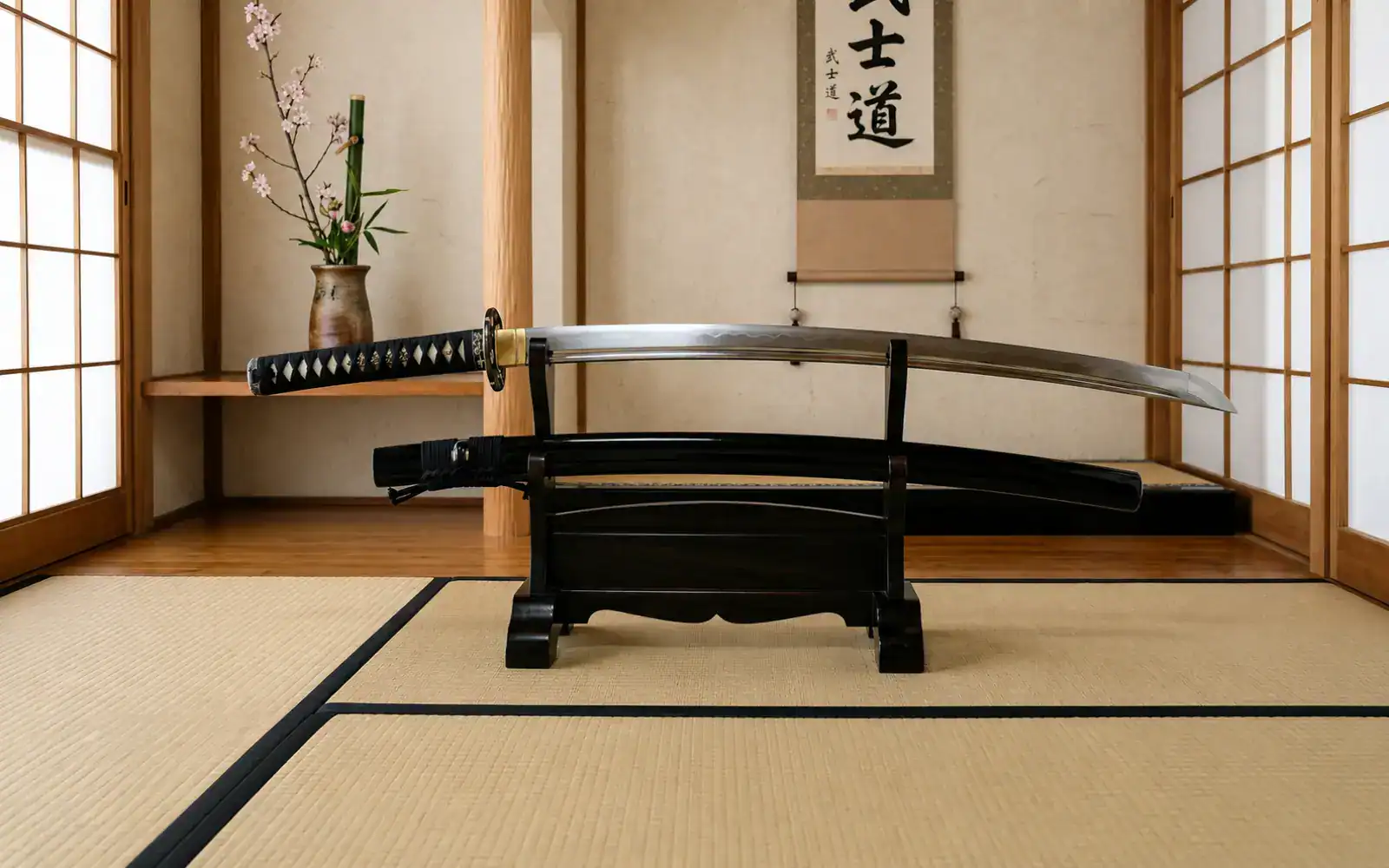
How to Store a Katana for Months?

If your katana is going away for more than a few weeks, start by identifying the blade in the saya. A modern carbon-steel katana, a display sword, and an inherited blade should not all get the same treatment.
For most modern carbon-steel katanas, the safe default is simple: clean the blade, dry it fully, apply a very thin oil film, store it in a clean dry saya, keep it horizontal with the edge facing up, and check it after 4-6 weeks.
Know what you are storing
Most owners are storing a modern production katana, not a museum piece. If that is you, keep the routine simple. If the blade is signed, inherited, unusually old, or you are not sure what it is, slow down before cleaning or taking anything apart.
| What you have | Store it this way | Avoid this mistake |
| Modern carbon-steel katana | Wipe dry, oil lightly, keep in a clean saya | Putting it away with fingerprints or cutting residue |
| Humid, coastal, or seasonal room | Use the driest indoor spot and check in 2-4 weeks | Sealing it in a case and forgetting it |
| Display, cosplay, anime, or gift sword | Check whether it is sharp and how it mounts | Using it for training or cutting unless it is rated for that |
| Old, signed, inherited, or possible nihonto | Leave the tang and polish alone; ask a specialist | Sanding rust, cleaning the tang, or opening the tsuka |
Once you know which group your sword falls into, the rest gets simpler. Modern production swords can follow the routine below; antique or traditionally polished blades should be looked at by a qualified person before DIY cleaning.
Clean the blade before it goes away
Do not put a blade away right after handling it. Sweat, fingerprints, cutting residue, dust, old oil, and moisture around the habaki can sit against the steel for months.
Clear the area before handling a sharp blade. Keep the edge away from your body, and keep children, pets, guests, and untrained people away from the sword.
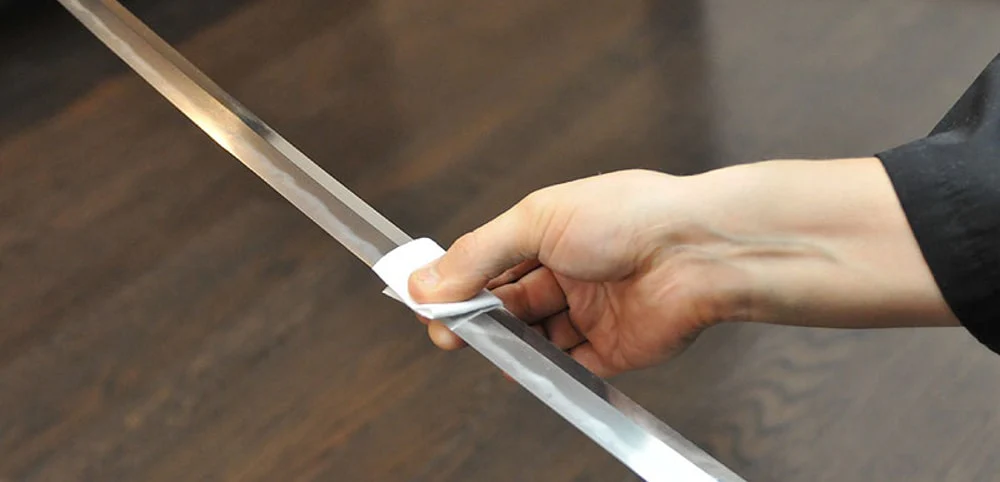
- Wipe the blade with a soft, lint-free cloth.
- Dry the blade fully, especially near the habaki and kissaki.
- Apply a very thin, even oil film.
- Check that the saya is clean, dry, fitted, and free of grit.
- Store the sheathed sword horizontally with the edge facing up.
If you can see oil running, you used too much. Before storing a functional blade, follow a proper clean and oil a katana routine rather than guessing with household products.
Check the saya before trusting it
A clean fitted saya is the right storage choice for many modern production katanas. It protects the blade and reduces handling, but only if the inside is dry and clean.
Do not trust a saya just because it came with the sword. A damp, loose, gritty, or badly fitted saya can create the problem it is supposed to prevent.
| Storage option | Good fit | Bad fit |
| Clean saya | Modern production katana in normal storage | Smells damp, sheds debris, or grips unevenly |
| Fitted shirasaya | Valuable, antique, or traditionally polished blade | Generic wooden scabbard sold as an upgrade |
| Display case | Display-first sword in a dry room | Case traps moisture or blocks inspection |
| Foam, leather, cardboard, sealed plastic | Short transport or packing only | Unattended storage for months |
A shirasaya should be properly fitted by a qualified specialist. For valuable or uncertain blades, a generic wooden scabbard is not a preservation plan.
A closet usually beats a garage
The boring storage spot is usually the right one: inside the house, away from steam, sun, and big temperature swings. A dry interior closet often beats a garage, attic, basement, balcony, car trunk, shed, or unmanaged storage unit.
Keep the sword away from exterior walls, bathroom steam, kitchen steam, direct sun, and any spot that gets hot in the day and cold at night. A cheap digital hygrometer is more useful than guessing by feel.
For new owners or humid climates, about 40-50% relative humidity is the safer target. A stable 40-60% room can be acceptable, but condensation and seasonal swings are the bigger warning signs.

Do not let folded steel distract you
A hamon, folded pattern, or Damascus-style look can make a katana feel more special, but none of those details stop rust. Long storage still comes back to clean steel, light oil, a dry saya or case, and regular inspection.
When you read a product listing, care more about steel type, sharpness rating, intended use, tang construction, and saya fit. Tsuka fit, sori, kissaki shape, and polish matter too, but they do not replace oil and checking.
Old or inherited blade? Touch less
This is the one place where normal katana cleaning advice can be wrong. An antique, signed, inherited, tamahagane, traditionally polished, or possible nihonto blade should be treated as a preservation question.
Do not clean the nakago, sand rust, polish the blade, open the tsuka, or try to improve the hamon. Those surfaces can carry age, signature, condition, and appraisal evidence.
With an older or uncertain blade, a clean-looking DIY fix can do damage you cannot undo. A properly fitted shirasaya, professional inspection, and stable storage matter more than making the blade look cleaner today.
Pick a sword you can actually care for
A sharp carbon-steel katana is not a buy-it-and-forget-it display object. It is the better choice when you are willing to wipe, oil, store, and inspect it on a calendar.
For room decor, costume use, photos, or a low-maintenance gift, a display-first sword may be the more honest fit. It still needs safe mounting and responsible handling, but it puts less pressure on the owner than a sharp carbon-steel blade.
Cutting practice is a separate decision. Use only swords rated for the intended practice, train under qualified instruction, follow local law and dojo rules, and do not assume sharpness or “battle ready” wording makes a sword appropriate for cutting practice.
Buying as a gift or shipping across borders? Check the unglamorous details before choosing a sharp sword: age restrictions, import rules, local possession laws, customs paperwork, and how the recipient will store it. A sword that is impressive on arrival can still be the wrong gift if the owner cannot legally, safely, or realistically maintain it.
Use maintenance as the buying filter. Compare functional katanas when you are ready for carbon-steel care. Start with the broader Japanese sword collection when the sword is mainly for decor, photos, cosplay, or a gift.
Put the first check on your calendar
The first inspection matters more than the fifth. In a stable dry indoor room, check after 4-6 weeks, then every 2-3 months. In humid, coastal, or variable rooms, check after 2-4 weeks, then monthly or every 1-2 months.
Look for orange rust, fingerprints, cloudy oil, moisture, dark spots, loose fittings, changed fit, or debris from the saya. Reapply oil only when the film looks dry, disturbed, or contaminated.
If you will be away for 3 months, reset the sword before you leave. Clean the blade, oil lightly, choose the driest stable room available, avoid old packaging, and inspect the sword when you return.
Where storage rust usually starts
Most storage problems do not start with one dramatic mistake. They start with small habits that seem harmless when the sword is only going away for a while.
- You put the blade away after handling it, cutting with it, or taking it outside.
- You use so much oil that it collects inside the saya.
- The saya smells damp, feels gritty, or fits oddly, but you keep using it.
- The sword stays in leather, foam, cardboard, sealed plastic, or shipping packaging.
- A sharp sword is stored where children, pets, guests, or untrained people can reach it.
- An uncertain blade gets DIY rust removal, polishing, tang cleaning, or disassembly.
Common katana storage questions
Can I store a katana in its saya?
Yes, a modern katana can usually be stored in a clean, dry, fitted saya. Check the saya first. Dampness, grit, poor fit, or trapped oil changes the answer.
Should I use shirasaya for long-term storage?
Use shirasaya for valuable, antique, inherited, or traditionally polished blades only when it is properly fitted. A generic wooden scabbard is not automatically safer than a clean saya.
Can I store a katana for 6 months?
A modern katana can sometimes sit for 6 months in a stable dry room, but that is the outer limit, not the target. Check after 4-6 weeks when possible.
What humidity is best for katana storage?
For new owners or humid climates, aim around 40-50% relative humidity. A stable 40-60% room can be acceptable, but condensation and seasonal swings matter more.
Should a katana be stored edge up?
For most sheathed modern katanas, horizontal storage with the edge facing up is the safer default because it keeps the cutting edge from resting against the saya.
Be honest about checking it
When you check the sword, you want an uneventful result: clean blade, light oil, dry saya or case, stable room, no new marks. If you cannot check it every few months, choose a display-first sword or arrange better storage before buying a functional carbon-steel blade.


