



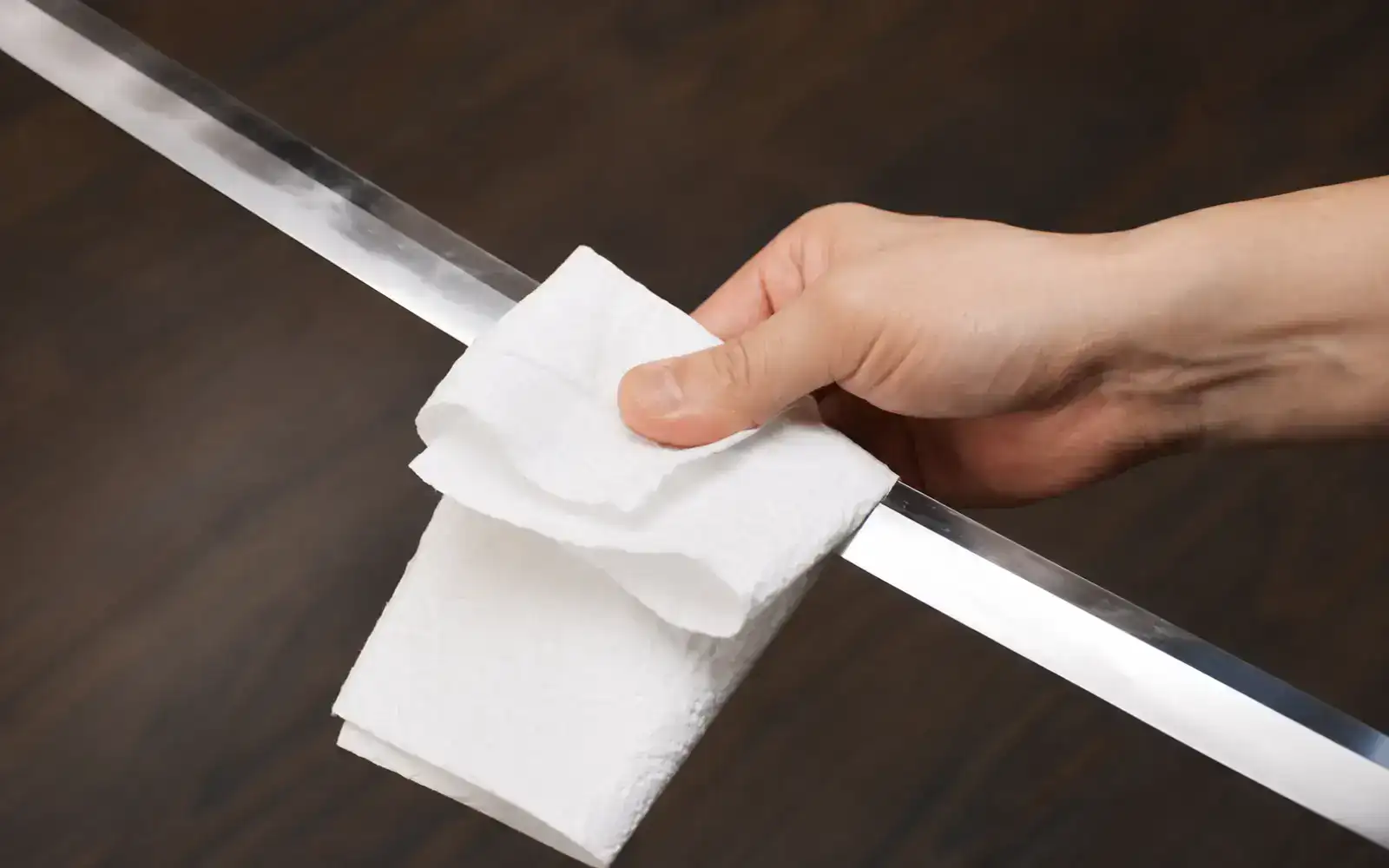
How to Clean a Katana with Household Items

A fingerprint on the blade is usually where this starts. You notice smudges or cloudy old oil, but the cleaning kit is not nearby. For a modern production katana, a few household items can handle routine surface care. The mistake is using the strongest cleaner within reach.
Start with a soft lint-free cloth. If residue remains, put 90-99% isopropyl alcohol on the cloth, dry the steel right away, then leave only a faint film of light mineral oil.
Stop before cleaning antique, signed, inherited, high-value, coated, plated, etched, badly rusted, or unknown blades. Those need identification or specialist care, not a stronger household cleaner. Before any cutting, carrying, transport, or import, check local laws, customs rules, age limits, and training requirements.
Check the Katana Before You Wipe It
If you bought the sword recently and know it is a modern production blade, routine cleaning is usually straightforward. If it came from an estate, has a signature, has a coated or plated finish, or you cannot tell what steel it is, do not treat it like a standard display katana.
- Modern exposed steel: wipe, dry, and oil lightly.
- Display, cosplay, or anime-inspired sword: stay away from finishes, fittings, wrap, and saya.
- Iaito, shinken, or dojo sword: follow instructor or school care rules first.
- Antique, nihonto, signed, inherited, high-value, rusty, or unknown blade: stop and get identification.
Folded steel, Damascus steel, hamon, tamahagane, and differential hardening sound important, but they do not change the basic cleaning rule: do not polish or abrade a blade you do not fully understand. A hamon can be real or etched; either way, household polishing is where mistakes start.
Steel type still matters. A modern high carbon steel katana needs more consistent wiping and oiling than a stainless display blade. The carbon steel vs stainless steel katana difference affects storage, rust risk, and whether a sword should be considered for practice.
Do not take off the tsuka just to inspect the tang. The nakago can carry construction clues or signatures, but forcing the handle apart can damage the sword or make a valuable blade harder to assess.
No Kit? Use This Katana Cleaning Routine
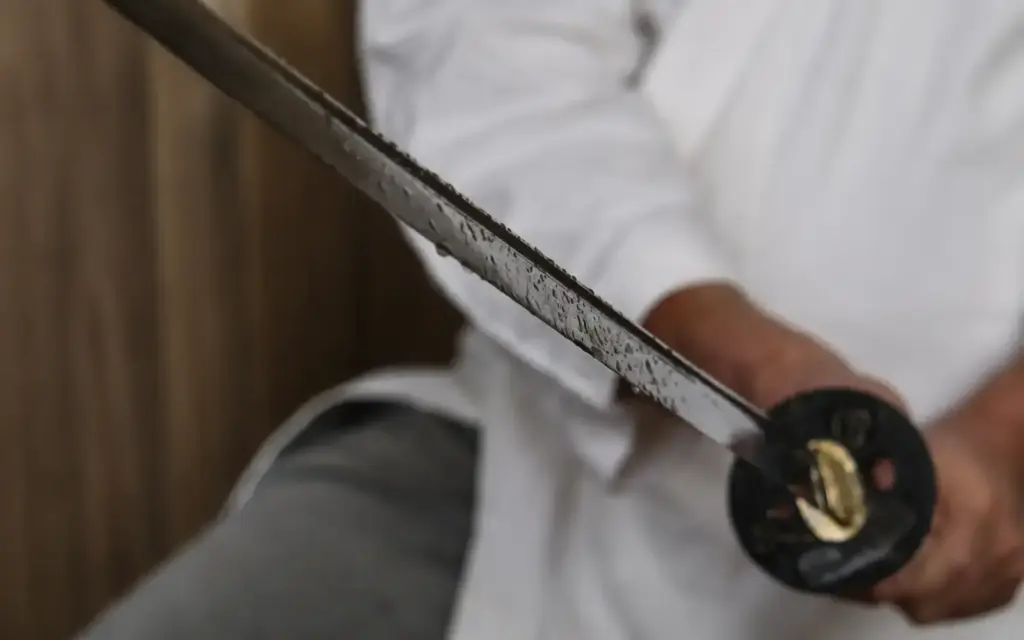
This routine is only for light surface grime on a modern production blade. Set the sword on a stable surface, keep the edge facing away, and move slowly enough that the cloth never crosses the edge under pressure.
- Wash and dry your hands, and take off rings or bracelets.
- Set the sword on a stable surface with the edge facing away.
- Wipe dust, fingerprints, or old oil from the habaki area toward the kissaki.
- Apply alcohol to the cloth only if dry wiping leaves residue.
- Dry the exposed steel immediately with a clean section of cloth.
- Check the blade under bright light and stop if rust, scratches, chips, or pitting remain.
- Re-oil with a barely visible film before re-sheathing.
Slow down near the kissaki, or tip. Hands tend to drift toward the point while wiping, especially on a curved blade. Fold the cloth around the spine side, move in one direction, and stop if the cloth catches or snags.
The finished oil film should barely show in the light. Streaks, drops near the habaki, or wet oil entering the saya mean too much oil. The blade’s sori, or curve, does not change the rule: follow the shape with light pressure.
For the occasional fingerprint, this is enough. A sword that gets handled often needs a fuller plan for oiling intervals, storage habits, and long-term maintenance; use the katana care routine for that.
Household Items That Are Safe for a Katana
Keep the substitute list short: clean cloth, 90-99% isopropyl alcohol, and plain light oil. Many cleaning mistakes start when someone tries to replace every traditional kit item with something from the bathroom, kitchen, or garage.
| Job | Use this | Skip this |
| Fingerprints or old oil | Lint-free microfiber or clean soft cotton | Dirty towels, rough paper, abrasive pads |
| Lift stubborn residue | 90-99% isopropyl alcohol on the cloth | Water, dish soap, kitchen spray |
| Sticky cutting residue | Alcohol on cloth, then dry immediately | Soaking, spraying, or scrubbing |
| Protect exposed steel | Light mineral oil or simple sewing-machine oil | Cooking oil, scented oil, WD-40 as storage oil |
| Uchiko powder | Skip it unless you have proper uchiko | Flour, talc, metal polish, abrasive powder |
Keep alcohol on exposed steel only, and put it on the cloth rather than spraying it onto the sword. Keep it away from the saya, tsuka, wrapping, lacquer, fittings, coated surfaces, plated surfaces, and etched finishes.
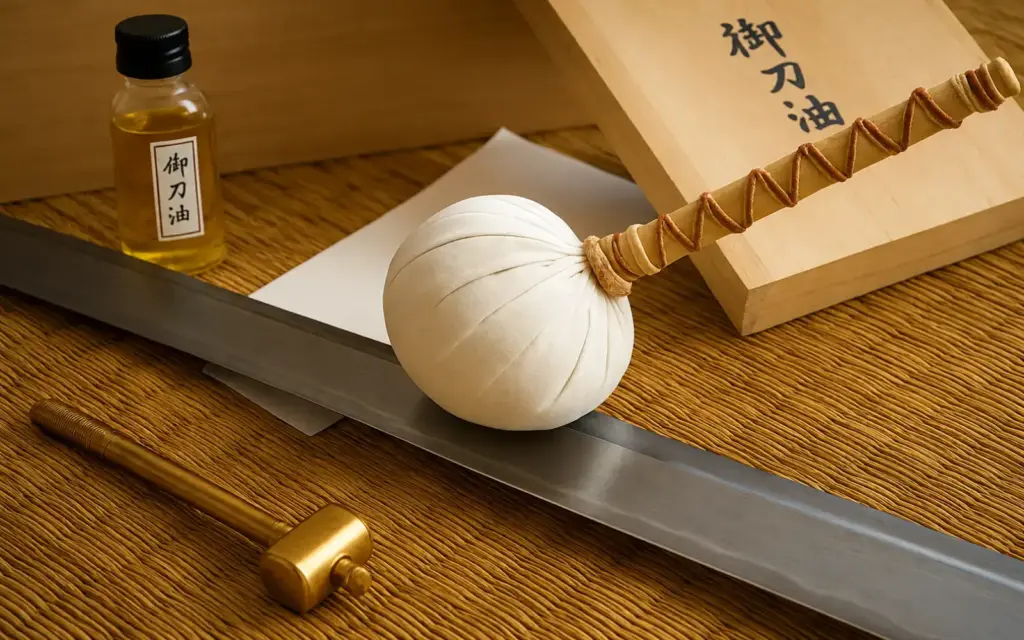
No Kit and Only Basic Supplies?
A clean soft cotton cloth is better than leaving fingerprints on high-carbon steel. Plain mineral oil is better than cooking oil. A small amount of 70% isopropyl alcohol can work on exposed modern steel, but it has more water than 90-99% alcohol, so dry and oil right away.
Stop If It Does Not Wipe Clean
A cleaning cloth should remove fingerprints, dust, old oil, and light haze. If the mark stays after light wiping, the problem is no longer basic cleaning. Pressing harder is the wrong next step.
- Haze or scratches that remain are polish or finish problems. Read how to polish a katana instead of pressing harder with household products.
- Dull edges, chips, or poor cutting point to sharpening or damage, not dirty steel.
- Red rust, black spots, or pitting need rust-specific guidance for modern blades, or specialist help for valuable swords.
Clean Sooner After Cutting Practice
A katana used for cutting practice needs attention sooner than a display sword. Moisture and residue from bottles, tatami, bamboo, or plant material can sit on the steel, especially in humid conditions.
After legal, supervised, properly set up cutting practice, dry wipe first. Use alcohol on the cloth for sticky residue, dry fully, inspect under bright light, and apply a thin oil film. Keep sharp blades away from children, pets, guests, and cluttered workspaces.
If you cannot clean properly right away, at least dry wipe the blade with a clean soft cloth. Add the protective oil film as soon as you can.
Treat an unknown sword as display-only by default. A buyer planning regular cutting should review katana for sale listings only after confirming the sword is listed for controlled cutting use, matched to the intended target and training setup, and acceptable to their instructor or practice environment.
Household Products That Damage a Katana
Water, dish soap, and kitchen cleaners bring moisture or additives onto parts that should stay dry: the blade, fittings, wrapping, and saya. Cooking oil can oxidize and turn sticky, while scented baby oil is less predictable than plain mineral oil.
WD-40 may displace moisture in some shop contexts, but it should not be your default protective film for a katana stored in a saya. Metal polish, scouring pads, flour, talc, and abrasive powders can scratch the blade, alter the finish, or make a decorative hamon look worse.
Uchiko is not just any white powder. Used poorly, or replaced with flour or talc, it can act like grit. A beginner with no proper uchiko is usually safer skipping that step than inventing a powder substitute.
Store the Katana After Cleaning
After cleaning, let the blade sit dry, lightly oiled, and out of casual reach. A display katana does not need a tougher cleaner. It needs less handling, a secure stand or mount, and a storage spot away from moisture.
The same cleaning session can tell you whether the sword fits its job. A gift sword meant for display should not be treated like a cutting sword. A sword used for training or controlled cutting needs clearer steel, edge, tang, and use-case information before you buy it.
For the next purchase, look for details that affect care: sharpened or unsharpened blade, steel type, real or etched hamon, and stated use for display, training, or controlled cutting. Vague folded-steel marketing is not a substitute for those details.
- Long-term care: follow a routine for oiling intervals, storage, and humidity checks.
- Unknown or valuable blade: get the sword identified before more cleaning.
- Unsure about steel type: confirm whether the blade is carbon steel, stainless steel, coated, or decorative.
- Planning cutting practice: confirm local rules, training approval, target type, and safe practice space before choosing a sword.
Common Katana Cleaning Questions
What can I use instead of a katana cleaning kit?
Use a lint-free cloth, 90-99% isopropyl alcohol on the cloth, and light mineral oil or simple sewing-machine oil. Skip uchiko entirely if you do not have the proper material.
Is 70% isopropyl alcohol safe for a katana?
70% isopropyl alcohol is only a pinch option for exposed modern production steel. Do not use it on antique, unknown, coated, plated, etched, lacquered, or high-value blades. Use very little, dry immediately, and re-oil.
Can I use mineral oil or baby oil on a katana?
Plain light mineral oil is the better default. Mineral-oil-based baby oil can work briefly in an emergency, but scented or additive-heavy versions are less predictable.
Can I use WD-40 on a katana?
Do not make WD-40 your default katana storage oil. A safer routine is dry cloth, alcohol only when needed, immediate drying, and a thin film of light mineral oil.
Can household items remove katana rust?
Routine household cleaning is not the right fix for rust, pitting, or black spots that do not wipe away. Use rust-specific guidance for modern blades and specialist help for valuable swords.


