



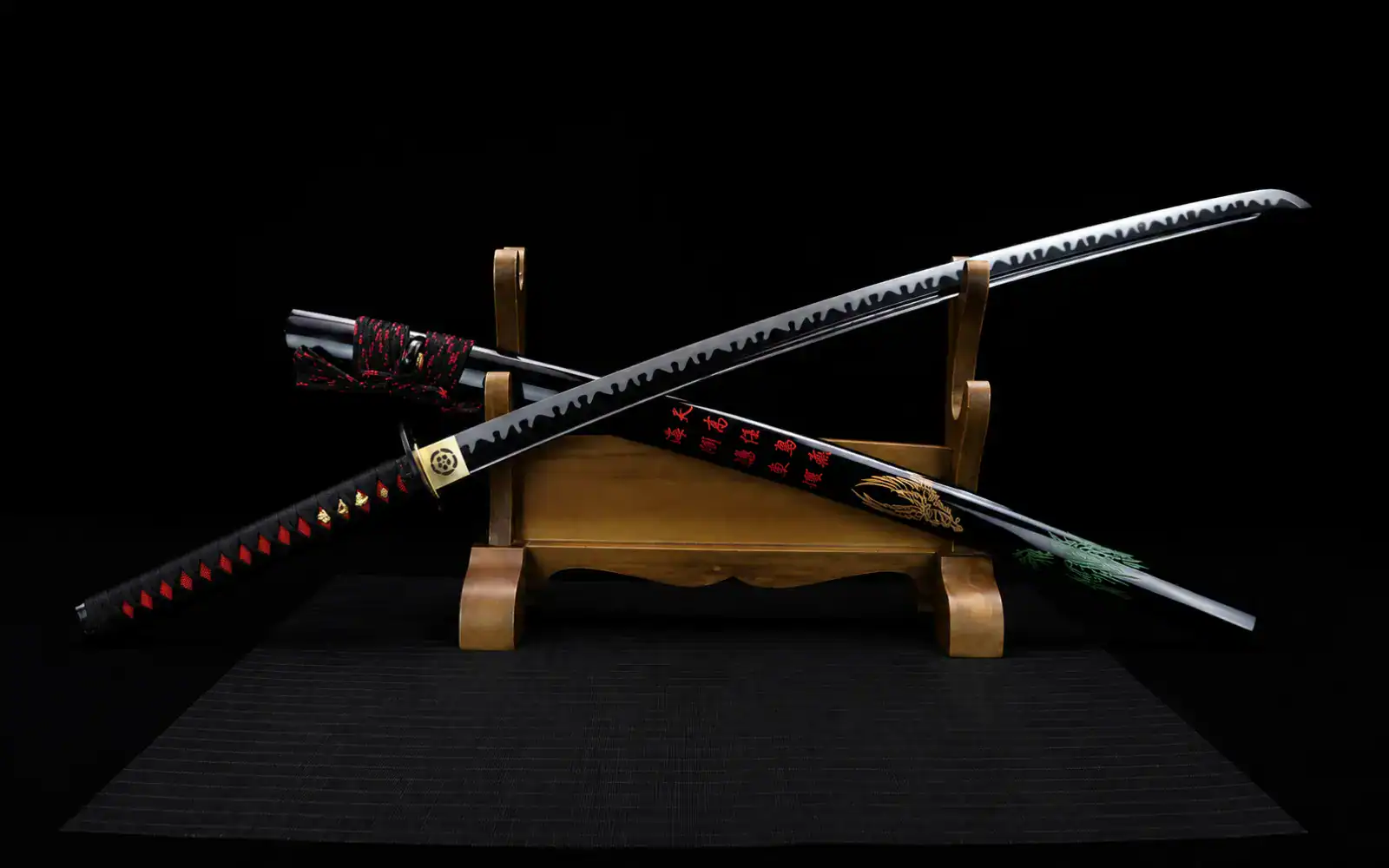
Battle Ready Katana: Real Sword or Marketing Label?

Quick Answer
- In most listings, battle ready means functional rather than decorative, usually for controlled cutting practice.
- It is still a seller claim, not a certified standard, so the listing needs proof: steel, tang, heat treatment, handle assembly, edge state, and use limits.
- Do not use the label to justify sparring, blade-to-blade contact, self-defense, hard targets, casual backyard testing, or public carry.
Battle ready katanas usually show up when you are trying to avoid buying the wrong sword. A listing may also say full tang, combat ready, hand-forged, Damascus, real hamon, or sharp enough to cut, which can make a thin product page sound more convincing than it is.
The real question is simpler: what will this sword actually be asked to do? Display, gift, collection, and cutting practice all need different proof, and the wrong assumption can mean wasted money or unsafe handling.
What “Battle Ready” Usually Means
Use battle ready as a starting flag, not the answer. It may point you toward swords meant to sit above display-only pieces, but it does not tell you whether the blade, handle, and fittings can handle the stated use.
“Combat ready katana” usually works the same way, just with louder wording. A serious page should show the steel, tang, heat treatment, edge state, and use limits before it asks you to trust the claim.
| Listing term | Treat it as |
| Decorative katana | Private display or controlled photos where allowed. Do not assume public carry, event entry, swinging, impact, or cutting safety. |
| Battle ready katana | A functional-sword claim. Check tang, steel, heat treatment, handle, edge, balance, and use limits. |
| Blunt trainer or stage sword | A purpose-built practice tool for a specific ruleset, not the same thing as a sharpened cutting katana. |

Why the Label Is Not Enough
Battle ready is not a third-party certification. One seller may mean sharpened and full tang; another may mean high-carbon steel; another may be using the phrase because shoppers recognize it.
This matters most on mixed marketplaces such as Amazon, Etsy, TikTok Shop, and other pages where similar wording can hide very different build quality. A low price does not automatically prove a bad sword, but vague steel, no tang explanation, no heat-treatment note, and extreme claims deserve caution.
- A budget functional sword should still name the steel and use limits.
- A higher-priced sword should explain what the money buys, such as better treatment, tighter fittings, polish, or customization.
- Folded steel, Damascus-style patterning, or a visible hamon can add visual appeal, but none of them replaces construction proof.
Clear product information matters more than the label. A guide to finding a reliable source for functional katanas is useful when a listing looks exciting but skips the build details.
A battle ready claim is not always an upgrade for the buyer. For wall display, a gift for someone with no storage plan, or a costume-style purchase, a sharp functional sword may add more responsibility than value.
Red Flags Before You Buy
Use this table as a fast risk filter. You do not need museum paperwork, but the seller should show enough detail to explain what the sword is built to do.
| Trust this listing more | Slow down here |
| Names the steel: 1060, 1095, T10, 5160, or 9260 | Says “real steel,” “premium steel,” or stainless steel with no functional specs |
| Mentions heat treatment, tempering, or hardening style | Talks mostly about sharpness, shine, or fantasy cutting claims |
| Explains full tang or nakago construction | Uses “full tang” with no supporting detail |
| States controlled cutting, display, or training limits clearly | Claims combat, self-defense, indestructible use, or hard-target cutting |
| Shows clear photos of blade, tsuka, tsuba, saya, and fittings | Uses fantasy renders, dramatic poses, or cropped glamour shots |
When comparing a battle ready katana, use these checks on the product page first, then narrow your options to functional katanas that clearly state steel, tang, heat treatment, edge state, and intended use.
Specs Worth Checking
The specs worth reading are the ones that show how the sword is put together and where it should stop. A credible listing covers tang construction, steel grade, heat treatment, handle assembly, and stated use limits.
Tang or Nakago
A credible listing should explain how the blade continues into the handle as a substantial tang or nakago. On a functional katana, that hidden section matters because every swing sends force through the handle.
Full tang is a baseline, not a final verdict. A full tang sword can still have poor heat treatment, loose fittings, bad balance, or weak assembly. Read what a full tang actually means before treating the phrase as proof by itself.
Steel and Heat Treatment
A trustworthy listing should name the steel instead of leaning on vague material claims. Common functional-katana steels include 1060, 1095, T10, 5160, and 9260, but the steel name is only the starting point.

The better question is not which steel sounds best. Ask whether the listing explains toughness, edge retention, heat treatment, and the cutting limits the blade was built for.
Be especially careful with listings that only say stainless steel. Stainless can make sense for decorative blades because it resists rust, but most stainless katana listings should not be treated as cutting swords unless the seller gives credible construction and use details.
Heat treatment is what helps the steel behave like a functional blade under cutting stress. A high-carbon steel katana still needs suitable treatment, blade geometry, and secure assembly before it should be trusted for controlled practice.
Tsuka, Ito, and Mekugi
A good blade can become unsafe when the handle assembly is loose, poorly fitted, or described only in decorative terms. The tsuka is the handle, ito is the wrap, and mekugi are the retaining pegs.
The practical check is simple: the handle should be described as secure, not just traditional-looking. Rattles, loose tsuba, unclear pegs, or photos that never show the tsuka should slow the purchase down.
Blade Geometry and Use Limits
Blade geometry affects how a katana enters a target, tracks through a cut, and handles stress. A credible listing should describe intended use without drifting into movie language.
Controlled cutting means appropriate soft targets in a safe environment, not trees, metal, furniture, hard objects, casual indoor swinging, or random backyard testing. Tameshigiri is controlled test cutting, not a shortcut around instruction, safe space, or proper targets.
What a Battle Ready Katana Is Not For
Battle ready does not mean safe for sparring, dueling, self-defense, or steel-on-steel contact. A sword can be suitable for controlled cutting and still be damaged by poor technique, hard impacts, bad targets, or loose fittings.
The label also does not automatically mean sharpened. Some sellers use battle ready and sharpened together, but edge state needs its own check. Read whether the edge comes sharpened before assuming a sword is ready to cut.
Anime, movie, and game-inspired swords need the same separation. Visual accuracy can make a sword more collectible, but it does not prove steel, tang, heat treatment, handle assembly, or cutting suitability.
What Different Buyers Should Check
The same battle ready katana listing can be acceptable for display and still be the wrong choice for cutting practice. Start with the buyer’s real use case before trusting the claim.
- Display buyer: prioritize finish, saya fit, stand or wall-mount safety, edge state, and clear display-only language. A sharp functional blade is not automatically the better display choice.
- Gift buyer: choose a seller that explains intended use, sharpness, care, storage, and basic safety in plain language. Unknown recipient? Safer display intent usually beats a vague battle ready claim.
- Collector: treat hamon, folded steel, Damascus-style patterning, and polish as visual or craft details, not automatic proof of function. Ask what the feature adds before paying more for it.
- Practice buyer: confirm the sword is rated for controlled cutting, use appropriate soft targets where allowed, wear eye protection, and follow qualified instruction before any live-blade cutting.
- Anime or custom buyer: separate the look from the use case. A sword can match a character design and still be display-only, especially if the shape is based on fantasy proportions.
Ownership, carry, import, shipping, event entry, display, and use rules vary by city, state, and country. Check local laws, customs rules, venue rules, and age restrictions before buying or transporting any sharp sword.
How to Judge the Listing
A trustworthy battle ready katana listing answers four questions: what is it built for, what steel is used, how the handle is secured, and what should the sword not be used for?
Give the listing a pass only when those answers are clear. When the page relies on dramatic photos, generic steel claims, or unsafe use language, treat the sword as display-only until proven otherwise.
Even a well-described functional katana still has limits. It can require oiling, careful storage, safe handling, and a lawful place to use it. That is not a flaw in the sword; it is part of owning a sharp carbon-steel blade.
Compare katanas by steel grade and use case rather than sorting by the battle ready label alone. Start with katana listings that state steel, tang, heat treatment, edge state, and intended use clearly.
FAQ About Battle Ready Katanas
What does battle ready mean for katanas?
In most listings, battle ready means functional rather than decorative. Treat it as a seller claim, then check the build and use limits.
Is full tang enough to make a katana battle ready?
No. Full tang is only one check. Steel quality, heat treatment, handle security, balance, geometry, and stated use still matter.
Does folded steel make a katana battle ready?
No. Folded steel, Damascus-style patterning, and hamon can add visual or craft appeal, but they do not prove cutting suitability.
Are battle ready katanas sharp?
Many are sold sharpened, but the phrase does not guarantee edge state. Check whether the listing says sharpened, unsharpened, blunt trainer, or display-only.
Can a stainless steel katana be battle ready?
Treat it with caution. Stainless steel is common on decorative swords, so a functional claim needs clear steel, heat treatment, tang, handle, and use-limit details.
Should a beginner buy a sharp battle ready katana?
Only with a clear reason and safe storage plan. Display buyers may not need a sharp blade, and cutting practice should start with qualified guidance.
Can you spar with a battle ready katana?
No. A battle ready katana should not be used for sparring, blade-to-blade contact, or casual contact training. Partner practice requires purpose-built training equipment and qualified supervision.
Are battle ready swords legal to own?
Laws vary widely. Home ownership, public carry, import, shipping, and age rules can be different, so check local rules before purchasing. This are katanas legal guide covers the basic distinction.


