



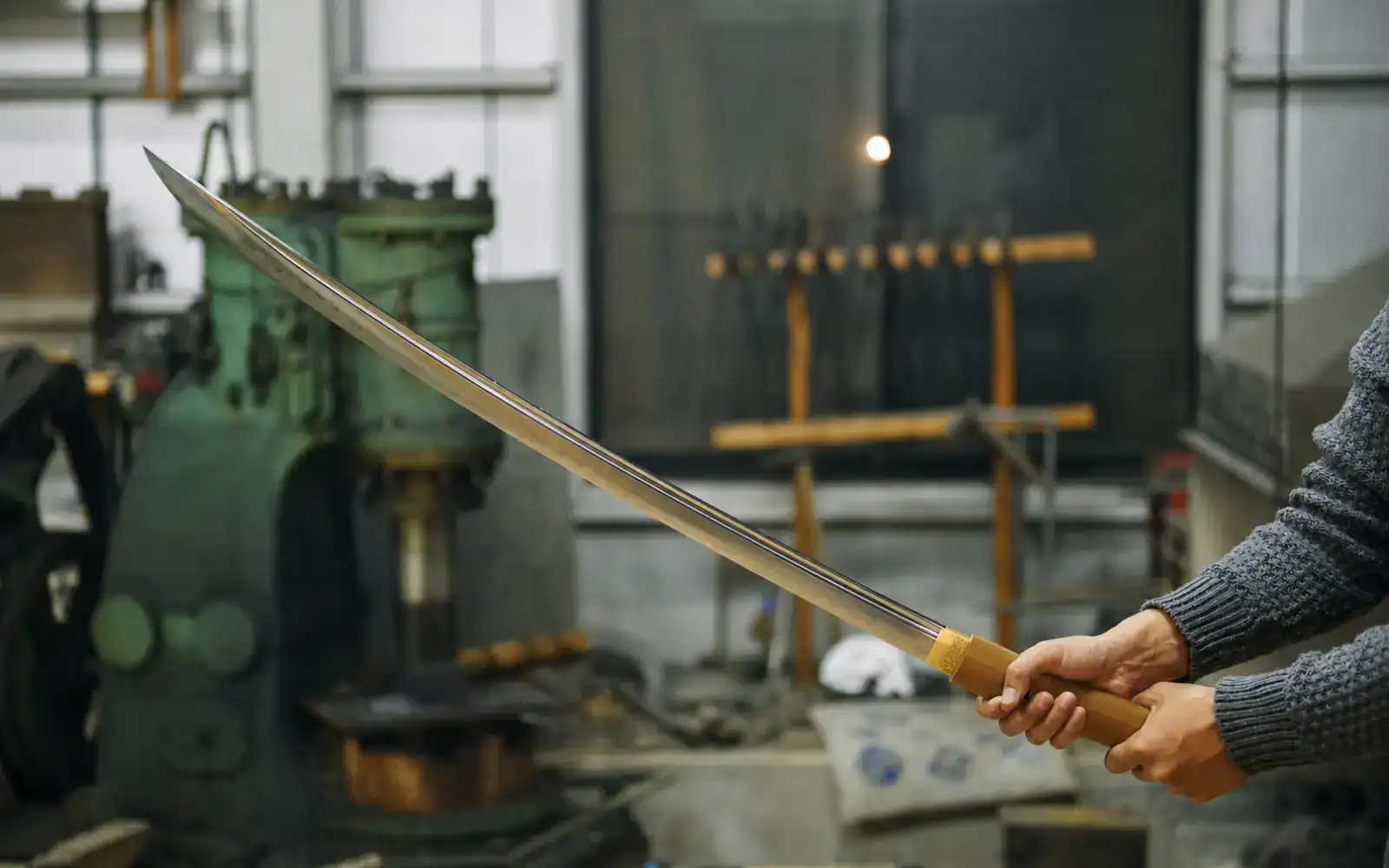
How Are Katanas Made? Steel, Hamon, and the Claims to Check

Quick Answer
- A katana is made by preparing steel, forging or shaping the blade, heat treating it, polishing it, and mounting it with the handle, guard, scabbard, and fittings.
- Traditional Japanese swordmaking starts with tamahagane from a tatara furnace; most modern production katanas start with known modern steels such as 1060, 1095, T10, spring steel, or folded billets.
- The making process helps you read product listings, but it does not prove a sword is safe for cutting, training, travel, or legal ownership where you live.
Most buyers who ask how katanas are made are not trying to become swordsmiths. They are trying to understand why one listing says tamahagane, another says folded steel, and a third says clay tempered or battle ready.
The point is not to memorize swordsmith terms. It is to know which details matter before you buy for display, collecting, gifting, or supervised practice.
How a Katana Is Made, Step by Step
Use the process to check whether a listing gives you enough information. The material, blade geometry, heat treatment, tang, fit, and intended use should be clear before the sword feels like a serious option.
- Prepare the steel. Traditional work starts with tamahagane from iron sand. Modern work usually starts with named steel. The material should be stated clearly.
- Sort or choose carbon. A traditional smith sorts pieces by carbon level. A modern workshop chooses the alloy before production. Carbon affects hardness, toughness, and upkeep.
- Forge or shape the blade. Traditional blades are forged, folded, welded, and shaped. Modern blades may be forged, machine-assisted, or stock-removed. Blade geometry matters more than the story around it.
- Heat treat the blade. Traditional craft often uses clay-coated differential hardening. Modern blades may be clay hardened, through-hardened, or treated another way. Heat treatment affects edge behavior and durability.
- Polish and mount the sword. Traditional finishing involves specialist polish and koshirae. Modern finish and fit vary by workshop. Loose fittings are a real warning sign.
Traditional Craft and Modern Claims Are Not the Same Thing
The biggest difference is the starting point. Traditional Japanese swordsmithing begins with variable tamahagane, then different specialists handle forging, polish, and mounting. Modern production usually begins with known steel and a more predictable workshop process.
That does not make modern production fake or inferior. It means the listing has to explain heat treatment, blade geometry, tang construction, fittings, and intended use instead of leaning on traditional language.
Do not treat “handmade,” “folded,” “clay tempered,” or “tamahagane” as automatic quality marks. Each word describes one part of the process, and none of them alone proves the sword is functional, lawful to own, or suitable for practice.
Steel Matters, but It Does Not Tell the Whole Story
Traditional katana steel starts with tamahagane, a steel made from iron sand in a tatara furnace. The bloom is not uniform, so the smith sorts pieces by carbon content before forging.
Modern production katanas usually skip the tatara stage because the steel is already refined. A named modern steel is easier to compare, but steel is only the first check. Heat treatment and fit still decide whether the sword belongs in display, collection, or supervised use. For a deeper material breakdown, see what katanas are made of.
Forging, Folding, and the Hidden Tang
Traditional forging turns sorted steel into a blade by heating, hammering, welding, folding, and shaping it. The smith also forms the edge, spine, kissaki, sori, and nakago.
The nakago is the tang hidden inside the handle, and it matters more than many first-time buyers expect. A beautiful blade pattern does not help if the tang construction, handle fit, or peg placement is unclear.
What “Folded” and “Hand-Forged” Really Mean
Forging language is where many listings start to overreach. Slow down when a seller uses craft terms without showing the construction behind them.
- Folded steel can be attractive, but folding does not prove strength.
- A visible hamon does not prove the blade is tamahagane or traditionally made.
- Modern steel is not automatically worse than traditional steel.
- “Handmade” can mean different levels of handwork, from shaping to finishing.
- A polished blade can still be decorative if the tang, heat treatment, or fittings are not suitable for movement.
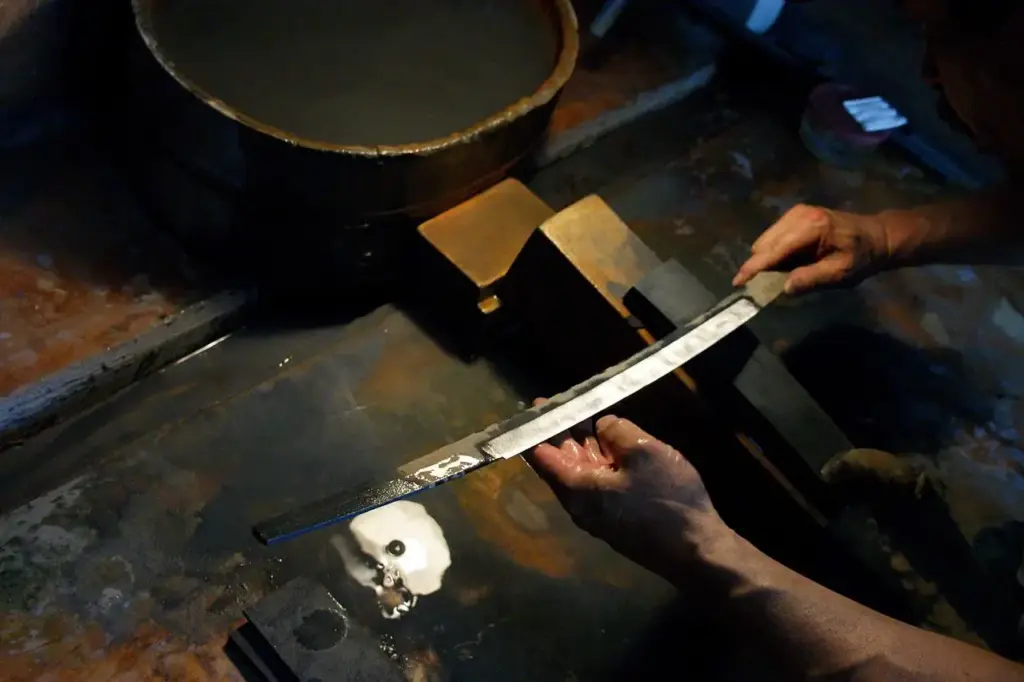
How Clay Hardening Creates Hamon and Curve
Clay-coated differential hardening changes how the blade cools during quenching. The edge is usually coated more thinly, while the spine receives a thicker layer, so the edge hardens differently from the body.
That hardening boundary creates the hamon when it is real and properly polished. A real hamon shows differential hardening, not a guarantee of tamahagane, a full nihonto process, or safe cutting use.
Does Quenching Give a Katana Its Curve?
Quenching helps shape the curve, but the curve is not simply bent into the sword at the end. Forged geometry, clay thickness, temperature, and uneven cooling all influence the sori.
This is why “curved blade” is not enough information in a product listing. A useful listing should explain steel, heat treatment, polish, and assembly around that shape. For a closer look at what the hamon shows, see katana hamon explained.
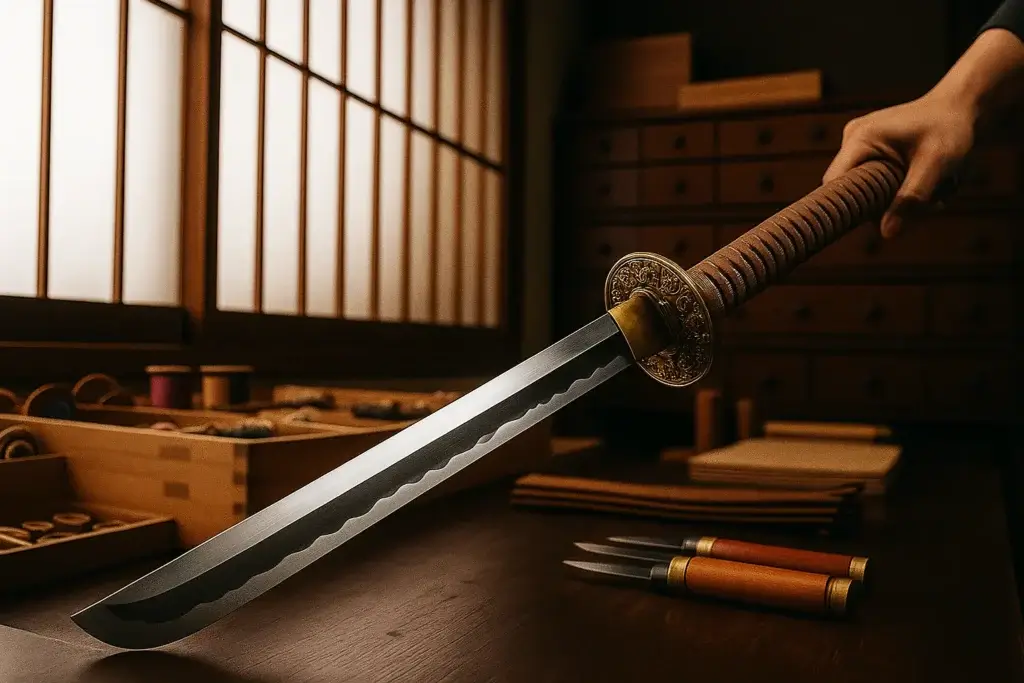
Polish and Fittings Affect Handling
Polishing is part of the making process, not just a shine at the end. A good polish clarifies blade geometry, shows the hamon and grain, and reveals whether the blade lines are clean.
Mounting turns the blade into a sword you can handle, display, or store. The tsuka, tsuba, saya, habaki, and mekugi affect retention, safety, and inspection as much as appearance.
Loose fittings are not a cosmetic issue on a sword intended for movement. Before any cutting practice, check that the mekugi pins are seated, the tsuka wrap is tight, and the habaki locks cleanly into the saya. New buyers should learn the parts of a katana before trusting listing photos alone.
What “Katana” Means in a Listing
“Katana” can mean a traditional Japanese sword, a modern functional katana-style sword, a blunt iaito for training, a sharp shinken, or a decorative display piece. Those are not the same buying decision.
Anime, movie-inspired, and custom swords add another layer. A sword can look right for display or cosplay photos while still being the wrong tool for cutting, dojo practice, or unsupervised handling.
- Nihonto: check documentation, legality, and provenance.
- Modern katana: check steel, heat treatment, tang, and fittings.
- Iaito or practice sword: follow dojo rules for weight, balance, and safety.
- Decorative katana: treat it as display, not cutting or training equipment.
How Modern Katanas Are Usually Made
Modern katanas often combine workshop steps: forged blanks, machine-assisted shaping, stock removal, hand polishing, and hand assembly. The label matters less than whether the seller tells you what was actually done.
Display buyers can prioritize appearance, saya fit, and clean mounting. Gift buyers should favor blunt or clearly described pieces. Practice buyers should put instructor approval, local law, and construction details ahead of finish style. The production differences are easier to compare in handmade vs machine-made katana.
How to Read a Katana Listing
Use the making process as a checklist. A listing with fewer dramatic words and clearer construction details is often easier to trust than one built around vague craft claims.
A useful listing shows the blade, tang, fittings, saya fit, and intended use clearly. Weak listings lean on words like “battle ready” or “ancient technique” without explaining steel, heat treatment, or assembly.
Some missing details are not dealbreakers. A display sword does not need a real hamon or cutting-ready geometry. A practice sword is different: vague heat treatment, unclear tang photos, loose fittings, or no stated intended use should stop the purchase until the seller answers.
| Claim | Ask for | Why it matters |
| Handmade | Which steps were done by hand | Labor alone does not prove quality |
| Folded steel | Material and folding method | Not proof of strength |
| Clay tempered | Real hamon or cosmetic pattern | Heat treatment affects blade behavior |
| High carbon steel | Specific steel and heat treatment | Carbon affects hardness and upkeep |
| Full tang or nakago | Tang photos and peg placement | Hidden construction affects handling safety |
| Fittings | Tsuka, tsuba, saya, habaki, mekugi fit | Poor fit can make handling unsafe |
Use the listing differently by purpose: display buyers can accept more cosmetic language, collectors should ask for provenance and close photos, and practice buyers need construction clarity before looks. Modern buyers comparing practical materials can start with high carbon steel katana options after checking local rules, storage, and intended use.
Questions Buyers Ask About Katana Making
How long does it take to make a katana?
Traditional work can take weeks to months across smithing, polishing, and mounting. Modern production varies by workshop, finish level, customization, and batching.
Does the making process affect cost?
Yes. Steel source, hand finishing, specialist polishing, mounting, documentation, and scarcity all affect cost. A higher price still needs clear construction details.
Can I use a modern katana for cutting practice?
Only when the sword, setting, instruction, target, and local law all support that use. Do not treat display swords, vague “battle ready” claims, or decorative blades as cutting tools.
Does a hamon mean the katana was made traditionally?
No. A real hamon shows differential hardening, but it does not prove tamahagane steel, Japanese origin, nihonto status, or safe cutting use.
Before You Choose, Know the Sword’s Job
Before you choose a katana, check the steel source, forging method, heat treatment, polish, tang construction, and mounting fit. Traditional craft and modern production are different paths, not simple labels for good and bad.
Once you know the sword’s role and your local rules, compare by use case. Display buyers can focus on finish and mounting. Gift buyers should avoid unclear sharpness claims. Practice buyers need qualified guidance first. First-time buyers can browse functional katanas with clearer expectations about what listing terms do and do not prove.


