



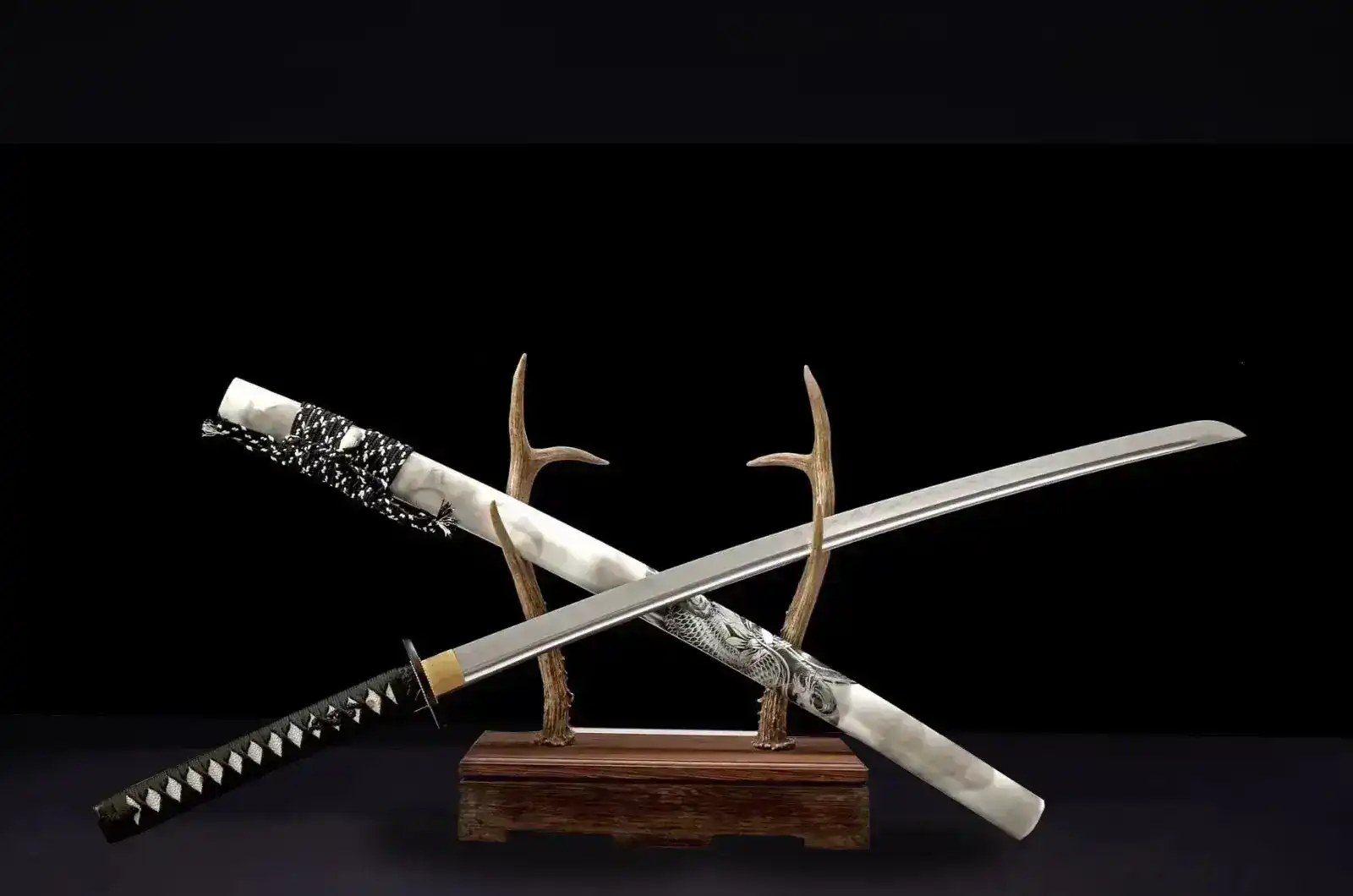
1045 or 1060 Steel Katana: Display, Gift, or Cutting?

Quick Answer
- Choosing between a 1045 steel katana and a 1060 steel katana? Pick 1060 for practice, soft-target cutting, and longer ownership.
- Choose 1045 if the sword is mainly for wall display, gifting, cosplay display, or a tight starter budget.
- The steel number helps, but heat treatment, full tang construction, and clear seller details decide whether a katana is worth trusting.
If you are comparing a 1045 steel katana with a 1060 steel katana, you are probably trying to avoid one of two mistakes: overpaying for a blade you only want to display, or saving a little money on a sword you outgrow after a few months.
This guide keeps the choice simple: when 1045 is enough, when 1060 is worth the upgrade, and what to check before trusting any katana listing that looks functional at first glance without turning the decision into a steel chart.
What’s the Real Difference Between 1045 and 1060?
The difference starts with carbon content. In the common 10xx naming system, the last two digits roughly point to carbon level: 1045 is commonly around 0.45 percent carbon, while 1060 is commonly around 0.60 percent.
That extra carbon gives 1060 better edge-holding potential when the heat treatment, edge shape, blade thickness, and build quality are comparable.
Neither number proves the sword is safe by itself. The steel grade only tells you the blade’s material family; it does not prove the heat treatment, fittings, or construction are good.
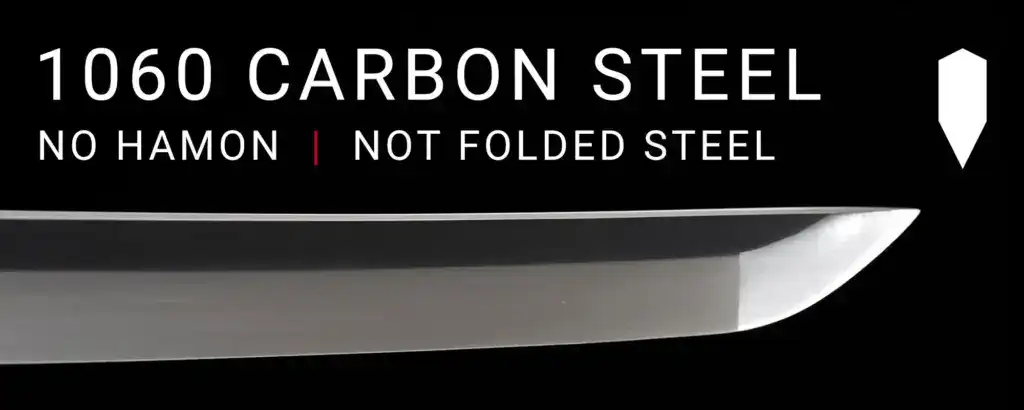
1045 vs 1060 Steel
Use this as the first filter, not the final verdict. The table tells you which steel fits the job, then the listing details tell you whether that specific sword is worth trusting.
| Steel | Carbon | Best For | Main Tradeoff | Quick Pick |
| 1045 | About 0.45% | Display, gifts, light handling | Softer edge | Choose if use stays light |
| 1060 | About 0.60% | First functional katana, light cutting | Costs a bit more | Better default for real use |
What You Notice After a Few Weeks
1045 usually needs attention sooner once cutting or repeated handling enters the picture. The softer feel can be friendly for a light-use owner, but it also means the edge has less room to stay crisp over time.
1060 feels like the cleaner first functional choice because it gives the blade more edge life without jumping into a much harder, less forgiving steel. 1045 still makes sense for the right buyer, but it has a narrower window of usefulness.
The difference may not feel dramatic on day one. It usually becomes clearer after ownership, when you start noticing edge touch-ups, confidence on soft targets, and whether the sword still feels like the right first blade.
Why the Steel Label Still Isn’t Enough
A vague label like “high carbon steel” is not enough to judge a katana. Treat the steel number as the starting filter, then check whether the seller explains heat treatment, tang construction, and intended use.
When a 1045 Katana Makes Sense
A 1045 katana is a smart budget choice when expectations stay realistic. It should not be dismissed as bad by default, but it should not be sold to every buyer as a serious cutting upgrade either.
For display, gifting, and cosplay use, 1045 is often enough and does not require paying more for 1060.
Who Should Buy 1045
A decent full-tang 1045 blade is still a better path than a cheap stainless decorative sword with unclear construction. The key is matching the blade to a light-use plan.
1045 still has a clear place: display, gifting, cosplay, and low-risk first ownership. A buyer choosing wall display, anime-inspired collecting, cosplay display, character-replica ownership, or a first low-risk piece can start with the 1045 carbon steel collection and compare listings by construction, finish, and intended use.
For entry-level collectors, 1045 can make sense when the main goal is visual style, fittings, and display value. For a cosplay or character-inspired display piece, blade finish, color, and safe construction usually matter more than upgrading from 1045 to 1060.
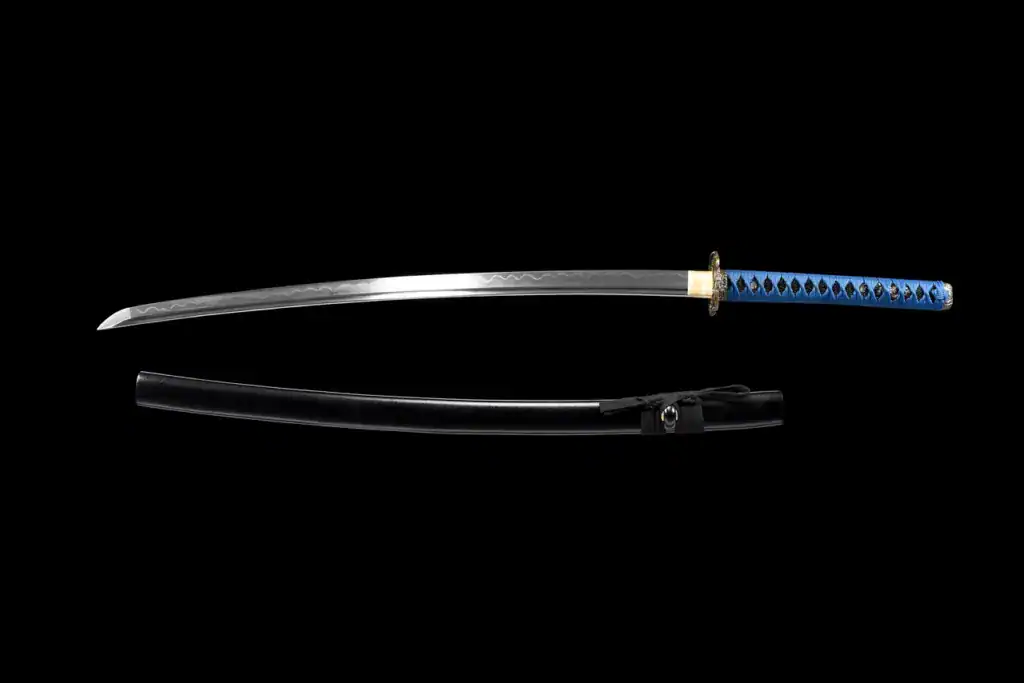
Quick Check: 1045 or 1060?
- Living room display: 1045 is enough.
- Gift for a casual owner: 1045 or 1060 can work.
- Dry handling or light forms practice: 1045 can be enough if the sword is full tang and used safely.
- Forms-only practice with no cutting: 1045 usually works; planning to add cutting later points toward 1060.
- Occasional soft-target cutting: 1060 is preferred.
- Repeated cutting practice: 1060 or higher, with training and safe targets.
Buying for someone else and unsure of their plans? 1045 is the lower-risk gift pick; 1060 is better when the recipient has mentioned practicing or cutting.
When 1045 Starts to Feel Too Limited
1045 starts to feel limited when the owner begins cutting more often, touching up the edge sooner, or realizing the sword was bought as a placeholder. That is the common regret point.
Repeated cutting changes the math. A small upgrade can be cheaper than buying 1045 first, using it lightly for a short time, and then shopping again for the blade you actually wanted.
The boundary is not about pride. A 1045 sword can still be enjoyable, but it should match a light-use plan. The moment the plan becomes regular cutting, the stronger recommendation shifts toward 1060.
Why Most Buyers Should Choose 1060 Katana Steel
1060 is the safer default recommendation for buyers who want a first katana with practical use in mind. It gives better edge life, better long-term usefulness, and less chance of outgrowing the sword quickly.
Where 1060 Feels Stronger
1060 feels stronger in the ownership window after the first few weeks. It is not the hardest sword steel, but it gives practical buyers more edge life without jumping into a specialist blade.
That middle matters for a first functional blade. A buyer who wants one sword that can do more than sit on a stand should compare the 1060 carbon steel collection before choosing only by the lower starting price.
Think of 1060 as the blade you buy when you are not fully sure how far the hobby will go. It leaves more room for light cutting, careful practice, and longer ownership without forcing the buyer into a specialist steel.
Do You Need to Go Past 1060?
Most practical buyers do not need to go past 1060 for careful light cutting on suitable soft targets. The next common step up is 1075 or 1095 carbon steel, which makes more sense when the buyer already knows they want a harder, more performance-leaning blade.
Higher carbon can bring better edge potential, but it can also demand more respect for edge alignment and target choice. The next comparison is 1060 vs 1095 carbon steel katana when that upgrade is truly on the table.
How Much More Does 1060 Usually Cost?
1060 often feels like a modest upgrade, not a completely different price class. In many entry-level katana catalogs, 1045 often appears at a lower starting price than 1060, but the exact gap changes with fittings, finish, discounts, and seller positioning.
Do not treat that as a fixed rule. Price changes with fittings, finish, polish, discounts, seller quality, and whether the sword is positioned as a more serious functional build. The extra spend is not always only for steel, and a higher price does not excuse vague specs.
Ask whether you will still be happy with the sword six months later. A small price gap matters less when 1060 keeps you from replacing a display-first blade after your interest turns into practice.
That is why the cheapest option is not always the best value. Value means the sword still fits your use after the first excitement wears off.
What Should You Check Before You Buy?
The safest purchase starts with the listing, not the steel label. Whether you land on 1045 or 1060, the listing details matter as much as the steel grade.
Check the steel grade, tang construction, functional-use description, and seller credibility before comparing price. A vague 1060 listing is not automatically safer than a transparent 1045 listing.
Good listings name the steel, explain the intended use, show clear construction clues, and avoid relying only on words like “handmade” or “battle ready.”
Four Things to Check in the Listing
- Look for an explicit steel grade instead of vague labels like “high carbon steel.”
- Confirm full tang katana construction instead of trusting “battle ready” alone.
- Check whether the seller describes intended use honestly rather than relying on hype language.
- Make sure the recommended use matches your real plan: display, forms, or cutting.
FAQ: 1045 or 1060 Steel Katana
The common questions come down to cutting, rust, beginner fit, and whether 1060 is worth the upgrade.
Is 1060 katana steel better than 1045?
1060 is better for most functional use because it usually offers better edge life. 1045 is still enough for display, gifting, cosplay display, and very light handling.
Is 1045 strong enough for cutting?
1045 can handle occasional soft-target cutting when the sword is properly heat treated, full tang, and used safely. It is not the better long-term pick for repeated cutting sessions.
Do 1045 and 1060 katanas rust at the same rate?
Both are carbon steel, so both need oil, dry storage, and regular wipe-downs. The full walkthrough is here: how to care for a katana.
Which is better for a beginner, 1045 or 1060?
Choose 1045 for display, gifting, or a strict budget. Choose 1060 when the beginner may practice, cut soft targets, or keep one functional blade for longer.
So Which One Should You Get?
Buy 1045 when the sword is mainly going on a wall, into a gift box, or into a cosplay display. Buy 1060 when you can already picture yourself practicing with it or trying safe soft-target cutting later.
Still unsure because it is a gift? Start with the 1045 steel collection when looks, theme, and budget matter more than edge life.
Already planning to handle it, practice, or cut soft targets? Browse the 1060 steel collection first.
The mistake is not choosing the cheaper steel. The mistake is buying a display-first blade when you already know you want something you can grow into.


