



Why Are Katanas Curved?

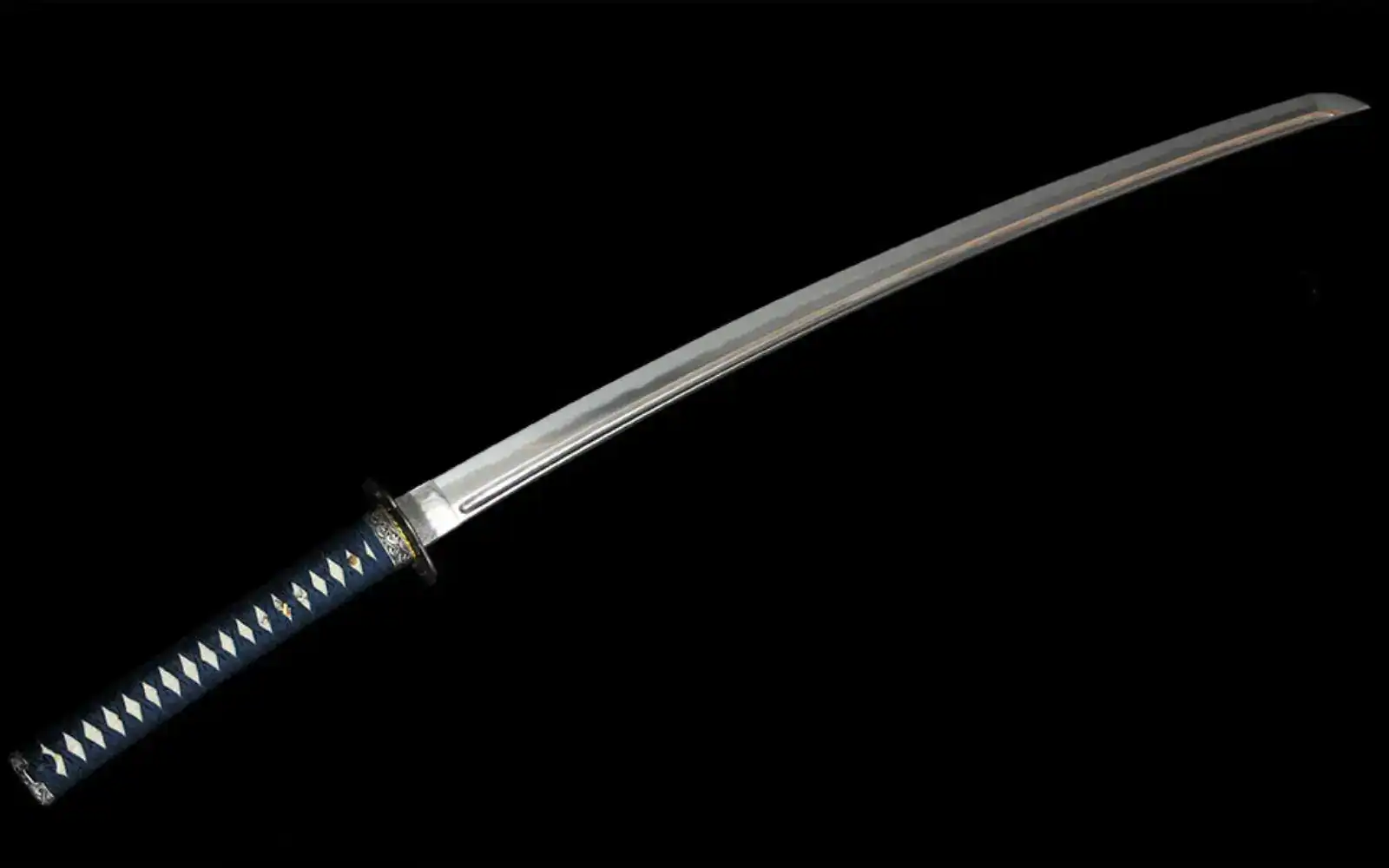
Why are katanas curved? On most traditionally made blades, the arc appears during quenching rather than being bent into the finished sword by hand. That matters whether you are a collector, history buff, dojo practitioner, or first-time buyer, because the curve affects slicing, drawing, and handling. It also reflects a long history of changing sword design rather than one fixed samurai pattern.
Quick Answer: Why Are Katanas Curved?
Most katanas are curved because differential hardening creates sori during quenching. The edge and back of the blade cool and transform differently, which creates internal stress and helps form the arc. That curve later improves slicing, drawing, and overall handling.
Most traditionally made katanas curve during differential hardening, not because a smith forges the final arc into the blade before quenching. A thinly coated edge cools much faster than the clay-insulated spine, and that mismatch creates the visible sori.
That same heat-treatment process also helps define the sword’s cutting feel, draw behavior, toughness profile, and hamon. The shape is both a metallurgical result and a functional advantage.
Why the Katana’s Curve Forms During Forging
The curve is not simply hammered in as a cosmetic choice. In a traditionally hardened blade, it is a physical consequence of differential hardening, which is why collectors and practitioners treat natural sori differently from a mechanically shaped curve on a modern production sword.
How Clay and Water Create the Katana’s Curve
Before quenching, a smith applies clay in different thicknesses across the blade. The cutting edge gets a very thin coat or very little coverage, while the spine and sides receive a much thicker layer. This step, called tsuchioki, makes the edge cool extremely fast in water while the clay-coated spine cools more slowly. The sword is not being bent into a curve during this stage. The curve emerges because the steel is transforming unevenly from edge to spine.

Why the Katana’s Edge Expands While the Spine Doesn’t
At the edge, rapid cooling forms martensite, a very hard crystal structure that takes up slightly more volume than the structure that existed before quenching. Along the spine, the slower cooling produces a tougher, less brittle structure. Those two areas are still part of the same blade, so they pull against each other as they change.
The result is internal stress that bends the blade into its characteristic arc. That same differential hardening is also what leaves the line collectors admire as the hamon on a katana. A traditionally hardened sword is therefore carrying the visual mark of the same process that shaped its curve.
What a Curved Katana Actually Does
Once the curve exists, it creates three practical benefits: a cleaner slicing path, a smoother draw, and a more intuitive sense of edge tracking. The geometry is helping the user rather than asking technique alone to do all the work.
The Draw-Cut: How the Curve Turns a Swing into a Slice
A curved edge naturally wants to slide across the target as it moves forward, which helps turn impact into a slicing action. That is why even a modestly curved katana often feels more efficient than a straight blade of similar size when cutting light or medium targets. The sword is not relying on blunt force alone.
Because the edge keeps traveling along the target surface, more of the blade can stay engaged through the cut. That usually means less drag, cleaner exits, and better follow-through, especially on common training targets.
How a Curved Katana Draws from the Saya and Stays in Control
The katana’s curve also matches the arc of the human arm more naturally during the draw. That is one reason iaido and kenjutsu techniques can flow from draw to cut in a single motion. The blade clears the saya smoothly instead of fighting the path created by the wrist, elbow, and shoulder.
Curvature also changes how the sword feels in motion. Sori is only one part of handling, but it works together with blade length, kissaki shape, and other parts of a katana to influence indexing and edge awareness.
How Combat Shaped the Katana’s Curve
Early Japanese swords were not all built to the same profile. Straight chokuto existed long before the classic samurai silhouette became dominant, and later blades changed as warfare changed. The location of the deepest curve can still hint at a sword’s intended use and historical period.
The broad pattern is simple. Earlier mounted swords favored deeper curvature and a carry style suited to edge-down suspension, while later belt-worn swords prioritized quicker access and a different draw path. That shift helps explain why later blades often favored different curve placement and faster draw behavior.
Mounted Warriors and the Deep-Curved Tachi
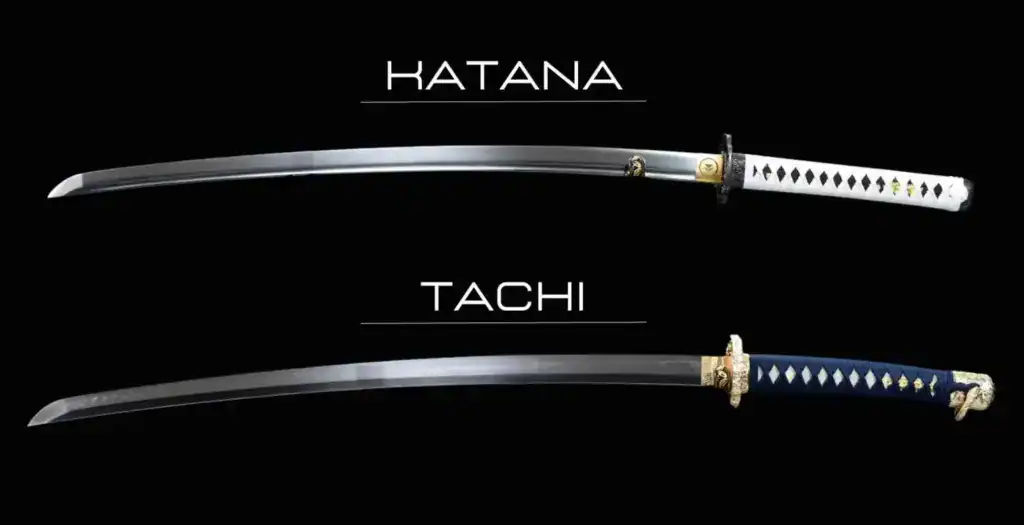
Mounted warfare favored long, sweeping cuts delivered from above and at speed. A deeper curve supported that draw-cut behavior, especially when the rider had to cut on an angle rather than in a straight line. Tachi were also worn edge-down, so the blade’s shape needed to work with a different draw path than a later edge-up katana.
Many early tachi show koshi-zori, where the deepest part of the curve sits closer to the hilt. That profile is strongly associated with early mounted use and is one reason collectors comparing tachi vs katana pay so much attention to where the arc sits rather than just how dramatic it looks from a distance.
How Foot Soldiers Reshaped the Katana’s Arc
By the Muromachi period, large infantry engagements demanded quicker access and more compact movement. The uchigatana and later katana answered that need with a shorter, faster-wearing format carried edge-up in the obi. That carry style made single-motion draw-and-strike actions more practical in tighter spaces.
Later swords often trended toward curve profiles that supported faster belt draws and closer fighting. Saki-zori is part of that story, but it should not be treated as the single defining curve of every katana. Japanese sword history is too varied for that. Era, school, and intended use all matter.
The Main Types of Katana Curve and What Each One Means
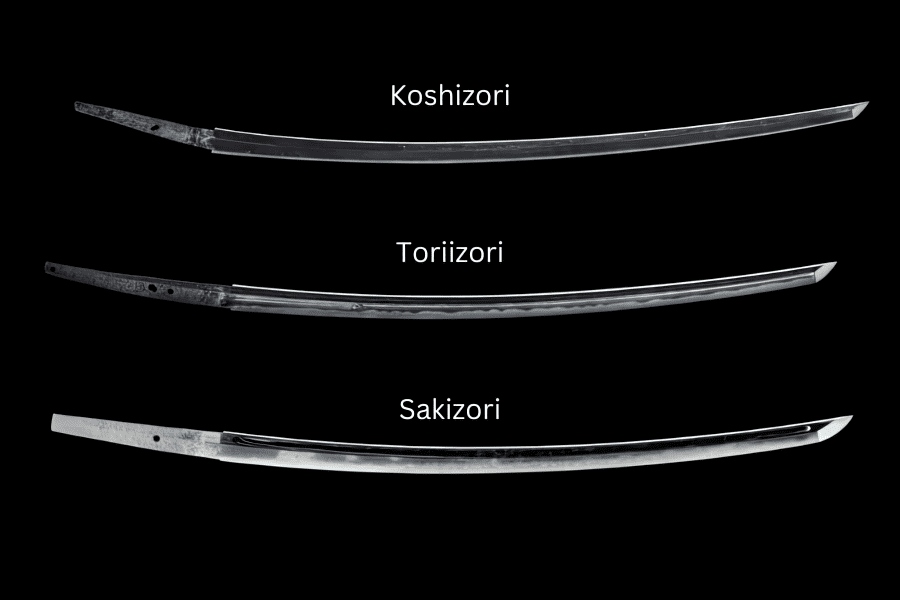
Katana curvature is classified by where along the blade the deepest point of the arc sits. The comparison below gives a practical way to read the most common sori types by position, historical association, and modern use case.
| Sori Type | Deepest Curve Location | Historical Association | Typical Buyer Interest Today |
| Koshi-zori | Near the tang or hilt | Often associated with earlier tachi forms | Historical tachi aesthetics and mounted-style display |
| Tori-zori | Center of the blade | Commonly associated with balanced classic profiles | General utility, balanced handling, classic elegance |
| Saki-zori | Near the tip | Often associated with later battlefield-era shapes | Quick-draw practice and infantry-style cutting |
| Mu-zori | No or minimal curvature | Seen on some later low-curvature forms, depending on style | Collectors comparing unusual or low-curvature profiles |
Steel choice affects how cleanly a curve can emerge during heat treatment. Higher-carbon steels such as 1095 and T10 tend to react more dramatically during differential hardening, while more forgiving steels can make production easier and reduce quench risk.
How to Choose a Katana Based on Its Curve
For a buyer, the better question is how the curve was created, how deep it is, and which combination fits the way the sword will actually be used. A collector, beginner, cutting practitioner, and custom buyer do not need the same answer.
Clay-Tempered vs. Through-Hardened: Where the Curve Comes From
On a clay-tempered blade, the curve forms naturally in the quench. That gives you the classic pairing of a hard edge, tougher spine, and visible hamon that many collectors and serious buyers want. It is also one reason two curved swords can differ so much in price even when they look similar in photos.
Through-hardened blades are made differently. They are hardened more uniformly, so the curve is usually established by manufacturing rather than by the same dramatic edge-versus-spine transformation. These swords can still be durable and practical, especially for beginners, but they do not carry the same metallurgical story or visual evidence of differential hardening.
Steel matters here too. T10 and 1095 are often chosen when makers want a more reactive heat treatment and a clearer hamon, while 1060 is popular for forgiving, beginner-friendly production blades. If you want to compare those tradeoffs more closely, our guide to the best steel for a katana is the right next read.
Choosing Katana Sori for How You’ll Use It
For beginners, moderate sori is usually the easiest place to start. It offers a balanced draw, predictable edge alignment, and enough curve to help with slicing without making the blade feel overly specialized. If you want an all-around first sword, start by comparing functional katanas.
For tatami cutting or regular practice, the best choice is often a practical middle ground rather than the deepest curve available. Most buyers in this group should prioritize consistent handling, durable heat treatment, and a sori profile that feels natural in repeated draws and follow-through cuts.
For collectors, the curve is often part of the sword’s visual identity as much as its handling. Deeper sori can make more sense if you want a stronger tachi-like silhouette, a more dramatic profile on display, or a blade where the hardening style and hamon presentation matter as much as day-to-day cutting use.
For buyers who already know the blade length, fittings, and curvature they want, custom is often the better path. If your target profile is too specific for standard inventory, it makes more sense to order a custom katana than settle for a stock sword that only gets close.
Frequently Asked Questions About Katana Curvature
Are There Straight Katanas?
Usually not. Early chokuto were straight, and some later Japanese swords had little to no curve, but most swords sold today as katanas follow the familiar curved profile. Straight versions do exist, though they are less typical and can reflect different historical forms or modern interpretations.
Does More Curve Mean Better Cutting?
Not necessarily. More sori can help a blade feel better in a slicing motion, but that does not automatically make it better for every user or every target. For many buyers, a moderate curve gives the best balance between cutting efficiency and control.
Is a Curved Katana Better for Beginners?
For many beginners, yes. A moderate curve often makes draw-and-cut mechanics feel easier to read, but beginner-friendly handling also depends on weight, balance, blade length, and training goal. Sori helps, but it is only one part of how approachable a sword feels.
How Is Sori Measured on a Katana?
Place a straight reference line from the tip area back toward the base of the blade and measure the deepest perpendicular distance to the spine. Exact measurements vary by era, school, and intended use, which is why tachi-style blades usually show deeper curvature than many later katana.
The Right Curve for Your Katana
The katana’s curve is not decoration added after the real work is done. It is a byproduct of differential hardening that smiths learned to turn into an advantage, which is why sori affects cutting behavior, draw smoothness, handling feel, and historical identity all at once.
For most buyers, the practical decision is choosing the right depth of curvature and the right hardening method for your goals. A practitioner, a collector, and a first-time buyer can all want a curved sword for different reasons.
If you are still deciding, use the path that matches your goal:
- For a balanced first sword or practical all-around option, explore our high quality katanas for sale.
- For a closer look at hardening and steel choices, review our katana steel guide.
- For exact curvature and build details, start a made-to-order katana.


