



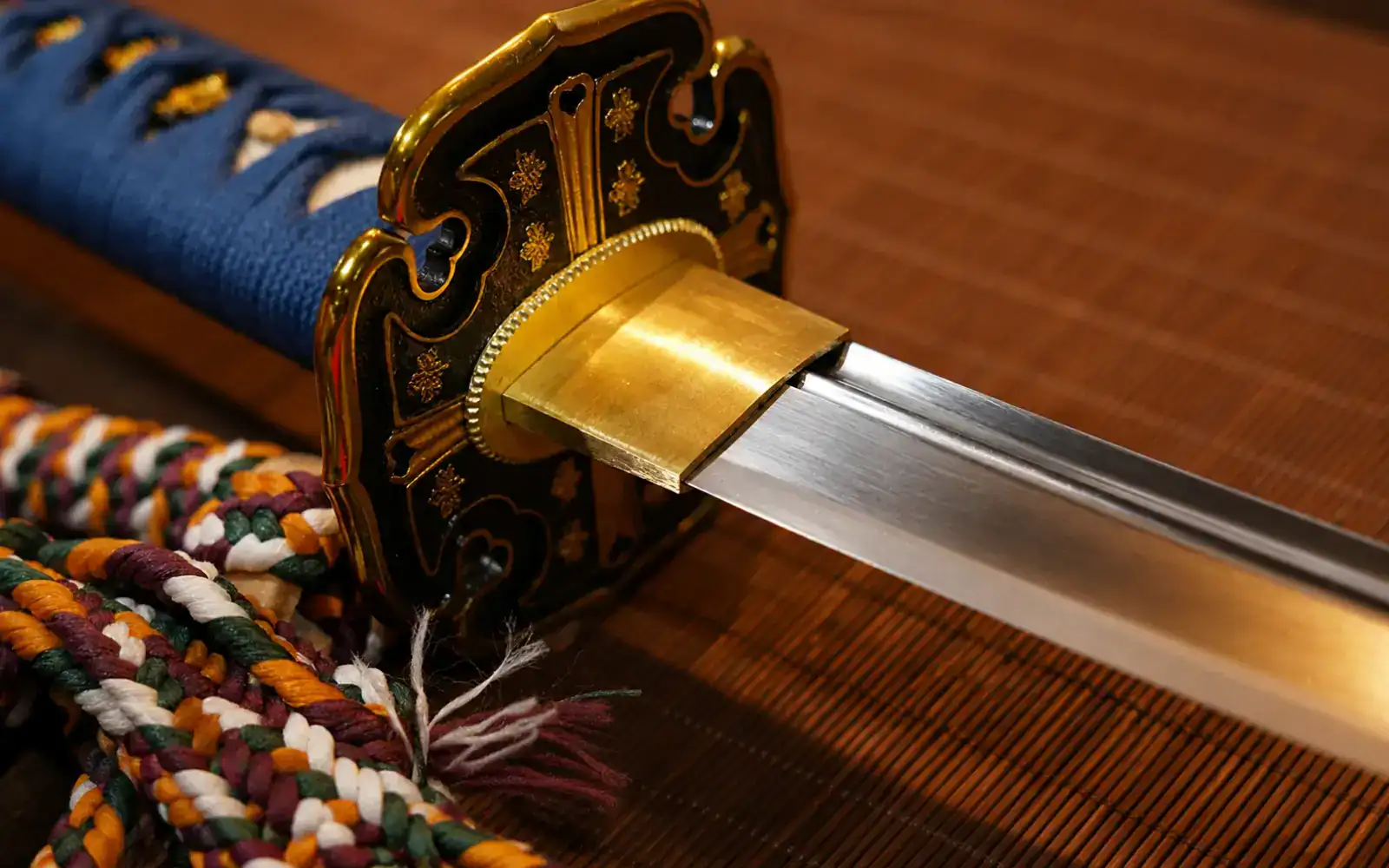
What Is a Tsuba on a Katana?

A tsuba is often the first fitting people notice on a katana. It is easy to give it too much weight. A good guard can make a sword look finished, but the blade, handle, and mounting matter more.
A tsuba is the guard mounted between a katana blade and handle. It helps keep the hand from sliding toward the blade, affects the sword’s look and feel, and can reveal fit problems. It cannot prove blade quality, safe handling, or legal ownership.
That matters for display, gifts, cosplay, collecting, and practice with proper equipment.
The tsuba is the guard, not the handle
On a katana, the tsuba sits at the front of the handle and behind the blade collar. It is part of the mounting, not part of the blade itself. Most English-speaking collectors pronounce it “tsoo-bah.”
This is where first-time buyers often mix up terms. The tsuba is the guard. The tsuka is the handle. The habaki is the metal blade collar in front of the guard. Seppa are the thin spacers around the tsuba.
- Tsuba: the guard between the blade and handle.
- Tsuka: the handle you grip, including the wrap and core fit.
- Seppa: thin spacers that help tighten the guard area.
- Habaki: the blade collar that helps the sword seat properly in the saya.
Casual English may call the whole area the hilt, but precise terms help when reading katana listings. For the full layout, see KatoKatana’s parts of a katana guide.
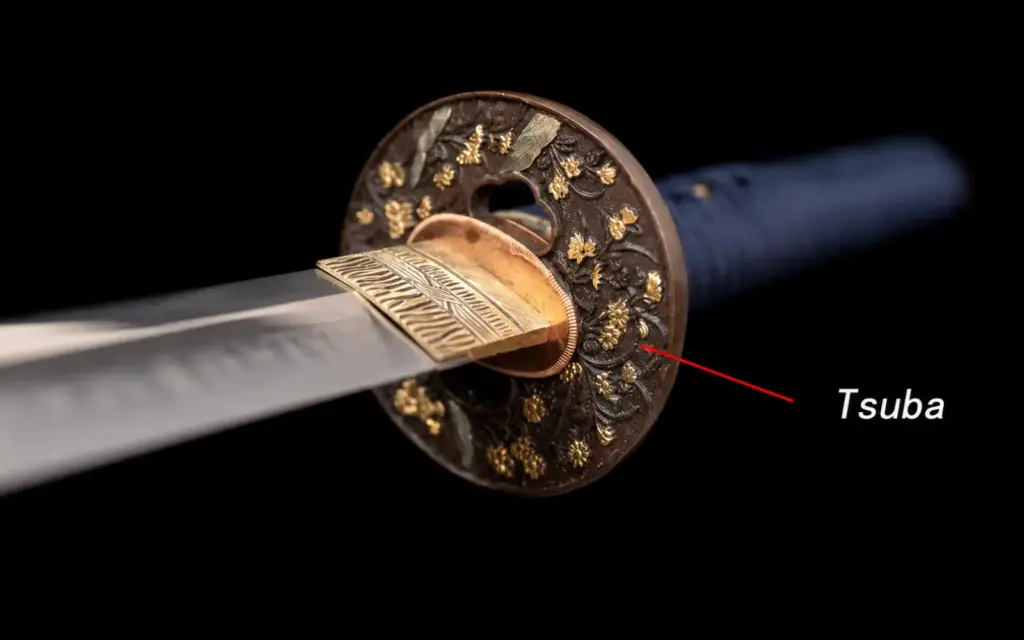
What the tsuba does on a katana
A tsuba helps keep the hand from sliding forward onto the blade during careful handling, controlled drawing practice, or formal training with a sword built for that setting.
A katana guard is not a large crossguard. It helps protect the hand near the mounting, but it cannot make careless handling safe. It also cannot turn a display sword into dojo equipment.
On a display sword, the tsuba changes the shape, color, and theme people notice first. On a practice sword, it matters more for fit, smooth edges, and a secure feel near the hand.
A heavier or lighter tsuba changes feel because it sits close to the hand. You may notice the difference, but the guard is only one small part of the sword’s balance. Blade length, kissaki shape, sori, tsuka length, fittings, and geometry matter more.
What a tsuba cannot prove
A tsuba tells you little about the blade itself. It does not verify steel type, heat treatment, hamon, tang construction, sharpness, or cutting suitability. Those questions have to be answered by the blade specs, tang, handle fit, and overall assembly.
Folded steel is one area where looks sometimes mislead. A folded pattern can be attractive, but folding alone does not make a modern production katana stronger, safer, or better for cutting practice. Heat treatment, blade geometry, and assembly matter more.
For construction questions, start with tang design and handle fit, not the guard alone. KatoKatana’s full tang katana guide covers that part of the build in more detail.
Why tsuba designs stand out
The tsuba became a decorative fitting because it stays visible even when the blade is sheathed. That made it a good place for metalwork, motifs, and personal taste.
Common themes include waves, plants, animals, family crests, geometric shapes, openwork, and story scenes. A simple wave or crest often feels traditional; a bold openwork guard pushes the sword toward a showpiece or anime-inspired build.
Decoration is not the same as quality. A plain iron tsuba with clean fit is often the better choice for handling. An ornate guard with rough casting, sharp protrusions, vague alloy, or visible movement deserves caution.
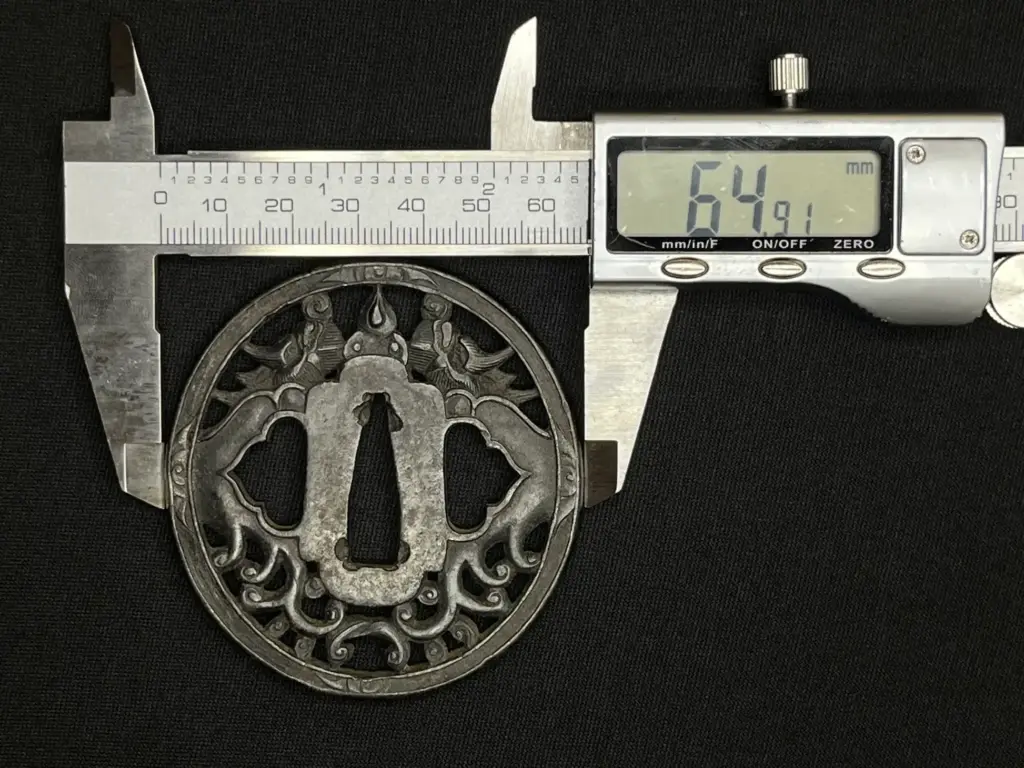
How to check a tsuba before buying
Check a tsuba in this order: fit first, intended use second, material clarity third, design last. That order keeps a nice-looking guard from distracting you from a sword that does not match your real use.
Read the photos first
Good product photos show the guard area close enough to inspect. Look at the tsuba between the tsuka, seppa, and habaki. Wide beauty shots show style, not fit.
Gaps, tilt, uneven seating, peeling coating, fuzzy close-ups, and rough edges deserve a slower look. A sword marketed for handling or cutting practice needs clear views of where the blade, guard, and handle meet.
The most useful photo is usually not the dramatic one. Look for a straight side view of the guard stack, a close view of the seppa and habaki, and enough light to see the finish.
Read the listing for use, not hype
A good listing tells you what the sword is for. Display, cosplay, iaito-style training, sharp collecting, and cutting practice are different uses. The tsuba needs to fit the stated use.
Vague wording is the warning sign. A listing that says “functional” or “battle ready” without clear tang construction, tsuka fit, mekugi, blade steel, and intended use asks you to trust the look more than the build.
Clear wording is simple. “Unsharpened display sword” sets a different expectation from “sharp blade for supervised cutting practice.” The tsuba does not settle that difference. The listing has to explain the full sword.
Match the tsuba to the job
Display buyers have room to care more about motif, color, wall presence, and matching the saya. Gift buyers need to check storage, local rules, and whether the sword is sharp.
Cosplay and photography buyers need event rules and blunt or controlled-use options. Martial arts buyers need instructor guidance before choosing an iaito-style trainer or sharp shinken-style blade. Cutting practice buyers need clear steel, tang, tsuka, mekugi, and assembly details.
Before buying or gifting any katana, check local ownership rules, age limits, shipping restrictions, customs rules, storage needs, and event policies. A sword that is acceptable in one country, state, or event setting may be restricted in another.
Full tang construction is useful to check, but it is not enough by itself. Tang shape, handle fit, blade geometry, and use labeling still need to line up.
Common tsuba materials and tradeoffs
Tsuba material mainly affects weight, finish, care, and appearance. It is not proof that a katana is safe for training or cutting.
Treat the material table as a first pass. Iron and brass both work when the fit is clean. A named alloy is easier to assess than a vague alloy label. Zinc alloy may suit display, but it should not carry a functional claim by itself.
Care is part of the tradeoff. Iron rusts if neglected. Brass and copper alloys darken with handling. Painted or plated budget fittings may show wear first around raised edges.
| Material | Often seen in | Buyer caution |
| Iron | Traditional-looking builds; some handling-focused swords | Still needs fit, edge finish, and assembly checks |
| Brass | Decorative, custom, or gift-oriented builds | Can tarnish and may change feel near the hand |
| Copper or named alloy | Decorative fittings and themed builds | Ask for clearer specs if the sword is sold for use |
| Zinc alloy or vague alloy | Display-first or costume-first swords | Weak support for functional claims unless the full build is clearly described |
Regular handling calls for a secure, smooth, clearly described guard. Display and anime-inspired builds have more room for decorative fittings when the listing is clear about use.
Choosing a custom tsuba
Choose a custom tsuba after you decide the sword’s job, especially when the sword might be handled, drawn, or used in training.
Custom work makes more sense when you already know the mood you want: restrained, historical-looking, anime-inspired, gift-friendly, or built around a color theme. It matters less when the blade and handle details are still unclear.
Start with how the sword will be used
Practice-focused builds need secure fit, moderate weight, smooth edges, and a shape that does not catch the hand or sleeve. Display and gift builds have more room for flowers, waves, crests, openwork, or anime-style motifs.
Collectors need to separate new custom work from antique value. Provenance, age, maker attribution, and condition are separate questions.
Gift buyers should avoid choices that create extra responsibility for the recipient. A sharp blade, complex maintenance routine, or hard-to-store display piece can turn a thoughtful gift into a burden.
Make the fittings work together
The tsuba needs to work with the tsuka wrap, fuchi, kashira, saya, blade profile, and color direction. The most ornate guard is not always the best choice. A quiet guard can make a dramatic blade or saya look more deliberate.
KatoKatana’s custom katana path fits buyers who already know the purpose, material direction, and visual mood they want.
Loose tsuba: stop handling
A loose tsuba is not a quirk to test by swinging. Small spacer noise can happen, but movement in the blade, handle, or several fittings means handling should stop immediately.
Common causes include seppa fit, humidity changes, thickness mismatch, handle movement, wear, or poor assembly. Stop using the sword and inspect it calmly.
Do not try to “see if it holds” with a test swing. A loose guard may be a small spacer issue, or it may point to handle or blade seating problems.
Minor rattle around the seppa is different from movement felt through the handle. Either way, stop, document what moves, and contact the seller or a qualified technician.
- Stop handling if the blade shifts or the tsuka feels loose.
- Do not cut with a sword that has guard movement.
- Do not disassemble a sharp sword without the right experience.
- Contact the seller or a qualified sword technician before repair.
FAQ about tsuba on katanas
Can a katana have no tsuba?
Some Japanese sword mountings use little or no guard, but the familiar mounted katana usually has a tsuba. That is a different mounting choice, not the standard look most buyers expect.
What does a loose tsuba mean?
A loose tsuba usually points to spacer fit, mounting wear, or poor assembly. Do not swing or cut with it until the guard, handle, and blade fit have been checked.
Can I replace a katana tsuba myself?
Only do it if you understand the full fitting stack and know how to reassemble the sword correctly. A poor replacement can create movement around the guard, handle, or blade.
Do local laws matter for a display katana?
Yes. Rules can vary by country, state, age, shipping route, storage, carry, and event setting, even for display pieces. Check local law and customs rules before buying or gifting a katana.
Before you buy, check the whole sword
Inspect the tsuba because it is one of the easiest places to see fit and finish before buying. Use it to spot loose assembly, vague materials, and mismatched use claims.
Then judge the full sword. Display buyers need mounting quality and safe storage. Gift buyers need legal clarity and sharpness information. Practice and cutting buyers should confirm the blade, tang, handle fit, and use label.
Once you understand the guard, compare katana for sale listings by purpose, blade details, tang construction, tsuka fit, and clear use labeling before choosing.


