



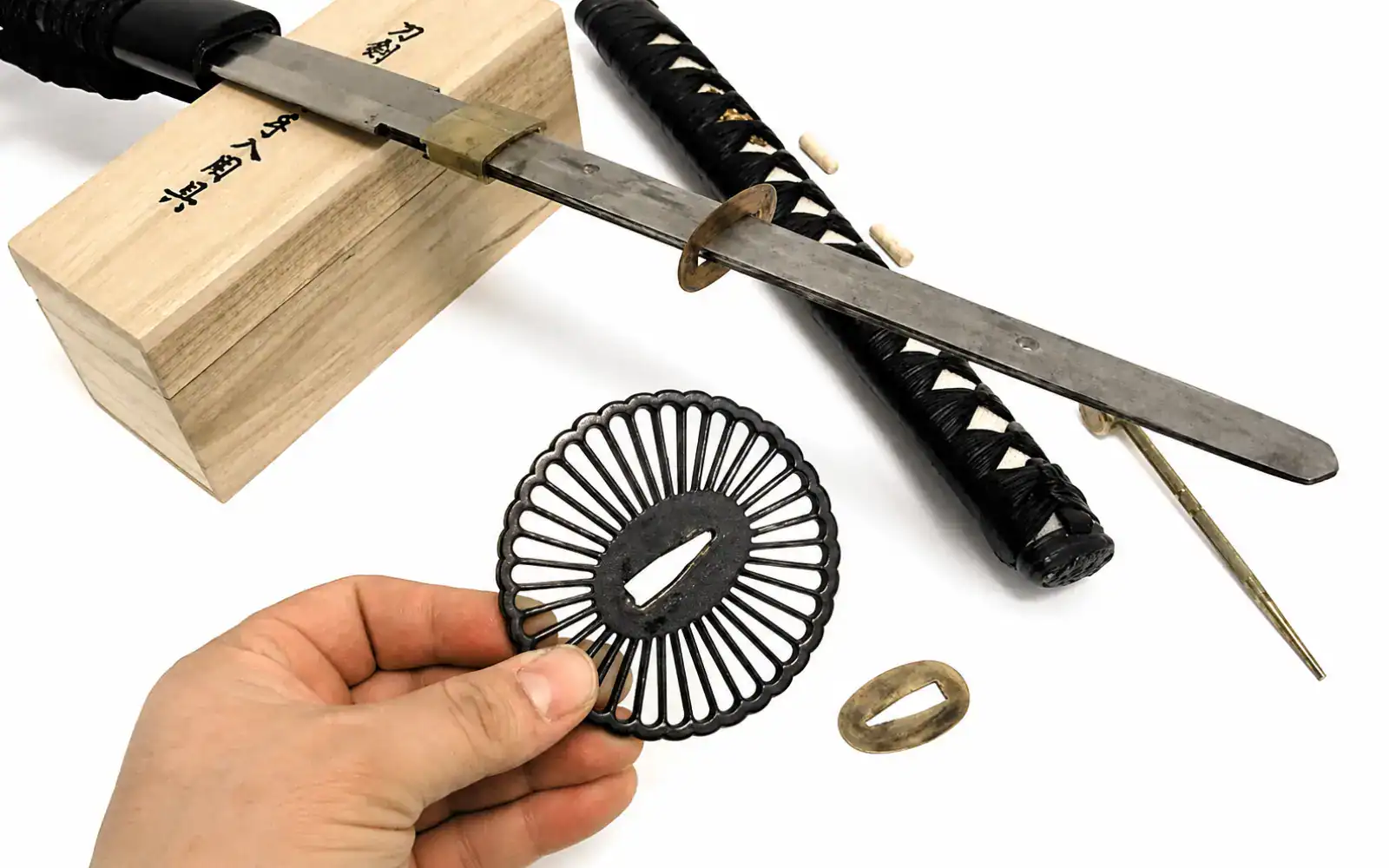
How to Take Apart a Katana Safely

If you are looking at the small pegs in the handle and wondering whether they come out, start with the handle, not the blade. The tsuka, mekugi, and fittings tell you whether this katana was built to be opened.
This guide is for modern production katanas with removable mounts. Leave signed, inherited, antique, decorative, or valuable swords assembled until a specialist identifies them. A bad takedown can crack the tsuka, mix up the fittings, or make a loose mount worse.
Check the tsuka and mekugi first
A katana that is meant to come apart usually looks clean around the handle. The mekugi holes line up on both sides of the tsuka. The fittings sit square. The handle does not shift in your hand. You should not see glue lines, bolt heads, filled holes, heavy rust, fresh shipping damage, or odd repair work under the wrap. When those details look messy, assume the sword is not ready for a first-time takedown.
Do a hand check before reaching for tools. Keep the blade sheathed or wrapped in a towel, then grip the tsuka and try a gentle forward, backward, and side-to-side movement. Any motion before disassembly is a warning, not a reason to keep going.
The mekugi lock the tsuka to the nakago, or tang. On a functional sword, those pegs are usually bamboo. Plastic pegs are a warning sign for practice or cutting, even if they can be pushed out. For the full anatomy, see our parts of a katana guide.
Visible mekugi only tell you that takedown may be possible. They do not prove the sword is ready for iaido, kata, tameshigiri, or backyard cutting. For use, the mount matters as much as the edge.
When not to take the tsuka off
Do not remove the tsuka just because the sword is new, dusty, or interesting. Most routine cleaning is done with the sword assembled: wipe the blade, oil it lightly, and leave the mount alone. For normal care, use the steps in how to care for a katana.
- Take it apart only for a real reason, such as fitting access, a first mount inspection, or a fit check on a modern production sword.
- Be careful with second-hand or marketplace swords when the construction details are vague. A “samurai sword” listing is not enough to treat one like a working sword; see Are Amazon katanas safe?.
- Do not continue with a loose blade, cracked tsuka, decorative build, rust, unknown history, antique value, or any plan to clean the tang. Photograph new damage before repair or return questions; see functional katana seller questions.
Taking the sword apart does not change carry, shipping, import, or travel rules. Check local blade laws, carrier rules, and customs requirements before transport. Keep any blade sheathed and secured.
Set up your workspace
You need a mekuginuki or brass punch, a wooden mallet, a padded mat, a towel, gloves, a tray, and your phone. Treat the blade as sharp even if the seller called it decorative. Steel on steel leaves burrs, so skip the steel punch. Work on a stable surface with the edge pointed away.
Take two photos before you start: one of each side of the tsuka and one of the fittings at the guard. Then keep every part in the order it came off. Mixed seppa or swapped mekugi can create fit problems during reassembly, and the mistake is easy to miss until the sword rattles.
How to take the katana apart
1. Keep the blade from moving
Lay the sword on a padded surface so it cannot slide or roll. If the blade, tsuka, or tsuba already wiggles before you touch a peg, stop there. A loose sword needs diagnosis, not disassembly.
2. Find every mekugi first
Check both sides of the tsuka under good light. The ito wrap can hide part of a peg. Bolts, glue, filled holes, or plastic parts mean the handle was not made for a normal takedown.
3. Tap the mekugi from the narrow end
Most mekugi are tapered. Tap from the smaller end with light, repeated strikes. A peg that is ready to move slides cleanly. A peg that mushrooms, splinters, or refuses to move is telling you to stop.
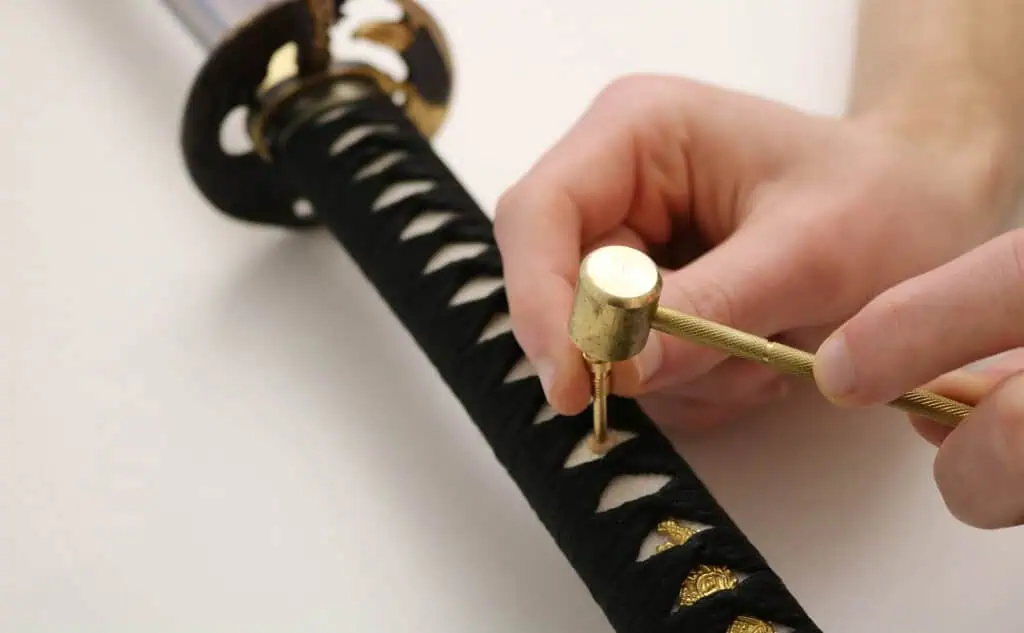
4. Loosen the tsuka without twisting
Hold the blade steady and tap the tsuka near the tsuba with padded support. Do not pull the blade or twist the handle. You want a straight, even gap. Creaking, cracking, or sideways movement means something is binding.
5. Lay the fittings out in order
After the tsuka is off, slide off the outer seppa, tsuba, and inner seppa in sequence. Remove the habaki only if it slides by hand. A stuck habaki is not worth a cut, and prying near the edge is a bad trade.
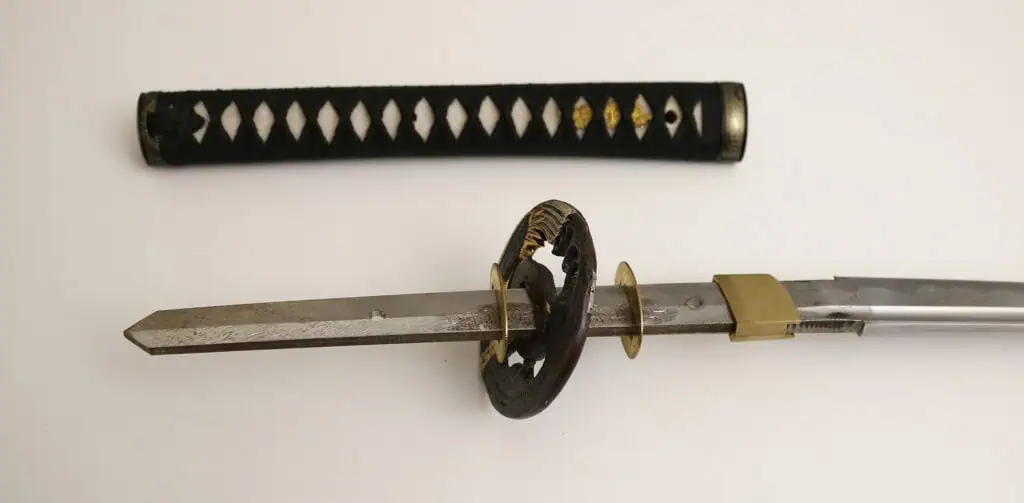
6. Inspect the fit, leave the tang alone
Check the mekugi, tsuka core, tsuba, and seppa for cracks, crushed edges, or poor fit. Do not sand, scrape, polish, or oil the nakago. On a production sword, altering the tang is unnecessary. On an older blade, it can erase identity and value.
If a peg or handle will not move
A stuck mekugi usually means the direction is wrong or the taper is tight. Confirm the smaller end, support the tsuka, and keep the taps light. Stop if the peg deforms, the wrap tears, or nothing moves.
A crushed, split, short, or loose mekugi should be replaced with bamboo mekugi matched to the hole diameter. Do not improvise with plastic, metal, toothpicks, epoxy, or glue. That small peg is part of the mount, not trim.
If the tsuka or habaki sticks, the handle core is cracked, or the sword rattles after reassembly, do not try to solve it with force. Do not pry, twist, drill, widen holes, or swing the sword until someone can inspect the fit.
Put the katana back together
Reassemble in reverse: habaki if removed, inner seppa, tsuba, outer seppa, tsuka, then the original mekugi. The peg holes should line up without hard pressure. If you have to force the tsuka, rotate parts around, or reach for a drill, something is out of position. Do not swap the mekugi between holes unless the maker marked them that way; a peg that fit one side cleanly may sit poorly in another.
Replace cracked, short, crushed, or loose mekugi before the sword leaves the stand. A mekugi that shears during practice can let the blade move inside the mount.
Check the mount before practice
| Check | Passes if | Do not swing or cut if |
| Mekugi | Fully seated, undamaged, each in original hole | Cracked, loose, short, crushed, or swapped |
| Tsuka | Zero movement under firm hand pressure | Any shift forward, back, or sideways |
| Tsuba and seppa | Seated firmly; a faint tsuba movement may be normal on some mounts | Audible rattle, visible gap, or shifting tsuka |
| Habaki | Tight against seppa and blade shoulder | Slides, gaps, or feels loose |
| Blade alignment | Straight, centered, holes aligned naturally | Blade off-center or holes need force to align |
If anything fails, the sword stays on the stand. Before every practice session, check the mekugi and twist the tsuka gently. Any shift or rattle means the mount is not ready for iai, kata, tameshigiri, or cutting.
When repair is not a beginner job
Some problems are useful to find, but not yours to fix on a first attempt. A cracked tsuka, missing mekugi, exposed nakago, signature, heavy rust, or unknown history is a specialist case. Decorative and cosplay swords belong on the wall. Gift or inherited swords should stay assembled until someone can identify them.
Patina, file marks, and inscriptions identify a sword. Cleaning them is permanent. If you replace the sword, look at the mount before the steel name: how the tsuka is secured, whether the mekugi are removable, what the pegs are made from, and whether the sword is built for display, forms, or cutting. You can compare production options in our katana category, but do not use any sword for practice until its mount passes a safety check.
Questions beginners usually ask
Can I clean the tang while the handle is off?
No. Leave the nakago alone. Sanding, oiling, or polishing the tang can remove patina, file marks, and other details that identify the sword, especially on older blades.
Does disassembly loosen the sword over time?
Careful occasional disassembly should not ruin a well-built production sword. Forcing stuck parts, reusing worn mekugi, or removing the handle monthly can. If the tsuka shifts with fresh mekugi, the problem is the fit, not the peg.
Can I train with one mekugi missing?
No. Do not train, cut, or swing the sword with a missing, cracked, loose, or shortened mekugi. Replace the peg first and run the mount check again.
Can I glue a loose tsuka or mekugi?
No. Glue hides the fit problem instead of fixing it. A loose tsuka, damaged peg hole, or shifting blade needs proper repair or replacement before the sword is handled under load.


