



What Is a Good Balance Point for a Katana?

Point of balance is the most underrated number on a katana listing. It tells you how the sword will feel the moment you move it, before you ever hold it. Most listings show a PoB. Almost none explain what it means. This one does.
For most people buying their first functional katana, the answer is 4 to 5 inches forward of the tsuba. This article explains why that range works, when to go closer or farther, and how to check the number on a sword you already own.
What Katana Balance Tells You
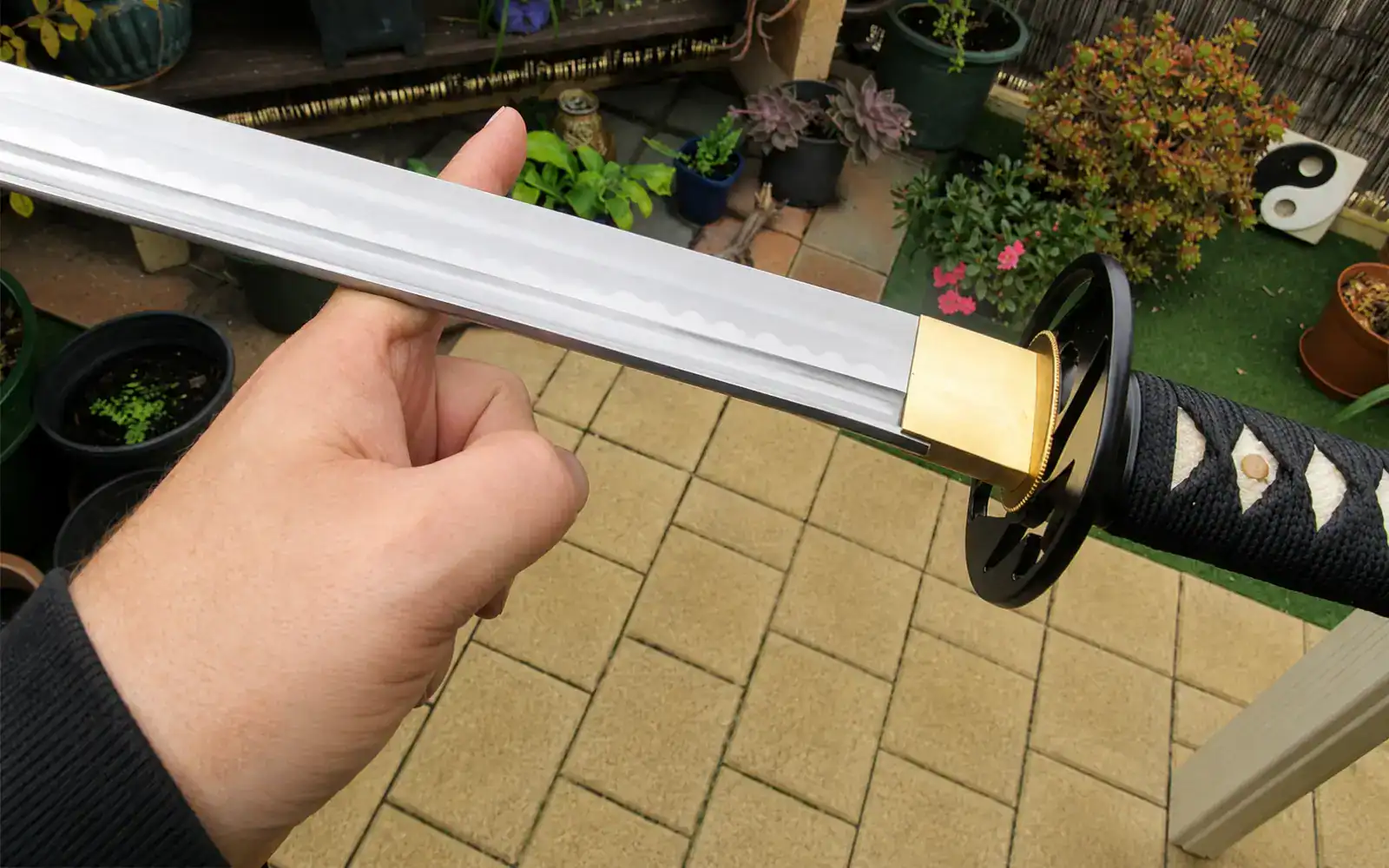
Katana balance is weight distribution along the blade, not total weight. The point of balance, or PoB, is the spot where the sword rests level when safely supported under the spine, measured forward from the tsuba.
Mass carried toward the hands redirects quickly. Mass carried toward the tip gives more committed presence. For how weight and balance interact, see how much a katana weighs.
PoB is not the monouchi, the blade section people mean when they talk about cutting. It is not the center of percussion. It describes handling and recovery. It does not tell you where to strike or whether the sword is safe for cutting.
Edge geometry, tang construction, and training are separate checks. For blade terminology, see parts of a katana.
Where the Balance Point Usually Sits
Katana balance numbers only make sense in katana context. Do not copy expectations from rapiers, longswords, or sabers. Each type is balanced around a different job.
On many modern production functional katanas, PoB commonly falls around 4 to 6 inches, or roughly 10 to 15 cm, forward of the tsuba. For a first functional katana, 4 to 5 inches is often a practical starting point, provided weight, blade length, tsuka length, and construction also make sense. It is not the only right number.
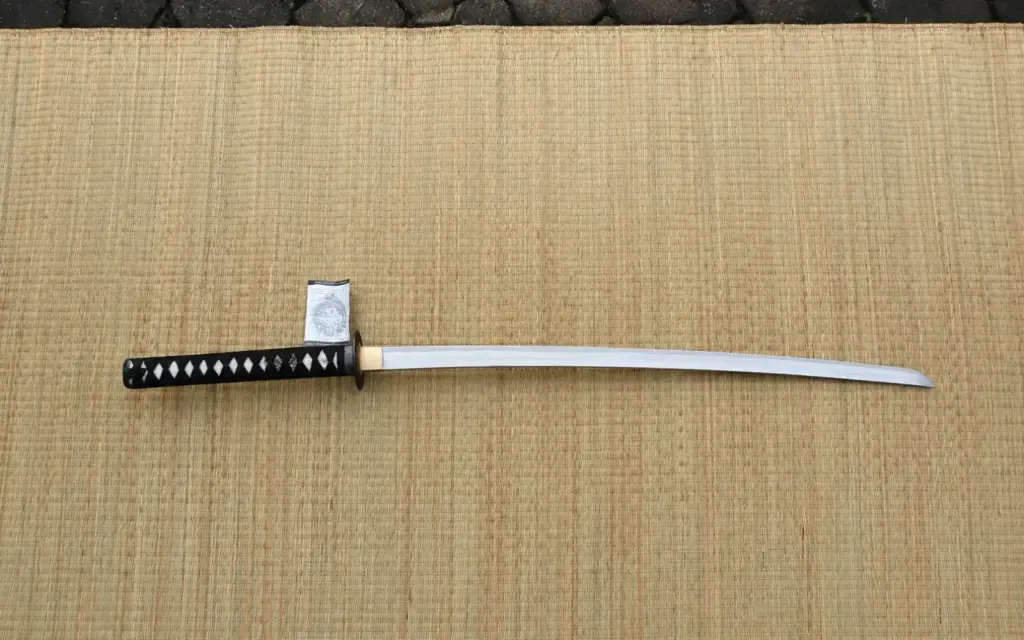
A PoB much closer than about 3.5 inches or much farther than about 6.5 inches is not necessarily a problem, but when the number gets close to either end, know why the sword was built that way before you pay for it.
| PoB position | How it feels and what it is good for | Who it fits |
| Under ~3.5 to 4 in | Quick, hand-responsive, easy to redirect. Low fatigue across repeated movement. | Forms-focused buyers; people who know they want a nimble sword |
| Around 4 to 5 in | Balanced, predictable, all-purpose. Good blend of control and forward presence. | First functional katana; mixed use; the common starting point |
| Around 5 to 6 in | Noticeable forward weight. Committed blade presence in motion. | Cutting-leaning users who can manage the extra fatigue |
| Over ~6 to 6.5 in | Heavy blade presence, slow to recover. Specialized forward-heavy handling. | Experienced users with a clear reason for wanting it |
Reading PoB on a Real Listing
PoB tells you where the weight sits. But it only means something next to a handful of other specs. Confirm the seller measures from the tsuba. Check whether the listed weight includes the saya. A scabbard adds enough heft to make the reading useless.
If a listing does not show PoB at all, ask. If the seller will not provide it alongside weight without the saya, blade length, and tsuka length, compare other listings first.
Five Specs to Check Alongside Balance
- Is PoB measured from the tsuba?
- Is the sword weight listed with or without the saya?
- Are blade length and tsuka length shown?
- Does the listing say bo-hi or no-bo-hi?
- Is the intended use clearly stated: display, forms, mixed use, or cutting?
Why a Few Inches Change Everything
If you want less fatigue across a long practice session, look for PoB closer to 4 inches. If you want more authority through the cut, 5 to 6 inches often fits better. That trade-off is what a few inches of balance decide.
A poorly distributed sword can exhaust your wrist, forearm, or shoulder even when the listed weight looks fine. Balance shapes handling. It cannot fix bad edge alignment, poor grip mechanics, or a lack of training.
Closer balance feels more responsive. The sword stops when you want and changes direction with less effort. For iaido or forms practice, that adds up fast over dozens of repetitions. The trade-off: very close balance can make the blade feel insubstantial.
Forward balance gives more committed presence through the cut, which some trained cutters prefer. The cost: forward-heavy swords wear out your wrists faster and recovery between cuts gets harder. Beginners usually underestimate how tiring it gets. Forward PoB alone does not make a sword cut well. Geometry, edge condition, tang construction, and technique all matter more.
What Shifts a Katana’s Balance
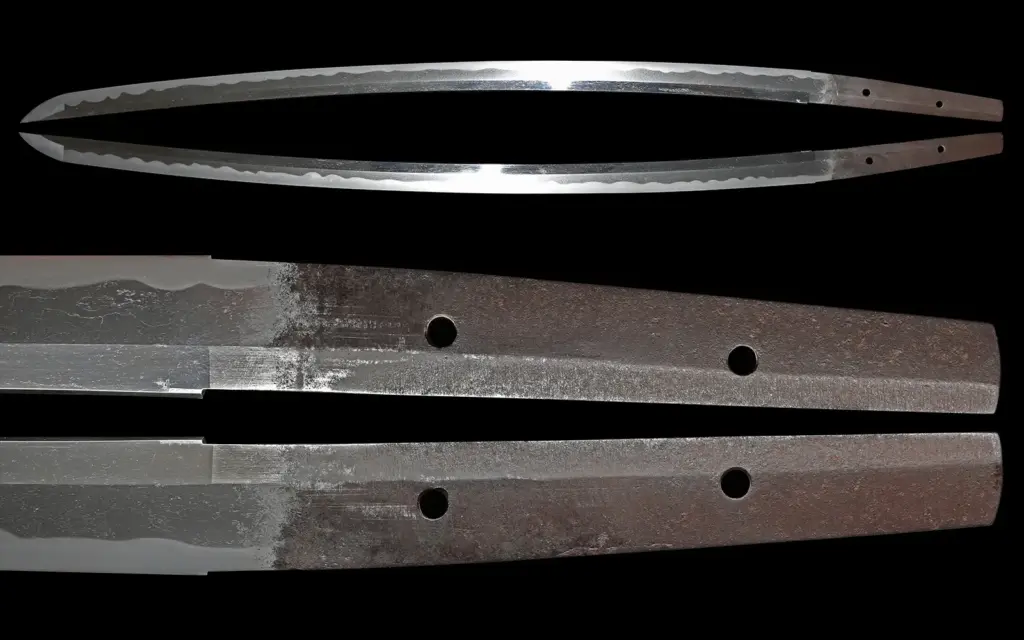
What matters most, in rough order: blade length and mass distribution, blade geometry and distal taper, bo-hi or no-bo-hi, tsuka length and tang, then tsuba and fittings. Fittings can nudge the feel slightly. They cannot rescue a poorly proportioned blade.
Longer blades and more mass near the kissaki push balance forward. A sword too long for your body feels slow even if the PoB looks fine. Katana length and handling covers the height fit.
Bo-hi removes steel, making a sword feel quicker and shifting balance closer to the hands. No-bo-hi keeps the mass in the blade and feels more planted. Bo-hi vs no-bo-hi has the full comparison.
Tsuka length changes hand placement and how easily you can redirect the blade. Tang construction affects handling and safety. Balance alone tells you nothing about whether the tang will hold. Full tang construction covers that check.
Does Folded Steel Improve Balance?
Folded steel, pattern-welded Damascus, and tamahagane affect blade aesthetics and are often marketed on structural grounds. The structural difference versus modern high-carbon steel is debated and rarely meaningful in production swords. A folded blade can still feel sluggish if the geometry is off. Judge balance by the PoB number, not by the steel marketing.
How to Measure Balance Safely
This method finds static PoB only. It does not confirm the sword is safe for cutting or structurally sound. Measure out of the saya. A scabbard makes the reading useless.
Before you start: If the blade is sharp, do not do this alone. Never use your finger, palm, or any unpadded surface on a sharp blade. Use a blunt trainer when possible. If unsure, ask the seller for the PoB directly.
You need a stable table, a padded wooden dowel or block, and a tape measure. Rest only the mune, or spine, on the support. Clear the area before drawing the sword.
- Remove the sword from the saya slowly. If the blade binds, stop. Keep the edge facing away and both hands behind the edge path.
- Place only the spine on the padded support. Position the tsuba close to the support point.
- Slide the support forward until the sword rests level. Move in small increments. If it starts to tip, catch it by the tsuka, not the blade.
- Measure from the tsuba to the center of the support. That is your point of balance.
If the PoB falls in the common range but the sword still feels wrong, grip fit, blade length for your body, or technique is more likely the issue. If it is much farther forward, the sword may be built for committed cutting and too demanding for your use.
If it is unusually close to the hands, you may have a specialized nimble build. That is a design choice. Make sure it matches yours.
When Balance Matters Less
Not every katana purchase needs a close look at PoB. For display, cosplay, or collection, balance barely matters. Focus on finish, safe mounting, and build quality. Do not pay extra for handling claims you will never feel. A blunt piece is often safer and cheaper.
For stage or choreographed use, follow prop-safety rules and use purpose-built blunt equipment. A sharp katana is the wrong tool for a convention.
Gift buyers: if the recipient plans to train or cut, the 4-to-5-inch reference range is a practical default. If the sword stays on a stand, prioritize appearance and safe storage.
A katana is not a casual gift. Confirm the recipient can legally receive and store it where they live. Sword laws vary by country, state, and sometimes city. Check before ordering.
Match Your Balance to What You Do
For Your First Functional Katana
Start around 4 to 5 inches, provided weight, blade length, and construction also check out. Do not chase an extreme PoB because a forum said it was better. How to buy your first katana has the full checklist.
For Forms, Iaido, or Dojo Practice
A handier PoB, closer to 4 inches, reduces fatigue across many repetitions. Ask your instructor before buying anything sharp. A sharp katana is not a substitute for a proper iaito.
For Mixed Use: Handling and Cutting
Mid-range, around 4 to 5.5 inches, splits the difference. Read PoB alongside total weight and bo-hi, not alone.
For Cutting-Focused Tameshigiri
Some forward presence, around 5 to 6 inches, is common among experienced cutters. Do not treat forward PoB as a replacement for good edge geometry, clean hasuji, and proper target selection. Browse high carbon steel katana options.
For Display, Cosplay, or Collection
Balance barely matters. Focus on finish and safe mounting. See how to choose a katana for practice or display.
For a Custom Build
Specify handling goals only after handling enough production swords to know what PoB and tsuka length feel right. Guessing from forum posts is the fastest way to order a sword that feels wrong. Explore custom katana options once you can describe the handling you want.
Katana Balance FAQs
My katana feels too tip-heavy. Did I buy the wrong sword?
Measure the PoB without the saya first. In the 4-to-6-inch range, the issue is more likely grip fit, blade length, or technique. Past 6 inches, the sword was probably built for committed cutting and may be too demanding for your use.
Does bo-hi change katana balance?
Yes. Bo-hi removes steel from the blade, so a sword with a groove typically feels quicker and carries its balance closer to the hands. The shift is usually modest, often under an inch, but the difference in handling can be significant.
Trust the Number, Then Your Hands
A few inches of balance separates a sword that feels right from one that fights you. PoB is not a quality score. A well-balanced blade on a poor tang is still dangerous. The number matters most next to weight, length, bo-hi, tsuka dimensions, and the use case you are buying for.
Pick a PoB range that fits what you do. Check the specs that matter alongside it. Browse functional katanas with the checklist in hand. The number gives you a starting point. Your hands tell you the rest.


