



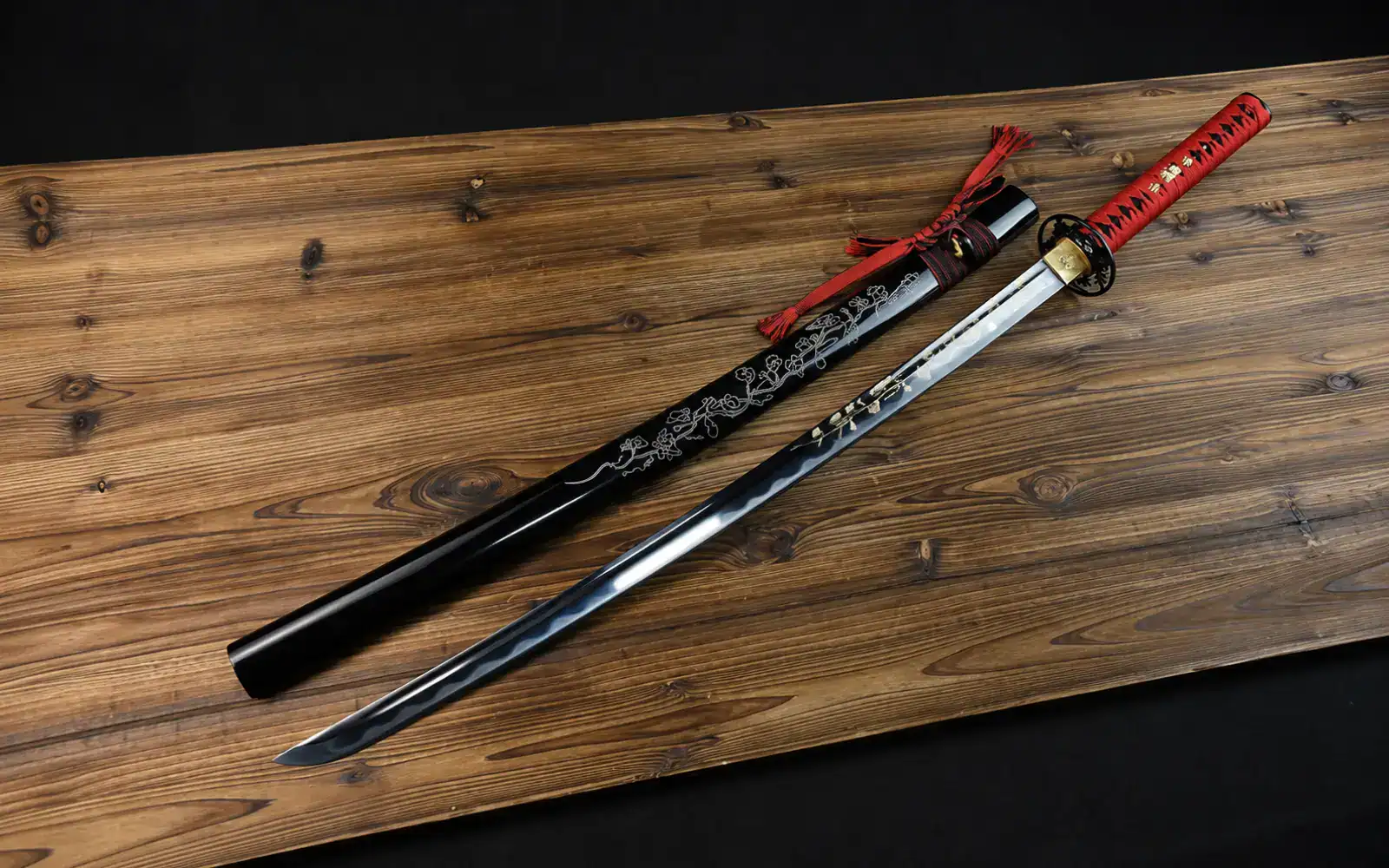
What Is a High Carbon Steel Katana?

A “high carbon steel katana” listing can sound like a quality promise. It is not. A high carbon steel katana uses carbon steel with enough carbon to harden well and hold a useful edge, but the label alone does not confirm heat treatment, tang construction, handle security, edge state, or cutting suitability.
In stricter steel discussions, high carbon often starts at roughly 0.60% carbon, though ecommerce filters can use the phrase more loosely. Treat it as a filter. Before you trust it, check the named steel grade, heat treatment, tang or nakago construction, edge state, and stated use limits.
What the Label Actually Means
“High carbon steel” tells you that the blade uses carbon steel with enough hardening potential to be a more credible starting point for a functional build than a typical decorative stainless-steel sword. It does not describe the rest of the sword.
Common buyer-facing examples include 1060, 1095, and T10. The numbers in the AISI 10xx series offer a useful clue: 1060 is roughly 0.60% carbon, while 1095 is roughly 0.95% carbon. Carbon content gives steel potential. Heat treatment and construction determine how much of that potential reaches the finished blade.
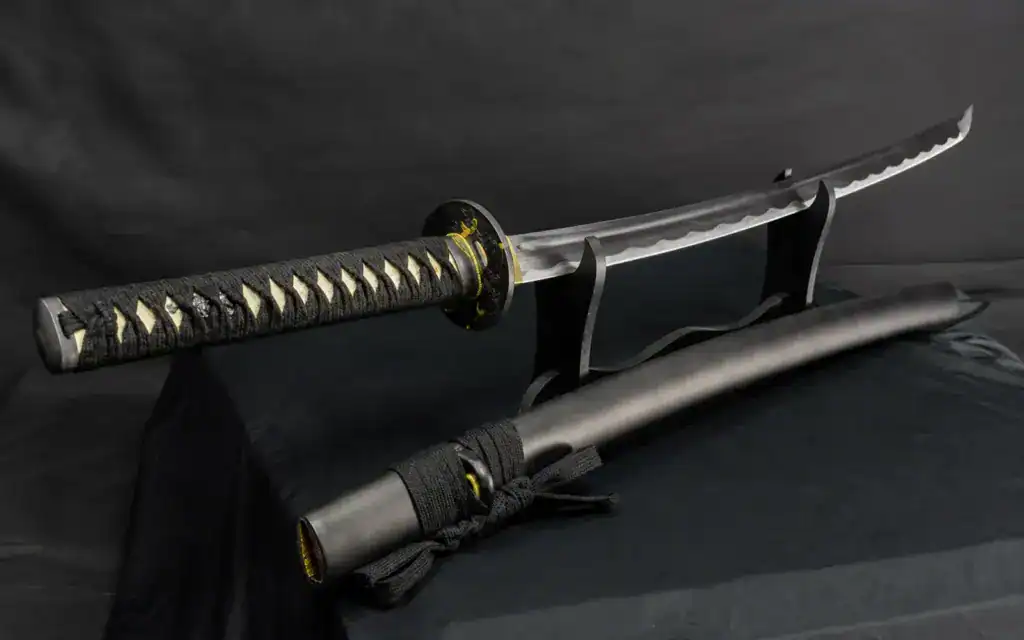
Why 1045 Appears in Filters
1045 is better treated as entry carbon steel than as the clearest strict high-carbon example. The “45” points to roughly 0.45% carbon, so it sits below the approximate 0.60% anchor many buyers use when they mean high carbon.
On KatoKatana shopping pages, 1045 may appear in broader high-carbon or carbon-steel filters because buyers often first separate carbon-steel blades from stainless display swords. For stricter comparison, treat 1060, 1095, and T10 as clearer high-carbon examples, and 1045 as entry carbon steel. The differences are covered in 1045 vs 1060 katana steel.
High Carbon Is Not a Guarantee
“High carbon” identifies a carbon-steel listing. It does not show that the sword is ready for cutting. Ask three questions before you buy: what steel is it, how is the sword built, and what use does the seller support?
| What the label suggests | What you still need to verify |
| Carbon-steel blade. | Exact grade and heat treatment. |
| Potential for functional use. | Tang or nakago, geometry, handle, and edge state. |
| Possible cutting suitability. | Seller-stated use limits and training context. |
“Battle ready” is a broader build-and-use claim than “high carbon steel.” Read the criteria behind that phrase before treating it as proof of suitability; this guide explains the distinction behind battle ready katana meaning.
Once you understand the label as a first filter, browse high carbon steel katana options by named steel grade and intended use.
Steel Grades Buyers Usually Mean
A named grade is more useful than a generic “high carbon” label because it gives you something concrete to compare. You still need to inspect the heat-treatment wording, construction details, edge state, and intended use.
1060 and 1095 Carbon Steels
1060 is a balanced, accessible grade many buyers consider for a first katana meant for functional use. Check the product’s construction and stated edge condition, then compare 1060 carbon steel swords as a named high-carbon baseline.
1095 is the grade to compare when a harder edge is the priority. It can hold an edge well, but heat treatment, target choice, care, and proper use still matter. Use 1095 carbon steel swords to compare builds, not to assume an automatic upgrade.
T10, 5160, and 9260
T10 is a high-carbon tool-steel option often compared with 1095 by buyers who care about edge behavior and hamon potential. Neither name tells you how a particular blade was made, so a clear heat-treatment description still matters.
5160 and 9260 belong in the broader carbon-steel shopping conversation. Buyers usually compare them for toughness and forgiveness rather than maximum edge hardness. That is a different priority, not a lower tier of ownership.
How High Carbon Compares With Other Steels
For katana listings, stainless steel is usually a display-first choice. Carbon steel is a more credible starting point for a functional build when construction also supports that use. A carbon-steel label still does not make every sword safe to cut with, so check the seller’s intended-use statement.
Compare plain high-carbon and spring-steel options by the tradeoff you care about: edge behavior versus toughness and forgiveness. Folded or Damascus patterning is a separate claim: a visible pattern does not prove performance. Steel composition, weld quality, any core construction where applicable, heat treatment, and the overall build still determine whether the sword deserves confidence.
Tamahagane and modern high-carbon steels belong to different material traditions. Modern high-carbon steels are common practical choices for production katanas, while tamahagane belongs to a traditional Japanese swordmaking context. Neither label removes the need to inspect the individual sword.
When High Carbon Fits Your Use
For a first katana meant for functional use, start with a named steel grade and clear edge state. That gives you a way to separate display pieces from functional builds. Collectors and upgrade buyers should judge polish, hamon, geometry, fittings, and construction on their own terms.
For controlled cutting, start with the seller’s stated use limits. Look for documented tang or nakago construction and secure tsuka and mekugi assembly, then check the edge state, blade geometry, target, and training context. Do not use a sword for cutting unless the seller explicitly supports that use.
High carbon can feel more authentic for a display or gift, but an unsharpened or display-first option may be easier to live with. If the sword will mainly be a household display piece, authenticity is not the only priority. Low handling risk, clear edge state, storage location, and maintenance expectations may matter more than choosing the highest-carbon steel.
Read the Listing Before Buying
Read a high carbon steel katana listing as evidence, not a headline. It should name the exact grade, explain the build, state the edge condition and intended use, and set out care and return terms. If it only says “high carbon steel,” ask the seller for the grade. HRC can help, but it does not replace build details.
A very low price alongside claims of 1095, T10, folded steel, clay tempering, and full tang construction calls for closer inspection, not an assumed bargain. Check for a named grade, realistic use claims, clear photos, and care instructions. Vague steel, edge, or heat-treatment details are warning signs, especially when “battle ready” is the only proof.

Care for High Carbon Steel
High carbon steel needs more routine care than stainless because it can rust more easily. The basic routine is simple: wipe the blade after handling, keep it dry, apply a light coat of oil, store it away from humidity, and clean it after cutting.
A display sword still needs care. Fingerprints and damp storage can cause problems, so choose carbon steel only when that small routine feels realistic for your space and habits.
Choose a Grade, Then Check Build
- For a first katana meant for functional use, use a well-documented 1060 build as your baseline.
- A clearly documented 1095 build is the harder-edge comparison.
- Treat T10 as a comparison only when the seller documents heat treatment and intended use.
- Prioritize 9260 or 5160 when toughness and forgiveness matter most, then check the same construction details.
After you narrow the grade and intended use, compare the listing’s exact grade, edge state, and seller-stated use limit with the job you have in mind. Choose only when those details match your intended use.
FAQ
Does high carbon steel mean a katana is battle ready?
No. High carbon steel identifies a blade material family, while battle-ready is a broader build-and-use claim. A credible claim should be supported by the named steel, heat treatment, tang construction, edge state, blade geometry, handle assembly, and realistic use limits.
Is 1045 carbon steel high carbon for katanas?
1045 is better treated as entry carbon steel than as the clearest high-carbon example. Ecommerce filters may group it with high-carbon blades to distinguish it from stainless display swords, while stricter comparisons usually center more clearly on 1060 and above.
Will a high carbon steel katana rust on display?
Yes. A high carbon steel katana can rust when it is handled, stored in humidity, or left unoiled too long. Display use lowers wear, but it does not replace basic wiping, dry storage, and light oiling.


