



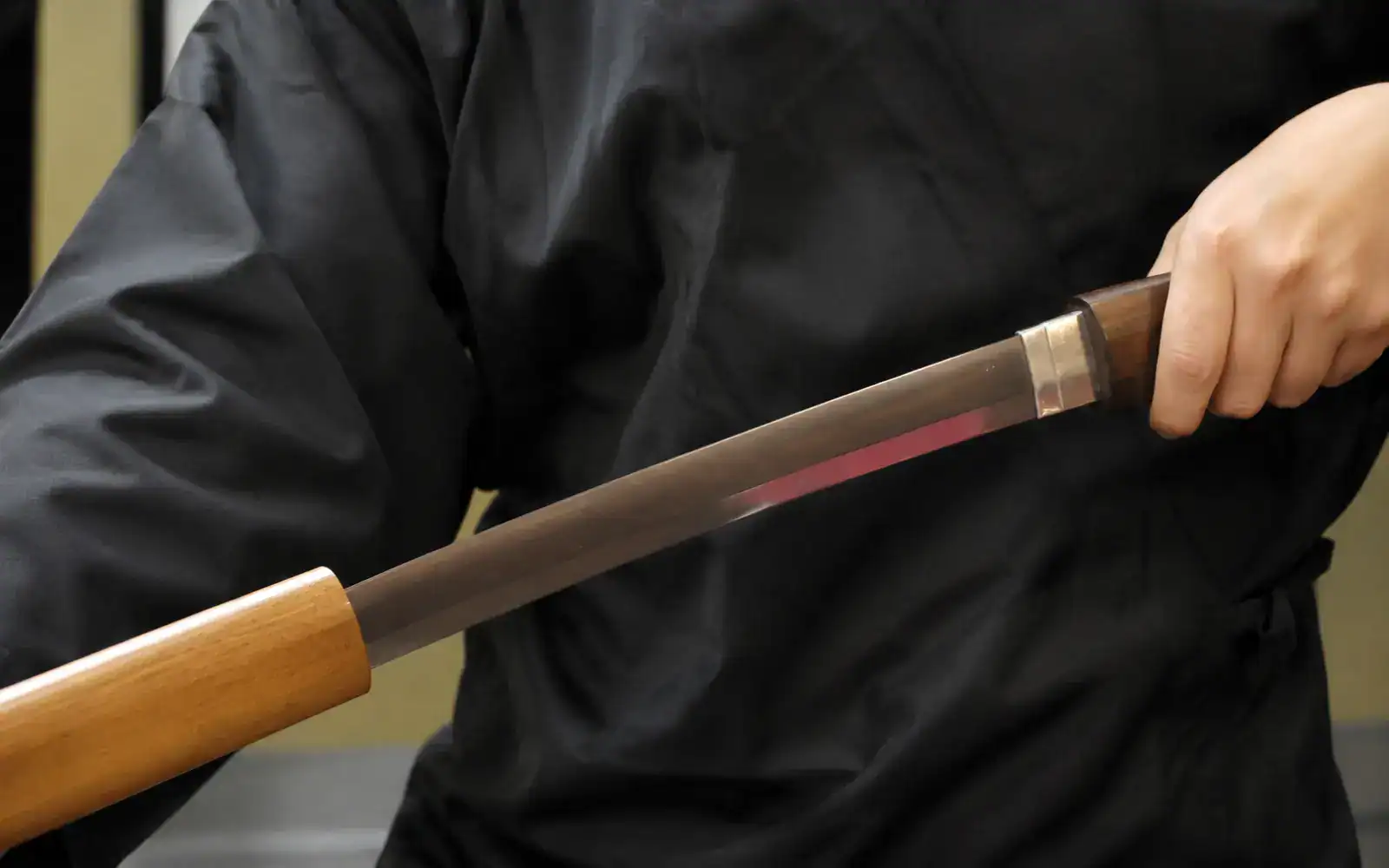
How to Sheathe a Katana Without Cutting Your Hand

The moment that catches new owners is often not drawing a katana. It is putting the blade back into the saya. The edge is close, the tip is moving, and the support hand is near the opening. There is not much room for guessing.
Start slowly: hold the saya by its body, keep fingers off the koiguchi, guide the back of the blade, and stop if anything scrapes, twists, or feels tight.
Safe sheathing starts with slow hands, but the sword itself matters too. A display piece, iaito, sharpened shinken, cosplay sword, and collectible blade should not all be handled as if they were the same tool. A first sword for display, gifts, or casual practice does not need to be sharp just to feel legitimate.
How to sheathe a katana safely
Before the blade moves, set the room. Keep people and pets away from the tip path, keep the sword where you can see it, and stop the moment the sword or saya feels out of line.
- Face the blade and saya where you can see them clearly.
- Hold the saya around its body, not over the koiguchi, the mouth of the scabbard.
- Keep every fingertip away from the opening before the tip moves toward it.
- Let the mune, the back of the blade, find the line into the saya. Do not guide the sharp edge with your hand.
- Align the tip before sliding the blade in.
- Seat the habaki gently. Stop if the fit feels tight, twisted, gritty, or wrong.
Treat speed as the last thing to add, not the first. Returning a sword from the hip belongs in supervised training, not copied video moves.

The sword terms that matter here
Only a few terms matter while the blade is going back in. The saya is the scabbard. The koiguchi is the opening of the saya. The mune is the back of the blade. The habaki is the blade collar that seats near the end. Noto is the re-sheathing motion.
Words such as nakago, tsuka, kissaki, and sori are useful when you are judging construction or handling feel. They do not change the rule at the opening: skin stays away from the koiguchi, and the mune guides the blade. Save the wider parts vocabulary for later; it is not what keeps your hand safe here.
Where beginners usually cut their hands
The support hand usually gets in trouble because it tries to help too much. Fingers drift over the koiguchi. A thumb rises into the edge path. Someone tries to feel for the tip instead of aligning the sword first.
Your support hand should control the saya, not search for the blade. Do not run fingers along the steel, cover the opening with skin, or let the cutting edge cross your hand.
Good hand position lowers the risk. It does not make a sharp katana harmless, especially around guests, children, pets, alcohol, clutter, or distractions.
Are you holding the saya or wearing it?
Most home owners are not wearing a sword at the waist. They are cleaning a blade, checking a gift, taking photos, or putting a display katana back where it belongs. That is not the same situation as training in a dojo.
- Display, gifts, photos, cleaning, or inspection: use the holding-saya method and keep the blade visible.
- Martial arts noto: use an instructor and a practice tool before working near a live edge.
How to sheathe with the saya in hand
For most owners, this is the everyday version. It fits cleaning, inspection, tabletop viewing, photography, and careful display handling.
- Set the room first. Clear the space before moving the blade. A stable stance or clear table matters more than a dramatic posture.
- Hold the saya body. Grip the saya around its body and keep fingertips away from the opening.
- Bring the saya to the blade. Move the opening only after the blade angle is controlled. Let the mune set the line.
- Stop and reset when it catches. Back out when the tip catches, the saya twists, or the blade feels misaligned.
Do not return a wet, dirty, over-oiled, or gritty blade to the saya. Moisture and debris can affect both the blade and the inside of the scabbard. Use KatoKatana’s how to care for a katana guide when the blade needs more than a quick wipe.
How to sheathe a katana from the hip
Sheathing from the hip is not a home display move. Schools vary, so treat the points below as a safety check, not as a replacement for instruction in iaido, kenjutsu, or another style.
- Confirm the setup. Check that the sword is worn edge up for the setup you are using. Obi placement and school details belong in a wearing guide, not in a quick sheathing drill.
- Keep the support hand close. Control the koiguchi and saya angle without covering the opening.
- Guide with the mune. Let the back of the blade find the line into the saya. Do not use the cutting edge as the guide.
- Seat the habaki gently. Stop for scraping, twisting, thumb drift, or hard resistance instead of striking the sword into place.

Why your katana is hard to sheathe
A katana that is difficult to sheath may have a fit problem, a maintenance problem, or a blade paired with the wrong saya. More force only makes the risk worse.
Check for misalignment, debris inside the saya, moisture swelling the wood, a warped saya, a loose fit, or an overly tight koiguchi. A high-value, antique, or true nihonto deserves professional guidance rather than guesswork.
Steel type does not make sheathing safe by itself. High carbon steel, folded steel, Damascus-style patterning, hamon, differential hardening, tamahagane claims, kissaki shape, and sori belong to construction or appearance. Hand safety still comes down to edge control, saya fit, and pace.
What should you practice with first?
For learning the motion, choose the least sharp tool that still teaches the job. Display handling, casual practice, gifts, and cosplay rarely call for a sharpened blade.
- Bokken: good for first motion drills, but it will not teach real saya fit.
- Iaito or unsharpened sword: better for controlled noto practice and forms, not cutting.
- Display sword: for decor, photos, and gifts, not repeated drills or cutting.
- Sharpened shinken: for experienced handling or approved cutting practice, not beginner sheathing drills.
Decide between a sharpened or unsharpened katana before purchase, not after a close call. Unsharpened does not mean harmless; a blunt metal sword can still have a hard point, real weight, and enough force to injure someone.
Buying a katana? Start with the job
Pick the use before comparing appearance, steel claims, or sharpness. Display buyers should check finish, fittings, saya quality, and mounting. Training buyers should check balance, construction, instructor rules, and school fit. Cutting buyers need a sword explicitly sold for that use, plus qualified guidance.
Treat vague claims such as “battle ready,” “folded steel,” or “real hamon” as incomplete when the listing does not explain blade material, heat treatment, tang construction, sharpness, and intended use. KatoKatana’s how to choose a katana for practice or display guide is the deeper buying checklist.
The two moments to slow down
Most mistakes happen at the first contact with the koiguchi or during the final inch before the habaki seats. At the start, people rush the tip toward the opening. At the end, they relax because the sword feels almost home.
Those are the moments to slow down. Skip spin-sheathing, back-carry moves, and anime poses with a metal blade. They do not teach better control, and they add risk right where your support hand is closest to the edge.
Questions beginners ask before sheathing a katana
Is it hard to sheath a katana?
The idea is simple. Doing it safely takes slow control, correct hand position, and the right practice tool. Beginners should not drill the motion with a sharp blade.
Can a katana cut you while sheathing?
Yes. A sharp katana can cut the thumb or hand when the edge path, hand position, or blade alignment is wrong. Stop as soon as the fit feels off.
Should beginners look at the saya?
Yes. Beginners can look while learning. No-look sheathing is a trained skill, not the starting point.
Is a display katana safe to practice with?
Usually no. Display swords are for decor, photos, and collection. Use training equipment for repeated practice unless the seller clearly rates the sword for that use.
Can I travel with or carry a katana?
Do not assume you can. Sword ownership, import, shipping, transport, and carry rules vary by country, state, city, carrier, and age. Check official local law and customs rules before moving any sword in public or across borders. This article is about handling, not legal permission.
Choose the sword before you practice
Match the sword to the job before you practice the motion. A display buyer, gift buyer, martial arts student, and cutting practitioner should not start with the same blade.
Compare Japanese katana options by purpose first, then check local laws, age rules, seller details, and training requirements before buying.


