




Iaido vs Kendo: Which Should Beginners Learn First?

Iaido vs kendo sounds like a choice between two sword arts. For a beginner, it is usually a choice between two rooms: a loud room where partners test your timing, or a quiet room where every draw, cut, and return to the saya gets corrected.
Kendo fits beginners who want live pressure with shinai and armor. Iaido fits beginners who want solo kata and careful sword handling before anyone talks about live blades. When both sound good, visit local classes and let the safer, more beginner-friendly dojo break the tie.
Iaido vs Kendo: Solo Kata or Live Pressure?
Start with the kind of training you would actually keep doing. A class that fits your personality and schedule will teach you more than a sword purchase made from photos and product specs.
As commonly taught to beginners today, both arts include etiquette, discipline, and structured correction. Neither should be treated as a shortcut to real-world fighting, legal self-defense, or safe sharp-sword use at home.
| Decision point | Iaido | Kendo |
| Training feel | Quiet solo kata with technical correction | Partner drills, footwork, shouting, and sparring |
| Practice partner | Imagined opponent | Live partner |
| Beginner gear | Bokken or blunt iaito, depending on dojo | Shinai first, bogu later when approved |
| First sword mistake | Buying a sharp katana before the instructor allows it | Buying a katana when the class needs kendo gear |
| Best fit | Patient learners who like form, posture, and precision | Social learners who want pressure and live feedback |
A deeper what is iaido guide helps if the solo kata side still feels unclear. Here, the goal is narrower: choose a first class and avoid buying the wrong sword too early.
Choose Kendo for Live Feedback
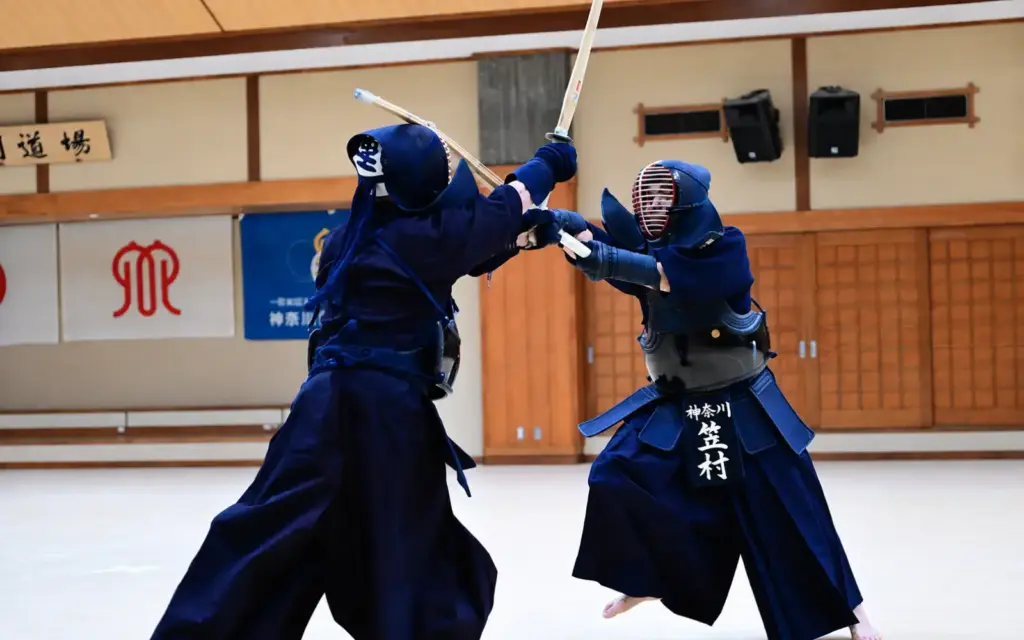
Kendo is usually the better first choice when you want another person testing your timing every class. The room feels louder, faster, and more athletic than most first-time sword buyers expect.
Beginner kendo often starts with footwork, etiquette, shinai handling, and basic strikes before full armor enters the picture. Later, bogu allows controlled contact to specific target areas under kendo rules.
Kendo is not a reason to buy a katana first. A shinai is usually the early gear focus, while bogu can become the larger later purchase when the dojo approves it.
Kendo Can Feel Too Intense
Kendo is a poor first fit if loud rooms, repeated drills, competitive pressure, or controlled contact would make you stop showing up. The live feedback is the point, but it is also the part some beginners bounce off.
Choose Iaido for Controlled Handling
Iaido is usually the better first choice when the draw, posture, and clean finish interest you more than sparring. Practice centers on kata, so small errors in grip, angle, balance, and resheathing become the lesson.
Beginner iaido may start with a bokken, then move toward a blunt iaito when the dojo approves it. A properly sized iaito can become the main early gear decision once the instructor allows it.
Iaido is not sword posing. It is also not permission to practice sharp-blade drawing at home without instruction. The dangerous moments are often quiet ones: drawing, turning, correcting edge angle, and returning the blade to the saya.

Iaido Can Feel Too Slow
Iaido is a poor first fit if you need live opponents, fast sparring, or obvious athletic feedback every session. The progress is real, but it often shows up in small corrections that outsiders barely notice.
Buying a Sword Changes the Question
Once you know which class you want to try, the next question is gear. Many beginners spend money in the wrong place by buying a sharp katana before knowing whether they need training gear, a display piece, a gift, or nothing yet.
Training With a Dojo
If you plan to train, let the dojo decide your first gear. Kendo points toward shinai and armor. Iaido may point toward bokken or iaito. A functional katana only makes sense after qualified instruction and clear approval.
Buying for Display or a Gift
Buying for a shelf, wall, or gift is different from buying for class. A blunt display katana may be the safer gift than a sharp blade, especially around children, guests, pets, or shared housing.
Collectors, Cosplay, and Anime Fans
Collectors, cosplay buyers, and anime fans can still use this comparison. Kendo explains why a bamboo shinai belongs in sparring. Iaido explains why draw feel, saya fit, tsuka security, and a sharp or blunt edge matter before a sword becomes more than a wall piece.
Iaido vs Kendo in the First Month
Kendo usually feels more physically intense in the first months. Footwork, repeated movement, kiai, partner pressure, and heat inside armor can challenge beginners even before competition becomes relevant.
Iaido is lower impact, but it still asks for leg strength, balance, shoulder endurance, wrist control, and careful spacing. Some styles include kneeling work, which may not suit every body.
People with injuries, mobility limits, or health concerns should observe class and ask instructors about modifications. A good beginner class can explain what is required without pressuring you into unsafe movement.
Let the Dojo Break the Tie
A well-run local dojo beats the art that sounded better online. Watch how beginners are treated, how safety is explained, and whether instructors inspect gear before students use it.
Credible federation, association, or instructor lineage can help you search, but no label replaces observation. In the United States, you can find a dojo via AUSKF. Global students can also find an IKF member organization or check relevant national bodies.
Ask Before Your First Class
- Can beginners observe before joining?
- What gear is needed for the first month?
- When do students usually buy shinai, bogu, bokken, or iaito?
- Who checks weapon fit, condition, and safety?
- Are age limits, insurance, and local rules explained clearly?
- Can you see yourself coming back every week?
Do Not Start With Steel Type
Steel type should not decide iaido vs kendo for a beginner. High carbon steel, folded steel, Damascus-style patterning, and differential hardening can matter later, but none of them replace dojo requirements.
A visible hamon can come from differential hardening, but some decorative blades imitate the look. Folded steel can be attractive, but it is often over-marketed in modern replicas. Tamahagane and true nihonto are specialized categories with legal, price, and provenance issues that most beginners do not need.
The safer buying order is purpose first, construction second, appearance third. Before comparing blade construction details, decide whether the item is for training, display, collecting, cosplay, gifting, or supervised cutting practice.
When Buying a Katana Makes Sense
A katana purchase makes sense when you can name what the sword is for. Display, gifting, collecting, cosplay, and instructor-approved functional use are different jobs, and one sword should not be assumed to serve all of them.
A display buyer can care more about look, steel, fittings, and budget than dojo fit. A guide to sharpened or unsharpened katana can help decide whether an edge is useful or just added risk.
The katana for practice or display question matters more than the product photo. Once a qualified instructor confirms that a functional blade is appropriate, compare functional katanas by purpose, length, weight, edge type, and stated construction.
Check Laws, Shipping, and Home Safety
Sharp swords need more planning than most first-time buyers expect. Store them away from children, guests, and pets, and never assume a wall mount is safe without checking how it holds the saya and blade.
Sword rules can differ for buying, importing, carrying, transporting, gifting, and public event use. This article is not legal advice; check local laws, import rules, age restrictions, customs requirements, and carrier policies before ordering or moving any sword.
Before buying, check whether the seller says plainly if the sword is sharp or blunt, decorative or functional, carbon steel or stainless, full tang or display-only. A good listing should also explain basic maintenance needs without making the sword sound maintenance-free.
Can You Practice Both Iaido and Kendo?
Iaido and kendo can complement each other after you have a stable training routine. Kendo builds pressure, timing, distance, and partner awareness. Iaido builds controlled handling, posture, and precision.
Starting both at once is possible, but it can split budget and attention. Beginners usually do better when one teacher is correcting one set of habits at a time.
Experienced martial artists may handle cross-training better, especially if instructors know about it. They should still expect corrections, because habits from one art may not transfer cleanly to the other.
Start With the Class, Not the Sword
The class decides the gear, and the gear decides what kind of katana purchase is responsible.
No safe beginner class nearby? Treat any sword purchase as display, collecting, or gifting until proper instruction is available. A sword that looks right in a photo can still be the wrong tool for your first month.
FAQ
Can I switch from kendo to iaido later?
Yes. Many students cross-train later, but each art has different habits. Let both instructors know so they can correct conflicts early.
Do I need a katana for kendo?
No. Kendo beginners usually use a shinai, not a katana. Later gear decisions usually involve uniform and bogu, depending on dojo progression.
Do iaido beginners use sharp swords?
Usually no. Many iaido beginners start with a bokken or blunt iaito. Sharp blade use should wait for qualified instruction and dojo approval.
Is folded steel better for iaido?
Not automatically. Folded steel can look attractive, but dojo approval, balance, length, weight, edge status, and construction matter more for training use.
Can one katana work for display and practice?
Sometimes, but do not assume it. A display sword, iaito, cutting blade, and collectible katana can have different safety, edge, and construction requirements.
Which is safer, iaido or kendo?
Both can be safe in a proper dojo. Beginner safety depends more on instruction, approved gear, class rules, and personal control than on the art name.


