

Bo-Hi vs No Bo-Hi: Don’t Pick the Wrong Katana Groove

Quick Answer
- Choose bo-hi for quicker handling, clearer tachikaze feedback, and an easier fit for forms, display, dry handling, or mixed use.
- Choose no-bo-hi for more forward blade mass, a quieter swing, and the more conservative option for repeated cutting on dense prepared targets.
- Do not choose by groove alone: steel, heat treatment, blade geometry, tang construction, and seller credibility matter more than bo-hi vs no-bo-hi by itself.
Bo-hi vs no-bo-hi is one of those small katana details that can make choosing harder. Two swords may share the same length, steel, fittings, and price, but that groove can change how the blade feels in forms, how it sounds in a swing, how planted it feels for cutting, and how it looks on display.
First-time buyers want an easier all-around choice. Forms users want feedback. Cutting-focused buyers worry about blade mass. Display and custom buyers do not want a groove that feels wrong later. This guide keeps the decision practical without pretending the groove matters more than build quality.
Match the Bo-Hi Choice to Your Use
Bo-hi is usually better for forms, display, and first katana buyers, while no-bo-hi is often the more conservative choice when a buyer wants a heavier feel and expects repeated cutting practice.
Bo-Hi vs No Bo-Hi
| Feature | Bo-Hi | No-Bo-Hi |
| Best for | First katana, forms, mixed use | Cutting-first buyers, heavier feel |
| Handling | Quicker and easier to redirect | More planted and forward-biased |
| Feedback | Clearer tachikaze | Less sound feedback |
| Cutting stress | Fine for soft prepared targets with good technique | More conservative for repeated dense targets |
| Default choice | Better default for most hobbyists | Better when cutting feel is the priority |
This table is a buying shortcut, not a lab test. Real performance still depends on steel, heat treatment, geometry, and overall build quality. No-bo-hi does not automatically mean better in every case.
Once the use case is clear, compare bo-hi and no-bo-hi options by steel, tang, blade geometry, and intended use, not by groove alone.
What Bo-Hi Actually Is
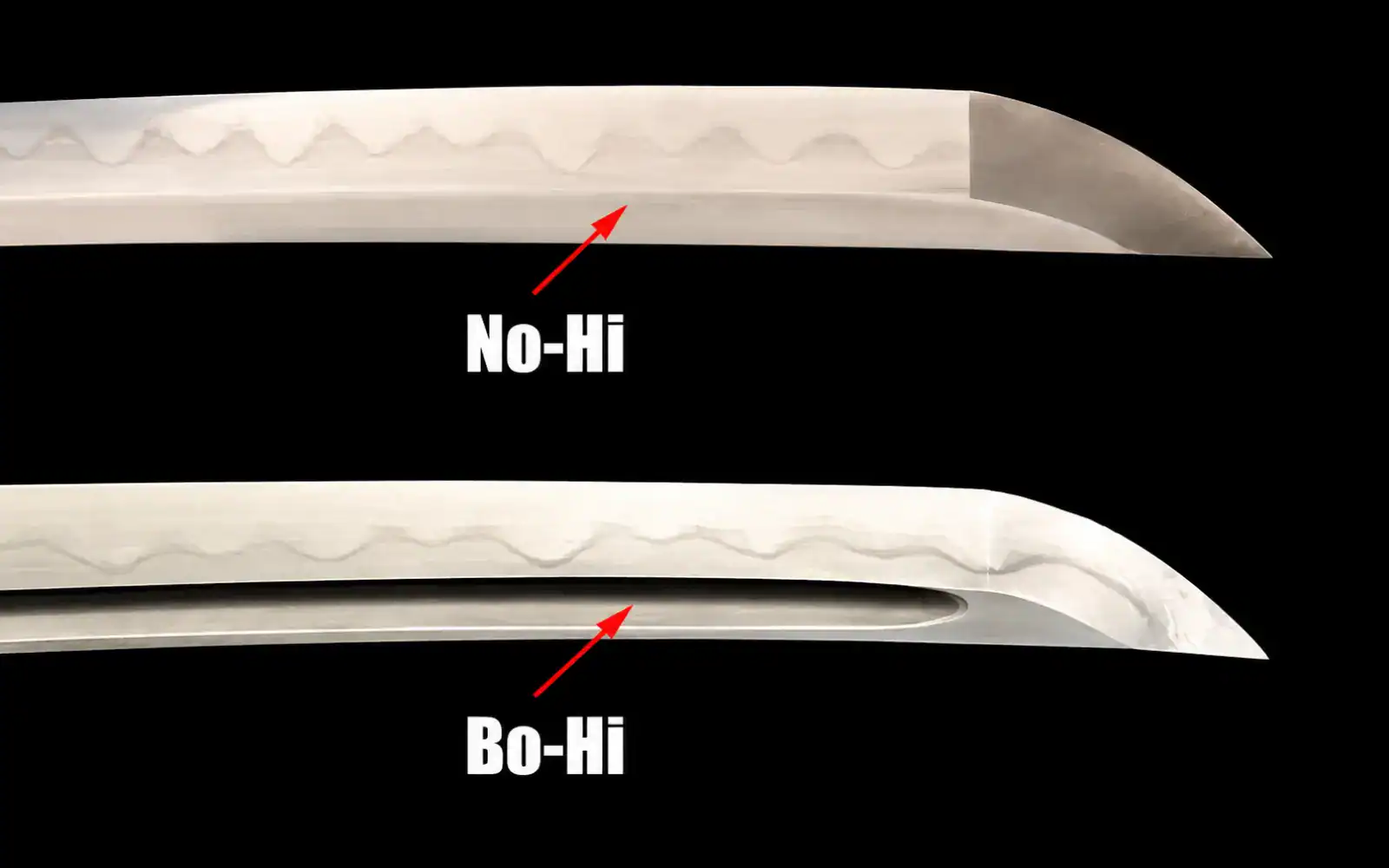
Bo-hi is the groove that runs along the blade of a katana, usually just below the spine. No-bo-hi simply means the blade does not have that groove. Buyers may also see bo-hi called hi, fuller, or, less accurately, a blood groove. A broader look at the parts of a katana helps place the groove in context.
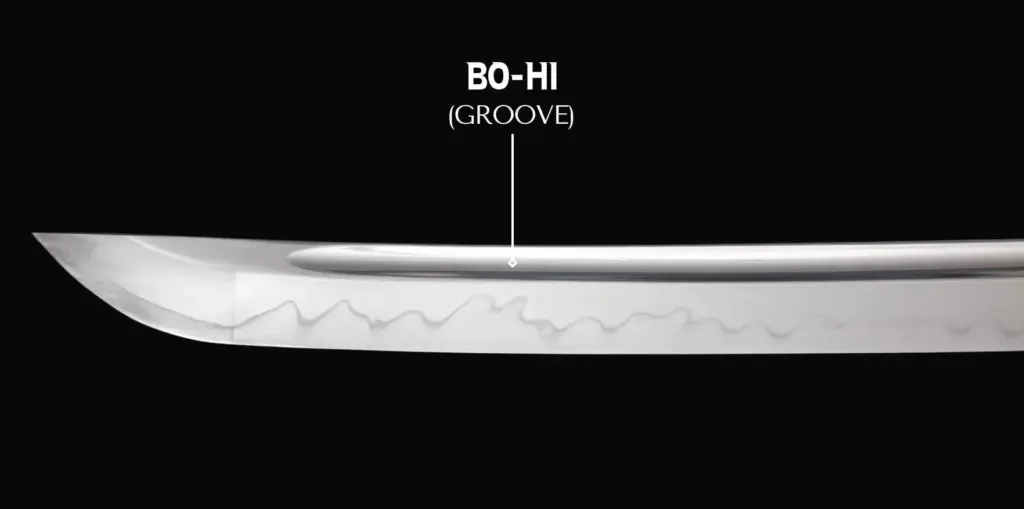
You may have noticed bo-hi on katana in games, anime, or film. On a real sword, it is not just a visual line. It can affect weight feel, balance, swing sound, and how detailed the blade looks on display.
Bo-hi alone does not usually drive a major price difference. Steel, heat treatment, fittings, polish, and overall build quality matter far more to cost. The blood-groove explanation is a myth; the groove is mainly discussed for weight, handling, balance, and sound, not blood flow.
Does a Groove Make a Katana Weaker?
A groove removes some blade material, but that does not automatically make a well-made katana unsafe for normal use. The real question is not groove or no groove. It is how well the sword is made.
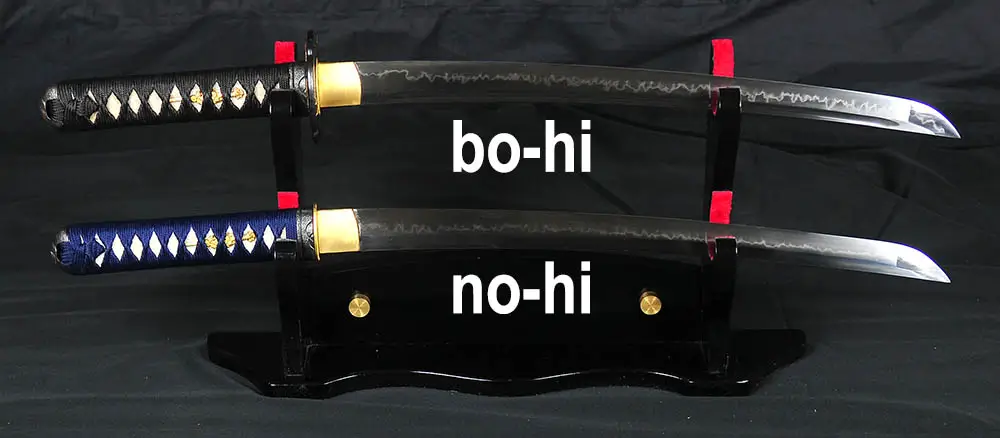
On a well-made sword, groove choice matters most under repeated cutting stress on dense targets, not from occasional off-angle cuts, which are a technique problem regardless of groove. Bo-hi can change stiffness, but it does not automatically make a well-built katana fragile.
Build quality still comes first. Steel, heat treatment, blade geometry, and full tang construction tell you more about a sword’s trustworthiness than the presence of a groove alone.
How Bo-Hi Changes the Feel of a Katana
Bo-hi usually makes a katana feel quicker in the hands when compared with a similar no-bo-hi blade. Point of balance is where the sword feels balanced in the hand, and bo-hi often makes that feel slightly closer to the hands on similar blades.
Tachikaze is the wind-like sound a blade can make during a clean swing with good edge alignment. A bo-hi can make tachikaze easier to hear when the swing is aligned well. Many forms-focused practitioners find that audio feedback useful, though it is not a substitute for proper technique.
In hand, the difference is usually simple: bo-hi tends to feel quicker and easier to redirect, while no-bo-hi tends to feel more planted and momentum-oriented. Forms users usually care more about feedback and handling. Display-only buyers may care more about the look.
Choose by How You Use Your Katana
Start with the job the sword will do most often; the groove choice gets much easier after that. Still deciding between a practice sword and a display piece? That choice matters more than the groove, and our practice or display guide walks through it.
Practicing Forms or Kata? Go With Bo-Hi
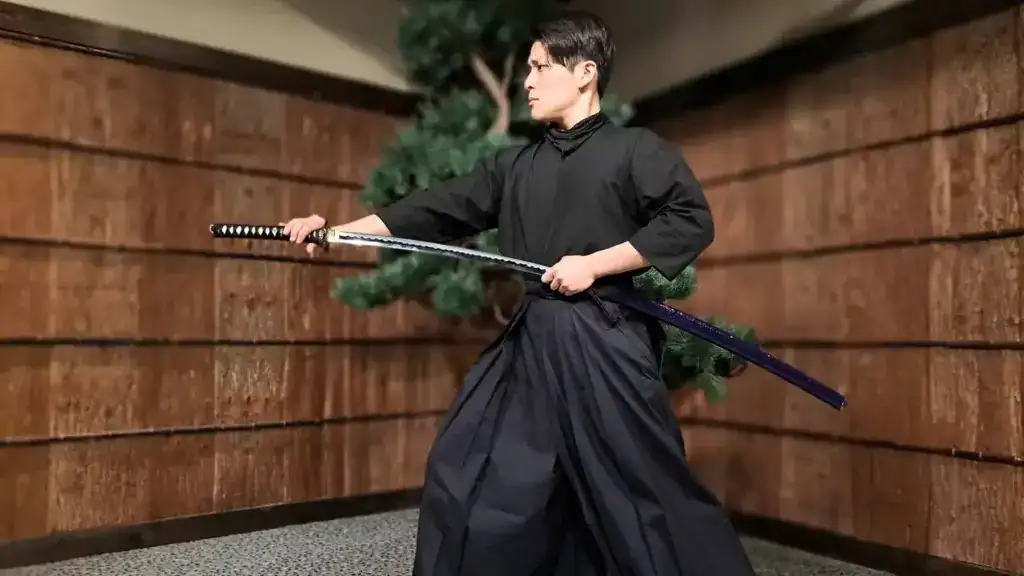
Forms and repeated handling usually point toward bo-hi. Lighter handling, easier redirection, and clearer tachikaze matter more here than extra forward mass.
Practice-focused buyers often want feedback they can feel and hear while repeating the same movement many times. A grooved live blade is still a sharpened sword, even if the handling feels familiar to people who have used training tools.
For a First or All-Around Katana
A first functional katana usually points toward bo-hi as the easier default. It fits the common ownership mix: display, dry handling, occasional prepared soft-target cutting, and general appreciation without locking you into a cutting-first sword.
That makes bo-hi a good fit for buyers who are still learning what they prefer. A beginner can still choose no-bo-hi when they already know they want a heavier, more planted feel or expect to focus more on cutting than forms.
When two similar listings differ mainly by groove, the grooved version is usually the easier all-around starting point. Buying as a gift? Bo-hi is usually the safer default unless the recipient specifically asked for a heavier cutting blade. After you decide between lighter mixed use and heavier cutting feel, compare matching katana options.
Focused on Cutting? Know When to Choose No-Bo-Hi
Cutting practice makes groove choice more important once target stress goes up. A well-made bo-hi katana can still handle normal rolled tatami-style mats or similar prepared soft targets when technique is sound.

Repeated cutting stress on denser prepared targets is where many buyers lean no-bo-hi as the more conservative choice. After groove choice, compare steel, heat treatment, geometry, and seller guidance before choosing a cutting-focused katana.
Learn what tameshigiri cutting practice actually involves before treating any sharp sword as a backyard test tool. A bo-hi first sword pairs naturally later with a no-bo-hi blade for buyers who want a cutting-focused complement. For cutting-first buyers, compare high carbon steel katana options after you understand the target and technique side.
If It’s Mostly for Display
Display buyers can let the silhouette decide. Choose bo-hi for a more detailed, agile look. Choose no-bo-hi for a cleaner, heavier visual presence.
This is the one use case where appearance can honestly lead the decision. Anime-inspired or display-first buyers can choose by look first, because handling differences matter less when the sword is not used for cutting. Collectors who want a cleaner, heavier visual profile may prefer no-bo-hi, while buyers who like more blade detail may prefer bo-hi.
If You’re Ordering a Custom Katana
Not sure? Default to bo-hi. It is the easier starting point for most builds, and you can always go no-bo-hi when you know you want more blade mass.
Choose no-bo-hi when heavier blade presence and a cutting-focused feel are must-have priorities. Choose custom when groove choice, blade feel, and appearance are non-negotiable. Start with a custom katana build when those details matter from the beginning.
- On most standard bo-hi katana listings, the groove should look clean, even, and intentionally finished near the tip area.
- Watch for rough edges, uneven depth, messy termination, or an overly deep groove.
- A very shallow or poorly cut bo-hi may add more visual detail than meaningful handling feedback.
- First live blade: bo-hi is usually the easier all-around start.
- Forms-focused sword: bo-hi gives more useful swing feedback.
- Cutting-focused second sword: no-bo-hi often makes the cleaner complement.
Bo-Hi vs No-Bo-Hi FAQ
Is Bo-Hi Better Than No Bo-Hi?
Neither is universally better. Bo-hi is the better default for forms, mixed use, and most hobbyists; no-bo-hi makes more sense when you want a heavier feel and a more conservative option for repeated cutting stress.
Can a Bo-Hi Katana Cut Tatami?
Yes, a well-made bo-hi katana can cut normal rolled tatami-style mats with sound technique, but it should not be used on improvised hard targets.
Is Bo-Hi Really a Blood Groove?
No. Bo-hi is a structural groove that changes handling, balance, sound feedback, and appearance; the blood-groove explanation is a myth.
Bottom Line
Choose bo-hi for a lighter, more versatile katana for forms and mixed use. Choose no-bo-hi when repeated cutting stress or a heavier blade feel matters more. Compare bo-hi and no-bo-hi models in the katana collection when you are ready to match the groove to the sword.


