


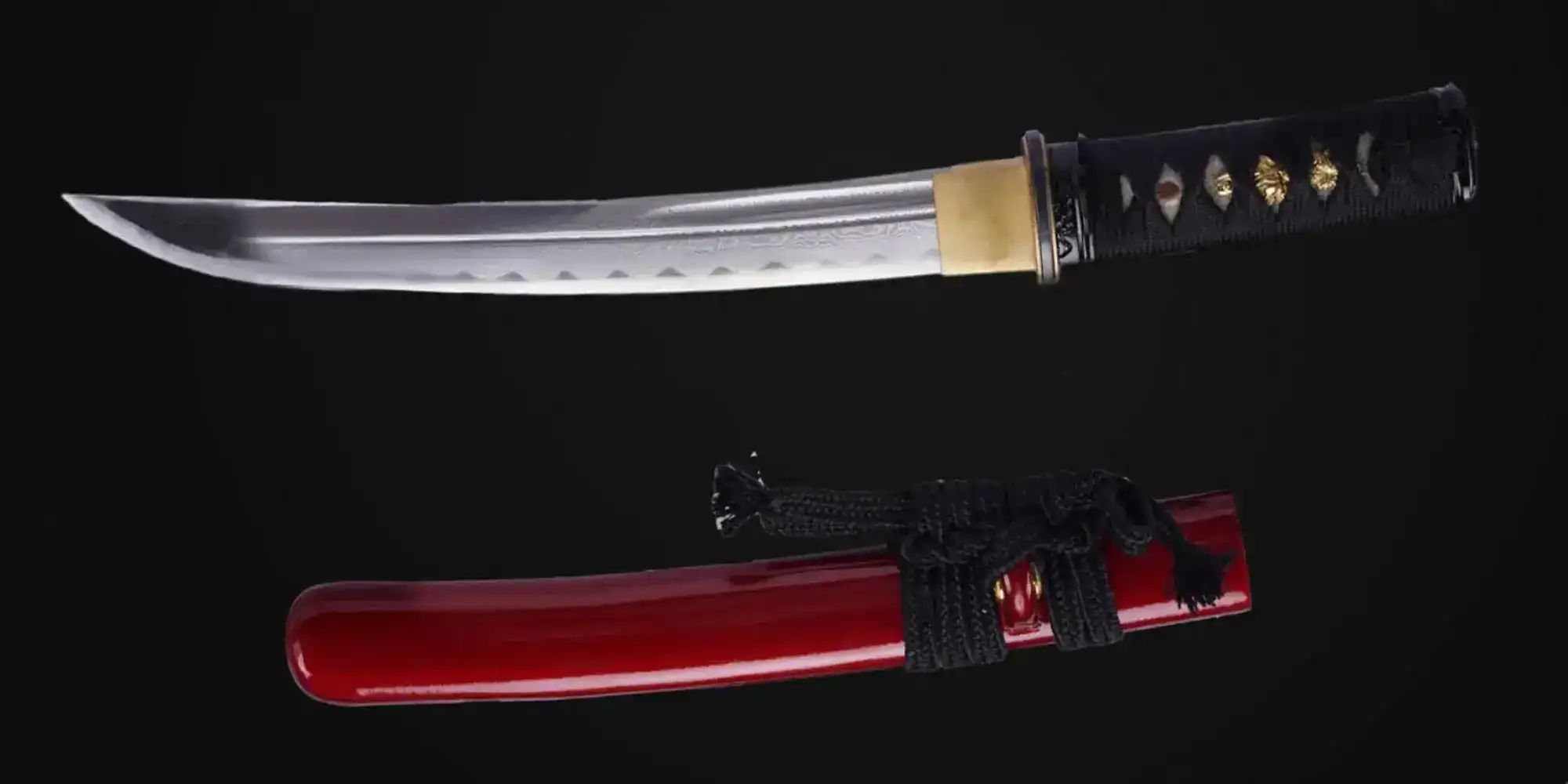
What Is a Tanto? Here’s What No One Tells You

Quick Answer
- A tanto is a traditional Japanese short blade with a blade length under roughly 30 cm (about 12 inches), the smallest main size class in the Japanese sword family.
- It was used as a sidearm and ceremonial blade from the late Heian period onward, worn by samurai alongside longer swords.
- Not the same as the modern American tanto-tip knife, which shares the name but has no historical connection to the traditional Japanese blade.
What Is a Tanto?
A tanto is a traditional Japanese short blade defined primarily by size. The name roughly translates to “short sword” or “short blade.” As a rule of thumb, blades under one shaku (about 30.3 cm) are classified as tanto.
That size-based definition matters more than most people realize. When someone says “tanto,” they may mean a forged samurai sidearm from the Kamakura period. Or they may mean a modern folding knife with an angular American tanto tip. These are two different things. This article covers the historical Japanese blade.
The easy way to think about it: tanto is the shortest rung on the Japanese sword ladder. Everything about its role, its design, and its history follows from that one fact.
Traditional Japanese Tanto vs. Modern American Tanto
The traditional Japanese tanto is a historical short blade, a real weapon and ceremonial object used in Japan from the late Heian period onward. Its tip shape varies by period and smith, but the traditional profile transitions relatively smoothly from blade to point.
The American tanto is something different: a blade-tip geometry designed by knifemaker Bob Lum and popularized by Cold Steel in the 1980s. It borrowed the name and a loose visual inspiration from Japanese aesthetics, then sharpened the geometry into a more angular, chisel-like tip. Not historically Japanese.
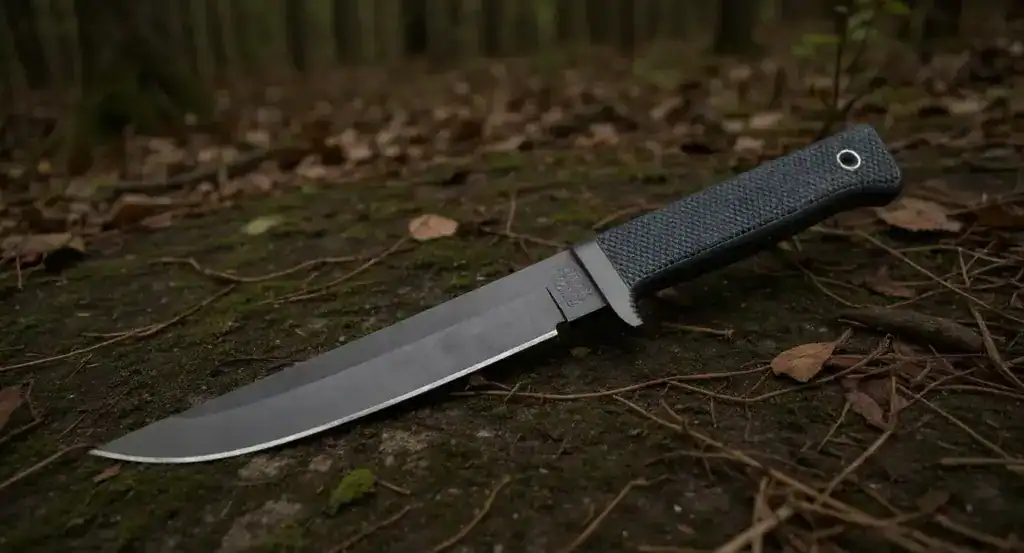
Both get called “tanto” in product listings. When you are reading about Japanese sword history, only one meaning applies.
How Long Is a Tanto?
The standard cutoff is one shaku, which equals approximately 30.3 cm (about 12 inches). In practical terms, most traditional tantos fall somewhere between 15 and 30 cm in blade length.
Where It Fits in the Japanese Sword Family
Think of it as a three-tier ladder. The tanto sits at the bottom rung: compact, fast, designed for close work. The wakizashi occupies the middle, longer than a tanto and short enough to wear indoors. The katana is the long sword, the main battlefield blade.
In simple numbers: tanto under about 30 cm, wakizashi roughly 30–60 cm, katana over about 60 cm.
If you want the full breakdown on the middle size, see what a wakizashi is, which covers how the wakizashi differs from both the tanto and the katana in role and carry context. If you are already weighing blade lengths, Tanto vs Katana covers the practical comparison directly.
What Does a Traditional Tanto Look Like?
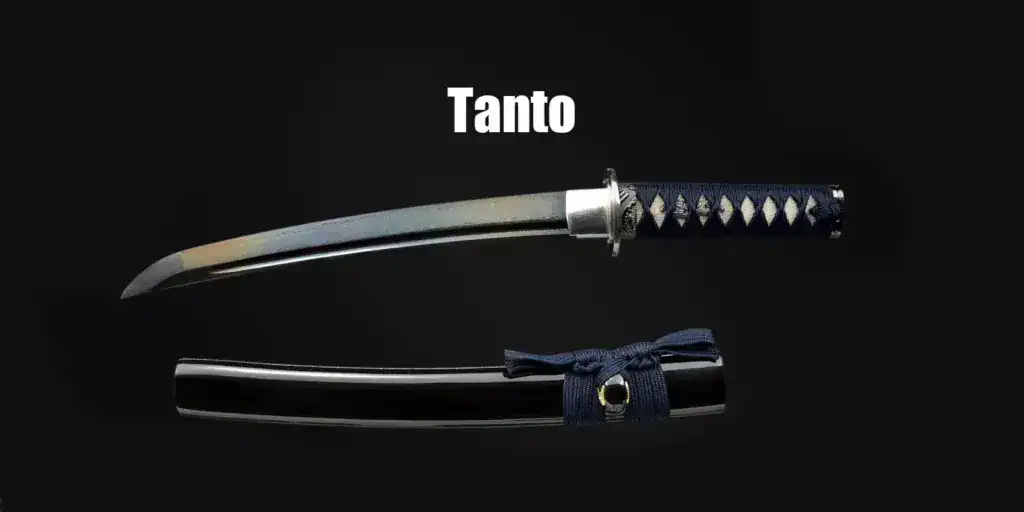
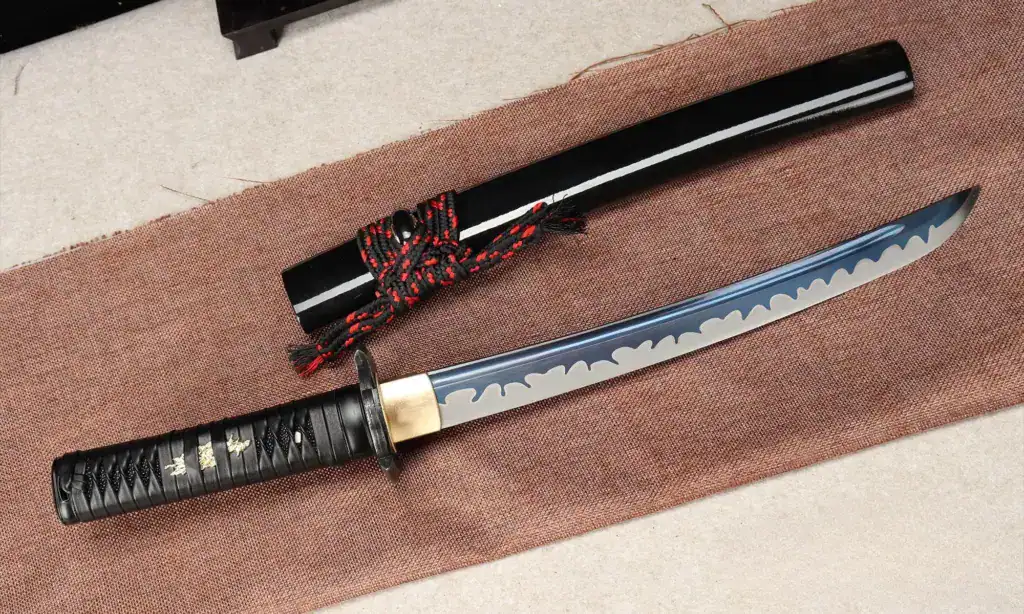
At a glance, a traditional tanto looks like a small sword, not a utility knife. The proportions are compact but the construction logic is the same as a full-size samurai sword.
Common Blade Features
Hira-zukuri is among the most common blade cross-sections on tanto, especially on earlier and plainer examples. It is flat-sided with no ridge line, a clean wedge-like grind that kept the blade thin and light without sacrificing rigidity.
Some tantos are nearly straight; others show a slight curve depending on the period and the smith’s preference. Neither is more correct. Both appear throughout Japanese sword history.
One detail worth knowing if you are browsing listings: the hamon. This is the visible temperline running along the blade edge, created during clay-tempering. On a genuine hand-forged tanto, it is a real structural feature, not a decorative etch. What Is a Hamon on a Katana explains the process in full.
Mountings and Details You Will See in Listings
Tanto mountings fall into two recognizable styles:
- Aikuchi: No guard. The handle (tsuka) meets the scabbard (saya) directly with no gap. Clean, minimal look.
- Hamidashi: A small guard, smaller than a katana’s, at the junction of handle and scabbard. Gives the blade a slightly more formal presentation.
Knowing these two terms will help you read listings more clearly.
Common Types and Terms You May See
- Sunnobi tanto: Slightly longer than the standard cutoff, sitting at the boundary between dagger and short sword. Popular in the Nanbokucho period.
- Moroha: A double-edged variant with a diamond-shaped cross-section. Notable, but not the default. Most tantos are single-edged.
- Yoroidoshi: A thick, rigid armor-piercing variant, often associated with close combat against armored opponents.
What Was a Tanto Used For?
The tanto’s primary role was practical: a compact sidearm for situations where a longer blade was awkward, unavailable, or already gone.
Combat and Everyday Carry Context
In close-quarters combat, grappling, and confined spaces, the tanto stayed usable where a katana’s length became a liability. A shorter blade can be drawn and deployed in tight range where a longer sword catches on walls, armor, or opponents.
The yoroidoshi variant took this further. With a thick, stiff blade designed to find gaps in armor, it was a specialized weapon for fighting armored opponents at point-blank range.
The tanto also served as a backup. Samurai carried a longer sword as the primary weapon; the tanto was there if it was lost, broken, or could not be brought to bear.

Household, Ritual, and Personal Roles
Not every tanto went to battle. Shorter blades had a place in daily life that longer swords did not.
When samurai visited indoors, where wearing a katana was often socially inappropriate, a shorter blade could remain at the side. The kaiken, a smaller blade associated with women in samurai households, served a similar purpose: personal protection in domestic contexts.
Ceremonially, the tanto carried genuine weight. It appeared in wedding customs, where a bride might carry a small blade as part of her trousseau. It is also historically associated with seppuku, a real part of the tanto’s history worth knowing without making it the whole story.
Over time, tanto were given to newborn children as talismans and treated as heirlooms. The blade’s meaning expanded well beyond the battlefield.
Tanto History: Where the Traditional Japanese Tanto Comes From
Heian and Kamakura Periods (794–1333)
The tanto’s origins run back to the late Heian period, roughly the 10th to 12th century, when Japanese bladesmiths first began producing short blades alongside the curved tachi. These early tantos were functional, plain, and closely tied to military need.
The Kamakura period (1185–1333) is where the tanto came into its own as a refined object. Many collectors and historians regard Kamakura-period tantos as a high point of traditional blade craftsmanship. The same level of care applied to full-length swords went into these short blades.
Nanbokucho Through Edo (1336–1868)
The Nanbokucho period (1336–1392) pushed dimensions outward. Political instability drove demand for longer blades, including the sunnobi tanto, which stretched toward wakizashi length. Through the Muromachi and Momoyama periods, the tanto stabilized and began appearing more frequently as a ceremonial and artistic object.
As large-scale warfare declined during much of the Edo period (1603–1868), practical battlefield demand for tanto generally fell. The blade became increasingly associated with ritual, ceremony, and collection rather than combat.
After the Meiji Restoration (1868 onward)
The Meiji Restoration in 1868 formalized the end of samurai culture and public sword carry. From that point, the tanto’s significance shifted almost entirely to craftsmanship, history, and ceremony, which is largely where it stands today.
What to Look For If You Are Buying a Traditional Tanto Today
Most people come to traditional tanto through one of three paths: collecting, display, or martial arts practice. Each leads to a different kind of purchase.
Choose by Purpose First
- Display and collection: You are buying for historical feel, aesthetic quality, and traditional fittings. Period-correct mountings and visible hamon matter more than edge utility.
- Martial arts (Toyama-ryu, Iaido): You need a blade suited for training, appropriate weight, safe edge geometry, and a handle that holds up under repeated drawing.
- Appreciation and research: Focus on reading listings carefully and learning to distinguish reproduction from genuine antique.
Basic Quality Signals to Check
Go in this order when reading a listing:
- Confirm it is a traditional Japanese-style tanto. If the listing leads with “tactical,” “EDC,” or “American tanto,” you are looking at a modern knife.
- Check blade length. Under 30 cm for a tanto; if longer, verify whether it is a sunnobi or a wakizashi.
- Look at the mounting style. Aikuchi or hamidashi are the main options.
- Check craftsmanship details. A real hamon can indicate traditional heat treatment, but judge it alongside steel quality, polish, fit, and overall construction. Etched hamon are common on lower-cost reproductions.
Avoid listings that mix historical Japanese terminology with generic tactical marketing. When the same page mentions “samurai tradition” and “great for survival situations,” the seller is not thinking carefully about what they are selling.
FAQ
What is a tanto blade?
In Japanese sword history, a tanto blade is a traditional short blade under roughly 30 cm, made using the same broad swordmaking principles seen in longer Japanese blades. In modern knife culture, the term often refers to an angular American tanto tip from the 1980s with no historical Japanese connection.
What are tanto blades good for?
Historically: close-range use, backup sidearm, and in the yoroidoshi form, armor-piercing. Today, traditional tantos are primarily collected, displayed, and used in martial arts practice.
Is a tanto a sword or a dagger?
In English, most people call it a dagger or short blade. In Japanese sword culture, it is the smallest recognized size class in the broader sword family — even though it is shorter, it was made and valued like a serious sword-class blade.
Is a tanto the same as a wakizashi?
No. The wakizashi is longer, roughly 30–60 cm, and was often the shorter blade of the paired daishō set. The tanto was carried separately and served different purposes. See our wakizashi guide for the full comparison.
Ready to See Real Examples?
A tanto is defined by its size, its role in Japanese sword history, and the craftsmanship tradition that shaped it — not by the angular tip of a modern pocket knife.
Browse our traditional tanto collection to put what you have learned into practice with real examples.


