



What Is a Wakizashi? The Samurai’s Other Sword

The wakizashi is the Japanese short sword that samurai carried alongside the katana every day, and it rarely gets a clear explanation. If you’ve run into the word in a game, a film, or a history article and wanted a straight answer, here it is: what the wakizashi actually was, what made it useful, how it fits into the Japanese sword lineup by size, and why people still buy and display them today.
A wakizashi is a Japanese short sword, usually classified at about 30–60 cm blade length, worn at the waist alongside a katana as part of the daisho (the paired sword set associated with samurai rank). Where the katana was often left at the door in formal indoor settings, the wakizashi came inside. It was the sword that remained useful when a longer blade couldn’t be drawn.
What Is a Wakizashi?
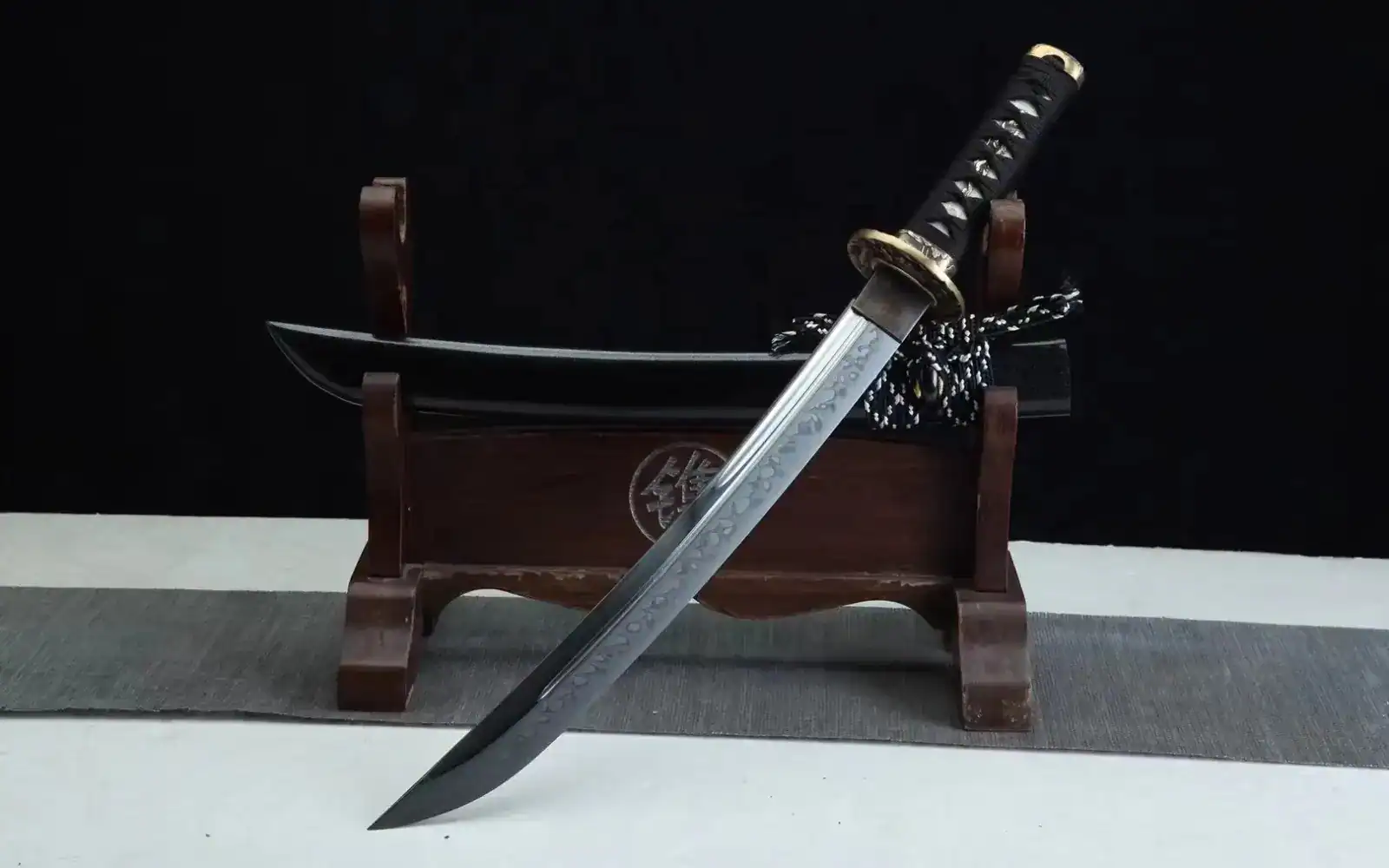
The wakizashi is a fully constructed Japanese sword, built with the same components as a katana: a single-edged curved blade, a guard (tsuba), a wrapped handle (tsuka), and a lacquered scabbard (saya). The name means something close to “worn at the side,” which describes exactly how it was carried. It rode edge-up through the fabric sash (obi) around the waist, ready to draw at almost any moment.
What sets it apart from the katana is not just length but design intent. The wakizashi sits within the nihonto tradition (the lineage of traditionally forged Japanese swords), but it was built around a shorter working length and the specific situations that come with it. It was not a decorative miniature, a backup kept just in case, or a sword that happened to be smaller. It had its own role, and that role shaped how it was made.
Why Samurai Carried a Wakizashi
The wakizashi mattered for three reasons: it worked indoors when a katana couldn’t, it completed the daisho pairing that identified samurai rank, and it served as a secondary weapon and ritual blade when needed. Of those three, the indoor role was the one that made it genuinely indispensable in daily life.
It stayed with the samurai indoors
In many formal indoor settings, the longer sword was often left aside before entering. Formal residences, castle interiors, and private meeting rooms were places where bringing in a full-length katana was either impractical or considered inappropriate. The wakizashi stayed on. It went through the door with its owner, sat within arm’s reach during meals or conversations, and was still there if something went wrong.
The practical advantage mattered in tight quarters. A longer blade was harder to draw cleanly in a narrow hallway or a low room, not a theoretical concern, but a real constraint of how Japanese architecture and social customs worked. A shorter blade at the waist cleared those situations without requiring the samurai to think twice about it.
It completed the daisho
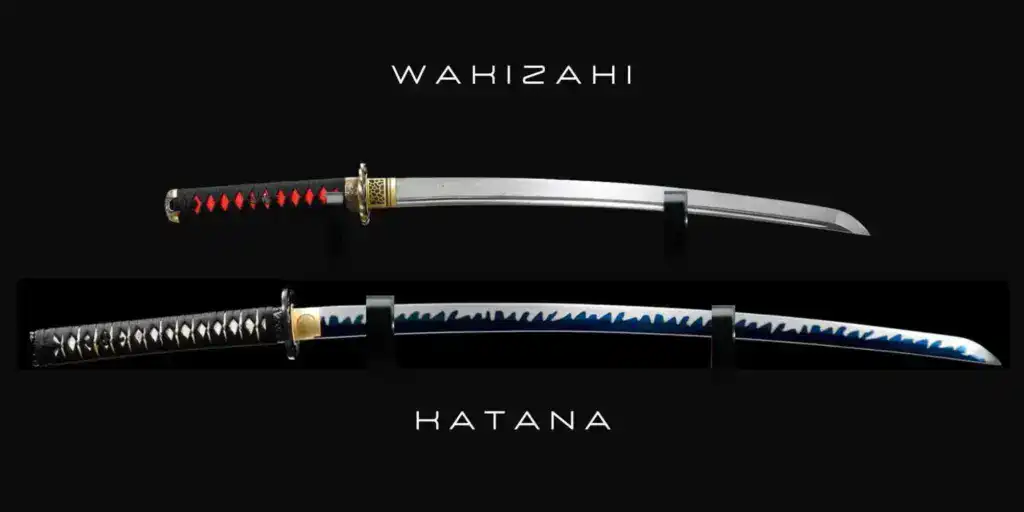
The daisho, literally “big-small,” was the paired long-and-short sword set that became a visible marker of samurai status during the Edo period. Wearing both the katana and the wakizashi together was not simply being well-armed. It was a recognized signal of rank, especially in a period when who could carry what was clearly defined.
That gave the wakizashi a meaning that went past its role as a weapon. It was part of how a samurai was recognized, not just equipped. The wakizashi vs. katana guide goes deeper on how the two swords differed in everyday carry and use.
It also served backup and ritual roles
If the katana broke in combat, was knocked away, or simply wasn’t accessible, the wakizashi was still there. It wasn’t a plan B anyone wanted to rely on, but it was a real one. The wakizashi also carries a specific historical association with seppuku — the ritual act tied to samurai honor — and readers who know the history will expect that context here. It’s worth naming without overstating: this role was real, but it wasn’t what made the sword worth carrying every day.
The wakizashi was the sword that stayed when the katana couldn’t. That’s why it was never just an afterthought.
How Long Is a Wakizashi?
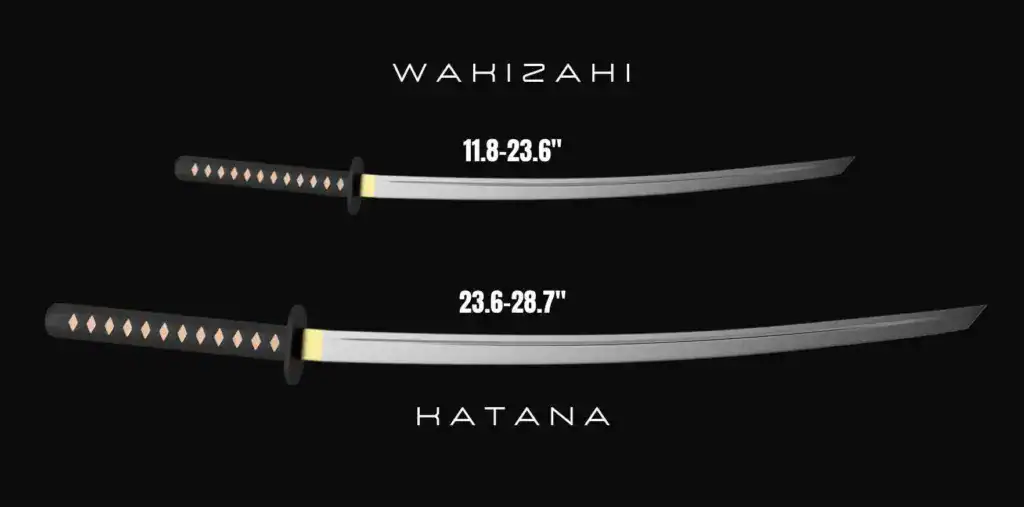
The wakizashi is generally classified as having a blade about 30–60 cm long. That range is what places it between the tanto (typically under 30 cm) and the katana (generally over 60 cm) in the Japanese sword family. As a quick reference:
- Tanto: under 30 cm
- Wakizashi: 30–60 cm
- Katana: over 60 cm
Individual examples vary within that range — some sit closer to tanto length, others push toward the katana’s lower limit. Those differences reflect the maker, the period, and the intended use, not a neat internal ranking system. For most purposes, about 30–60 cm is the right frame to work with. More detail on how katana blade length is measured and categorized is in the overview of katana length.
Is a Wakizashi Just a Short Katana?
No, and the difference isn’t really about length. The katana was built for open combat: longer reach, more cutting force, drawn in space where there was room to move. The wakizashi was built around situations where that kind of reach was a liability. Quicker access, tighter control, one-handed use in cramped quarters: those were the design priorities, not a scaled-down version of whatever the katana did.
Think of it less as a small katana and more as a sword designed for the situations a katana couldn’t handle. The materials overlap, the visual resemblance is obvious, but the functional logic is different. The full side-by-side breakdown is in the wakizashi vs. katana comparison.
Why the Wakizashi Still Matters Today
The wakizashi hasn’t faded into pure museum territory. It’s still collected, studied, and displayed, and for reasons that go beyond nostalgia.
Why the wakizashi holds up as a display piece
A full-length katana demands space. On a wall or a stand, it dominates a room in a way that doesn’t work everywhere. A wakizashi fits shelves, desks, and smaller wall displays more naturally and doesn’t require a dedicated sword wall to look right. Anyone working with a smaller space, or buying their first Japanese sword, will find the shorter blade a more practical starting point.
What the wakizashi meant to the person carrying it
The wakizashi wasn’t a prop or a spare. It was the sword a samurai kept closest, in private rooms, during meals, through the hours when the katana was set aside. That daily intimacy gives it a different kind of historical presence than the katana, which was more public but also more ceremonially distant. People who care about what a sword actually meant to the person carrying it often find the wakizashi more interesting for exactly that reason.
Wakizashi in practice today
Some traditional sword schools include short-sword work as a distinct practice from katana training. The shorter blade changes timing, draw angles, and handling enough that it’s studied on its own terms, not just as a scaled-down version of katana technique.
Most people buying a wakizashi are choosing by purpose: display, a paired set with a katana, or hands-on practice. The wakizashi collection is the right place to start for any of those. Still deciding which Japanese sword fits best? The Japanese swords collection covers the full range.
Common Questions About Wakizashi
Is a wakizashi the same as a katana?
No. They share the same general design: single-edged, curved, traditionally forged. But they weren’t built for the same situations. The katana was the longer primary weapon, used in open combat and carried visibly in outdoor settings. The wakizashi was the shorter companion sword that stayed accessible indoors and in confined spaces where the katana had been set aside. Similar appearance doesn’t mean the same sword.
What was a wakizashi mainly used for?
Its most consistent daily role was staying accessible when the katana couldn’t be. Indoors, in formal settings, in spaces too tight to draw a longer blade: that’s where the wakizashi earned its place. It also functioned as a secondary weapon if the katana was lost or broken, and it carried specific ritual significance in samurai culture. The daisho pairing added social meaning on top of the functional ones.
Is a wakizashi longer than a tanto?
Yes. A tanto typically has a blade under 30 cm, while a wakizashi runs about 30–60 cm — making it clearly longer than a tanto and shorter than a katana. That middle position wasn’t accidental. It was long enough to function as a real sword in confined spaces, short enough to go places the katana couldn’t follow.
Did only samurai carry wakizashi?
The daisho pairing, katana and wakizashi worn together as a matched set, was specifically tied to samurai status and wasn’t available to people outside that class. A wakizashi carried alone had a more complicated legal history during the Edo period, and the actual rules varied more than a simple yes or no captures. But the full paired daisho, and the social identity that came with it, was samurai territory.


