



How Long is a Katana?

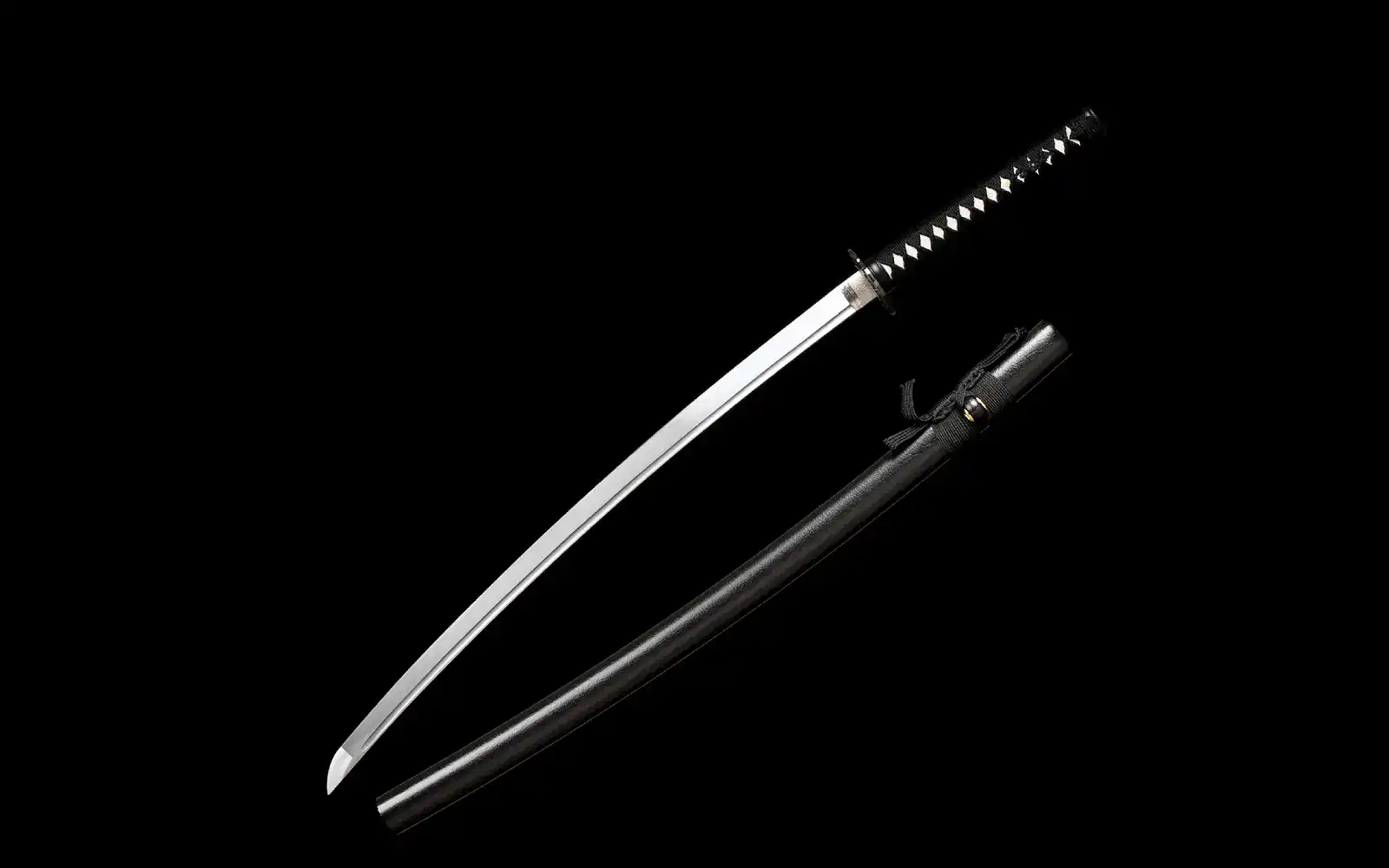
How long is a katana? A standard katana measures roughly 100 to 105 cm (39 to 41 inches) from end to end when sheathed. That total comes from three parts working together: the blade, the handle, and the scabbard, each with its own standard range. Even a few centimeters in either direction can change how the sword feels in your hands, how quickly you can draw it, and how it handles in motion.
The right length ultimately depends on what you plan to do with it. This guide breaks down each dimension and helps you match them to your specific use.
Standard Katana Length and Dimensions

In Japanese sword terminology, the blade length is called the nagasa, the handle the tsuka, and the scabbard the saya. All three parts need to work together for the sword to feel balanced.
All traditional katana measurements use the shaku, a Japanese unit equal to roughly 30.3 cm or 11.93 inches. You will still see this unit on listings from traditional forges, so knowing the conversion helps when comparing swords across different sellers.
How Long is a Katana Blade

The standard katana blade length falls between 60 and 80 cm (24 to 32 inches). This range is what officially separates a katana from shorter Japanese swords. Within that range, most production katanas cluster around 71 to 73 cm. Anything below 70 cm is considered short for a katana, and anything above 74 cm starts to feel noticeably long. When you see a blade listed at 72 cm, that is a mainstream spec. A listing at 67 cm or 77 cm is not wrong, but it sits outside the most common range and will handle differently.
Blade length is measured in a straight line from the back notch (munemachi) at the base to the very tip. The curve of the blade is ignored in this measurement. That means two blades with the same listed length can look slightly different depending on how deep their curvature is.
Handle and Overall Katana Sword Length

The handle needs to fit two hands with a small gap between them. That gap is what lets you generate torque during cuts. Handles shorter than 25 cm cramp your grip, and handles longer than 30 cm add unnecessary weight without improving control. Most katanas ship with handles around 27 to 28 cm, which works for the majority of hand sizes.
The total katana sword length when sheathed usually falls between 100 and 110 cm (39 to 43 inches), depending on blade length. Most standard katanas land in the 100 to 105 cm range, while longer blades push the total closer to 110 cm. The scabbard adds a small amount of length beyond the blade itself because it needs to extend past the tip to protect it. If you are buying a display stand or planning wall storage, use the sheathed length as your reference measurement.
Why Katana Sizes Are Not All the Same
Katana dimensions shifted throughout Japanese history as combat conditions changed. The katana evolved from the tachi, an older sword style that was generally longer and more curved. Mounted warriors needed that extra reach to strike from horseback. When battlefield tactics shifted toward foot combat, the sword shortened into the katana form we recognize today.
Even within the katana category, samurai carried different lengths for different contexts. The full-sized katana was an outdoor weapon. For indoor settings or close-quarters situations, samurai carried a wakizashi as a companion sword. The wakizashi blade typically measures between 30 and 60 cm, short enough to draw and use in hallways or seated positions where a full katana would be impractical.
Modern reproductions often trend toward the longer end of the katana sword sizes spectrum. The reason is straightforward. The average person today is taller than an Edo-period samurai. A blade length that felt balanced for someone around 160 cm tall would feel noticeably short for a 180 cm user. Compared to the historical average, many modern makers shift upward to 72 to 76 cm blades to better match contemporary proportions.
How Katana Length Affects Performance and Handling

The core trade-off with katana length is reach versus speed. A longer blade lets you keep more distance from a training partner or cutting target, which matters in sparring and tameshigiri (test cutting on rolled mats or bamboo). A shorter blade moves faster through transitions and recovers quicker after each cut, which is why many beginners start with blades on the shorter end of the range.
When a blade is too long for the user, the tip starts to feel heavy. That “tip-heavy” sensation makes the sword lag during direction changes and puts extra strain on your wrists over a long training session. If you pick up a katana and the tip drops noticeably when you extend your arms, the blade is likely too long for you.
If you plan to train at a dojo, check with your instructor before buying. Some schools and styles have specific blade length requirements that override personal preference. Showing up with a 74 cm blade when your dojo standardizes on 69 cm means you will likely need to buy again.
Beyond body fit, intended use is the other major factor in choosing katana dimensions. A blade length that works well for cutting practice may not be ideal for iaido or display. Our comparison of how to choose a katana for practice or display covers this in detail.
Katana Size Chart: How to Pick the Right Length
Different uses call for different katana sizes. Here is a quick reference based on blade length:
| Use Type | Blade Length (cm) | Blade Length (in) | Why This Range |
| Practice | 60 – 70 | 24 – 28 | Shorter blades keep weight manageable while you build form, reducing strain during repetitive drills |
| Display | 70 – 80 | 28 – 32 | Longer blades look more proportional on a stand or wall mount; handling is not a concern |
| Cutting / Tameshigiri | 73 – 78 | 29 – 31 | Enough length to generate leverage through the target without sacrificing cut control |
| Iaido | 68 – 75 | 27 – 30 | Optimized for smooth draw-and-resheathe motions without overextending the arm |
Use these ranges to narrow down by purpose first. Then fine-tune within that range based on your body. A taller person doing iaido will lean toward the 75 cm end, while a shorter person with the same goal might stay closer to 68 cm. Our guide on how to choose katana length for your height walks through that second step so you land on a specific number.
Find the Right Katana Size for Your Needs
The right katana sword dimensions come from matching historical standards to your own body and purpose. Tradition gives you the framework. Your height, arm length, and intended use give you the specifics.
Before committing to a purchase, try a simple standing test. Hold a wooden dowel or broomstick cut to your intended overall sword length (blade plus handle) and let it hang naturally at your side. The tip should clear the floor with a comfortable margin. If it drags or you have to angle your wrist to keep it up, go shorter.
Ready to find your match? Browse our full katana collection to find a quality blade in the length that works for you.


