



Real vs Fake Katana: How to Judge Before You Buy

Shopping online for a katana can feel risky. Photos look convincing, and product pages are filled with words like handmade, high carbon steel, and battle ready.
Most buyers rely on these signals to decide whether a sword is “real” or “fake.” The problem is that these signals are often misleading. Many swords pass these checks while still being structurally misleading or mismatched for their intended use.
This is why the question “real vs fake katana” often leads people to the wrong conclusion. This guide doesn’t teach you how to choose a katana. It shows you why the common ways people judge katanas are flawed in the first place.
Why “Real vs Fake Katana” is the Wrong Question
The “real vs fake” framing sounds helpful, but it often pushes buyers toward the wrong checks. People focus on origin or tradition when the bigger risk is misuse and injury.
Online, “fake” gets used loosely. Anything not hand-forged in Japan might be labeled fake—even if it’s a safe, well-made sword. That lumps together harmless display pieces and genuinely unsafe builds, which doesn’t help you decide.
A more useful way to think about this is “functional vs decorative,” because that reflects what the sword can safely do, not just how it is described. Keep in mind: a katana can look convincing, feel heavy, and still behave like a “sword-shaped object” when swung.
If the construction isn’t sound, it’s not safe to use, regardless of how authentic it appears. Before you trust labels or photos, scan the most common buying traps: Mistakes to Avoid When Buying a Katana.
Fake vs Decorative vs Functional Katana: What Do These Mean?
These three categories help you stop treating all “non-traditional” swords the same way. Each one implies different evidence to look for, different handling expectations, and different warning signs.
Fake Katana
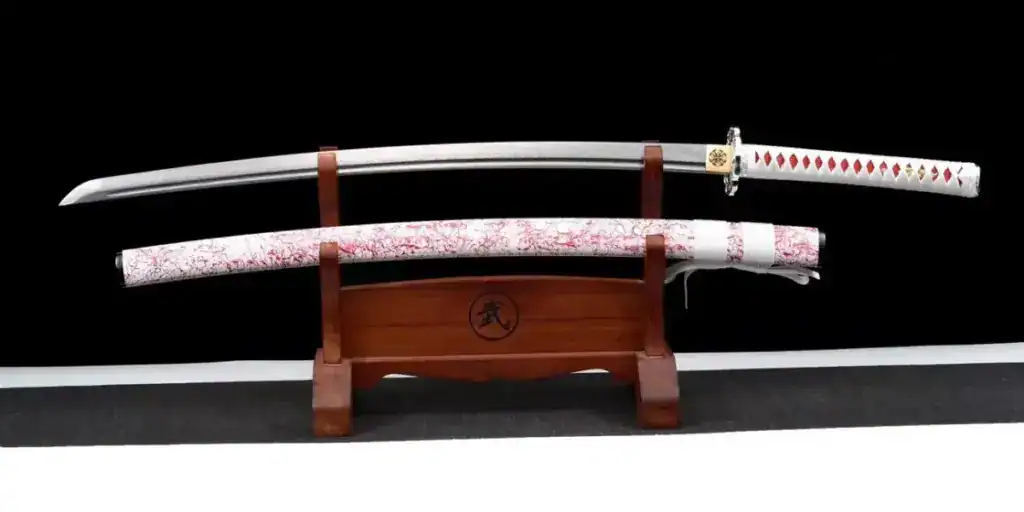
A “fake” katana isn’t just one made outside Japan. The real issue is deceptive claims—when a seller markets a sword as genuine, certified, or historically significant without proof.
Visual features can be copied. Blade patterns, handle wraps, and fittings can all be imitated convincingly. So when authenticity is claimed, documentation and expert evaluation matter more than photos.
Here’s a useful boundary: a replica can be honest. It’s labeled as what it is. A counterfeit tries to deceive. Treat “fake” as a claim problem, not a geography problem. If a seller implies provenance but offers no verification, that’s the red flag.
Decorative Katana
Decorative swords are built for display or cosplay. Appearance is the priority. Using them for cutting or practice falls outside the design intent.
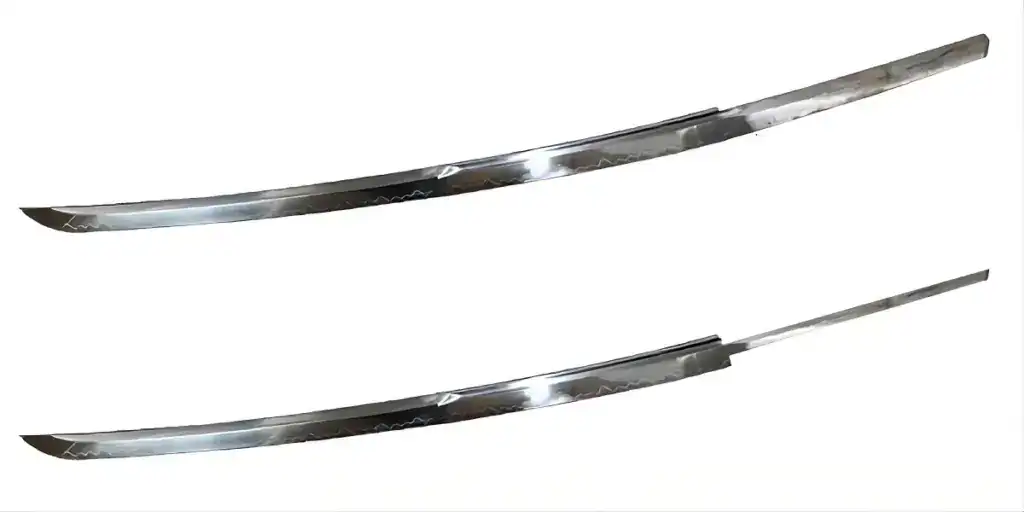
The main safety concern is construction. Many decorative katanas use rat-tail tangs, a thin metal rod welded to the blade and hidden inside the handle. That weld point concentrates stress. When swung hard, it can snap.
Here’s something buyers often miss: expensive decorative swords exist. A high price tag doesn’t mean safe construction. Sometimes the cost goes into ornate fittings, fancy packaging, or brand positioning—not into building a sword you can actually use.
If a listing highlights beauty and price but stays vague on construction, assume it’s decorative until proven otherwise.
Functional Katana
Functional swords are purpose-built for controlled practice or cutting. The construction prioritizes structural integrity over ornament.
Owning a functional blade comes with basic upkeep. You’ll want to oil the blade occasionally and watch for rust. That’s part of real-world usability, not a drawback, just a reality.
One important note: “functional” doesn’t mean historically Japanese. It means the build supports your intended use safely and transparently. A well-made modern sword from outside Japan can absolutely be functional. What matters is whether the materials, tang, and assembly are designed for actual use.
Common Myths Debunked
When buyers lack technical context, they rely on shortcuts—price, sharpness, weight, labels. These often reward decorative marketing and punish plain-looking functional builds.
Expensive ≠ Real
Some decorative swords carry high prices because of ornate fittings or brand positioning—not because they’re safe to use. In fact, some sellers price weak builds high on purpose. A steep price tag can signal legitimacy even when proof is missing.
Ask yourself: “What does this listing prove (materials, construction, intended use) versus what it implies (rarity, authenticity)?”
Sharp ≠ Real
A decorative stainless steel sword can be sharpened to a fine edge. That doesn’t make it safe or authentic. When brittle stainless fails, sharp fragments can become a serious hazard—for you and anyone nearby.
If you see “razor sharp” without construction details, assume it’s a marketing hook. Look for build information first.
Heavy ≠ Real
Weight can come from poor balance or cheap construction, not from better steel or safer assembly. For actual use, poor balance increases fatigue and control issues. “Feels solid” in the hand doesn’t mean much if swing dynamics are off.
When specs are vague, treat phrases like “heavy duty” or “solid weight” as noise. Prioritize handling cues and intended-use clarity instead.
Advertised “Battle-Ready” ≠ Real
“Battle-ready” is a marketing term. It has no standardized technical meaning. The risk is that buyers assume indestructibility. They try abusive targets—like hard objects or thick branches, and break even well-made swords.
Replace the label with questions:
- What is this sword built for?
- What targets are stated as appropriate?
- What construction details are disclosed?
Flawed Ways to Judge
Many buyers try DIY tests they’ve seen online. The problem is that these methods create false confidence. They can’t reliably separate a safe functional sword from a dangerous wall-hanger.
The most important details like grain structure, heat treatment quality, and tang geometry are internal. You can’t see them without experience or disassembly. That’s why surface-level tests often mislead.
Magnet Test
The magnet test sounds logical: real steel is magnetic, so a strong pull means real steel. But stainless steel wall-hangers are also magnetic. The test can easily “approve” the wrong item.
More importantly, magnet results tell you nothing about heat treatment or tang construction. Those two factors drive safety far more than whether the blade attracts a magnet.
If a seller leans on “magnet test proof,” treat it as a weak signal. Look for purpose and construction disclosure instead.
Spark Test
Spark testing involves grinding metal to observe the spark pattern. In theory, different steels produce different sparks. In practice, interpretation requires training most buyers don’t have.
Worse, sparks reveal little about heat treatment and assembly. These are two areas where cheap swords commonly fail. Grinding your blade for uncertain conclusions isn’t a good trade.
Don’t damage a sword to “verify” it. Verify the listing instead. Look for clear specs, stated intended use, and seller transparency.
Examining the Hamon
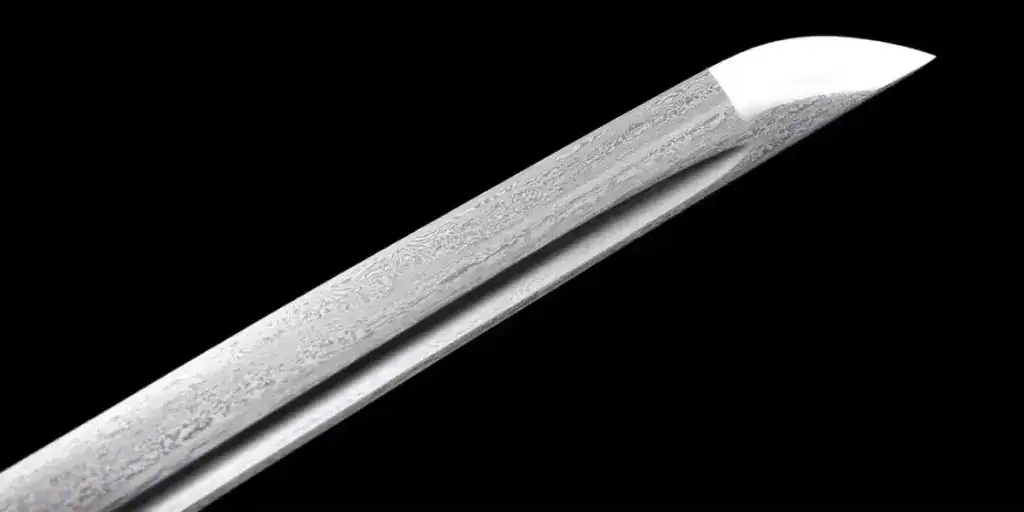
The hamon, the visible temper line along the blade, is often treated as proof of authenticity. But modern acid-etching can create a hamon that looks more obvious than a real one.
Casual hamon inspection requires skill and controlled lighting. Novices are likely to misread what they see. A bold visual pattern doesn’t mean much on its own.
If hamon is used as the main selling point, ask what else supports function. Look for construction details, heat treatment intent, and stated use.
Is It Made in Japan?
True nihonto, swords made under Japan’s regulated production system, represent a narrow, certified category. That’s not the default for everything labeled “katana” online.
Geography alone doesn’t guarantee function. “Made in Japan” claims still need context and proof. Some Japanese-made swords are decorative. Some swords made elsewhere are well-built and functional.
When origin is emphasized, ask: “Is this meant for cutting, practice, or display, and is that stated clearly?”
Focus on Purpose, Construction, and Safety Instead
Rather than chasing “real vs fake,” use a decision framework that matches how you’ll actually use and evaluate a sword. What makes a katana “real” in practice is structural integrity and honest fit to purpose, not dramatic appearance.
Start With Intended Use
Different goals need different standards:
- Display or cosplay: Appearance matters most; safety under use is not expected.
- Martial arts forms: Light handling and durability for controlled movements.
- Test cutting: Structural integrity for repeated contact with targets.
- Collecting: Provenance, documentation, and condition.
If you plan to swing or cut, treat safety and integrity as primary. Aesthetics come second.

One clarification: “functional” still assumes controlled use. It doesn’t mean “safe for abuse” or hard targets.
If you want a clear pathway for choosing, use: How to Choose a Katana for Practice or Display.
Construction Matters More Than Appearance
Two hidden variables often decide whether a sword fails or lasts: tang geometry and internal steel behavior.
The tang is the part of the blade inside the handle, and it’s decisive. Rat-tail tangs can snap under stress. Full tangs distribute force safely. But you often can’t see the difference without disassembly. Cosmetic pegs can mislead.
If construction isn’t stated plainly, assume “display-first” until the seller provides clear build and intended-use details.
Safety Over Authenticity
For most buyers, the safest choice is the sword that matches your use and is honestly described. It’s not the one with the strongest mythology.
Here’s a useful cue: plain-looking functional cutters often invest in heat treatment and structure. Flashy replicas often invest in decoration. Appearance and safety don’t always line up the way you’d expect.
When you can’t verify purpose and build, default to display-only assumptions. Don’t “test” it yourself.
FAQ
Is a katana made outside Japan always fake?
No. A sword made outside Japan can still be a legitimate functional tool. The word “fake” should be reserved for deceptive authenticity claims, not geography. Use origin as context only. What should decide your purchase is whether the sword fits your use case and whether the construction is clearly disclosed.
Are replica katanas fake?
The word “replica” describes inspiration, not safety or construction. Replicas can be decorative or functional depending on how they’re built. Treat a replica as “fake” only when it claims certified authenticity or implies provenance it can’t support. Otherwise, judge it by its actual build and intended use.
Can a functional katana be real?
Yes. “Real” can mean “real tool for the job.” A functional katana is built to handle its stated purpose with appropriate structure and materials. If a listing focuses mostly on looks, ask what proves function. Look for intended use, construction details, and safety expectations before you buy.
Why are real Japanese swords so expensive?
True nihonto are made under regulated production systems with limited output. Artisan labor, traditional methods, and proper documentation all add to the cost. Provenance matters to collectors and raises value further. Decide whether you’re buying it for collecting or for practice. Those goals often point to very different “best fits” in terms of price and construction.
Is “battle-ready” a reliable label?
No. “Battle-ready” is not a standardized term. It can be applied to widely different quality levels, including weak builds that won’t hold up under use. Replace the label with specifics: purpose, construction method, mounting quality, and clear specs from the seller. If those details are missing, the label means little.
How to Think About “Real vs Fake” Before You Buy
Skip the “real vs fake” debate. Use a simpler method: classify the sword type, match it to your use case, then check construction and safety signals.
The most common mistake is treating a decorative wall-hanger like a functional cutter. This usually happens when buyers trust price, weight, or labels instead of build details.
When evidence is thin, prefer transparent specs over marketing terms. Assume display-only rather than “proving it” through risky experiments.
Looking for the right fit? Explore the katana sword collection and choose based on your goals, whether that’s display, training, gifting, or collecting.


