


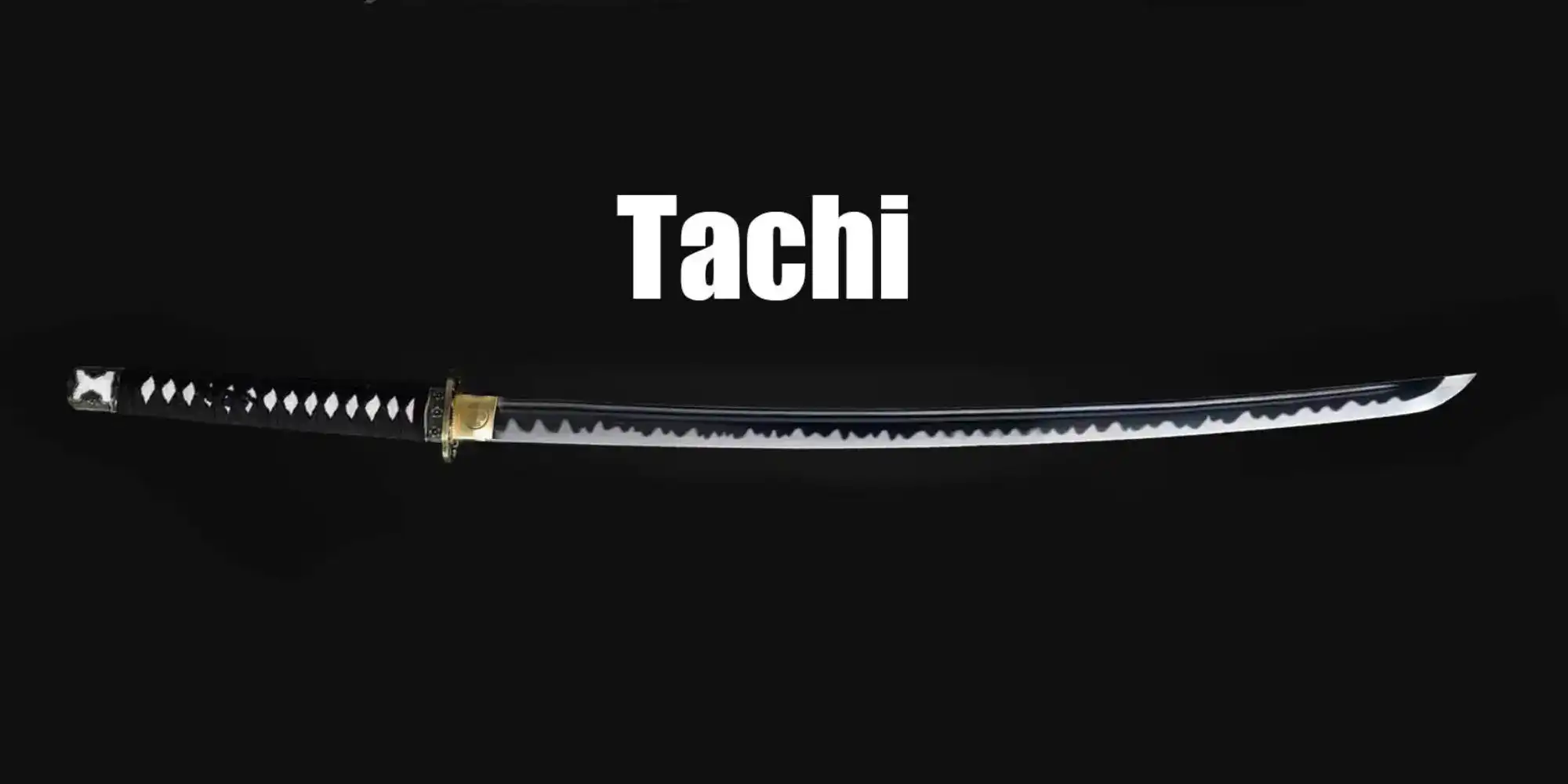
What Is a Tachi Sword? It’s Not Just a Longer Katana

Quick Answer
- A tachi sword is a traditional Japanese long sword worn edge down from suspended mountings, not tucked edge up into the sash.
- Many references place a tachi sword’s blade length, or nagasa, around 70 to 80 cm, but length alone does not decide the label.
- In modern listings, the tachi label often points to tachi-style mountings and presentation, not a strict historical classification.
A tachi sword is a traditional Japanese long sword worn edge down from suspended mountings, not tucked edge up into the sash like a katana. The reason the tachi sword label feels slippery is that antiques, reproductions, and modern retail listings don’t all use it in exactly the same way.
This guide keeps the answer practical. It explains what defines a tachi sword, how its history shaped the form, and what sellers usually mean when they use the term today.
What Actually Makes a Sword a Tachi?
A tachi sword is defined first by how it is mounted and worn, not by one measurement in isolation. The easiest thing to check first is simple: does it hang edge down from suspended mountings? Length, curvature, and profile help, but they work as supporting clues rather than a single all-purpose test.
The carry style is the first clue
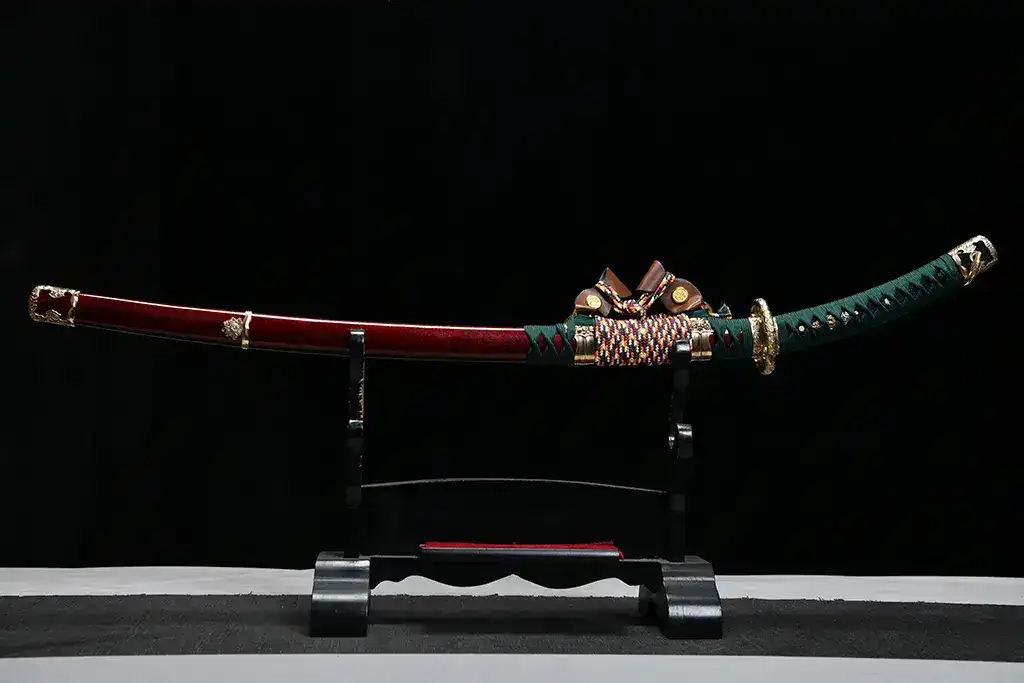
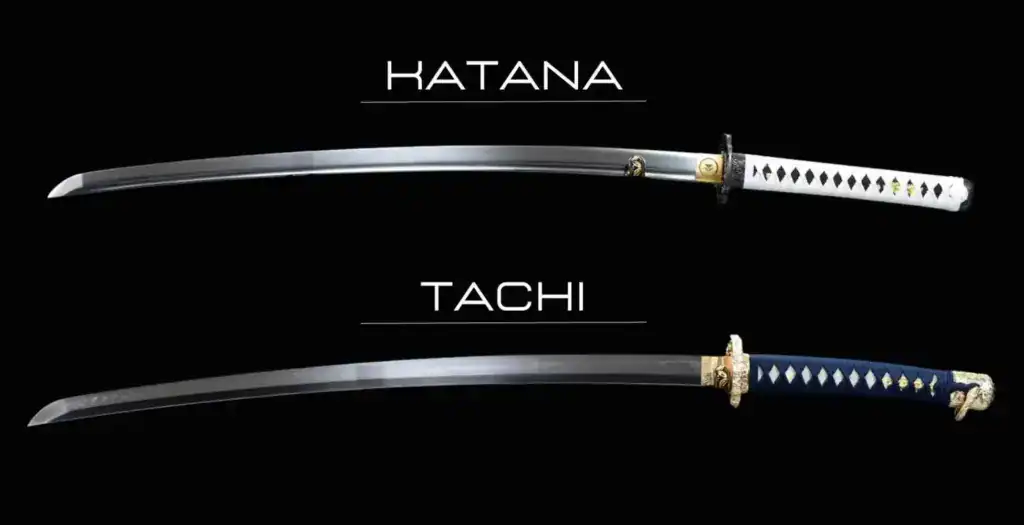
Classic tachi mountings use suspension hangers on the scabbard so the sword hangs edge down from the waist. For most people, that is the clearest visual cue because it changes how the sword sits, how it is drawn, and how it reads at a glance.
This carry style is strongly associated with earlier samurai culture, especially mounted warriors. One photo still doesn’t settle every classification question. It is simply the fastest place to start when the label feels fuzzy.
- Check whether the scabbard is meant to hang rather than sit tucked into a sash.
- Look at how the sword is presented in photos, not just the product title.
- Treat blade length as supporting evidence, not the first test.
The blade traits help, but they do not decide everything alone
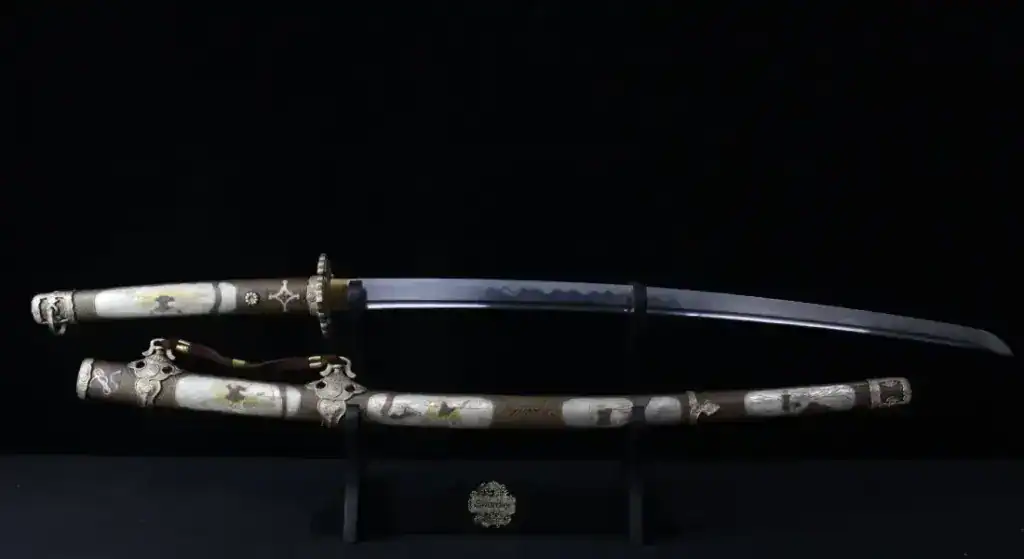
Most people picture a tachi sword as a curved, single-edged Japanese long sword with an elegant, earlier silhouette. Many classic tachi swords show koshi-zori, where the deepest point of the curve sits in the lower third of the blade, closer to the hilt end. It is a useful clue, not a standalone test.
Blade length can help, and many references place a tachi sword’s blade length, or nagasa, around 70 to 80 cm. Even so, era, maker, later shortening, and remounting all complicate the picture. A longer blade alone doesn’t settle the label.
Where the Tachi Fits in Japanese Sword History
The tachi sword emerged as an early Japanese long sword strongly associated with slung, edge-down wear and many mounted warfare contexts. You do not need a full period-by-period lecture here. You only need enough history to see why the form developed and why the term still matters now.
Early battlefield context and mounted use
The tachi sword is strongly associated with mounted warriors and earlier battlefield use. Its suspended, edge-down carry made sense in many early contexts, where swords were worn alongside armor rather than tucked into everyday clothing.
The historical link still needs qualifiers. Not every tachi story can be reduced to cavalry alone, and not every surviving blade still sits in its original form. Even so, mounted use is one of the clearest reasons the tachi developed a distinct identity.
Why the style kept prestige even after warfare changed
The tachi didn’t vanish after later sword styles became more practical in many situations. It also carried prestige. Courtly presentation, formal wear, and elaborate koshirae helped preserve the tachi as a symbol of rank, refinement, and continuity with earlier samurai culture.
The prestige factor explains why ornate fittings still matter today. In many contexts, the word points as much to formal presentation as raw battlefield function. Modern tachi-style mountings still appeal for that reason, especially to buyers who care about history or display.
Celebrated tachi such as Mikazuki Munechika and Dojigiri Yasutsuna still get cited because they tie that prestige to real surviving blades. They also remind readers that tachi is not just a vague old-sword label.
Visual cue: a suspended tachi with visible hangers and ornate koshirae usually communicates the category faster than a blade spec sheet does.
Why the Word “Tachi” Confuses So Many People
The tachi sword label gets confusing because history, mountings, and modern retail language are all using the word in slightly different ways. Once those layers get mixed together, people new to Japanese swords start treating tachi as either a simple synonym for katana or a vague label for any older-looking long sword.
Why it gets mentally grouped with katana
Most people use katana as the reference point because it is the Japanese sword term they already know. At first glance, both look like curved, single-edged long swords, so the brain groups them together before it notices mounting, carry direction, and historical context.
A tachi sword is not just a longer katana. It has its own historical identity, and the mounting matters. For a fuller side-by-side explanation, the full tachi vs. katana breakdown goes deeper into the visual checks and practical differences.
Why old blades and remounts blur simple labels
Old Japanese blades were often shortened, remounted, or reinterpreted across later eras. That is why hard labels get messy faster than beginners expect. A collector may look at mei placement on the tang, the degree of shortening, and the mounting history before feeling confident about what the sword originally was.
Terms like suriage and o-suriage matter because they point to shortening, sometimes significant shortening, of an older blade. Once that happens, the sword may no longer present itself the way it did when first made. Unsigned or heavily modified blades often need broader historical context, not just one visual shortcut.
Two people can look at the same blade and emphasize different clues, one the original blade, another the later mounting. If you’re looking at antiques, check the tang, signature placement, provenance, and expert appraisal, not just the current koshirae.
What “Tachi” Usually Means in Modern Product Listings
In modern product listings, a tachi sword label usually points to tachi-style mountings, presentation, or historical inspiration, not a strict historical classification. That broader usage isn’t automatically misleading. It just means buyers should read the label in context, starting with the mount, the presentation, and the seller’s description instead of assuming the word alone settles everything.
What buyers can safely assume from the label
If a listing calls a sword a tachi, you can usually expect edge down presentation cues, suspended style fittings, and a design that draws from earlier Japanese sword aesthetics. In many online stores, that is the safest first assumption, especially for production swords and display oriented builds.
Read the listing in this order: mounting first, overall silhouette second, product description third. That order helps you avoid the common beginner mistake of treating blade length as the whole answer. It also keeps you from overreacting when a seller uses the label in a broader, more market friendly way.
- Look for suspension hardware or mounting details that suggest edge down wear.
- Check whether the sword’s curve and overall silhouette point toward an earlier tachi look.
- Read the description for phrases such as tachi style mountings, ceremonial presentation, or historical inspiration.
Where strict history ends and style language begins
Strict historical classification belongs to museums, collectors, and serious appraisal. Retail language often has a different job. It tells you what visual tradition, mounting style, or historical inspiration the sword is trying to capture for a modern buyer.
Many modern tachi listings are best read as tachi-style interpretations rather than exact historical replicas. You don’t need a museum catalog to read that correctly. You only need to notice where history is being described carefully and where style language is doing the heavier lifting.
Most modern tachi labels are better read as informed style descriptions with varying levels of historical precision. That keeps you from dismissing every listing as fake or treating each one as a strict historical classification.
If You Want to Explore Tachi Swords Today
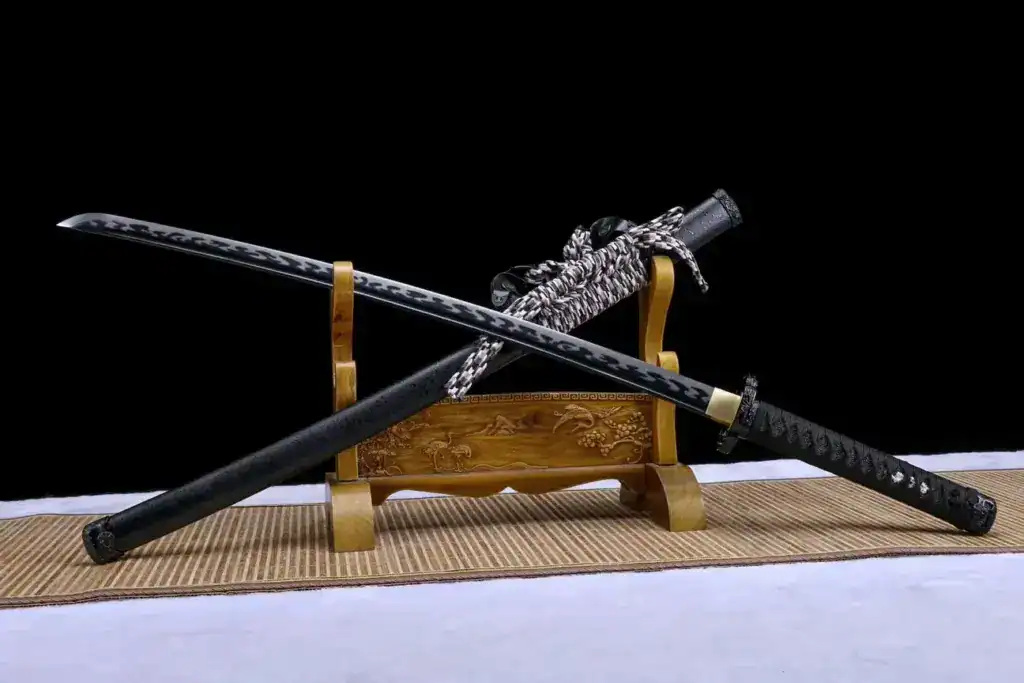
To explore a modern tachi sword listing, check the mountings first, then blade shape, then the seller’s language. That three-step read tells you faster whether the sword is leaning historical, decorative, or simply using tachi as style shorthand.
Once the label makes sense, the next useful step is seeing real examples. Browsing modern tachi swords lets you spot the suspended fittings, overall proportions, and presentation cues discussed throughout this guide.
Tachi-style swords also tend to work well for display or as gifts because the suspended mountings already have a more formal presentation. If you’re comparing options, start with mounting quality, overall fit and finish, and whether the description clearly matches the style being sold.
Tachi Sword FAQ
Is a tachi the same as a katana?
No. A tachi sword is not the same as a katana, even if casual discussion sometimes blurs the terms. The mounting, carry style, and historical context are different.
How long is a tachi?
Blade length varies, but most references place a tachi sword’s nagasa around 70 to 80 cm. Overall length runs longer once you include the handle and mountings.
What is handachi?
Handachi usually means half-tachi mountings, a hybrid style that combines tachi-style fittings with katana-style wear.
Why do collectors mention o-suriage with tachi?
O suriage means a blade was significantly shortened, which can make its original form and classification harder to judge today.


