

Katana vs Dao: What’s the Difference and Which to Buy?

Katana vs dao sounds like a simple Japan-versus-China sword comparison, but the terms are not equally specific. A katana usually means one recognizable Japanese sword tradition, while dao can mean several Chinese single-edged blade styles. That difference matters whether you are comparing handling, reading product listings, or deciding what to buy first. This article stays focused on dao and katana specifically.
The short answer is this: a katana is easier to generalize, while a dao is easier to misunderstand because the category covers multiple shapes and use cases. If your real goal is choosing a first sword, the katana side is usually easier to research because the terminology and buyer guidance are more consistent.
Key Takeaways
- A katana is one specific Japanese sword type, while dao is a broader Chinese blade category.
- The most practical comparison is standard dao vs katana, with Tang dao, miao dao, and wo dao adding useful historical context.
- For most first-time buyers, a katana is easier to understand, compare, and buy with confidence than a dao.
Katana vs Dao: The Main Difference
The main difference is simple in plain English: a katana is a more standardized Japanese two-handed sword tradition, while dao is a broader Chinese saber family with more variation in form and feel. That means the katana side of the comparison is usually clearer, while the dao side depends heavily on which subtype you actually mean.
For most readers, that distinction matters more than memorizing historical terminology. If you ask what a katana feels like, people usually picture a similar silhouette, grip length, and cutting style. If you ask what a dao feels like, the answer can shift from a compact one-handed saber to a longer two-handed blade depending on subtype.

A quick side-by-side view makes the gap easier to see before we get into handling and history.
| Feature | Katana | Dao |
| Origin | Japan | China |
| Type | Specific sword tradition | Broad blade category |
| Grip Style | Usually two-handed | One-handed or two-handed |
| Main Appeal | Precision and standardization | Variety and broader historical range |
If you want a cleaner first purchase, the katana usually wins because it is easier to compare across sellers. If you are more interested in the wider history of Chinese blades, the dao side becomes more interesting precisely because it is less uniform.
Standard Dao vs Katana: Handling, Grip, and Real Use
This is the core comparison most readers actually want. Standard dao vs katana is less about fantasy matchups and more about what feels different in the hand, what looks different across listings, and what is easier to evaluate before spending money.
How Katana and Dao Usually Feel in Hand
Exact handling depends heavily on blade dimensions, balance, and build quality, so these are broad patterns rather than fixed rules. In broad terms, the katana usually feels more standardized, while dao covers a wider range of shapes, grip formats, and balance profiles.
- Katana usually feels easier to picture as a two-handed cutting sword with a familiar overall format.
- Dao usually covers a wider range of feels, from compact sabers to longer two-handed blades.
- Katana often shows a more even, deliberate curve, while dao can be straighter, more curved, shorter, longer, lighter, or more forward-weighted depending on type.
Why Dao Is Harder to Compare Across Listings
Katana listings are often easier for beginners to compare because the category is more standardized. Dao becomes more rewarding once you already know which Chinese blade style you actually want.
Construction language also tends to be clearer on the katana side. Modern katana discussions often mention differential hardening and a visible hamon, while dao construction varies more by historical model and by present-day maker. That does not make dao inferior. It means the buying conversation is less standardized. For readers who want a full breakdown of Japanese sword anatomy, parts of a katana is the better place to go deeper.
Which Is Easier for a Beginner to Understand and Buy?
For beginners, katana is usually easier to understand and buy. The naming is clearer, product pages tend to follow more familiar patterns, and buyer expectations are more consistent across the modern market. A first-time shopper can usually compare blade length, steel, fittings, and intended use without first sorting out which historical family a sword belongs to.
The same pattern applies to training-minded readers. If someone wants a sword for solo practice, dojo-aligned expectations, or a display-plus-practice decision, the katana is easier to place inside a documented modern path. In other words, you do not have to decode as much before making a reasonable choice.
Tang Dao, Miao Dao, and Wo Dao vs Katana
These long-tail comparisons matter because many readers are not really asking about a generic dao. They are asking about one specific Chinese subtype that looks closer to, longer than, or historically connected with a katana.
Tang Dao vs Katana
Tang dao vs katana is mostly a history question. Tang-era Chinese swords are often part of the broader background when people discuss early Japanese sword development, so it is reasonable to say Chinese influence mattered. What is not reasonable is turning that into a one-to-one claim that the katana is simply a copied Tang dao. The katana developed much later through Japanese changes in warfare, mounting style, and sword-making practice.
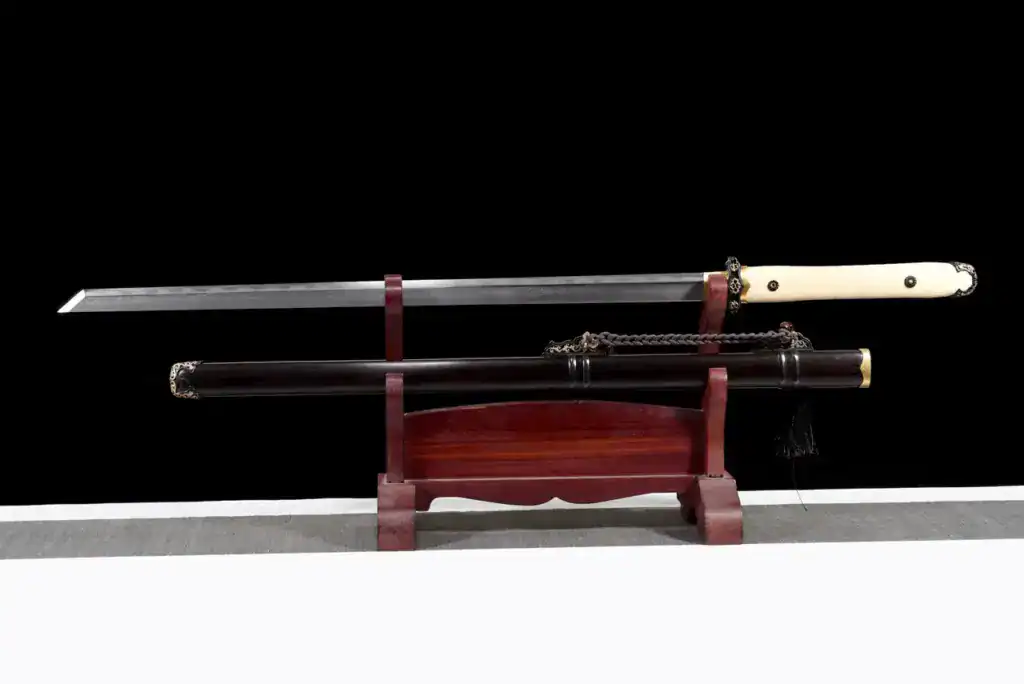
It also helps to separate history from modern product labeling. Today, “Tang dao” is often used commercially for modern blades inspired by Tang-period aesthetics, and that label does not necessarily point to one exact historical standard. If your main interest is how Japan developed its own path after early outside influence, tachi vs katana is the cleaner next step. If your main goal is buying clarity rather than tracing history, the katana side is still easier to evaluate.
Miao Dao vs Katana
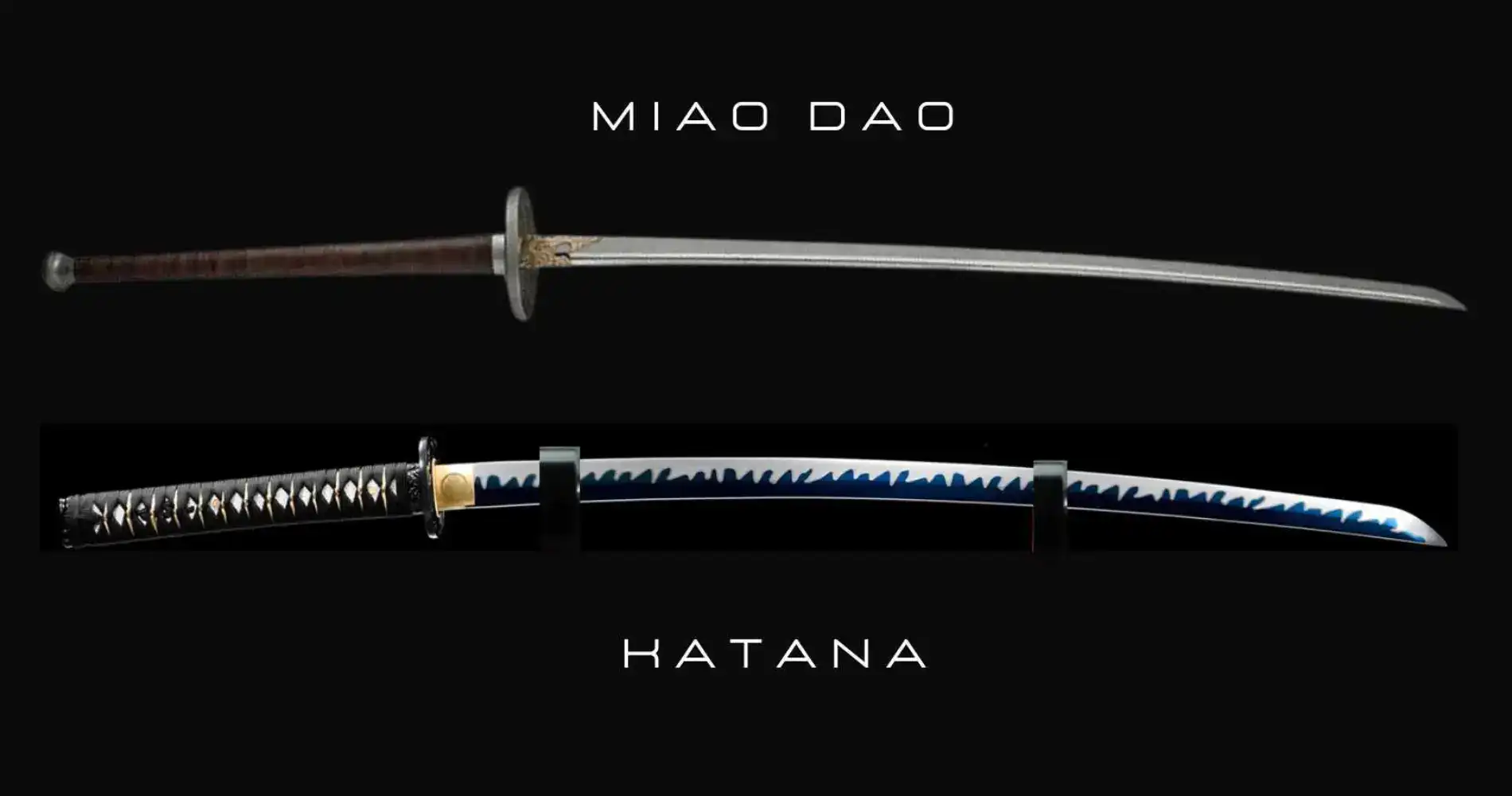
Miao dao vs katana is really a comparison of scale and weapon feel. A miao dao is generally understood as a longer two-handed Chinese saber, so buyers interested in miao dao are often looking for more reach, more visual command, and a more martial presence. In a training hall or even in a simple at-home handling session, that extra length changes how the sword feels long before you start talking about fine historical details.
The katana, by contrast, remains the more standardized and easier-to-benchmark option. If you want a sword that is easier to compare across makers and easier to fit into a familiar collecting or practice path, katana is still the safer recommendation. If you specifically want a longer two-handed Chinese blade with a bigger physical presence, miao dao is the more distinctive answer.
Wo Dao vs Katana
Wo dao matters because it shows that influence did not move in only one direction. In Chinese historical discussion, the term is associated with Japanese-style influence on Chinese blade design, which is why some Chinese swords can look surprisingly close to Japanese ones at first glance. For most buyers, the practical takeaway is simple: similar-looking blades can still belong to different historical and market contexts.
Which Is Easier to Buy, Collect, and Train With Today?
In much of the modern English-language market, katana is usually easier to buy, compare, and collect. Buyer guides are easier to find, and many sellers present katana listings in a way that makes side-by-side evaluation less confusing. A beginner can usually learn the basic decision points faster and make a purchase with fewer unknowns.
The same is true for collecting and training. If you are interested in display pieces, functional replicas, or a path that might later include practice, the katana ecosystem is easier to navigate because more readers already understand what a “normal” katana listing should tell them. A dao can be deeply rewarding, especially for readers who want broader Chinese blade history or a more varied martial feel, but the variation that makes dao interesting also makes it harder to generalize.
Which Path Fits You Better?
For most readers, the practical decision comes down to what kind of path they want.
- Choose katana first if you want a clearer buying path, easier comparison shopping, and a more documented training ecosystem.
- Lean toward dao if you already know you prefer Chinese blade history, broader subtype variety, or a specific feel such as a compact saber or a longer miao dao style.
- Stay in research mode if you like the idea of dao but still do not know which subtype you mean yet.
If you are moving from comparison into actual purchase evaluation, start with how to choose a katana for practice or display. If you already know you want the more standardized first-purchase path, browse the japanese katana collection.
FAQ About Katana vs Dao
Is a dao the same as a katana, and what is the main difference?
No. A dao is a broad Chinese single-edged blade category, while a katana is a more specific Japanese sword tradition. The practical difference is that katana is easier to generalize, while dao changes meaning depending on which subtype you are talking about.
Is the Tang dao really the ancestor of the katana?
Not in a simple one-to-one sense. Tang-era Chinese swords likely influenced the wider background of early Japanese sword development, but the katana was not a direct copy of one Tang dao model. Modern use of the “Tang dao” label can also refer to commercial recreations rather than one fixed historical form.
What is the difference between a miao dao and a katana?
The biggest difference is scale and feel. Miao dao generally appeals to readers who want a longer two-handed Chinese saber with more reach and a stronger martial presence, while katana remains the more standardized and easier-to-compare option.
Why do many first-time buyers choose a katana over a dao?
Many first-time buyers start with katana because the market is easier to read. Terminology, expectations, and buyer guidance are more consistent, so it is easier to compare listings and buy with confidence.
Is a dao harder to buy well than a katana today?
For most beginners, yes. Dao is harder to generalize because naming, historical reference points, and quality expectations vary more across types and makers. That is why katana is usually the simpler modern path for a first purchase.


