



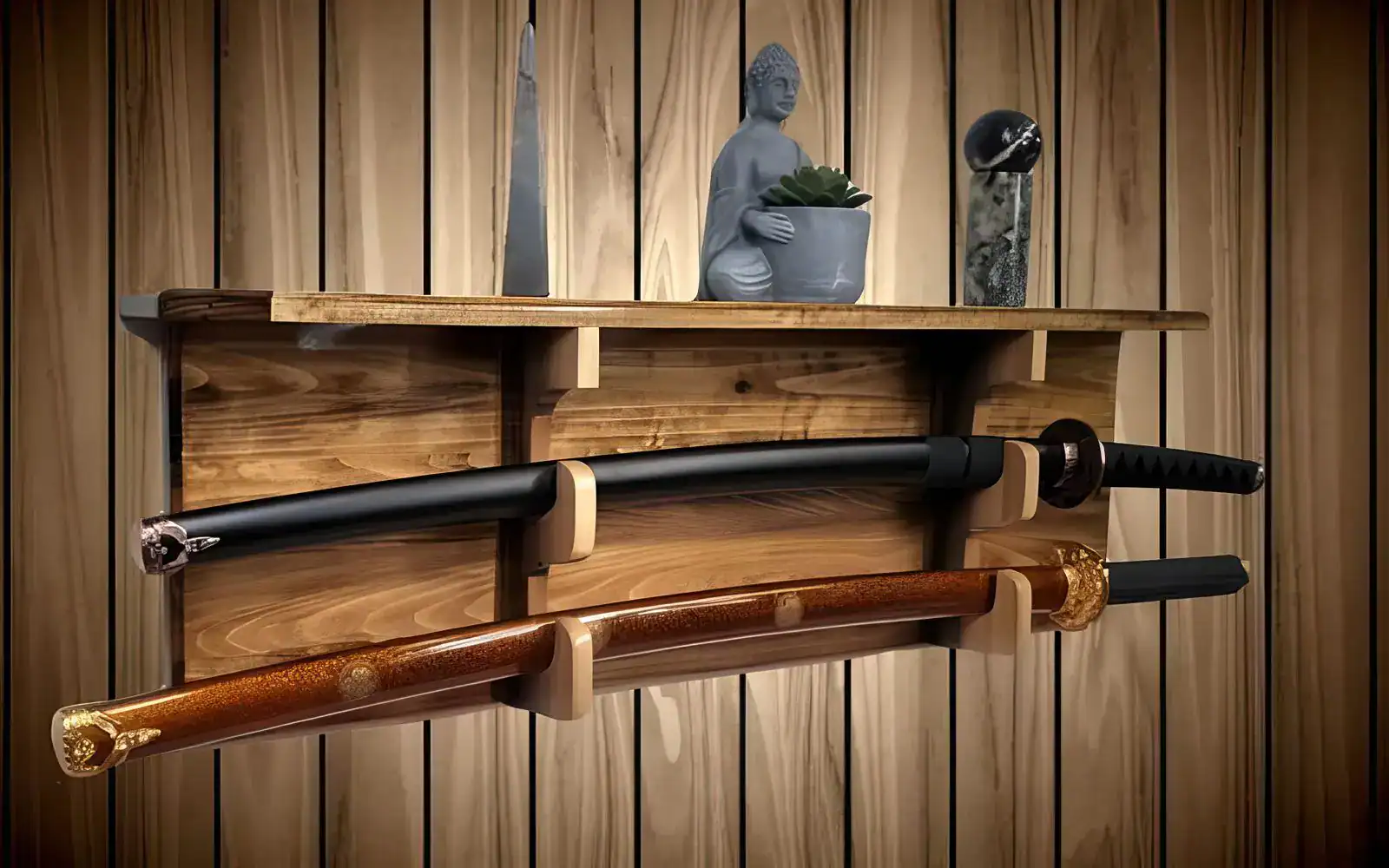
Katana Stand vs Wall Mount: Which One Most Rooms Actually Need

QUICK ANSWER
- A katana stand sits on furniture and needs no drilling. A wall mount attaches to the wall and usually needs anchors or screws.
- Stands are the safer default for renters, gift buyers, first-time owners, and anyone who handles the sword regularly.
- Wall mounts work better when surface space is already full, drilling is allowed, and the sword is meant to stay fixed as part of the room.
The katana stand vs wall mount decision is not about style. One choice solves most situations, and the wrong one leads to moving day regrets or a lease conversation you did not plan for.
Your answer comes down to three things: whether you rent, how much surface space is free, and whether you handle the sword or just display it.
Renters, first-time buyers, and gift-givers usually have a simpler answer than they think. Collectors building toward a daisho or a multi-sword wall have a different one. This guide helps you find yours before buying anything.
A Simple Rule of Thumb
Choose a katana display stand for a flexible tabletop setup; choose a wall mount when drilling is allowed and furniture space is already full.
- Stand = easier setup, more flexible, better for one sword.
- Wall mount = cleaner look, better for tight rooms with full surfaces, better for long-term display.

Stand or Wall Mount: A Quick Look
Find your situation in the left column. Each row gives a direct answer.
| Your Situation | Stand | Wall Mount |
| Renting or likely to move | Yes. No drilling, no patching. | No. Lease and repair hassle. |
| Furniture surfaces already full | No. Stands need a clear spot. | Yes. Wall is the open space. |
| Handle or clean the sword often | Yes. Easy daily access. | No. Mounted swords stay put. |
| Pets, kids, or shared rooms | Corner-placed, low-traffic only | Better. Raises it out of reach. |
| Planning 3+ swords eventually | Start here, outgrow it later | Better long-term fit |
| Sword as a room design feature | No. Sits on furniture. | Yes. Reads as part of the wall. |
What Really Decides It?
Room layout, daily use, safety, and commitment level are what usually decide this choice, not sword tradition or display etiquette. First choose the format. After that, you can work on height, angle, and exact placement.
How much space do you actually have?
A katana wall display starts to look cleaner when desks, shelves, and surfaces are already carrying books, lamps, monitors, or collectibles. The wall has nothing to compete with. The sword gets a clean section of wall that reads as intentional.
A stand works well when the room has one solid, low-traffic spot: a dedicated shelf or sideboard with nothing else on it. A katana runs long. The display spot needs enough clearance on either side to look right rather than crammed, and how long a katana is is worth checking before you choose the surface.
Can you drill the wall?
Lease rules, rental agreements, and wall condition often settle this question before style preference gets a vote. A renter who cannot patch drywall properly usually has a weak wall-mount case, even if the look is appealing.
Beyond lease rules, wall type matters before anyone commits. Hollow drywall, concrete, and plaster each need different anchors. Placement height and room traffic affect the safety picture. Anyone serious about wall mounting needs to verify the wall condition and anchor fit before buying hardware.
Will you take the sword down often?
A stand makes it easy to pick the sword up, inspect it, clean the blade, or photograph it without any wall interaction. Collectors who handle their swords regularly, create content around their pieces, or simply want to practice drawing tend to live better with that kind of access.
A wall mount works better when the sword is meant to stay put. Once it is mounted and level, it becomes part of the room rather than something you interact with casually. That is a good fit for display-first ownership and accent-wall setups.
Is this a busy room?
Pets, children, guests, and shared spaces change the safety calculation. A stable stand placed in a quiet corner, away from walkways and the edges of high-traffic furniture, can work safely. The same stand near a doorway or at a height a child can reach is a different situation.
A wall mount can raise the sword out of easy reach, but a poorly anchored mount in a high-traffic area is not automatically safer. The safer option is whichever setup is hard to bump, stable, and realistic for the people and animals who actually use the room.
What will it really cost?
A stand’s total cost usually stays close to the listing price. No extra hardware, no installation tools, no wall repair costs if plans change. Place it, done.
A wall mount can cost more in practice if you need anchors, tools, a stud finder, or wall repair later. The hidden cost gap matters most when the room is not permanent, especially for renters who need to patch before handing back the keys.
Start With a Katana Stand If
For most beginners, renters, and one-sword owners, a katana display stand is the simpler first move. It can still look deliberate and well-placed, especially in a study, office, or traditionally furnished room with wood furniture and clean shelving.

You have one sword and want the easiest setup
One sword does not require a permanent wall plan. A stand lets you test placement, experiment with lighting, and see how the piece fits the room before committing to anything drilled into the wall.
A simple two-tier katana sword display stand also works well for a single sword when the buyer already expects to add a wakizashi, tanto, or second katana later. The second tier is ready when the collection grows. Anyone still choosing a first sword can browse the katana collection to see what the display will need to accommodate.
You rent or move around a lot
No drilling, no patching, no landlord conversation. A stand moves when you move. It does not depend on wall type, anchor fit, or lease clauses. For renters, this is not just a convenience point. It is often the only realistic display option when the lease restricts permanent fixtures.
You like to handle, inspect, or photograph your sword
For anyone who interacts with the sword regularly, a stand keeps that habit easy. Picking it up becomes natural rather than a process. A wall mount shifts ownership toward display-first, and that is a real trade-off for collectors who live with their swords rather than just showing them.
You’re buying a display as a gift
A stand is the safer gift choice because it does not depend on the recipient’s wall condition, lease rules, or confidence with a drill. It works in any room without installation decisions.
A wall mount is a safer gift only when the recipient has already said they want one and has a clear place to install it. When in doubt, a tabletop stand is the lower-risk choice.
Start With a Wall Mount If
A katana wall mount is not a fallback when a stand does not fit. When the room situation and display goal are clear, it can be the cleaner and better long-term option.
Your shelves and desk are already full
Picture an office where the desk holds a monitor, keyboard, and a small plant, and every shelf leans with books already. A katana stand on that desk would look crammed in. The same sword on a clean section of wall reads as a deliberate feature of the room rather than one more object looking for a home.
You want the sword to be part of the room
Wall mounting is often a design choice as much as a display choice. In offices, game rooms, dedicated display spaces, or rooms built around an accent wall, a sword mounted flush against the wall reads as part of the room rather than an addition to it.
A single-tier wall-mounted katana display works especially well in minimalist or traditional-style spaces where the sword is meant to draw the eye rather than share the room with everything else on a desk.
Horizontal or vertical wall mount?
Horizontal wall-mounted katana displays are common because the sword’s profile reads naturally along the wall. Horizontal also fits most rooms without needing a tall, narrow section of clear wall to work.
A katana wall mount vertical setup works better for narrow walls, corner features, or a single-sword focal point where horizontal clearance is limited. Vertical mounting is generally a weaker fit for renters, frequent handlers, or rooms where the layout changes often, since repositioning a vertical mount involves the same patching work as any other drilled mount.
You know the collection will grow

Wall systems start to pay off once multiple swords begin taking over shelves and desk space. A simple progression helps clarify the path:
- One sword: tabletop stand or single wall mount
- Two swords or a daisho pair: two-tier stand or horizontal wall display
- Three or more: wall system or a dedicated display area
Once the buyer shifts from a single-sword question into thinking about multiple blades, the decision becomes less about format and more about what kind of collection to build. Browse Japanese swords to see what a multi-piece display could eventually need to accommodate.
Your Situation, Quick Answer
Six scenarios, one answer each.
Apartment renter with one katana
Stand. No drilling, no commitment, easy to move when the lease ends.
First sword, first display
Stand, unless the room is already built around a wall feature and drilling is clearly allowed.
Small room, not much surface space
Wall mount when the real problem is lack of usable furniture space, not preference for the look.
Kids, pets, or shared space
Whichever setup is harder to reach, harder to bump, and more stable given how the room actually gets used.
Growing collection or daisho plan
Wall mounting once furniture space starts disappearing and a two- or three-piece display becomes the goal.
Accent wall or display room
Wall mount when the sword is meant to read as part of the room’s design rather than an object sitting on furniture.
Before You Buy Anything
Run through this list before committing to either format.
- How many swords are you planning to display now, and in the next year?
- How busy is the room? (foot traffic, children, pets)
- Is the intended surface or wall stable, clean, and dedicated?
- Are you allowed to drill, and have you checked the wall type and anchor options?
- How often will you take the sword down to handle, clean, or photograph it?
- Is your collection likely to grow in a way that changes the display plan?
Common Mistakes
Most display problems come down to one of four decisions made without thinking the room through first.
Choosing only by looks
A wall mount that looks clean in a product photo can be the wrong choice for a rental apartment. A stand that looks minimal in a listing can be exactly right for a quiet office corner. The look of the final setup depends more on placement and room context than the product itself.
Buying before checking room traffic
A great stand or wall mount in the wrong spot fails regardless of build quality. A stand near a doorway where people brush past it is a different risk than a stand in a dedicated, low-traffic corner. Room traffic decides the placement before the product does.
Ignoring wall rules or repair hassle
Renters and frequent movers need to think past the first install. Drywall repair costs money and time. Anchor failure is a real risk with cheaper hardware or improper stud placement. The question is not just whether you can mount it today. It is whether you can manage that wall when you leave.
Comparing a cheap stand to a solid wall mount
Build quality and placement change the whole safety and value equation. A cheap stand with wobble and a quality wall mount on a solid stud are not a fair comparison. Neither are a quality lacquered stand and a basic screw-in bracket. Compare padding, stability, hardware, finish, and weight capacity before comparing price, or the comparison will lead to the wrong conclusion.
FAQ
Is a wall mount safer than a katana stand?
Not automatically. A wall mount reduces surface tipping risk, but a poorly anchored mount in a high-traffic area is not safer. A stable stand placed in a low-traffic spot is often safer than a rushed wall mount. Setup quality and placement matter more than the format.
Can a wall mount damage a katana over time?
A well-padded, properly mounted bracket is less likely to damage the sword, especially if the contact points are checked over time. The main risks are wear from cheap or unpadded hardware and gradual saya stress if the mount holds the sword at an unusual angle for an extended period.
Can I start with a stand and switch to a wall mount later?
Yes, and for most rooms this is the practical approach. Starting with a stand lets you test placement, lighting, and ownership habits before committing to a drilled wall. The stand remains useful for a second sword or daisho display even after the wall mount goes up.
Final Verdict
For most beginners, renters, gift buyers, and one-sword owners, a stand is the easier and safer first move. No drilling, no wall assessment, no lease conversation. It can still look intentional in the right room with the right placement.
A wall mount wins when surface space is genuinely limited, drilling is clearly allowed, and the goal is to make the sword part of the room rather than an object sitting on furniture. That is a different situation with a different best answer, and not a compromise.
Once the format is clear, the next step is the setup itself. A how to display a katana covers placement, orientation, height, and the details that make the setup look finished rather than improvised.


